On This Page
Description
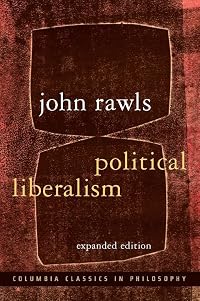
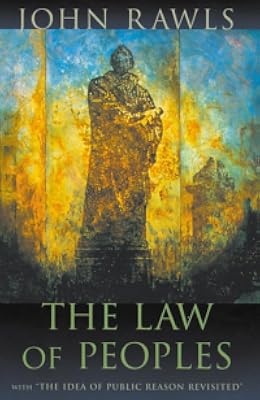
This book continues and revises the ideas of justice as fairness that John Rawls presented in A Theory of Justice but changes its philosophical interpretation in a fundamental way. That previous work assumed what Rawls calls a "well-ordered society," one that is stable and relatively homogenous in its basic moral beliefs and in which there is broad agreement about what constitutes the good life. Yet in modern democratic society a plurality of incompatible and irreconcilable show more doctrines-religious, philosophical, and moral-coexist within the framework of democratic institutions. Recognizing this as a permanent condition of democracy, Rawls asks how a stable and just society of free and equal citizens can live in concord when divided by reasonable but incompatible doctrines? This edition includes the essay "The Idea of Public Reason Revisited," which outlines Rawls' plans to revise Political Liberalism, which were cut short by his death. show lessTags
Recommendations










Member Reviews
not my cup of tea, but to be respected. I don't know about its future influence, but i wonder how his afficionados in the States might counter bushism
Extremely dense and philosophical. Unable to plow through it for whatever ideas it has to offer.
Magnificently elaborate treatise by John Bordley Rawls on his ethical theories. Written in 1992; published in 1993.
un excelente ensayo para esta epoca de luchas fraticidas de como promover la tolerancia a los fines de poder estructurar una sociedad justa y un estado de derecho
Oct 7, 2017Spanish
Ratings
Members
- Recently Added By
Lists

Works referenced in Capital in the Twenty-First Century by Thomas Piketty
62 works; 2 members

2024-2025 Ezra Klein Guest Recommendations
213 works; 6 members

In Our Time books
4,934 works; 2 members
Author Information

17+ Works 6,496 Members
John Rawls, professor of philosophy at Harvard University, had published a number of articles on the concept of justice as fairness before the appearance of his magnum opus, A Theory of Justice (1971). While the articles had won for Rawls considerable prestige, the reception of his book thrust him into the front ranks of contemporary moral show more philosophy. Presenting a Kantian alternative to conventional utilitarianism and intuitionism, Rawls offers a theory of justice that is contractual and that rests on principles that he alleges would be accepted by free, rational persons in a state of nature, that is, of equality. The chorus of praise was loud and clear. Stuart Hampshire acclaimed the book as "the most substantial and interesting contribution to moral philosophy since the war."H. A. Bedau declared: "As a work of close and original scholarship in the service of the dominant moral and political ideology of our civilization, Rawls's treatise is simply without a rival." Rawls historically achieved two important things: (1) He articulated a coherent moral philosophy for the welfare state, and (2) he demonstrated that analytic philosophy was most capable of doing constructive work in moral philosophy. A Theory of Justice has become the most influential work in political, legal, and social philosophy by an American author in the twentieth century. (Bowker Author Biography) show less
Awards and Honors
Awards
Series

Belongs to Publisher Series
Work Relationships
Common Knowledge
- Original publication date
- 1993
Classifications
- Genres
- Politics and Government, Philosophy, Nonfiction, General Nonfiction
- DDC/MDS
- 320.51 — Society, government, & culture Political science Types of Government Political ideologies Liberalism
- LCC
- JC578 .R37 — Political Science Political theory Political theory. The state. Theories of the state Purpose, functions, and relations of the state
- BISAC
Statistics
- Members
- 918
- Popularity
- 29,163
- Reviews
- 4
- Rating
- (3.86)
- Languages
- 7 — English, French, German, Italian, Polish, Portuguese, Spanish
- Media
- Paper, Ebook
- ISBNs
- 30
- ASINs
- 9