The Informant: A True Story
by Kurt Eichenwald
On This Page
Description
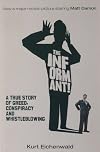
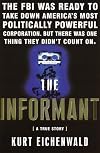
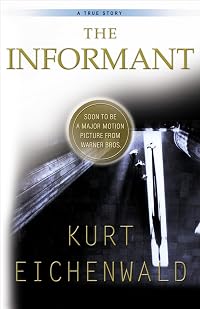
From an award-winning New York Times investigative reporter comes a gripping account of one of the most captivating and bizarre tales in the history of the FBI and corporate America.It was one of the FBI's biggest secrets: Mark Whitacre, a senior executive at Archer Daniels Midland—America's most politically powerful corporation—became a confidential government witness. Putting his career and family at risk, Whitacre, along with a small team of agents, tapped into secrets at ADM that show more led the FBI to discover the company's scheme to steal millions of dollars from its own customers.
But as the FBI and federal prosecutors closed in on ADM, they suddenly found that everything was not all that it appeared. While Whitacre was cooperating with the Feds and playing the role of loyal company man, he also had his own agenda. Whitacre became sucked into his own world of James Bond antics, imperiling the criminal case and creating a web of deceit that left the FBI and prosecutors uncertain where the lies stopped and the truth began.
Meticulously researched and richly told, The Informant re-creates the drama of the story, beginning with the secret recordings, stakeouts, and interviews with suspects and witnesses to the power struggles within ADM and its board—including the high-profile chairman Dwayne Andreas, F. Ross Johnson, and Brian Mulroney—to the big-gun Washington lawyers hired by ADM, and on up through the ranks of the Justice Department to FBI Director Louis Freeh and Attorney General Janet Reno.
A page-turning real-life thriller that features deadpan FBI agents, crooked executives, idealistic lawyers, and shady witnesses with an addiction to intrigue, The Informant tells an important and compelling story of power and betrayal in America. show less
Tags
Recommendations






Member Recommendations
Member Reviews
Easily one of the most technically accurate pictures of the FBI I've ever read. Since the FBI is viewed through the lens of a particularly complex white collar, price fixing case, the agency's political and bureaucratic foibles are imminently apparent - from warring factions of agents and prosecutors to the tedious meanderings of investigative practice. The book also serves as a wonderful behavioral analysis treatise, as the informant of the title engages in a range of unbelievable hi-jinx that stretch the boundaries of believabiity. The author kindly provides actual diagnostic opinions from a professional who treated the informant toward the end of the book - so your questions will be answered, nominally, at least. If you've watched so show more many films to see an FBI agent as someone who is quick to the draw and racing around the streets chasing serial killers, this book serves as the appropriate antidote - this is the bread and butter of the FBI, complete with all the warts that hamper it.
4 1/2 bones!!!!! show less
4 1/2 bones!!!!! show less
It's hard not to hear the Michael Douglas character, Gordon Gecko, in "Wall Street" echoing 'greed is good' when reading this story. Having seen the film I decided to read the book which goes far beyond it in all respects. Mark Whitacre, PhD and head of lysine department at ADM is more like Bernie Madoff than anything else though its not suspected due to his 'good guy' nature. The twists and turns as the story unfolds show just how greedy Fortune 500 companies are and to what end they'll go to manipulate markets and people. But crime does NOT pay and Whitacre learns this well. Highly recommended.
Kurt Eichenwald was an investigative reporter for the NY Times, and this book is a nonfiction account of the investigation and prosecution of the executives and board of Archer Davis Midland for the white collar crime of price-fixing. It is told in minute detail, and at 650 pages is a tome. Doesn't sound like your thing? Think again. This is written and paced like a thriller. The facts are well-documented, but had this been a novel, its plot might strain credibility at times. It was absolutely riveting. It was made into a movie, but if you've seen the movie, the book is so much better.
The book opens with the very public arrests of the Archer Davis Midland executives, including the purported arrest of the FBI's informant, Mark Whitacre. show more Whitacre had secretly recorded his colleagues and Archer's competitors as they illegally divided the world markets among themselves and set artificially high prices for their products. At the time of the arrests in 1995, the case was described as the most important white collar crime ever, and the government was extremely confident that it had an airtight case.
Then, the agents begin discovering troubling facts about their informant, who would have to be the government's star witness at the trials. They knew throughout the investigation that Whitacre was kind of strange, and somehow believed that he would end up as president of Archer after everyone else went to jail. His actions during the investigation were frequently erratic and sometimes seem to threaten the secrecy of the investigation. But while the FBI agents realized that Whitacre was sometimes in a fantasy world, they didn't realize that he, too, was involved in illegal activities, including embezzlement, tax fraud, money laundering, bribery and kickbacks. Unbeknownst to the agents investigating Archer, there was a contemporaneous investigation by a different FBI office of Whitacre and some of his accomplices.
The book becomes a fascinating look into the turf wars among the National FBI office and various regional FBI offices; among the Department of Justice Anti-Trust Division, the Department of Justice Criminal Division and the US Attorney's offices. The IRS is also involved. Whitacre's relationships with his various defense attorneys and lack of candor with them are also explored. Whitacre continues further off the cliff and begins accusing the FBI agents he worked with of corruption and destruction of evidence, so they too come under investigation.
After finishing this book, I purchased another book about corporate crime by Eichenwald (Serpent on the Rock) which I previously had no interest in. I already owned, but have not read, 500 Days about the beginnings of the war on terror. After reading The Informant, I think I'd read anything by Eichenwald. show less
The book opens with the very public arrests of the Archer Davis Midland executives, including the purported arrest of the FBI's informant, Mark Whitacre. show more Whitacre had secretly recorded his colleagues and Archer's competitors as they illegally divided the world markets among themselves and set artificially high prices for their products. At the time of the arrests in 1995, the case was described as the most important white collar crime ever, and the government was extremely confident that it had an airtight case.
Then, the agents begin discovering troubling facts about their informant, who would have to be the government's star witness at the trials. They knew throughout the investigation that Whitacre was kind of strange, and somehow believed that he would end up as president of Archer after everyone else went to jail. His actions during the investigation were frequently erratic and sometimes seem to threaten the secrecy of the investigation. But while the FBI agents realized that Whitacre was sometimes in a fantasy world, they didn't realize that he, too, was involved in illegal activities, including embezzlement, tax fraud, money laundering, bribery and kickbacks. Unbeknownst to the agents investigating Archer, there was a contemporaneous investigation by a different FBI office of Whitacre and some of his accomplices.
The book becomes a fascinating look into the turf wars among the National FBI office and various regional FBI offices; among the Department of Justice Anti-Trust Division, the Department of Justice Criminal Division and the US Attorney's offices. The IRS is also involved. Whitacre's relationships with his various defense attorneys and lack of candor with them are also explored. Whitacre continues further off the cliff and begins accusing the FBI agents he worked with of corruption and destruction of evidence, so they too come under investigation.
After finishing this book, I purchased another book about corporate crime by Eichenwald (Serpent on the Rock) which I previously had no interest in. I already owned, but have not read, 500 Days about the beginnings of the war on terror. After reading The Informant, I think I'd read anything by Eichenwald. show less
I never though I'd say this, but this has been a really fun read. Eichenwald has turned a potentially dry subject into a thoroughly engrossing look at corporate and personal greed. It helps that Mark Whitacre, the ADM executive who wore the wire for the FBI, is just a bit nutty.
It probably helps that I lived in Decatur from kindergarten through sixth grade and that we still take day trips there on a semi-regular basis. When he describes driving to the Hampton Inn in Forsyth, I can visualize it clearly. This one is a keeper.
It probably helps that I lived in Decatur from kindergarten through sixth grade and that we still take day trips there on a semi-regular basis. When he describes driving to the Hampton Inn in Forsyth, I can visualize it clearly. This one is a keeper.
Incredible story and a true page turner about price fixing and other corporate misdeeds at Archer, Daniels, Midland, a fortune 500 company. Eichenwald does a masterful job to get the reader through the twists and turns of an emotionally complicated and unstable central figure, Mark Whitacre, who becomes the FBI informant and then the target of Justice Dept/FBI probes. Reading Eichenwald's Conspiracy of Fools(the Enron scandal) right before The Informant, and during another decade of corporate greed and misdeeds (mortgage, financial scandals) leaves the reader incredulous and somewhat powerless next to the seemingly systemic and far reaching ability of corporations to skew the landscape and playing field for the rest of us.
[Contains Spoilers]
In his afterword, Eichenwald says, "While everything described in this book occurred, the story was intentionally structured to lend temporary credence to some of the many lies told in this investigation. Essentially, I was attempting to put readers in the same uncertain position as the investigators, all the while dropping hints - admittedly subtle at times - about where reality began."
The result is very effective as the FBI's star cooperating witness (Mark Whitacre) starts off providing great evidence of international corporate price fixing on tape and film and then proceeds to lose his credibility (and greatly complicate the anti-trust case) by his personal theft from the company of millions of dollars, even while show more he is cooperating with the FBI.
Remarkably, the FBI keep things on track with great professionalism while facing off high level corporate lawyers, political interference and an idiotic witness, although it is finally the admission of guilt by the Asian price fixers that ensures success.
An observation after reading the book is that international price fixing could be a lot more widespread than it would at first appear, and that some some politicians are not about to change. Bill Clinton was quick to congratulate "My good friend" Dwayne Andreas, the chairman of ADM, despite his obstruction of the FBI at every turn and his only avoiding jail through a plea bargain. show less
In his afterword, Eichenwald says, "While everything described in this book occurred, the story was intentionally structured to lend temporary credence to some of the many lies told in this investigation. Essentially, I was attempting to put readers in the same uncertain position as the investigators, all the while dropping hints - admittedly subtle at times - about where reality began."
The result is very effective as the FBI's star cooperating witness (Mark Whitacre) starts off providing great evidence of international corporate price fixing on tape and film and then proceeds to lose his credibility (and greatly complicate the anti-trust case) by his personal theft from the company of millions of dollars, even while show more he is cooperating with the FBI.
Remarkably, the FBI keep things on track with great professionalism while facing off high level corporate lawyers, political interference and an idiotic witness, although it is finally the admission of guilt by the Asian price fixers that ensures success.
An observation after reading the book is that international price fixing could be a lot more widespread than it would at first appear, and that some some politicians are not about to change. Bill Clinton was quick to congratulate "My good friend" Dwayne Andreas, the chairman of ADM, despite his obstruction of the FBI at every turn and his only avoiding jail through a plea bargain. show less
This non-fiction story is more interesting than any fictional crime detective story. I feel compelled to be a bit more enthusiastic than usual about this book to overcome the reaction of potential readers who are not interested in a story about price fixing at Archer Daniels Midland (ADM). That may sound boring. Trust me, it’s not!
By the end of the book, you will learn that as of the year 2000 over a billion dollars in fines had been paid worldwide by various food and pharmaceutical companies as a result of the fall-out from this case. Thousands of normally law-abiding people had to be involved over many years for such wide spread price fixing to exist. It took one flawed cooperating witness to expose the crimes to law enforcement. show more When I use the word “flawed,” this one was a doozy! As multiple layers of lies are peeled back in this story the reader can’t help but wonder just how many more layers can there be?
The story is told from the point of view of the FBI as they investigate the case. A small but interesting part of the story is the internal friction between the FBI and the Department of Justice (DOJ) prosecutors. In this case the FBI appears to be the good guys and the DOJ are a bunch of bumbling idiots. At one point the DOJ appears to be guilty of trying to obstruct justice in response to political pressure. It’s too bad the author wasn’t able to learn the behind-the-scenes reasons for their actions. It was probably a good example of the effect of the generous political contributions made by ADM.
A runner-up for the Pulitzer Prize, The Informant is a mesmerizing piece of investigative reporting. The foreword to the book says that everything in the book is true including the lies. After finishing the book, I understand the reason for that statement. show less
By the end of the book, you will learn that as of the year 2000 over a billion dollars in fines had been paid worldwide by various food and pharmaceutical companies as a result of the fall-out from this case. Thousands of normally law-abiding people had to be involved over many years for such wide spread price fixing to exist. It took one flawed cooperating witness to expose the crimes to law enforcement. show more When I use the word “flawed,” this one was a doozy! As multiple layers of lies are peeled back in this story the reader can’t help but wonder just how many more layers can there be?
The story is told from the point of view of the FBI as they investigate the case. A small but interesting part of the story is the internal friction between the FBI and the Department of Justice (DOJ) prosecutors. In this case the FBI appears to be the good guys and the DOJ are a bunch of bumbling idiots. At one point the DOJ appears to be guilty of trying to obstruct justice in response to political pressure. It’s too bad the author wasn’t able to learn the behind-the-scenes reasons for their actions. It was probably a good example of the effect of the generous political contributions made by ADM.
A runner-up for the Pulitzer Prize, The Informant is a mesmerizing piece of investigative reporting. The foreword to the book says that everything in the book is true including the lies. After finishing the book, I understand the reason for that statement. show less
Members
- Recently Added By
Lists

True Crime
156 works; 1 member
Author Information

8 Works 2,155 Members
Kurt Eichenwald has been selected by The Journal of Financial Reporting as one of the nation's most influential business reporters, and has twice in the past three years won the prestigious George Polk Award for excellence in journalism. For The New York Times, he has covered some of the highest-profile news stories emanating from the business show more world. His bestselling book, Serpent on the Rock, was one of Newsweek's Hot Summer Reads of 1995. Eichenwald lives in Scarsdale, New York, with his wife and three children. (Publisher Provided) Kurt Eichenwald is a journalist and best-selling author. He is the author of Serpent on the Rock, Conspiracy of Fools, and The Informand. Eichenwald is a two-time winner of the George Polk Award for Excellence in Journalism in 1995 and 1998, for articles about the dialysis industry and fraud at the nation's largest hospital company, Columbia/HCA Healthcare Corporation. He was a finalist for the Pulitzer Prize in 2000, along with his Times colleague Gina Kolata, for an investigation of medical clinical trials. In 2006, he won the Payne Award for Ethics in Journalism and the Best in Business Enterprise Award from the Society of American Business Editors and Writers. (Bowker Author Biography) show less
Awards and Honors
Work Relationships
Has the adaptation
Common Knowledge
- Original publication date
- 2000
- Related movies
- The Informant! (2009 | IMDb)
- Canonical DDC/MDS
- 364.1680973
- Canonical LCC
- HV8144.F43
Classifications
- Genres
- Nonfiction, General Nonfiction, Business
- DDC/MDS
- 364.1680973 — Society, government, & culture Social problems and social services Crime Criminal offenses Crimes of property Business, financial, professional offenses
- LCC
- HV8144 .F43 — Social sciences Social pathology. Social and public welfare. Criminology Social pathology. Social and public welfare. Criminal justice administration Police. Detectves. Constabulary By region or country
- BISAC
Statistics
- Members
- 831
- Popularity
- 33,292
- Reviews
- 30
- Rating
- (3.90)
- Languages
- English, Portuguese (Portugal), Spanish
- Media
- Paper, Audiobook, Ebook
- ISBNs
- 19
- ASINs
- 8