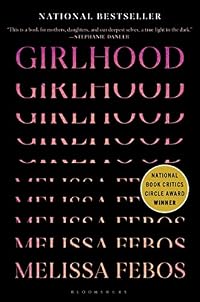
Girlhood
by Melissa Febos
On This Page
Description
National Book Critics Circle Award WinnerNational Bestseller
Lambda Literary Award Finalist
NAMED ONE OF THE BEST BOOKS OF THE YEAR BY TIME * NPR * The Washington Post * Kirkus Reviews * Washington Independent Review of Books * The Millions * Electric Literature * Ms Magazine * Entropy Magazine * Largehearted Boy * Passerbuys
"Irreverent and original." –New York Times
"Magisterial." –The New Yorker
"An intoxicating writer." –The Atlantic
"A classic!" –Mary Karr
"A true light in show more the dark." –Stephanie Danler
"An essential, heartbreaking project." –Carmen Maria Machado
A gripping set of stories about the forces that shape girls and the adults they become. A wise and brilliant guide to transforming the self and our society.
In her powerful new book, critically acclaimed author Melissa Febos examines the narratives women are told about what it means to be female and what it takes to free oneself from them.
When her body began to change at eleven years old, Febos understood immediately that her meaning to other people had changed with it. By her teens, she defined herself based on these perceptions and by the romantic relationships she threw herself into headlong. Over time, Febos increasingly questioned the stories she'd been told about herself and the habits and defenses she'd developed over years of trying to meet others' expectations. The values she and so many other women had learned in girlhood did not prioritize their personal safety, happiness, or freedom, and she set out to reframe those values and beliefs.
Blending investigative reporting, memoir, and scholarship, Febos charts how she and others like her have reimagined relationships and made room for the anger, grief, power, and pleasure women have long been taught to deny.
Written with Febos' characteristic precision, lyricism, and insight, Girlhood is a philosophical treatise, an anthem for women, and a searing study of the transitions into and away from girlhood, toward a chosen self.
. show less
Tags
Recommendations
















Member Reviews
Girlhood describes, with razor sharp accuracy, how it feels to inhabit a woman’s body, and how women must wield and protect this/their body in a culture dominated and driven by the patriarchy. This book is powerful, profound, incisive, raw, relevant and deeply resonant. Melissa Febos is my new favorite writer.
“All my violences might be seen this way: a descent, a rise, a sowing. If we sow them, every sacrifice becomes a harvest.”
“The body, it turns out, is an abacus that never forgets, even when our memories do.”
“Patriarchy colonizes our brains like a virus. Like a virus, patriarchy harms the systems that infects and relies on replication to survive. It flourishes in those who are not aware of its presence, and sometimes show more even in those actively working to expose it.” show less
“All my violences might be seen this way: a descent, a rise, a sowing. If we sow them, every sacrifice becomes a harvest.”
“The body, it turns out, is an abacus that never forgets, even when our memories do.”
“Patriarchy colonizes our brains like a virus. Like a virus, patriarchy harms the systems that infects and relies on replication to survive. It flourishes in those who are not aware of its presence, and sometimes show more even in those actively working to expose it.” show less
I received an advance copy from NetGalley in exchange for my honest review.
This book is a series of personal essays about the author's relationship to her body, and her body's relationship to the world around her. I am probably not putting that right, but it was the most pithy way I could think to say it. I had to regroup after I started reading, because I was expecting something lighter. The essays are academically rigorous and often relate to the literature and philosophy of feminism, which I know way too little about. But the experience of being an American girl and then an American woman, of rejecting one's own body even though it's wrong and self-defeating, of suppressing one's own feelings and needs to prevent embarrassing a man show more with rejection, of feeling afraid of sexual assault... all of that is in this book, and in me too. It took me to some dark places, but the writing is beautiful, and I am better for having read it. There are some gorgeous illustrations on the chapter title pages, too. I am going to seek out more work by the author. show less
This book is a series of personal essays about the author's relationship to her body, and her body's relationship to the world around her. I am probably not putting that right, but it was the most pithy way I could think to say it. I had to regroup after I started reading, because I was expecting something lighter. The essays are academically rigorous and often relate to the literature and philosophy of feminism, which I know way too little about. But the experience of being an American girl and then an American woman, of rejecting one's own body even though it's wrong and self-defeating, of suppressing one's own feelings and needs to prevent embarrassing a man show more with rejection, of feeling afraid of sexual assault... all of that is in this book, and in me too. It took me to some dark places, but the writing is beautiful, and I am better for having read it. There are some gorgeous illustrations on the chapter title pages, too. I am going to seek out more work by the author. show less
It always annoys me when I read a review of a memoir and people complain because it is too self-involved. It's a memoir, it is by definition a book that involves the excavation and display of oneself. All that said, though this both is and is not a memoir, I am about to say something similar, but in my defense I will explain why this was an issue for me.
Febos is smart, a superb writer, and has interesting observations about how women are socialized to expect/allow unwanted attention/scrutiny/contact, how we are taught to do everything possible even if putting ourselves at risk, to keep men feeling good. This is a subject of great interest to me, something I am trying to cure myself of now that I am an old lady and it has far less show more negative impact (but better late than never.) Febos tells stories from her life and the lives of her friends that illustrate her theses. The most resonant to me, because it has happened to me and it shaped me, are the stories of women who apologize to the men who touch them without consent, whether some handsy finance bro at a bar or a rapist, for not having consented. It is a pretty common story. She makes solid points here about the shamelessness of men in everyday interaction, the expectations that women will accept, or even crave, whistles and gropes and peeping through windows, and sex when unconscious. They have no shame in part because most of the women in their lives have likely been reassuring them that its okay, and apologizing for making them do it. When I was young I cannot count the number of times I moved away from men who touched me and got a response along the lines of "hey, if you didn't look so hot I would have been able to control myself." Is that supposed to flatter me? It sounds ridiculous but even typing that makes me feel uncomfortable and a little disgusting many years after that stopped. And still I usually smiled like it was flattering and thanked them. Worse still were the many times that happened when I was with a guy and when he walked up the commenter said something like "sorry man, I didn't know she was taken." This conviction that women have no sovereignty, that they are there for the touching and comments, that they are there for the plucking unless another man has claimed ownership is horrifying, but it is also convincing -- I believed it in my marrow. There is a reason that other than for about 7 months after I was raped I had a boyfriend or a husband all-the-time from the ages of 13-42. I felt at sea and a little frightened if I did not have a man. That makes me sad to consider now, and that is the dynamic Febos is analyzing and talking about here. So why only a 3.5? A couple things.
I know this is cultural criticism so the rules of academic citation don't apply, but Febos takes her experience and the experiences of four friends sitting in her Bushwick (I assume) living room and pronounces universal truths from that. I don't need footnotes or citation to academic journals, but I need some foundation other than "Melissa believes and asserts unequivocally" to accept her arguments. As I detailed above, a lot of what she says I believe because of my lived experience, it is true because it happened to me. BUT, this is not primarily intended as memoir, and for cultural commentary there has to be more than, this is what happened to me or Melissa or a select group of our friends. I cannot assume that it defines the experience of most people based on the fact that Melissa and our friends and I all have seen it. And more than that, someone reading this who does not have the lived experience (like, for instance men, who have the most to gain from her shining the light on this dynamic) could not possibly be persuaded from pronouncements without support. From those pronouncements the readers knows it is a cultural dynamic that occurs, not THE cultural dynamic that defines a statistically significant portion of the interactions between men and women. It might be, I think it is, but I need more than what she is giving me in order to accept that and in order to convince others to shift their behaviors.
Another major issue was that for all that resonated with me here, a lot was wholly unrelatable. If this is intended as pure memoir, that is fine and good. I want to read memoirs by people with different life experiences than I have. It helps me understand the world. But if you are writing cultural criticism, and opining on the ways in which the culture reinforces norms that are injurious to a large group (in this case at least 51% of the population) and if you are using your life experience as the support (often the sole support) for your criticism, your experience has to feel relatable to people. My GR friend Alisa said reading this was like when people bought The Step for their cardio, but ended up sitting on it and watching aerobics videos. I totally agree. Cultural criticism, to be effective, needs to nudge the reader into seeing the world through a slightly different lens. That is the point, to start a new conversation by getting us to see things that have become part of the wallpaper and then to question them, not to gawk. If what I am seeing is not relatable through experience or observation there is nothing to work with. Many of the things that make Febos interesting are the same things that make her unrelatable. She was raised essentially feral, with no understanding of how to live in the society she needed to navigate or to protect herself, and as a result was an outcast from the day she started school. Not surprisingly she looked for validation through sex, became known as the school slut, and left home as a teenager. More surprisingly she became a smack addict and a dominatrix and a woman who happily had a lot of sex with men and women and was able to maintain. Despite the drug use, she attended college, got her work done at her hipster alt-publishing job, and traveled to Europe. Eventually she realized she was really smart and had something to say, and also that she identified as a lesbian and wanted a committed relationship. She got clean and ended up as a tenure track professor at one of the best writing programs in the world and married to a woman who teaches poetry at the same institution and seems a strong support. Happy ending, great stuff, but not really filled with relatable life experience for most of us. So again, as memoir this was interesting, and even instructive and broadening, but as cultural criticism? I didn't really know what to do with most of this. I felt like I was sitting on The Step watching it. (On that subject, the essay about the "cuddle parties" was one of the most uncomfortable things I can remember reading, and also one of the saddest. How do we live in a world were people are that lonely and where people feel that a search for connection, warmth and comfort can be satisfied in such a transactional way?)
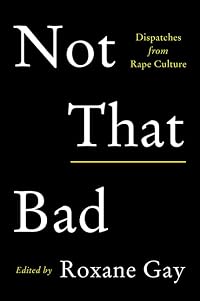
As I said above, this was a 3.5 for me. I am glad I read it, I want to read more from Melissa Febos, and I have people I would happily recommend this to (Kierstyn and Anita, I am looking at you!) It is interesting for sure, and she raises some issues I think are wise and important. I can draw a lot of lines between this and Not That Bad: Dispatches from Rape Culture which worked better for me. They make good companions. show less
Febos is smart, a superb writer, and has interesting observations about how women are socialized to expect/allow unwanted attention/scrutiny/contact, how we are taught to do everything possible even if putting ourselves at risk, to keep men feeling good. This is a subject of great interest to me, something I am trying to cure myself of now that I am an old lady and it has far less show more negative impact (but better late than never.) Febos tells stories from her life and the lives of her friends that illustrate her theses. The most resonant to me, because it has happened to me and it shaped me, are the stories of women who apologize to the men who touch them without consent, whether some handsy finance bro at a bar or a rapist, for not having consented. It is a pretty common story. She makes solid points here about the shamelessness of men in everyday interaction, the expectations that women will accept, or even crave, whistles and gropes and peeping through windows, and sex when unconscious. They have no shame in part because most of the women in their lives have likely been reassuring them that its okay, and apologizing for making them do it. When I was young I cannot count the number of times I moved away from men who touched me and got a response along the lines of "hey, if you didn't look so hot I would have been able to control myself." Is that supposed to flatter me? It sounds ridiculous but even typing that makes me feel uncomfortable and a little disgusting many years after that stopped. And still I usually smiled like it was flattering and thanked them. Worse still were the many times that happened when I was with a guy and when he walked up the commenter said something like "sorry man, I didn't know she was taken." This conviction that women have no sovereignty, that they are there for the touching and comments, that they are there for the plucking unless another man has claimed ownership is horrifying, but it is also convincing -- I believed it in my marrow. There is a reason that other than for about 7 months after I was raped I had a boyfriend or a husband all-the-time from the ages of 13-42. I felt at sea and a little frightened if I did not have a man. That makes me sad to consider now, and that is the dynamic Febos is analyzing and talking about here. So why only a 3.5? A couple things.
I know this is cultural criticism so the rules of academic citation don't apply, but Febos takes her experience and the experiences of four friends sitting in her Bushwick (I assume) living room and pronounces universal truths from that. I don't need footnotes or citation to academic journals, but I need some foundation other than "Melissa believes and asserts unequivocally" to accept her arguments. As I detailed above, a lot of what she says I believe because of my lived experience, it is true because it happened to me. BUT, this is not primarily intended as memoir, and for cultural commentary there has to be more than, this is what happened to me or Melissa or a select group of our friends. I cannot assume that it defines the experience of most people based on the fact that Melissa and our friends and I all have seen it. And more than that, someone reading this who does not have the lived experience (like, for instance men, who have the most to gain from her shining the light on this dynamic) could not possibly be persuaded from pronouncements without support. From those pronouncements the readers knows it is a cultural dynamic that occurs, not THE cultural dynamic that defines a statistically significant portion of the interactions between men and women. It might be, I think it is, but I need more than what she is giving me in order to accept that and in order to convince others to shift their behaviors.
Another major issue was that for all that resonated with me here, a lot was wholly unrelatable. If this is intended as pure memoir, that is fine and good. I want to read memoirs by people with different life experiences than I have. It helps me understand the world. But if you are writing cultural criticism, and opining on the ways in which the culture reinforces norms that are injurious to a large group (in this case at least 51% of the population) and if you are using your life experience as the support (often the sole support) for your criticism, your experience has to feel relatable to people. My GR friend Alisa said reading this was like when people bought The Step for their cardio, but ended up sitting on it and watching aerobics videos. I totally agree. Cultural criticism, to be effective, needs to nudge the reader into seeing the world through a slightly different lens. That is the point, to start a new conversation by getting us to see things that have become part of the wallpaper and then to question them, not to gawk. If what I am seeing is not relatable through experience or observation there is nothing to work with. Many of the things that make Febos interesting are the same things that make her unrelatable. She was raised essentially feral, with no understanding of how to live in the society she needed to navigate or to protect herself, and as a result was an outcast from the day she started school. Not surprisingly she looked for validation through sex, became known as the school slut, and left home as a teenager. More surprisingly she became a smack addict and a dominatrix and a woman who happily had a lot of sex with men and women and was able to maintain. Despite the drug use, she attended college, got her work done at her hipster alt-publishing job, and traveled to Europe. Eventually she realized she was really smart and had something to say, and also that she identified as a lesbian and wanted a committed relationship. She got clean and ended up as a tenure track professor at one of the best writing programs in the world and married to a woman who teaches poetry at the same institution and seems a strong support. Happy ending, great stuff, but not really filled with relatable life experience for most of us. So again, as memoir this was interesting, and even instructive and broadening, but as cultural criticism? I didn't really know what to do with most of this. I felt like I was sitting on The Step watching it. (On that subject, the essay about the "cuddle parties" was one of the most uncomfortable things I can remember reading, and also one of the saddest. How do we live in a world were people are that lonely and where people feel that a search for connection, warmth and comfort can be satisfied in such a transactional way?)
As I said above, this was a 3.5 for me. I am glad I read it, I want to read more from Melissa Febos, and I have people I would happily recommend this to (Kierstyn and Anita, I am looking at you!) It is interesting for sure, and she raises some issues I think are wise and important. I can draw a lot of lines between this and Not That Bad: Dispatches from Rape Culture which worked better for me. They make good companions. show less
It was excellently written but filled me with sorrow. I needed an antidote to patriarchy, to girls losing agency over their own bodies and selves, to men who ignore boundaries and consent, who annihilate women because an alternative doesn’t occur to them. Played some Jamila Woods as a countermeasure:
“Permission denied to rearrange me
I am the Kingdom, I am not your Queen”
“Permission denied to rearrange me
I am the Kingdom, I am not your Queen”
For the first quarter, I felt like I was paddling upstream against the oblique language and tone shifts. The balance of the academic, the anecdotal, and the poetic was off in the first few essays, but by the midpoint with the illuminating essay on stalking and voyeurism the writing improved or I finally clicked into its groove due to the more interesting subject matter. The remaining essays about consent and addiction were just as strong and kept me eager to return to the book.
Since the essays are relatively independent, if you are having trouble getting into the book also, try skipping ahead to the good stuff.
Since the essays are relatively independent, if you are having trouble getting into the book also, try skipping ahead to the good stuff.
A very well written and thoughtful set of essays about a pro domme, who was an early bloomer and took decades to recover from being sexually mistreated by males and emotionally mistreated by females. Then she became a sex worker (dominatrix), which helped her gain control over who was in charge, but still this failed to really address her deep psychological issues, which she managed to finally conquer with unwavering love and compassion from her female companion/wife. This book helped me gain a better understanding about what it means to be a woman in a world where they have many roles and responsibilities, some of which are more societal expectations than necessary life constraints.
Melissa Febos transfixed me at times, educated and enlightened me the entire time. Learning through essays of the pains, fears & damage of women who, as girls, were traumatized as a result of being girls was shockingly eye-opening and deeply disturbing.
Members
- Recently Added By
Published Reviews
Melissa Febos' third book of nonfiction, Girlhood, takes the task of looking backward seriously. Although most of the essays dip into the author's adult life as well, they keep trying to find the child and teenager that she was — how she learned to be, feel, believe, and react.... One of the most powerful themes running throughout these essays is Febos' nuanced approach to the harms that we show more live with, both those perpetuated upon us and those we walk into with eyes wide open. Febos understands trauma "as an event that changes a person, or for which a person changes herself, in order to withstand — an event that redraws the psychic or emotional map in some lasting way that later proves inhibitive." ...Regardless how distinctly varied our childhoods and adolescences are, so many of us hate or distrust our bodies, have difficulty in saying no. By following Febos's distinct paths between the past and present, we might realize there's room to forge our own, and that we've just been handed a flashlight that helps illuminate the way. show less
added by Lemeritus
The book is a feminist testament to survival: years of dehumanizing sex with boys and men, harassment by women, being stalked, drug addiction and what she describes as “a growing certainty about the ways in which I have collaborated in the mistreatment of my own body.” ... In her author’s note, Febos writes that she has “found company in the stories of other women, and the revelation show more of all our ordinariness has itself been curative.” This solidarity puts “Girlhood” in a feminist canon that includes Febos’s idol, Adrienne Rich, and Maggie Nelson’s theory-minded masterpieces: smart, radical company, and not ordinary at all. show less
added by Lemeritus
Over the course of eight essays with poignant illustrations by Forsyth Harmon, Febos interrogates the strength, savvy and vulnerabilities of girlhood. Mining personal experience, cultural references, scientific studies and philosophical sources, her methodical yet kaleidoscopic arguments invoke Jacques Lacan, the mirror test, Edith Wharton, Wild America, intimacy, intrusion, Audre Lorde, show more addiction, Greek myths and the panopticon.... Febos left behind the cruel vagaries and fumbling predations of men and embraced being queer; “divested from the systems that benefited from my self-hatred,” she gained independence from the prurient accusations that might have silenced other women.... No longer holding herself responsible for what happened to her childish body, adolescent reputation and womanly psyche, Febos got free. To bear witness to her liberation is, as she writes, “terrifying and beautiful, like all my favorite journeys.” show less
added by Lemeritus
Lists


Author Information

5+ Works 1,223 Members
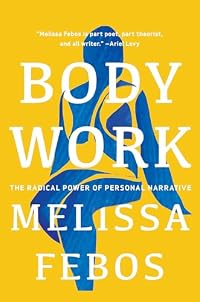
Melissa Febos is the author of the memoir Whip Smart, the essay collection Abandon Me, and a writing craft book, Body Work. She is the inaugural winner of the Jeanne Crdova Nonfiction Prize from Lambda Literary and the recipient of Fellowships from the National Endowment for the Arts, MacDowell, Bread Loaf, and others. Her essays have appeared in show more the Paris Review, the Believer, the New York Times, and elsewhere. She is an associate professor at the University of Iowa, where she teaches in the Nonfiction Writing Program. show less
Some Editions
Awards and Honors
Awards
Distinctions
Common Knowledge
- Alternate titles
- Girlhood: Essays
- Original publication date
- 2021
- People/Characters
- Melissa Febos; Donika Kelly; Robert Ballard; Jamaica Kincaid; Charles Darwin [Charles Robert: 1809-1882]; Gordon Gallup Jr. (show all 51); Cara Kulwicki; Tanaïs; Henri Wallon; Jacques Lacan; Thomas Fuchs; Olive Penderghast (of film "Easy A"); Lily Bart; Gus Trenor; Judy Trenor; Heinrich Kramer; Kimberlé Crenshaw; Sigrio Brauner; Eloise Brill; Marty Stouffer; Hecatoncheires; Cottus; Gyges of the Hecatoncheires; Briareus; Audre Lorde; Alfred Hitchcock; Tippi Hedren; James Ellroy; Walter Kirn; John Berger; Debra Gwartney; Lady Godiva; Peeping Tom; Demeter; Persephone; Hades; Harry Harlow; Reid Mihalko; Marcia Baczynski; Jessica Valenti; Jeannie Vanasco; Peggy Orenstein; Deborah Tolman; Sarah McClelland; Catherine Lacey; Jeremy Bentham; Michel Foucault; Judith Butler; Sandra Lee Bartky; Laura Mulvey; Elliot Rodgers
- Important places
- Massachusetts, USA; New York, New York, USA; Cassis, Provence-Alpes-Côte d'Azur, France; Paris, France
- Epigraph
- Destruction is thus always restoration -- that is, the destruction of a set of categories that introduce artificial divisions into an otherwise unifed ontology. - Judith Butler, Gender Trouble
To say: no person, trying to take responsibility for her or his identity, should have to be so alone. There must be those among whom we can sit down and weep, and still be counted as warriors. (I make up this strange, angry p... (show all)acket for you, threaded with love.) I think you thought there was no such place for you, and perhaps there was none then, and perhaps there is none now; but we will have to make it, we who want an end to suffering, who want to change the laws of history, if we are not to give ourselves away. - Adrienne Rich, "Sources" - Dedication
- For Mom, to whom I owe everything and from whom I heard all of it first
- First words
- Prologue: Scarification
1. First, the knees. They meet the gravel, the street, the blunt hips of curbs.
"What do you like?" the men would ask. "Spitting," I'd say. - Last words
- (Click to show. Warning: May contain spoilers.)When I go back, I can see the marks that girl made so long ago. I reach my hand through the water and touch their familiar shapes.
- Original language
- English
- Canonical DDC/MDS
- 818.603
- Canonical LCC
- PS3606.E26
- Disambiguation notice
- Contents: Author's Note -- Prologue: Scarification -- Kettle holes -- The mirror test -- Wild America -- Intrusions -- Thesmophoria -- Thank you for taking care of yourself -- Les calanques -- Acknowledgements -- Sources & Wo... (show all)rks Consulted
Classifications
Statistics
- Members
- 408
- Popularity
- 75,642
- Reviews
- 10
- Rating
- (4.08)
- Languages
- English, French, German
- Media
- Paper, Audiobook, Ebook
- ISBNs
- 9
- ASINs
- 2