On This Page
Description
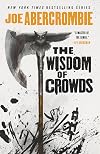
"Chaos. Fury. Destruction. The Great Change is upon us . . . Some say that to change the world you must first burn it down. Now that belief will be tested in the crucible of revolution: the Breakers and Burners have seized the levers of power, the smoke of riots has replaced the smog of industry, and all must submit to the wisdom of crowds. With nothing left to lose, Citizen Brock is determined to become a new hero for the new age, while Citizeness Savine must turn her talents from profit to show more survival before she can claw her way to redemption. Orso will find that when the world is turned upside down, no one is lower than a monarch. And in the bloody North, Rikke and her fragile Protectorate are running out of allies . . . while Black Calder gathers his forces and plots his vengeance. The banks have fallen, the sun of the Union has been torn down, and in the darkness behind the scenes, the threads of the Weaver's ruthless plan are slowly being drawn together . . "-- show lessTags
Recommendations



Member Reviews
For years, I think I had an overly simplistic, slippery-slope-relativism view of post-modernism in SF (meaning almost anything can be justified). Over the years, I've come to understand it's much more nuanced than that (Abercrombie and K. J. Parker made me realise that). I especially see the value in the "critique" part. Abercrombie and to some extent Parker construct their narratives with some semblance of a structure in order to be deconstructed. In this second volume there is an overarching theme of compassion, and Abercrombie achieves this without any hand-holding or plot? Ambitious! I love post-modernism/deconstruction (and in this case meta-modernism) and being explored in a fantasy series. I am personally fascinated by why a book show more resonates or doesn't resonate with an individual. As much as the author can try to control the narrative, individual readers bring their own background experiences and beliefs into the equation, which ultimately determines how the book is received. There is so much we can learn about ourselves and others through that process. I personally love it when an author like Abercrombie challenges my beliefs and attachment to certain paradigms.
I feel that Abercrombie's writing have a lot of postmodern influences, which he of course has acknowledged on several occasions. But I also feel like his works aren't postmodern per se, there are plenty of meta-modern aspect to the writing. In general I feel like the works are continuously in a dialogue between the modern and postmodern. I have often discussed this elsewhere but the best manner in which you can present themes of empowering issues around society, rights and justice is by taking the meta-modern approach this trilogy took. To my knowledge there are fewer writers or artists who take this approach, Hayao Miyazaki’s works come to mind and I think the Souls games from Hidetaka Miyazaki are also very good examples of a similar approach. Because this approach first shows social orders as they stand and by pure luck of which character you interact with, you are led to believe in the goodness or the evilness of the said social order. This is wonderfully highlighted in the series as our understanding of structures is made, then broken down and then remade in a different light. This trilogy as a whole is a very subtle commentary on how we as children become so easily socialised to believing into an inherent good of the society we have been born in. That the only reason we see structure A) as good and B) as bad, is purely because of the lottery of birth. The fact that “The Age of Madness” novels force us to take views from other vantage points makes us wrestle with contradictions of the same structures. And I love how one of the characters in the series essentially even motivates us to try and resolve these contradictions, calling consistent certainty of belief as abetting tyranny. I can write about this series forever.
SF = Speculative Fiction. show less
I feel that Abercrombie's writing have a lot of postmodern influences, which he of course has acknowledged on several occasions. But I also feel like his works aren't postmodern per se, there are plenty of meta-modern aspect to the writing. In general I feel like the works are continuously in a dialogue between the modern and postmodern. I have often discussed this elsewhere but the best manner in which you can present themes of empowering issues around society, rights and justice is by taking the meta-modern approach this trilogy took. To my knowledge there are fewer writers or artists who take this approach, Hayao Miyazaki’s works come to mind and I think the Souls games from Hidetaka Miyazaki are also very good examples of a similar approach. Because this approach first shows social orders as they stand and by pure luck of which character you interact with, you are led to believe in the goodness or the evilness of the said social order. This is wonderfully highlighted in the series as our understanding of structures is made, then broken down and then remade in a different light. This trilogy as a whole is a very subtle commentary on how we as children become so easily socialised to believing into an inherent good of the society we have been born in. That the only reason we see structure A) as good and B) as bad, is purely because of the lottery of birth. The fact that “The Age of Madness” novels force us to take views from other vantage points makes us wrestle with contradictions of the same structures. And I love how one of the characters in the series essentially even motivates us to try and resolve these contradictions, calling consistent certainty of belief as abetting tyranny. I can write about this series forever.
SF = Speculative Fiction. show less
I received this novel from Orbit Books, through NetGalley, in exchange for an honest review: my thanks to both of them for this opportunity.
Lord Grimdark did it again: with The Age of Madness he gave us a new, immersive trilogy set in the world of the First Law, and while he kept us all glued to the story with the two previous installment, he literally ended this narrative cycle with much, much more than a proverbial “bang” (or rather, a whole lot of them…).
The widespread turmoil on which the first two books in this series were focused, reaches here its bloody peak: previously, in Adua King Orso’s popularity was at its all-time low and the conspiracy mounted against him - led by his former friend and ally Leo dan Brock, together show more with Leo’s wife Savine dan Glokta - failed only thanks to a timely warning. What should have been the rebels’ decisive battle ended with Orso as the winner, Leo losing the gamble and some body parts, and he and a heavily pregnant Savine as prisoners in the city they hoped to rule. In the North, Rikke was sitting on her father’s chair, but still faced the encroaching armies of Black Calder and his brutal son Stour Nightfall, while trying to consolidate her power, forge new alliances and avoid constant betrayals.
As the final book opens, Orso has little time to enjoy his victory: after decades of bad, myopic management from the ruling council, the city of Adua is now a powder keg ready to explode, and explode it does in the throes of the Great Change - think of it as a bloodier, far scarier version of the French Revolution, complete with its own reign of Terror and mass executions carried out through worse means than the guillotine. Angry mobs sweep the city, destroying everything in their path, killing indiscriminately and taking the king prisoner, while Leo and Savine find themselves hailed as heroes. And in the North, Rikke seems on the verge of losing it all, as her allies dwindle and Black Calder keeps amassing a force capable of sweeping the land and crowning him as its sole ruler…
The above gives just the bare bones of the complex interweaving of narrative threads and character journeys that turn this novel into a compulsive - if often horrifying - read: there are many more POVs than the main ones I mentioned, and each one moves the story forward without overshadowing the others, reinforcing instead the perception of a building avalanche that moves inexorably toward its intended destination. Not that it’s easy to see what exactly this destination is, particularly once readers are faced with some massive revelations - like the big one toward the end - and a constant barrage of betrayals and treachery that is guaranteed to have your head spinning wildly.
The Wisdom of Crowds is mainly a study of the effects of long-suppressed rage at widespread injustice, and of what happens when exasperation’s fires are fed beyond their conflagration point: the wisdom in the title is used in a darkly sarcastic way, of course, because what we witness in the course of the Great Change is the total obliteration of any civilized rule and a plunge into the kind of collective madness that occurs when the baser animalistic instincts take the place of the oh-so-thin veneer of civilization draped over them.
As usual, Joe Abercrombie manages to seamlessly blend his peculiar brand of humor into the most appalling situations, managing to elicit a smile - or even a laugh - when least you expect it, while pointing out how far easier it is to destroy what does not work anymore than to find the means to build something better. We are treated to several scenes in which the new government spends inordinate amounts of time foolishly debating the wording of those changes without actually implementing any, while nearby the madwoman named Judge sends hundreds of people - guilty and innocents alike - to their death.
Such upheavals are of course bound to impart profound changes on the characters we have come to know, and it’s hardly surprising that some of them end up being quite different from the people they were at the beginning of the story. Savine is certainly a case in point: while she retains some of her former drive for power and self-preservation, her harrowing encounters with danger and death, and her recent motherhood, seem to have awakened her conscience, slightly tempering her ambition and making her more human. It’s not a complete turnover, of course, not given her established personality and the teachings imparted by her father Sand dan Glokta, but it’s a definite improvement over the ruthless socialite bent on profit at any cost that she was at the beginning.
King Orso and Leo dan Brock seem to exchange their respective roles here: the former was a reluctant ruler who preferred drinking and womanizing over learning the rules of kinghood, the latter was the highly praised warrior and hero with a bright destiny in his future. Events transform them profoundly, and where Orso becomes a true king in his captivity, submitting to it with humorous gallantry and ultimately showing a kind of subdued bravery that moved me deeply, Leo turns into an embittered, violence-prone individual more focused on the lost glories of the past than on the needs of the present.
A truly tragic figure is that of Gunnar Broad, the former soldier who keeps promising - to himself and his family - that he’s through with bloody violence: events keep proving him wrong and he finds himself constantly enmeshed in situations that force him to rely on his darker instincts. In a way he reminds me of the Bloody Nine, who strove to be a better man without ever managing to fulfill this vow.
I’ve left my favorite character for last: Rikke. As the daughter of the Dogman, all her life she’s been weighted down by her father’s legend and the need to prove herself, a girl, in the world of these Northern hard warriors - and by the heavy toll of her unpredictable precognitive ability. Here she comes into her own, successfully managing to balance the ruthless strength necessary to rule (“make your heart a stone”) with the desire to act for the best of her people. You will encounter many surprises along Rikke’s journey, together with the heartwarming relationships with her two closest advisors, the cunningly uncouth hill woman Isern-i-Phail and the grizzled Caul Shivers, who seems to have found some inner balance here, if confronted with the man I came to know in Best Served Cold.
Joe Abercrombie’s novels always prove such an immersive experience that it’s hard to move out of his world and return to reality: my only solace is represented by the standalone First Law books I have still to read and the implied promise of this one that the story is not over, that there are some still-hanging threads that might, one day, turn into other equally engrossing books. Time will tell… show less
Lord Grimdark did it again: with The Age of Madness he gave us a new, immersive trilogy set in the world of the First Law, and while he kept us all glued to the story with the two previous installment, he literally ended this narrative cycle with much, much more than a proverbial “bang” (or rather, a whole lot of them…).
The widespread turmoil on which the first two books in this series were focused, reaches here its bloody peak: previously, in Adua King Orso’s popularity was at its all-time low and the conspiracy mounted against him - led by his former friend and ally Leo dan Brock, together show more with Leo’s wife Savine dan Glokta - failed only thanks to a timely warning. What should have been the rebels’ decisive battle ended with Orso as the winner, Leo losing the gamble and some body parts, and he and a heavily pregnant Savine as prisoners in the city they hoped to rule. In the North, Rikke was sitting on her father’s chair, but still faced the encroaching armies of Black Calder and his brutal son Stour Nightfall, while trying to consolidate her power, forge new alliances and avoid constant betrayals.
As the final book opens, Orso has little time to enjoy his victory: after decades of bad, myopic management from the ruling council, the city of Adua is now a powder keg ready to explode, and explode it does in the throes of the Great Change - think of it as a bloodier, far scarier version of the French Revolution, complete with its own reign of Terror and mass executions carried out through worse means than the guillotine. Angry mobs sweep the city, destroying everything in their path, killing indiscriminately and taking the king prisoner, while Leo and Savine find themselves hailed as heroes. And in the North, Rikke seems on the verge of losing it all, as her allies dwindle and Black Calder keeps amassing a force capable of sweeping the land and crowning him as its sole ruler…
The above gives just the bare bones of the complex interweaving of narrative threads and character journeys that turn this novel into a compulsive - if often horrifying - read: there are many more POVs than the main ones I mentioned, and each one moves the story forward without overshadowing the others, reinforcing instead the perception of a building avalanche that moves inexorably toward its intended destination. Not that it’s easy to see what exactly this destination is, particularly once readers are faced with some massive revelations - like the big one toward the end - and a constant barrage of betrayals and treachery that is guaranteed to have your head spinning wildly.
The Wisdom of Crowds is mainly a study of the effects of long-suppressed rage at widespread injustice, and of what happens when exasperation’s fires are fed beyond their conflagration point: the wisdom in the title is used in a darkly sarcastic way, of course, because what we witness in the course of the Great Change is the total obliteration of any civilized rule and a plunge into the kind of collective madness that occurs when the baser animalistic instincts take the place of the oh-so-thin veneer of civilization draped over them.
As usual, Joe Abercrombie manages to seamlessly blend his peculiar brand of humor into the most appalling situations, managing to elicit a smile - or even a laugh - when least you expect it, while pointing out how far easier it is to destroy what does not work anymore than to find the means to build something better. We are treated to several scenes in which the new government spends inordinate amounts of time foolishly debating the wording of those changes without actually implementing any, while nearby the madwoman named Judge sends hundreds of people - guilty and innocents alike - to their death.
Such upheavals are of course bound to impart profound changes on the characters we have come to know, and it’s hardly surprising that some of them end up being quite different from the people they were at the beginning of the story. Savine is certainly a case in point: while she retains some of her former drive for power and self-preservation, her harrowing encounters with danger and death, and her recent motherhood, seem to have awakened her conscience, slightly tempering her ambition and making her more human. It’s not a complete turnover, of course, not given her established personality and the teachings imparted by her father Sand dan Glokta, but it’s a definite improvement over the ruthless socialite bent on profit at any cost that she was at the beginning.
King Orso and Leo dan Brock seem to exchange their respective roles here: the former was a reluctant ruler who preferred drinking and womanizing over learning the rules of kinghood, the latter was the highly praised warrior and hero with a bright destiny in his future. Events transform them profoundly, and where Orso becomes a true king in his captivity, submitting to it with humorous gallantry and ultimately showing a kind of subdued bravery that moved me deeply, Leo turns into an embittered, violence-prone individual more focused on the lost glories of the past than on the needs of the present.
A truly tragic figure is that of Gunnar Broad, the former soldier who keeps promising - to himself and his family - that he’s through with bloody violence: events keep proving him wrong and he finds himself constantly enmeshed in situations that force him to rely on his darker instincts. In a way he reminds me of the Bloody Nine, who strove to be a better man without ever managing to fulfill this vow.
I’ve left my favorite character for last: Rikke. As the daughter of the Dogman, all her life she’s been weighted down by her father’s legend and the need to prove herself, a girl, in the world of these Northern hard warriors - and by the heavy toll of her unpredictable precognitive ability. Here she comes into her own, successfully managing to balance the ruthless strength necessary to rule (“make your heart a stone”) with the desire to act for the best of her people. You will encounter many surprises along Rikke’s journey, together with the heartwarming relationships with her two closest advisors, the cunningly uncouth hill woman Isern-i-Phail and the grizzled Caul Shivers, who seems to have found some inner balance here, if confronted with the man I came to know in Best Served Cold.
Joe Abercrombie’s novels always prove such an immersive experience that it’s hard to move out of his world and return to reality: my only solace is represented by the standalone First Law books I have still to read and the implied promise of this one that the story is not over, that there are some still-hanging threads that might, one day, turn into other equally engrossing books. Time will tell… show less
Another masterpiece by Joe Abercrombie. At the end of book two, I was breathless, and couldn't wait for a second more to get into the third book. The plot twist was so unexpected I needed to know more. And yet, the plot twist in this third book is mindblowing. If I had read all books with more attention to details instead of devouring them, I might have seen them coming, but I didn't. I think there's a hint waved in front of the reader's eye at the beginning of the first book, but it's there only to remind us about it in the end.
If something, this trilogy is even better than the first one, minus Sand dan Glokta. I missed his constant presence. I mean, he's in these books as well, but only as a ... let's say a spectator (ha). But it was show more great to read about his 'daughter'. So much like him even if she doesn't have his genes. A father in all that matters, for sure. There's more room for female leading roles. Despite what lots of people tell, writing characters of another gender isn't easy. Savine, Rike, and all the other female characters are perfect, in their dramatic imperfections.
Sex scenes don't feel imposed on the reader like in the previous trilogy, where there's one all of a sudden, and it's not even pleasant to read. It felt like it was there because sex is mainstream and sells. didn't like that. There were also endless combat scenes in Logen's timeline. Didn't miss him in this trilogy.
Anyhow, after reading the last chapter of this book, I have a feeling another trilogy is coming, and I can barely wait. show less
If something, this trilogy is even better than the first one, minus Sand dan Glokta. I missed his constant presence. I mean, he's in these books as well, but only as a ... let's say a spectator (ha). But it was show more great to read about his 'daughter'. So much like him even if she doesn't have his genes. A father in all that matters, for sure. There's more room for female leading roles. Despite what lots of people tell, writing characters of another gender isn't easy. Savine, Rike, and all the other female characters are perfect, in their dramatic imperfections.
Sex scenes don't feel imposed on the reader like in the previous trilogy, where there's one all of a sudden, and it's not even pleasant to read. It felt like it was there because sex is mainstream and sells. didn't like that. There were also endless combat scenes in Logen's timeline. Didn't miss him in this trilogy.
Anyhow, after reading the last chapter of this book, I have a feeling another trilogy is coming, and I can barely wait. show less
Difficult series to review, as it's both very enjoyable, but feels completely lacking direction. The Age of Madness spent about 1500 pages setting up and executing a french revolution, second guessing at stringpullers behind the scenes, for it all to be revealed just a handful of pages before the end to all have been a plot against Sir Not-appearing-in-this-series, with the consequences of everything that's happened set dangling in a dozen pages of vague prophecies at the end, teasing the next trilogy.
Now GRRM might never finish ASOIAF, but the books have a very clear idea of where the slow moving train crash is going to happen, who the main parties are, their stories and motivations dissected in depth. The principal movers in show more Abercrombie's universe are after this series not illuminated in the slightest, and while they featured heavily in the previous trilogy, large parts of the ultimate goals and motivations remain a mystery.
It doesn't feel so much as time wasted, because the books are a well written entertaining read, but the burning need to find out what's really going on with the big fantasy elements gets a wet cloth thrown over it when even the author doesn't seem too concerned about it. show less
Now GRRM might never finish ASOIAF, but the books have a very clear idea of where the slow moving train crash is going to happen, who the main parties are, their stories and motivations dissected in depth. The principal movers in show more Abercrombie's universe are after this series not illuminated in the slightest, and while they featured heavily in the previous trilogy, large parts of the ultimate goals and motivations remain a mystery.
It doesn't feel so much as time wasted, because the books are a well written entertaining read, but the burning need to find out what's really going on with the big fantasy elements gets a wet cloth thrown over it when even the author doesn't seem too concerned about it. show less
Loved this! Of course, once you've gotten to the tenth book by an author set in his fictional world, what else are you gonna tell yourself? But for wow, what a ride. I burned through this in 3 1/2 days. Might have been faster but I forced myself to stop after key moments to let everything just sink in. Sometimes you have to let things breathe a bit, you know?
Truly amazed at how I can go from loving characters to feeling the utmost pity for them and then sliding into almost hating them by the end, while others travel the same road but in the opposite direction.
**I actually listened to the audio version of this but GR annoyingly doesn't have that edition properly added so whatever. I keep track of and make notes on what I read pretty show more much just for me. It's not like anyone is fact-checking what I write here or turning to my reviews to decide what to read next** show less
Truly amazed at how I can go from loving characters to feeling the utmost pity for them and then sliding into almost hating them by the end, while others travel the same road but in the opposite direction.
**I actually listened to the audio version of this but GR annoyingly doesn't have that edition properly added so whatever. I keep track of and make notes on what I read pretty show more much just for me. It's not like anyone is fact-checking what I write here or turning to my reviews to decide what to read next** show less
Terrific conclusion. I was wary about where the story would go, but there's just as much teeth, twists and turns as The Trouble With Peace. Some genuinely shocking moments perfectly complement some great character arcs. I went from hating a few characters early in the series to loving them and vice versa. Really excited to see that there is obviously more to come in the First Law world. I'd eagerly read another trilogy.
I really liked this trilogy. Comparable even to the first trilogy which is really saying something. The only thing that I didn't really care for too much was the transition into the Great Change, but once I settled into it then I became very engaged again. I found Savine's character arc (or potentially lack thereof) to be interesting and an anti-trope, while Orso's arc, and [[SPOILERS]] death [[END SPOILERS]] was more impactful than I thought it would be.
Members
- Recently Added By
Lists

Plan to Listen Audiobooks
63 works; 1 member

Anticipated SFF 2021
86 works; 3 members

Books Read in 2021
5,361 works; 113 members

Recommend Fantasy Books
100 works; 1 member

Books Read in 2025
4,091 works; 97 members
Author Information

91+ Works 40,705 Members
Joe Abercrombie is a freelance film editor, working mostly on documentaries and live music events. He lives and works in London. The First Law is his debut series. He won a Locus Award 2015 for science-fiction in the Young Adult Book Category with his title Half a King. (Bowker Author Biography)
Awards and Honors
Series


Common Knowledge
- Canonical title
- The Wisdom of Crowds
- Original publication date
- 2021-09-14
- Dedication
- For Lou,
With grim, dark
hugs - First words
- "You know something, Tunny?"
- Last words
- (Click to show. Warning: May contain spoilers.)"Nothing," she said. "All good."
- Blurbers
- Grossman, Lev; Brown, Pierce; Hobb, Robin; Hill, Joe; McClellan, Brian
Classifications
Statistics
- Members
- 923
- Popularity
- 28,947
- Reviews
- 18
- Rating
- (4.36)
- Languages
- 5 — English, Greek, Italian, Polish, Spanish
- Media
- Paper, Audiobook, Ebook
- ISBNs
- 26
- ASINs
- 8