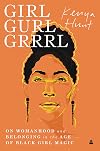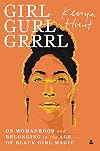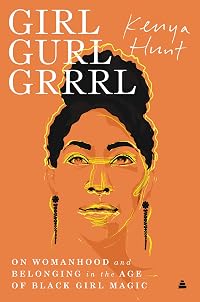
Girl Gurl Grrrl: On Womanhood and Belonging in the Age of Black Girl Magic
by Kenya Hunt
On This Page
Description
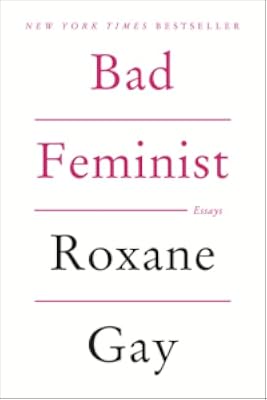
In the vein of Roxane Gay's Bad Feminist and Issa Rae's The Misadventures of Awkward Black Girl, but wholly its own, a provocative, humorous, and, at times, heartbreaking collection of essays on what it means to be black, a woman, a mother, and a global citizen in today's ever-changing world. Black women have never been more visible or more publicly celebrated. But for every new milestone, every magazine cover, every box office record smashed, every new face elected to public office, the show more reality of everyday life for black women remains a complex, conflicted, contradiction-laden experience. An American journalist who has been living and working in London for a decade, Kenya Hunt has made a career of distilling moments, movements, and cultural moods into words. Her work takes the difficult and the indefinable and makes it accessible, it is razor sharp cultural observation threaded through evocative and relatable stories. Girl both illuminates our current cultural moment and transcends it. Hunt captures the zeitgeist while also creating a timeless celebration of womanhood, of blackness, and the possibilities they both contain. She blends the popular and the personal, the frivolous and the momentous in a collection that truly reflects what it is to be living and thriving as a black woman today. show lessTags
Recommendations





Member Reviews
Girl Gurl Grrrl: On Womanhood and Belonging in the Age of Black Girl Magic by Kenya Hunt is a case of the whole being greater than the sum of its parts. And make no mistake, the parts are very good.
I'll try to explain what I mean by that comment. Like any collection of essays (of which a few are written by others) there will be some that are stronger than others or speak to the reader more. This is no different, though there wasn't, for me, any bad or even borderline essay, just some that spoke to me more while reading than others. I phrased that last part the way I did intentionally. How we read it, what it stirs or doesn't stir, is largely a function of what the reader brings and the writer's style. What I find, especially in a show more collection that speaks to current events and social justice, is that how it sticks with me is more important than how I felt while reading it. And that is where I think this book excels and also why I consider the whole (the reading and the impact after reading) is greater than the sum of its parts (the collection of essays).
I am not a woman and while I have some indigenous heritage I have essentially lived as a white, so anything I could somewhat relate to was either through a "similar to..." type exercise or remembering a friend mentioning something similar about how they feel or what they experienced. So I am not the target audience even though I imagine that I am the type of reader that can learn the most from the book. And learn I did even if it was/is at times uncomfortable (as it should be) and on a couple of occasions talking with friends who can more easily relate and asking questions (yeah, some of them were stupid questions, but they usually elicited the best answers).
I highly recommend this to readers who can either directly relate or want to better understand our current political and cultural environment. These should be read not just with an open mind but while bracketing one's preconceived ideas and privileges. Read to understand, not argue or refute. You shouldn't be doing those things before understanding anyway or you're just debating your own strawmen.
Reviewed from a copy made available by the publisher via NetGalley. show less
I'll try to explain what I mean by that comment. Like any collection of essays (of which a few are written by others) there will be some that are stronger than others or speak to the reader more. This is no different, though there wasn't, for me, any bad or even borderline essay, just some that spoke to me more while reading than others. I phrased that last part the way I did intentionally. How we read it, what it stirs or doesn't stir, is largely a function of what the reader brings and the writer's style. What I find, especially in a show more collection that speaks to current events and social justice, is that how it sticks with me is more important than how I felt while reading it. And that is where I think this book excels and also why I consider the whole (the reading and the impact after reading) is greater than the sum of its parts (the collection of essays).
I am not a woman and while I have some indigenous heritage I have essentially lived as a white, so anything I could somewhat relate to was either through a "similar to..." type exercise or remembering a friend mentioning something similar about how they feel or what they experienced. So I am not the target audience even though I imagine that I am the type of reader that can learn the most from the book. And learn I did even if it was/is at times uncomfortable (as it should be) and on a couple of occasions talking with friends who can more easily relate and asking questions (yeah, some of them were stupid questions, but they usually elicited the best answers).
I highly recommend this to readers who can either directly relate or want to better understand our current political and cultural environment. These should be read not just with an open mind but while bracketing one's preconceived ideas and privileges. Read to understand, not argue or refute. You shouldn't be doing those things before understanding anyway or you're just debating your own strawmen.
Reviewed from a copy made available by the publisher via NetGalley. show less
It was definitely a really powerful collection. I agree with other reviewers that a lot of it felt like stuff I read in other books but rehashed in a somewhat less eloquent way. That said, there was a lot of value in her personal experiences.
I especially liked the essay on "Black Girl Magic," how the phrase started out celebrating everyday lives, and how the author is reclaiming the phrase and using it that way again.
This is one of those books that isn't for me to give a rating to. I enjoyed it, I found it informative, and I hope individuals who have had similar experiences to the ones depicted in the book feel that it is an accurate representation of their experiences.
There's not a collection of essays that I won't find value in, and as difficult and heartbreaking as many of these stories were to read, they were valuable.
Worth the read, but don't take it from me. Just read the book.
There's not a collection of essays that I won't find value in, and as difficult and heartbreaking as many of these stories were to read, they were valuable.
Worth the read, but don't take it from me. Just read the book.
Ratings
Members
- Recently Added By
Lists

BLM
210 works; 1 member
Author Information

1 Work 83 Members
Awards and Honors
Distinctions
Common Knowledge
- Original publication date
- 2020-11-12
Classifications
- Genres
- Nonfiction, Sexuality and Gender Studies, General Nonfiction, Biography & Memoir
- DDC/MDS
- 305.48 — Society, government, & culture Social sciences, sociology & anthropology Social group - Age, Gender, Ethnicity Women Specific groups of women
- LCC
- HQ1163 .H86 — Social sciences The family. Marriage, Women and Sexuality The Family. Marriage. Women Women. Feminism
- BISAC
Statistics
- Members
- 83
- Popularity
- 384,070
- Reviews
- 4
- Rating
- (3.93)
- Languages
- English
- Media
- Paper, Audiobook, Ebook
- ISBNs
- 11
- ASINs
- 3