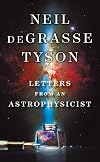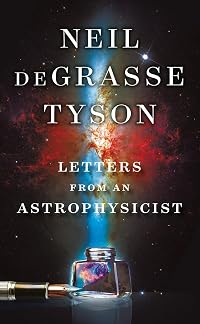
Letters from an Astrophysicist
by Neil deGrasse Tyson
On This Page
Description
Tyson shares 101 letters from people across the globe who have sought him out in search of scientific answers. A luminous companion to the phenomenal bestseller Astrophysics for People in a Hurry. Astrophysicist Neil deGrasse Tyson has attracted one of the world's largest online followings with his fascinating, widely accessible insights into science and our universe. Now, Tyson invites us to go behind the scenes of his public fame by revealing his correspondence with people across the globe show more who have sought him out in search of answers. In this hand-picked collection of 101 letters, Tyson draws upon cosmic perspectives to address a vast array of questions about science, faith, philosophy, life, and of course, Pluto. His succinct, opinionated, passionate, and often funny responses reflect his popularity and standing as a leading educator. Tyson's 2017 bestseller Astrophysics for People in a Hurry offered more than one million readers an insightful and accessible understanding of the universe. Tyson's most candid and heartfelt writing yet, Letters from an Astrophysicist introduces us to a newly personal dimension of Tyson's quest to explore our place in the cosmos. show lessTags
Recommendations








Member Reviews
Letters from an Astrophysicist is a collection of letters and replies from Neil deGrasse Tyson to his fans and other inquirers, collected over a span of more than two decades. The topics range across science, religion, philosophy, politics, ethics, education, and more, with Tyson doing his best to impart his cosmic wisdom to his often ill-informed interrogators.
You might ask what benefits can be derived from reading this collection of letters, rather than reading Tyson’s other works or watching his videos or podcasts. I think there are three:
1. Using the examples as a crash course in the art of letter writing for the purpose of being able to express your thoughts more clearly and concisely.
2. Learning how to answer a series of show more stupid questions with patience and understanding while cultivating a skeptical mindset in your audience.
3. Understanding the approach of a scientist and educator whose primary goal is the education of the public.
I used to think that Tyson was overly evasive when it came to questions of god and religion and that his reticence to take a stand on political and religious topics was timid and non-confrontational (especially in comparison to someone like Richard Dawkins).
While I still feel that there is a need for people like Richard Dawkins and Christopher Hitchens, I’ve since come to appreciate Tyson’s very different but still admirable approach. Tyson doesn’t want to shove his beliefs down your throat, unless you ask. He’s not interested in converting you to atheism or anything else, or telling you which politician to vote for. He wants to give you the facts, to tell you how to reason appropriately and think responsibly, so that whatever conclusions you come to you’ve come to on your own. Tyson’s only real agenda appears to be the fostering of independent thinking skills in his audience.
As for the letters themselves, they are mostly edifying and often amusing. You may find yourself disagreeing with his approach on some topics, but his replies are typically well-thought out and researched. The letters to Tyson, however, can be monotonous and at times terrifically stupid (one person insists that they’ve found the secret to building a perpetual motion machine while another insists that Tyson should take Big Foot more seriously).
Tyson’s replies seem to boil down to a few principles that are repeated over and over. Here are the primary ones:
- A little bit of education is dangerous. People often know enough about a topic to think they’re right about some theory, but not enough about the topic to know they’re wrong. If you think you can build a perpetual motion machine, for instance, don’t bother Neil deGrasse Tyson; build the machine, submit your discoveries to peer-reviewed science, and win the nobel prize. More than likely, though, you’re just wrong; remember, education is largely the discovery of how little you actually know.
- The argument from ignorance underlies all superstitions and conspiracy theories. As Tyson said regarding the claim that UFOs are alien spacecraft, “Once you confess to not knowing what you are looking at, no logical line of reasoning allows you to then declare that you know what you are looking at.” The “U” in UFO stands for “unidentified,” and just because you can’t identify it doesn’t automatically make it an alien spacecraft. Similarly, that you can’t understand how the universe came into existence doesn’t mean that “God did it.”
- Eyewitness testimony is the least reliable evidence. Scientists and psychologists know that eyewitness testimony is the least reliable type of evidence available, especially when the event in question is several years old and reliant upon an also unreliable memory. All accounts of “supernatural” phenomena rely exclusively on this type of evidence, so if you’ve experienced something you can’t explain, for example, you should ask yourself whether it’s more likely that you’ve witnessed a suspension of the laws of physics or that you’re simply mistaken. Remember, the gold standard of science is peer-reviewed controlled experiment, to which no supernatural claims have ever held up.
- The belief in extrasensory perception has a basic psychological explanation. Fortune tellers and psychics are compelling to people because people tend to remember the hits and not the misses. Take the example of prophetic dreams. You have multiple dreams every night regarding events that never transpire, which you quickly forget. But the one dream you have regarding an event that comes true—among thousands of meaningless dreams—will be the one you remember and use as “proof” of your prophetic powers, when it’s statistically guaranteed that you will eventually dream of something that actually happens.
- Those who are determined to be offended always will be. There is nothing worse than someone who overreacts to an edgy joke. Every time Tyson Tweets something mildly controversial he gets bombarded by people who are destined to take offense on behalf of themselves or others or the country. We should all lighten up, not be so sensitive, and find something better to do with our time than police the internet for offensive material.
- Epistemologically, religion is the enemy of science. While Tyson is more conciliatory when it comes to religion than others (perhaps too much so?), he understands that the discovery of truths via revelation, miracles, or faith—all unreliable methods subject to the whims of the individual— is the antithesis of the epistemological approach of science based on observation, experiment, and logical analysis.
- The search for meaning outside of yourself is misguided. A number of questions fielded by Tyson revolve around the meaning and purpose of life and the belief in a higher power, whatever that phrase is supposed to mean. As Tyson said, regarding the question as to why we are all here: “I never think much about ‘why.’ Why implies a purpose set by external forces. I have always felt that purpose is not defined outside of ourselves, but from deep within. My purpose in life is to lessen the suffering of others; advance our understanding of the universe; and enlighten others along the way.”
While Tyson is generally on point, I do take some issue with his dismissive stance on philosophy. In fact, most of what Tyson does himself is not science; he discusses and interprets the findings of other scientists and advocates for a particular epistemological view. This is, in many ways, mainly philosophical, whether explicitly stated or not.
Personally, I don’t think it is possible to divorce philosophy from science, and history bears this out. Isaac Newton considered himself to be a “natural philosopher,” and his systematization of the universal laws of motion and gravity was largely a purely intellectual endeavor, not one based on simply running experiments and getting back data.
The same can be said for Albert Einstein, whose theories of relativity began as thought experiments only later to be codified in mathematical terms and confirmed via experiment. There is always an interplay between experiments, data, and interpretation, and philosophy is a big part of that equation. Tyson’s views here seem to be very intellectually narrow-minded.
Many physicists, for instance, such as Lee Smolin, believe that our next breakthrough in our understanding of quantum mechanics will be conceptual and philosophical. We already have the data, but no one can make any sense of it, or figure out which additional experiments can shed more light on the problem.
It’s interesting to note that elsewhere Tyson suggests, in support of government funding of varied priorities, that “the most innovative solutions to problems commonly come from outside of the field—from people inspired by different priorities.” He also speaks of “cross-pollination of the disciplines” as being beneficial, yet maintains a dismissive stance towards a discipline that has throughout history been closely allied with science.
In one of the letters to Tyson, an individual insists that philosophy is a useless endeavor, and that only science is useful, entirely oblivious to the fact that his very assertion of the uselessness of philosophy is itself a philosophical position that cannot be confirmed or denied via experiment. The fact is, we can’t escape philosophy; we can only decide whether we practice it poorly or well.
Overall, this is an entertaining and intimate look into the mind of one of our best science educators. You’re guaranteed to learn some useful facts and gain exposure to a more enlightened perspective. But if you find yourself disagreeing with Tyson, that’s exactly what he would want, because it shows you’re still thinking. show less
You might ask what benefits can be derived from reading this collection of letters, rather than reading Tyson’s other works or watching his videos or podcasts. I think there are three:
1. Using the examples as a crash course in the art of letter writing for the purpose of being able to express your thoughts more clearly and concisely.
2. Learning how to answer a series of show more stupid questions with patience and understanding while cultivating a skeptical mindset in your audience.
3. Understanding the approach of a scientist and educator whose primary goal is the education of the public.
I used to think that Tyson was overly evasive when it came to questions of god and religion and that his reticence to take a stand on political and religious topics was timid and non-confrontational (especially in comparison to someone like Richard Dawkins).
While I still feel that there is a need for people like Richard Dawkins and Christopher Hitchens, I’ve since come to appreciate Tyson’s very different but still admirable approach. Tyson doesn’t want to shove his beliefs down your throat, unless you ask. He’s not interested in converting you to atheism or anything else, or telling you which politician to vote for. He wants to give you the facts, to tell you how to reason appropriately and think responsibly, so that whatever conclusions you come to you’ve come to on your own. Tyson’s only real agenda appears to be the fostering of independent thinking skills in his audience.
As for the letters themselves, they are mostly edifying and often amusing. You may find yourself disagreeing with his approach on some topics, but his replies are typically well-thought out and researched. The letters to Tyson, however, can be monotonous and at times terrifically stupid (one person insists that they’ve found the secret to building a perpetual motion machine while another insists that Tyson should take Big Foot more seriously).
Tyson’s replies seem to boil down to a few principles that are repeated over and over. Here are the primary ones:
- A little bit of education is dangerous. People often know enough about a topic to think they’re right about some theory, but not enough about the topic to know they’re wrong. If you think you can build a perpetual motion machine, for instance, don’t bother Neil deGrasse Tyson; build the machine, submit your discoveries to peer-reviewed science, and win the nobel prize. More than likely, though, you’re just wrong; remember, education is largely the discovery of how little you actually know.
- The argument from ignorance underlies all superstitions and conspiracy theories. As Tyson said regarding the claim that UFOs are alien spacecraft, “Once you confess to not knowing what you are looking at, no logical line of reasoning allows you to then declare that you know what you are looking at.” The “U” in UFO stands for “unidentified,” and just because you can’t identify it doesn’t automatically make it an alien spacecraft. Similarly, that you can’t understand how the universe came into existence doesn’t mean that “God did it.”
- Eyewitness testimony is the least reliable evidence. Scientists and psychologists know that eyewitness testimony is the least reliable type of evidence available, especially when the event in question is several years old and reliant upon an also unreliable memory. All accounts of “supernatural” phenomena rely exclusively on this type of evidence, so if you’ve experienced something you can’t explain, for example, you should ask yourself whether it’s more likely that you’ve witnessed a suspension of the laws of physics or that you’re simply mistaken. Remember, the gold standard of science is peer-reviewed controlled experiment, to which no supernatural claims have ever held up.
- The belief in extrasensory perception has a basic psychological explanation. Fortune tellers and psychics are compelling to people because people tend to remember the hits and not the misses. Take the example of prophetic dreams. You have multiple dreams every night regarding events that never transpire, which you quickly forget. But the one dream you have regarding an event that comes true—among thousands of meaningless dreams—will be the one you remember and use as “proof” of your prophetic powers, when it’s statistically guaranteed that you will eventually dream of something that actually happens.
- Those who are determined to be offended always will be. There is nothing worse than someone who overreacts to an edgy joke. Every time Tyson Tweets something mildly controversial he gets bombarded by people who are destined to take offense on behalf of themselves or others or the country. We should all lighten up, not be so sensitive, and find something better to do with our time than police the internet for offensive material.
- Epistemologically, religion is the enemy of science. While Tyson is more conciliatory when it comes to religion than others (perhaps too much so?), he understands that the discovery of truths via revelation, miracles, or faith—all unreliable methods subject to the whims of the individual— is the antithesis of the epistemological approach of science based on observation, experiment, and logical analysis.
- The search for meaning outside of yourself is misguided. A number of questions fielded by Tyson revolve around the meaning and purpose of life and the belief in a higher power, whatever that phrase is supposed to mean. As Tyson said, regarding the question as to why we are all here: “I never think much about ‘why.’ Why implies a purpose set by external forces. I have always felt that purpose is not defined outside of ourselves, but from deep within. My purpose in life is to lessen the suffering of others; advance our understanding of the universe; and enlighten others along the way.”
While Tyson is generally on point, I do take some issue with his dismissive stance on philosophy. In fact, most of what Tyson does himself is not science; he discusses and interprets the findings of other scientists and advocates for a particular epistemological view. This is, in many ways, mainly philosophical, whether explicitly stated or not.
Personally, I don’t think it is possible to divorce philosophy from science, and history bears this out. Isaac Newton considered himself to be a “natural philosopher,” and his systematization of the universal laws of motion and gravity was largely a purely intellectual endeavor, not one based on simply running experiments and getting back data.
The same can be said for Albert Einstein, whose theories of relativity began as thought experiments only later to be codified in mathematical terms and confirmed via experiment. There is always an interplay between experiments, data, and interpretation, and philosophy is a big part of that equation. Tyson’s views here seem to be very intellectually narrow-minded.
Many physicists, for instance, such as Lee Smolin, believe that our next breakthrough in our understanding of quantum mechanics will be conceptual and philosophical. We already have the data, but no one can make any sense of it, or figure out which additional experiments can shed more light on the problem.
It’s interesting to note that elsewhere Tyson suggests, in support of government funding of varied priorities, that “the most innovative solutions to problems commonly come from outside of the field—from people inspired by different priorities.” He also speaks of “cross-pollination of the disciplines” as being beneficial, yet maintains a dismissive stance towards a discipline that has throughout history been closely allied with science.
In one of the letters to Tyson, an individual insists that philosophy is a useless endeavor, and that only science is useful, entirely oblivious to the fact that his very assertion of the uselessness of philosophy is itself a philosophical position that cannot be confirmed or denied via experiment. The fact is, we can’t escape philosophy; we can only decide whether we practice it poorly or well.
Overall, this is an entertaining and intimate look into the mind of one of our best science educators. You’re guaranteed to learn some useful facts and gain exposure to a more enlightened perspective. But if you find yourself disagreeing with Tyson, that’s exactly what he would want, because it shows you’re still thinking. show less
This probably hovers between a 3 and a 4, like a 3.5. I like Neil deGrasse Tyson (for the most part). Most of his (other) writings are fine and intellectual and intelligent and great. And this really is no different... but he does come off as smarmy, snarky, and a bit condescending and grandiose towards some of the letters. Also, remember - these are the hand-picked correspondences he chose. So these are the ones he wanted to use to make this book.
Generally he comes off as nice, intelligent, and helpful. But his replies to the religious groups do reek of the typical scientific/intellectual responses; but those aren't even the ones I'm talking about. I'm mainly talking about his responses to just other, random people, and their show more inquiries. He comes across as both flippant and condescending and elitest at times.
Still, overall a good and interesting read if you like Neil Tyson. Outside of that, your not really 'learning' anything from this, just kind of given a window of his life, a spectrum and view into his mind - per se. A coded, veiled, chosen view, but a somewhat view. show less
Generally he comes off as nice, intelligent, and helpful. But his replies to the religious groups do reek of the typical scientific/intellectual responses; but those aren't even the ones I'm talking about. I'm mainly talking about his responses to just other, random people, and their show more inquiries. He comes across as both flippant and condescending and elitest at times.
Still, overall a good and interesting read if you like Neil Tyson. Outside of that, your not really 'learning' anything from this, just kind of given a window of his life, a spectrum and view into his mind - per se. A coded, veiled, chosen view, but a somewhat view. show less
Astrophysicist Neil deGrasse Tyson is a very public scientist. He receives a lot of mail (including email). From this vast archive of correspondence he has culled a selection of letters that ask good questions, bad questions, praise or blame, and to each he provides sensible and sometimes lengthy responses. The sheer effort to meaningfully fulfil how he sees his role as a public scientist is astonishing.
That said, I’m not entirely certain to whom this book is addressed. It is presented by the publishers as a companion, of sorts, to Tyson’s Astrophysics for People in a Hurry. It is not. You would be hard pressed to learn much about astrophysics from these correspondences. Rather what you learn is just how taxing (I want to write show more “tedious”, but I suspect Tyson is just more generous than I) it must be to be regularly confronted with the cliff edge of scientific illiteracy. Perhaps the few letters of startling optimism and scientific enthusiasm sprinkled in here make up for how disheartening the others must be. Perhaps.
I’d gladly recommend this book to someone to whom it might serve as inspiration. Until then, I’ll continue to recommend Tyson’s other titles. show less
That said, I’m not entirely certain to whom this book is addressed. It is presented by the publishers as a companion, of sorts, to Tyson’s Astrophysics for People in a Hurry. It is not. You would be hard pressed to learn much about astrophysics from these correspondences. Rather what you learn is just how taxing (I want to write show more “tedious”, but I suspect Tyson is just more generous than I) it must be to be regularly confronted with the cliff edge of scientific illiteracy. Perhaps the few letters of startling optimism and scientific enthusiasm sprinkled in here make up for how disheartening the others must be. Perhaps.
I’d gladly recommend this book to someone to whom it might serve as inspiration. Until then, I’ll continue to recommend Tyson’s other titles. show less
The first point where I’d like to congratulate Neil de Grasse Tyson is his patience in replying to many emails and letters. I do not know if he replies to every bit of correspondence that comes his way, but it must be clear to anyone that his volume of correspondence is massive.
His replies are direct. Sometimes, he clarifies points made, answers questions, or refutes the writer’s opinion. However, I did not read one letter in which his replies were indirect or evasive, and I greatly appreciate his approach.
There were a few occasions when I thought he was pompous, but maybe I misunderstood the tone of his correspondence. I checked his claim that humans genetically modified the wild bull, ‘Aurochs,’ and his statement seems show more incorrect. Even when you receive ‘facts’ from famous and educated people, double-checking does not hurt!
His essay, or letter, on the Twin Tower catastrophe is introspective. However, he betrayed his ‘Americanness’ in this essay because, while he grieved (and I respect his grief), he did not pause to reflect on the disaster American politicians wreak on other nations with their incessant bombing or war-mongering. Maybe I expect too much sometimes.
This book contains many interesting observations, giving you much material to mull over. show less
His replies are direct. Sometimes, he clarifies points made, answers questions, or refutes the writer’s opinion. However, I did not read one letter in which his replies were indirect or evasive, and I greatly appreciate his approach.
There were a few occasions when I thought he was pompous, but maybe I misunderstood the tone of his correspondence. I checked his claim that humans genetically modified the wild bull, ‘Aurochs,’ and his statement seems show more incorrect. Even when you receive ‘facts’ from famous and educated people, double-checking does not hurt!
His essay, or letter, on the Twin Tower catastrophe is introspective. However, he betrayed his ‘Americanness’ in this essay because, while he grieved (and I respect his grief), he did not pause to reflect on the disaster American politicians wreak on other nations with their incessant bombing or war-mongering. Maybe I expect too much sometimes.
This book contains many interesting observations, giving you much material to mull over. show less
I'm a NDGT fan, but this collection of correspondence was a bit of a letdown. I would've liked to read some correspondence with people he actually takes seriously, a substantial exchange of arguments to whatever topic he deems necessary and not just the ever same litany of "science is better than faith/religion/superstition". Everybody who knows him also knows his stance on this before opening the book, and his arguments in these responses to questions from all kinds of people were, to be blunt, simplistic and repetitive to a degree that it verged on the edge of contemptuous. Perhaps it was because he gathered similar questions into thematic chapters that he sounded like a broken record, but there wasn't much of the wit and enthusiasm show more for science that is so characteristic for his live appearances. show less
I truly enjoyed this book. It is one I will keep on my bookshelf and refer back to often, I am sure. Mr. Tyson has a distinct point of view and is able to intelligently defend it. He stresses the importance of scientific literacy in our society, which is woefully lacking in our country. While I do not agree with everything he writes about as far as religion and faith, I respect him immensely. Some of my favorite quotes in the book:
"..In life, it's not good enough to be right. You must also be effective."
"'extraordinary claims require extraordinary evidence' remains a potent guide when investigating the natural world. But it comes with a recurring risk: knowing enough about a subject to think you are right, but not enough to know you are show more wrong."
"the most important moments in life occur at times when how we think will matter more than what we know."
"purpose is not defined outside ourselves, but from deep within. My purpose in life is to lessen the suffering of others; advance our understanding of the universe; and enlighten others along the way."
Dr. deGrasse has done a great job, through his academic career and his many modes of communication, to realize his purpose! Keep rockin' it, Dr. deGrasse!! show less
"..In life, it's not good enough to be right. You must also be effective."
"'extraordinary claims require extraordinary evidence' remains a potent guide when investigating the natural world. But it comes with a recurring risk: knowing enough about a subject to think you are right, but not enough to know you are show more wrong."
"the most important moments in life occur at times when how we think will matter more than what we know."
"purpose is not defined outside ourselves, but from deep within. My purpose in life is to lessen the suffering of others; advance our understanding of the universe; and enlighten others along the way."
Dr. deGrasse has done a great job, through his academic career and his many modes of communication, to realize his purpose! Keep rockin' it, Dr. deGrasse!! show less
An awesome compilation of letters and exchanges between the public and Dr. Tyson, all answered and written in his humorous yet succinct style we’ve come to love.
Members
- Recently Added By
Lists

Books Read in 2019
4,052 works; 110 members

Books Read in 2020
4,379 works; 123 members

Books Read in 2024
4,727 works; 128 members
Author Information

59+ Works 15,701 Members
Astrophysicist Neil deGrasse Tyson was born in New York City on October 5, 1958. Interested in astronomy since he was a child, Tyson gave lectures on the topic at the age of 15. He attended the Bronx High School of Science and was the editor-in-chief for its Physical Science Journal. After earning a B.A. in Physics from Harvard in 1980, Tyson show more received an M.A. in Astronomy from the University of Texas at Austin in 1983. He earned his Ph.D. in Astrophysics from Columbia in 1991. Since 1996, Tyson has held the position of Frederick P. Rose Director of the Hayden Planetarium at Manhattan's American Museum of Natural History. In 2001, he was appointed by President George W. Bush to serve on the Commission on the Future of the United States Aerospace Industry. In 2004, Tyson joined the President's Commission on Implementation of United States Space Exploration Policy. He has hosted PBS's television show NOVA scienceNOW since 2006. Tyson can also be seen frequently as a guest on The Daily Show with Jon Stewart, The Colbert Report, and Late Night with Conan O'Brien. Tyson has written many popular books on astronomy, and he began his "Universe" column for Natural History magazine in 1995. In 2009, he published the bestselling book The Pluto Files: The Rise and Fall of America's Favorite Planet to describe the controversy over Pluto's demotion to dwarf planet. His other books include Accessory to War: The Unspoken alliance between astrophysics and the military. Tyson was recognized in 2004 with the NASA Distinguished Public Service Medal, and Time named him one of the 100 Most Influential People of 2007. (Bowker Author Biography) show less
Awards and Honors
Notable Lists
Common Knowledge
- Original publication date
- 2019
- Epigraph
- If in this I have been tedious, it may be some excuse, I had not time to make it shorter.
--William Cowper - Dedication
- To my mother, who first taught me how to write with meaning and impact. And to my father, whose life experience navigating people, places, and things, conferred upon me the necessary wisdom to navigate a life of my own.
- First words
- Preface: Now that people communicate with one another primarily by social media, letter-writing has become a lost art.
- Last words
- (Click to show. Warning: May contain spoilers.)I know I will miss you because I already do.
Classifications
Statistics
- Members
- 462
- Popularity
- 66,176
- Reviews
- 7
- Rating
- (3.91)
- Languages
- 5 — English, French, Polish, Portuguese (Portugal), Spanish
- Media
- Paper, Audiobook, Ebook
- ISBNs
- 15
- ASINs
- 4