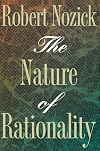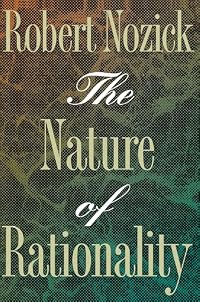
The Nature of Rationality
by Robert Nozick
On This Page
Description
Repeatedly and successfully, the celebrated Harvard philosopher Robert Nozick has reached out to a broad audience beyond the confines of his discipline, addressing ethical and social problems that matter to every thoughtful person. Here Nozick continues his search for the connections between philosophy and "ordinary" experience. In the lively and accessible style that his readers have come to expect, he offers a bold theory of rationality, the one characteristic deemed to fix humanity's show more "specialness." What are principles for? asks Nozick. We could act simply on whim, or maximize our self-interest and recommend that others do the same. As Nozick explores rationality of decision and rationality of belief, he shows how principles actually function in our day-to-day thinking and in our efforts to live peacefully and productively with each other. Throughout, the book combines daring speculations with detailed investigations to portray the nature and status of rationality and the essential role that imagination plays in this singular human aptitude. show lessTags
Recommendations



















Member Reviews
Members
- Recently Added By
Author Information

9+ Works 3,805 Members
Educated at Columbia and Princeton universities, Robert Nozick is Arthur Kingsley Porter Professor of Philosophy at Harvard University. He rose to eminence in the last quarter of the twentieth century as a creative philosopher who has expressed philosophical truths beyond the reach of analytic argumentation. Honed in the technical intricacies of show more analytic philosophy, he has nonetheless restored meditation to its proper place in the philosophical canon. Nozick's first book, Anarchy, State and Utopia (initially published in 1974), won the National Book Award in 1975 and became the fundamental text of the Libertarian movement. Nozick's second book, Philosophical Explanations, was given the Ralph Waldo Emerson Award of Phi Beta Kappa in 1982. It covers a wide range of basic philosophical topics: the question why there is something rather than nothing, the identity of the self, knowledge and skepticism, free will, the foundation of ethnics, and the meaning of life. Nozick abandons philosophical proof or argumentation as too coercive and opts instead for methods of explanation that promote understanding. This approach has culminated in his third book, The Examined Life. (Bowker Author Biography) show less
Common Knowledge
- Original publication date
- 1993
- Dedication
- To Carl Hempel and to the memory of Gregory Vlastos
- First words
- Introduction -- The word philosophy means the love of wisdom, but what philosophers really love is reasoning. They formulate theories and marshal reasons to support them, they consider objections and try to meet these, they ... (show all)construct arguments against other views. Even philosophers who proclaim the limitations of reasoning -- the Greek skeptics, David Hume, doubters of the objectivity of science -- all adduce reasons for their views and present difficulties for opposing ones. Proclamations or aphorisms are not considered philosophy unless they also enshrine and delineate reasoning.
Classifications
Statistics
- Members
- 290
- Popularity
- 110,117
- Reviews
- 1
- Rating
- (3.71)
- Languages
- English, Italian, Spanish
- Media
- Paper, Ebook
- ISBNs
- 6
- ASINs
- 2