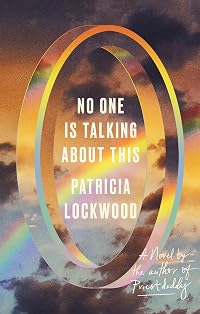
No One Is Talking About This
by Patricia Lockwood
On This Page
Description
"From "a formidably gifted writer" (The New York Times Book Review), a book that asks: Is there life after the internet? As this urgent, genre-defying book opens, a woman who has recently been elevated to prominence for her social media posts travels around the world to meet her adoring fans. She is overwhelmed by navigating the new language and etiquette of what she terms "the portal," where she grapples with an unshakable conviction that a vast chorus of voices is now dictating her show more thoughts. When existential threats--from climate change and economic precariousness to the rise of an unnamed dictator and an epidemic of loneliness--begin to loom, she posts her way deeper into the portal's void. An avalanche of images, details, and references accumulate to form a landscape that is post-sense, post-irony, post-everything. "Are we in hell?" the people of the portal ask themselves. "Are we all just going to keep doing this until we die?" Suddenly, two texts from her mother pierce the fray: "Something has gone wrong," and "How soon can you get here?" As real life and its stakes collide with the increasingly absurd antics of the portal, the woman confronts a world that seems to contain both an abundance of proof that there is goodness, empathy, and justice in the universe, and a deluge of evidence to the contrary"-- show lessTags
Recommendations
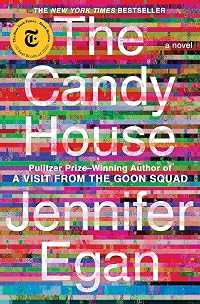

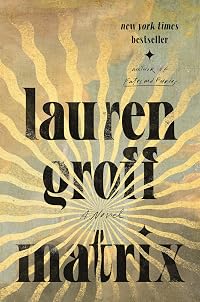
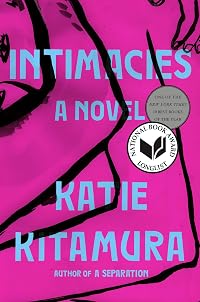
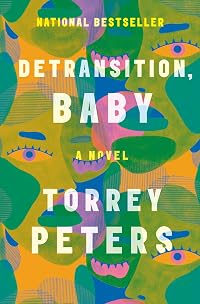
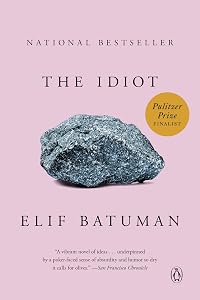
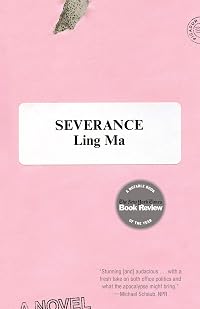
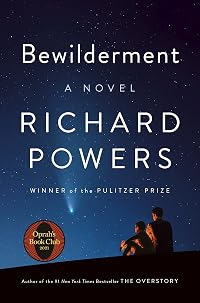
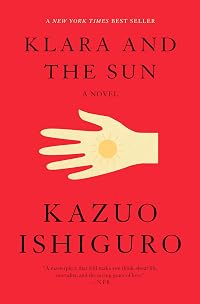




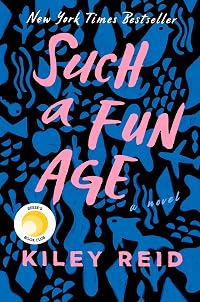
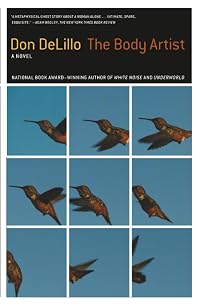
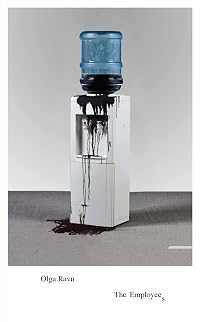
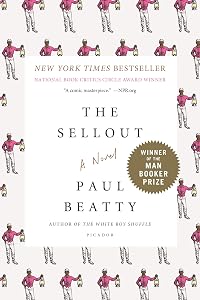


Member Recommendations
susanbooks The first half of Lockwood's novel illustrates Virilio's points about how the online world is affecting us.
Member Reviews
When I read the Booker Prize shortlist I generally save books written by Americans for last, and after reading and thoroughly enjoying 'The Fortune Men', 'The Promise' and 'A Passage North', my favorite novel of 2021 to date, I picked up this nominee for this year's Most Clever American Novel, a supposed satire about social media in American culture, which was somehow attached to a tragedy involving the baby of the main character's sister, based on the author's own sister and her child, who had the same fatal condition. This unnamed character is a famous social influencer, who cares about her popularity more than her marriage, and the first half of the book is filled with overly clever comments that left me cold and reminded me of show more listening to a bad standup comic who relied on crude jokes to entertain her audience:
"chuck e cheese can munch a hole in my you-know-what"
"An episode of 'True Life' about a girl who liked to roll herself up, get into a pot with assorted vegetables, and pretend that cannibals were going to eat her. Sexually."
"...which coffeemakers were but a shit in the mouth of the coffee christ."
"“Ahahaha!” she yelled, the new and funnier way to laugh, as she watched footage of bodies being flung from a carnival ride at the Ohio State Fair. Their trajectories through the air were pure arcs of joy, T-shirts turned liquid on them, just look what the flesh could do when it gave in, right down to the surrendering snap of the..."
Lockwood, Patricia. No One Is Talking About This (p. 9). Penguin Publishing Group. Kindle Edition.
"She had become famous for a post that said simply, "Can a dog be twins?" That was it. Can a dog be twins? It had recently reached the state of penetration where teens posted the cry-face emoji at her. They were in high school. They were going to remember "Can a dog be twins?" instead of the date of the Treaty of Versailles, which, let's face it, she didn't know either."
Imagine reading over 100 pages of similar drivel, with plenty of sophomoric butt, nipple and dildo humor mixed in. I nearly quit reading the book 50 pages in, but I read several reviews that encouraged me to continue, as the second half was said to be much better.
I held my nose and skimmed through the next 50 pages before reading the second part, in which the social influencer learns that her sister is carrying a child who appears to have a serious genetic disorder. Unfortunately Lockwood trivializes the grief that a mother and family experience when they learn that a yet to be born baby has a life altering and potentially fatal condition, the hope that the doctors were wrong and the baby will be normal, and the torturously slow process of watching the child's slow and inevitable decline towards a painful death. I occasionally care for children such as these in the hospital, and I was deeply offended by Lockwood's insensitive handling of this process, especially since her own sister had a child with the same fatal genetic condition. The last straw for me was the uproarious laughter by several family members just before the baby's funeral, which I found infuriating and deeply insulting.
I would hope that Ms Lockwood obtained her sister's permission to "craft" a novel about her late child and family, but even if she did I thought that this was incredibly vulgar, cruel and distasteful, and the attempt to meld these two themes didn't work for me at all. This is a "love it or hate it" book, and I fall firmly in the latter category, as this sorry excuse for a novel is a perfect example of why I don't like modern American literature, with few exceptions. show less
"chuck e cheese can munch a hole in my you-know-what"
"An episode of 'True Life' about a girl who liked to roll herself up, get into a pot with assorted vegetables, and pretend that cannibals were going to eat her. Sexually."
"...which coffeemakers were but a shit in the mouth of the coffee christ."
"“Ahahaha!” she yelled, the new and funnier way to laugh, as she watched footage of bodies being flung from a carnival ride at the Ohio State Fair. Their trajectories through the air were pure arcs of joy, T-shirts turned liquid on them, just look what the flesh could do when it gave in, right down to the surrendering snap of the..."
Lockwood, Patricia. No One Is Talking About This (p. 9). Penguin Publishing Group. Kindle Edition.
"She had become famous for a post that said simply, "Can a dog be twins?" That was it. Can a dog be twins? It had recently reached the state of penetration where teens posted the cry-face emoji at her. They were in high school. They were going to remember "Can a dog be twins?" instead of the date of the Treaty of Versailles, which, let's face it, she didn't know either."
Imagine reading over 100 pages of similar drivel, with plenty of sophomoric butt, nipple and dildo humor mixed in. I nearly quit reading the book 50 pages in, but I read several reviews that encouraged me to continue, as the second half was said to be much better.
I held my nose and skimmed through the next 50 pages before reading the second part, in which the social influencer learns that her sister is carrying a child who appears to have a serious genetic disorder. Unfortunately Lockwood trivializes the grief that a mother and family experience when they learn that a yet to be born baby has a life altering and potentially fatal condition, the hope that the doctors were wrong and the baby will be normal, and the torturously slow process of watching the child's slow and inevitable decline towards a painful death. I occasionally care for children such as these in the hospital, and I was deeply offended by Lockwood's insensitive handling of this process, especially since her own sister had a child with the same fatal genetic condition. The last straw for me was the uproarious laughter by several family members just before the baby's funeral, which I found infuriating and deeply insulting.
I would hope that Ms Lockwood obtained her sister's permission to "craft" a novel about her late child and family, but even if she did I thought that this was incredibly vulgar, cruel and distasteful, and the attempt to meld these two themes didn't work for me at all. This is a "love it or hate it" book, and I fall firmly in the latter category, as this sorry excuse for a novel is a perfect example of why I don't like modern American literature, with few exceptions. show less
~spoilers ahead!!!~
On the third page of No One Is Talking About This, I read about the narrator washing her legs in the shower because "she had recently learned that some people didn't" and immediately realised a. that she was referring to the "white people don't wash their legs" discourse that's been on Twitter for the past few years and b. if you weren't aware of that, this passage would make very little sense. I don't think this is a bad thing, necessarily - write what you know, and all that - but be warned that unless you are Very Online, great chunks of this book will be likely be incomprehensible, like watching a film in a language you don't speak with machine-translated captions on. It almost needs footnotes.
Like many other show more reviewers, I initially found this quite vapid (yesterday my friend ran me through the plot of the Lucinda Riley series she's working her way through, to which I responded "I'm reading a novel in which a woman goes on Twitter a lot") - but the second half, the part with the real-life family tragedy, unfolds very sadly and with a strange beauty. A few of my co-reviewers seem to find her treatment of it flippant, offensive - to which I counter, that the author doesn't make dumb jokes about dead babies to make light of the situation or anyone's suffering. This is who she is, a person in this place and time, this is how she communicates, and these are the words that come out of her when faced with tremendous sadness. It's not good or bad, it just is - and that's kind of the whole point, really.
This book will definitely not be for everyone - but as a novel of how grief is experienced through the lens of late-2010s internet culture - like a cat gif with the fake weeping eyes, it has a strange, sad charm. show less
On the third page of No One Is Talking About This, I read about the narrator washing her legs in the shower because "she had recently learned that some people didn't" and immediately realised a. that she was referring to the "white people don't wash their legs" discourse that's been on Twitter for the past few years and b. if you weren't aware of that, this passage would make very little sense. I don't think this is a bad thing, necessarily - write what you know, and all that - but be warned that unless you are Very Online, great chunks of this book will be likely be incomprehensible, like watching a film in a language you don't speak with machine-translated captions on. It almost needs footnotes.
Like many other show more reviewers, I initially found this quite vapid (yesterday my friend ran me through the plot of the Lucinda Riley series she's working her way through, to which I responded "I'm reading a novel in which a woman goes on Twitter a lot") - but the second half, the part with the real-life family tragedy, unfolds very sadly and with a strange beauty. A few of my co-reviewers seem to find her treatment of it flippant, offensive - to which I counter, that the author doesn't make dumb jokes about dead babies to make light of the situation or anyone's suffering. This is who she is, a person in this place and time, this is how she communicates, and these are the words that come out of her when faced with tremendous sadness. It's not good or bad, it just is - and that's kind of the whole point, really.
This book will definitely not be for everyone - but as a novel of how grief is experienced through the lens of late-2010s internet culture - like a cat gif with the fake weeping eyes, it has a strange, sad charm. show less
A woman is heavily invested in social media, and it shows. “One hundred years ago her cat might have been called Mittens or Pussywillow. Now her cat was called Dr. Butthole.”
She understands the draw and danger. “A person might join a site to look at pictures of her nephew and five years later believe in a flat earth.”
She became famous for a viral social media post asking “Can a dog be twins?” She travels as a speaker, often spouting nonsense. “P-p-p-perfect p-p-p-politics will manifest on earth as a raccoon with a scab for a face!”
She’s aware of the irony behind her popularity, but still rides the wave. “She hoped the twenty-four online IQ tests she had taken were wrong. They had to be.”
Then real life intervenes in show more the shape of a family tragedy mixed with beauty, love and empathy. The online world recedes for a while, until maybe she doesn’t need it as much, and visa-versa. show less
She understands the draw and danger. “A person might join a site to look at pictures of her nephew and five years later believe in a flat earth.”
She became famous for a viral social media post asking “Can a dog be twins?” She travels as a speaker, often spouting nonsense. “P-p-p-perfect p-p-p-politics will manifest on earth as a raccoon with a scab for a face!”
She’s aware of the irony behind her popularity, but still rides the wave. “She hoped the twenty-four online IQ tests she had taken were wrong. They had to be.”
Then real life intervenes in show more the shape of a family tragedy mixed with beauty, love and empathy. The online world recedes for a while, until maybe she doesn’t need it as much, and visa-versa. show less
"I can give them to her, I can give her my minutes." Then, almost angrily, "What was I doing with them before?"
This novel touched on the utter brain-rotting hysteria of living in the digital age in an unabashedly honest and viscerally real way that I've never seen before. The first half of the novel is both hilarious in how it captures the inane mental junk that flits through our minds as we are torn apart in every direction by the attention economy, and eye-opening in how it calls out the way this slowly breaks down any way for us to engage in and converse with others in any meaningful way. The narrative is broken down into short, Tweet-size "scenes" that will bring up absolutely anything that floats to the surface of protagonist's show more mind, and in this way it captures a modern sort of stream-of-consciousness with frightening accuracy.
The second half of the novel, however, introduces a gradual but significant tone shift as the protagonist suddenly becomes an aunt to her sister's newborn child. The child is, unfortunately, diagnosed with Proteus disease, causing a swelling of the brain that will soon prove fatal. Slowly, the inanity from the first half melts away as the narrative finally, finally starts to have a cohesive throughline tying together each scene as the protagonist desperately tries to hold onto the fleeting time she has with this newborn being who finally brings her life meaning.
One final thought I had about this book was the possible symbolism of the baby's condition. They are essentially 100% brain, 100% mental, and many times the baby is described as knowing how to do only two things: absorb information passively, and call out to ask if anyone else is there and can hear them. I personally interpret the baby as a metaphor for the new generations of humanity, who become increasingly withdrawn from the physical world and into the realm of the mind as a result of being terminally online. There are some morbid implications with the baby's brain swelling leading to eventual death--perhaps the continued digital sheltering of humanity will swiftly lead to its demise? But on the other hand, the protagonist's ultimate conclusion of choosing to cherish and care for the baby regardless of how difficult it is also suggests that there is value in continuing to love and nurture our swollen-brain descendants through thick and thin because we are all, ultimately, still humans deserving of love. show less
This novel touched on the utter brain-rotting hysteria of living in the digital age in an unabashedly honest and viscerally real way that I've never seen before. The first half of the novel is both hilarious in how it captures the inane mental junk that flits through our minds as we are torn apart in every direction by the attention economy, and eye-opening in how it calls out the way this slowly breaks down any way for us to engage in and converse with others in any meaningful way. The narrative is broken down into short, Tweet-size "scenes" that will bring up absolutely anything that floats to the surface of protagonist's show more mind, and in this way it captures a modern sort of stream-of-consciousness with frightening accuracy.
The second half of the novel, however, introduces a gradual but significant tone shift as the protagonist suddenly becomes an aunt to her sister's newborn child. The child is, unfortunately, diagnosed with Proteus disease, causing a swelling of the brain that will soon prove fatal. Slowly, the inanity from the first half melts away as the narrative finally, finally starts to have a cohesive throughline tying together each scene as the protagonist desperately tries to hold onto the fleeting time she has with this newborn being who finally brings her life meaning.
One final thought I had about this book was the possible symbolism of the baby's condition. They are essentially 100% brain, 100% mental, and many times the baby is described as knowing how to do only two things: absorb information passively, and call out to ask if anyone else is there and can hear them. I personally interpret the baby as a metaphor for the new generations of humanity, who become increasingly withdrawn from the physical world and into the realm of the mind as a result of being terminally online. There are some morbid implications with the baby's brain swelling leading to eventual death--perhaps the continued digital sheltering of humanity will swiftly lead to its demise? But on the other hand, the protagonist's ultimate conclusion of choosing to cherish and care for the baby regardless of how difficult it is also suggests that there is value in continuing to love and nurture our swollen-brain descendants through thick and thin because we are all, ultimately, still humans deserving of love. show less
A woman gets to tour the world after being famous for a dumb thing she wrote in the Portal. I love that even the internet isn't mentioned, using this fictional Portal to become all of the internet and all the apps that have or will ever live and die... making the book transcend time, the time of the internet being most fickle of all. I love that Lockwood writes these perfectly crafted little snippets for the internet distracted inclined, and definitely think the Twitteresque snippets are the point... It's taking what Jenny Offill does (and also reminded me of the gem 'Goodbye, Vitamin' by Rachel Khong) and bringing this incredible honesty and clear-eyed view of what social media/the internet has done to us. I have had many of these show more thoughts before but I could never say them this clearly and hilariously. Also quite funny, I think Lockwood intentionally makes you google so many things. No other book that I have read has said such truth about our technology yet. None of these snippets are extraneous, no word misplaced. Which would seem tough to do in a book like this, about the randomness and distraction of the internet. Easily, a book like this in less genius hands would have annoyed me. I am not Extremely Online and never really was. I was worried the internet of it all would annoy me, possibly be a bit too hipstery. But Lockwood is at that perfect age of being born in 1982 when she can remember when the internet wasn't constantly in your hand or even in the home, but also young enough to remember every meme that ever happened. But still, I was amazed each and every time a snippet is perfectly crafted and placed. And then the second half of the book happens. The woman is called back to Ohio from her travels. And it's like the real needs to grab her hand and take her from the drowning ocean of the internet. All I can say otherwise, to do the book justice: this book is perfect. Heart and humor and explaining our human problem with the internet. Thank you for having the courage to write it. show less
It's easier for me to respect than love a novel written in the fragmentary style, to say "Yes, I see what you did there, well done, it's not really for me, though". No One Is Talking About This at least has a formal reason for being written this way, even arguably a necessary one, being about the experience of being extremely online, but even more specifically being extremely online on Twitter, or "the portal" as Lockwood's narrator calls it, and this is how the portal writes. It is also however about the experience of having the ultimately inescapable reality of human bodies and sickness suddenly jerk you out of your previous life, even when that life is the disembodied mind inside the portal, and seeing that life continue on in its show more great stream while you are busy with something else, and when you lift your head and look over at it, you realize that you are now an outsider viewing it through a film of difference and alienation rather than an integrated participant.
Why be a part of the portal in the first place? Why, when what goes on in it, your contributions in it, fly by and are gone in nearly a blink. "Already it was becoming impossible to explain things she had done even the year before, why she had spent hypnotized hours of her life, say, photoshopping bags of frozen peas into pictures of historical atrocities, posting OH YES HUNNY in response to old images of Stalin, why whenever she liked anything especially, she said she was going to 'chug it with her ass.' Already it was impossible to explain these things."
Personally I have no idea why people on Twitter photoshopped bags of frozen peas into pictures of historical atrocities or posted OH YES HUNNY to pictures of Stalin, but if even core participants have trouble explaining why they did it a short time later, it can't be very important, really. And so I think it's not important if readers of this novel know the memes Lockwood is referencing or not. It might be a fun sort of parlor game, but that's all.
The important thing to know is why the character is immersing herself into the portal, and what it is doing to her, rather than the frankly irrelevant details of what flies by in the portal. She says, "it was a place where she would always choose the right side, where the failure was in history and not herself, where she did not read the wrong writers, was not seized with surges of enthusiasm for the wrong leaders, did not eat the wrong animals... she knew how it all turned out... she floated as the head at the top of it and saw everything, everything, backward, backward, and turned away in fright from her own bright day."
So we get a hint that the portal offers self-esteem and a sense of belonging to a favored tribe, psychological benefits that humans seem designed to chase. It offers certainty and a way to avoid the scary unknown. It also becomes a self-erasing addiction. "You have a totally dead look on your face," her husband tells her as she's doing something or other in the portal. She thinks, "Gradually it had become the place where we sounded like each other, through some erosion of wind or water on a self not nearly as firm as stone." And it takes on a darker cast over time. People - Russians, capitalists, our own ambitious political leaders - exploit it to manipulate us. There's a lust to find transgressors and righteously hound and shun them: "Callout culture! Were things rapidly approaching the point where even you would be seen as bad?"
"Something has gone wrong," her mother texts her. But she's not referencing the portal. The character's sister has had a terrible revelation about her pregnancy. A rare and fatal genetic abnormality in the baby has been discovered. Her sister's life is in danger. She is suddenly and without warning jerked out of her previous life, undone by the reality of these fragile bodies we inhabit outside of the portal. Lockwood writes,
She finds that being surrounded by and participating in her family's pain rather than living so greatly inside the portal reintroduces her to herself: "the previous unshakable conviction that someone else was writing the inside of her head was gone." As ever, illness and death have a great way of shifting one's perception of the world, one does not have to be extremely online to experience this fact of life, it's just one more way of being that has to bow before something greater. New, but ultimately not different in this respect, anyone can identify with this passage where the character looks at her previous life, before the Great Encounter:
So the novel takes a turn towards the universal as Life asserts itself over life. It's not sentimental, Lockwood is far too strong of a writer to get trapped in clichés and sentiment only, rather we see the characters doing the best they can to live out love with each other and in the baby's short life among the difficulties and realities that lie in wait. The character wonders if this experience will change her, fill her with more love and kindness towards her fellow humans. On an airplane, she feels the world calling her back, and the rainbow that follows the plane's path just might offer an answer.
Love to you, whether you find yourself in the portal or elsewhere. show less
Why be a part of the portal in the first place? Why, when what goes on in it, your contributions in it, fly by and are gone in nearly a blink. "Already it was becoming impossible to explain things she had done even the year before, why she had spent hypnotized hours of her life, say, photoshopping bags of frozen peas into pictures of historical atrocities, posting OH YES HUNNY in response to old images of Stalin, why whenever she liked anything especially, she said she was going to 'chug it with her ass.' Already it was impossible to explain these things."
Personally I have no idea why people on Twitter photoshopped bags of frozen peas into pictures of historical atrocities or posted OH YES HUNNY to pictures of Stalin, but if even core participants have trouble explaining why they did it a short time later, it can't be very important, really. And so I think it's not important if readers of this novel know the memes Lockwood is referencing or not. It might be a fun sort of parlor game, but that's all.
The important thing to know is why the character is immersing herself into the portal, and what it is doing to her, rather than the frankly irrelevant details of what flies by in the portal. She says, "it was a place where she would always choose the right side, where the failure was in history and not herself, where she did not read the wrong writers, was not seized with surges of enthusiasm for the wrong leaders, did not eat the wrong animals... she knew how it all turned out... she floated as the head at the top of it and saw everything, everything, backward, backward, and turned away in fright from her own bright day."
So we get a hint that the portal offers self-esteem and a sense of belonging to a favored tribe, psychological benefits that humans seem designed to chase. It offers certainty and a way to avoid the scary unknown. It also becomes a self-erasing addiction. "You have a totally dead look on your face," her husband tells her as she's doing something or other in the portal. She thinks, "Gradually it had become the place where we sounded like each other, through some erosion of wind or water on a self not nearly as firm as stone." And it takes on a darker cast over time. People - Russians, capitalists, our own ambitious political leaders - exploit it to manipulate us. There's a lust to find transgressors and righteously hound and shun them: "Callout culture! Were things rapidly approaching the point where even you would be seen as bad?"
"Something has gone wrong," her mother texts her. But she's not referencing the portal. The character's sister has had a terrible revelation about her pregnancy. A rare and fatal genetic abnormality in the baby has been discovered. Her sister's life is in danger. She is suddenly and without warning jerked out of her previous life, undone by the reality of these fragile bodies we inhabit outside of the portal. Lockwood writes,
She fell heavily out of the broad warm us, out of the story that had seemed, up till the very last minute, to require her perpetual co-writing. Oh, she thought hazily, falling rain-wise like Alice, finding tucked under her arm the bag of peas she once photoshopped into pictures of historical atrocities, oh, have I been wasting my time?
She finds that being surrounded by and participating in her family's pain rather than living so greatly inside the portal reintroduces her to herself: "the previous unshakable conviction that someone else was writing the inside of her head was gone." As ever, illness and death have a great way of shifting one's perception of the world, one does not have to be extremely online to experience this fact of life, it's just one more way of being that has to bow before something greater. New, but ultimately not different in this respect, anyone can identify with this passage where the character looks at her previous life, before the Great Encounter:
Through the membrane of a white hospital wall she could feel the thump of the life that went on without her, the hugeness of the arguments about whether you could say the word retard on a podcast. She laid her hand against the white wall and the heart beat, strong and striding, even healthy. But she was no longer in that body.
So the novel takes a turn towards the universal as Life asserts itself over life. It's not sentimental, Lockwood is far too strong of a writer to get trapped in clichés and sentiment only, rather we see the characters doing the best they can to live out love with each other and in the baby's short life among the difficulties and realities that lie in wait. The character wonders if this experience will change her, fill her with more love and kindness towards her fellow humans. On an airplane, she feels the world calling her back, and the rainbow that follows the plane's path just might offer an answer.
Love to you, whether you find yourself in the portal or elsewhere. show less
Let's start with the fact that this book had a couple of tremendous strengths. Despite those, I can't really say I liked it. While it was thematically interesting and had moments that were truly touching, those strengths were offset by its structure.
The book is divided into two parts. In the first part, we are introduced to a girl who is really, really into the internet (known as the portal here). She is an influencer (in today's parlance) who rose to fame with a single meme. Her life is effectively lived online. Part I basically illustrates this by re-surfacing a whole bunch of Twitter nostalgia in bite sized chunks. If you were into Twitter in 2017-19, this whole section might be a fun reminiscence. If you weren't (and I wasn't), you show more basically have little idea of what is being alluded to. Fortunately, you can google it all, and some enterprising person actually compiled a list. But I fail to see how this structure made for a good reading experience. Nor did I feel like I really got a whole lot of insight into our protagonist other than her life was inseparable from the online world. That's an interesting piece of social commentary to ponder actually, but by trying to present it in such a "I'm oh so clever" way, I think it became mostly boring.
Part II was fortunately much better. The protagonist's niece is born, and unfortunately she is has a syndrome (one you will recognize, but I don't want to spoil too much here). She is yanked away from her internet life forced into the real world by this crisis situation. From here, we see a family dealing with the tremendous love of a child, despite her imperfections, and the accompanying grief that derives from her hopeless condition. There are some important moments of truth in this section, and I think anyone who has had a child will really be hard pressed not to shed a tear. However, there are still moments from the portal and bits of pop culture woven into part II, and the structure of very short paragraphs remains . . .and for me, it was merely distracting. As soon as I was feeling something, I was onto the next thing.
This book struck me as one that might be cool to read in college. The author seemed to be saying that online life, which is almost always going in for a laugh or out for a kill, is a distraction from the real world where perfection is not a pre-requisite to love and even the helpless creatures help to underscore our humanity.
Or maybe I was just hoping that's what the author wanted to say.
It's possible she just wanted to juxtapose the comedy of our online existence to the pathos of reality, and to show how fragmented our lives have become with only the most impactful life events pulling us back from the lure of the portal.
The problem is - - I'm really not sure what she meant, whether this book was intended as black comedy, or a salute to internet culture, or an autobiographical tribute for her sister. I have no idea really, and while I salute the creative effort, I can't say I liked where I ended up. show less
The book is divided into two parts. In the first part, we are introduced to a girl who is really, really into the internet (known as the portal here). She is an influencer (in today's parlance) who rose to fame with a single meme. Her life is effectively lived online. Part I basically illustrates this by re-surfacing a whole bunch of Twitter nostalgia in bite sized chunks. If you were into Twitter in 2017-19, this whole section might be a fun reminiscence. If you weren't (and I wasn't), you show more basically have little idea of what is being alluded to. Fortunately, you can google it all, and some enterprising person actually compiled a list. But I fail to see how this structure made for a good reading experience. Nor did I feel like I really got a whole lot of insight into our protagonist other than her life was inseparable from the online world. That's an interesting piece of social commentary to ponder actually, but by trying to present it in such a "I'm oh so clever" way, I think it became mostly boring.
Part II was fortunately much better. The protagonist's niece is born, and unfortunately she is has a syndrome (one you will recognize, but I don't want to spoil too much here). She is yanked away from her internet life forced into the real world by this crisis situation. From here, we see a family dealing with the tremendous love of a child, despite her imperfections, and the accompanying grief that derives from her hopeless condition. There are some important moments of truth in this section, and I think anyone who has had a child will really be hard pressed not to shed a tear. However, there are still moments from the portal and bits of pop culture woven into part II, and the structure of very short paragraphs remains . . .and for me, it was merely distracting. As soon as I was feeling something, I was onto the next thing.
This book struck me as one that might be cool to read in college. The author seemed to be saying that online life, which is almost always going in for a laugh or out for a kill, is a distraction from the real world where perfection is not a pre-requisite to love and even the helpless creatures help to underscore our humanity.
Or maybe I was just hoping that's what the author wanted to say.
It's possible she just wanted to juxtapose the comedy of our online existence to the pathos of reality, and to show how fragmented our lives have become with only the most impactful life events pulling us back from the lure of the portal.
The problem is - - I'm really not sure what she meant, whether this book was intended as black comedy, or a salute to internet culture, or an autobiographical tribute for her sister. I have no idea really, and while I salute the creative effort, I can't say I liked where I ended up. show less
Members
- Recently Added By
Lists

2022 Tournament of Books
18 works; 15 members

2021 Women's Prize for Fiction Longlist
16 works; 7 members

Favourite Booker Prize contenders
73 works; 21 members

Top Five Books of 2022
736 works; 272 members
Booker Prize
491 works; 62 members

NY Times Book Review Best Books 2021
5 works; 1 member

Books Read in 2023
5,547 works; 145 members

Books Set in Ohio
30 works; 6 members

Anticipated 2021 Reads
231 works; 7 members

Phi Beta Kappa reading list
260 works; 8 members

Powell's 50 Books for 50 Years
50 works; 4 members

Our digital age
79 works; 5 members

The Atlantic's The Great American Novel
136 works; 12 members

Books Read in 2024
4,623 works; 126 members

Take Four Books
130 works; 1 member
Talk Discussions
Past Discussions
2021 Booker Prize Longlist: No One Is Talking About This by Patricia Lockwood in Booker Prize (October 2021)
Author Information

7+ Works 3,466 Members
Patricia Lockwood was born in Fort Wayne. Indiana, and raised in all the worst cities of the Midwest. She is the author of two poetry collections. Balloon Pop Outlaw Black and Motherland Fatherland Homelandsexuals, a New York Times Notable Book. Her writing has appeared in The New York Times. The New Yorker, The New Republic, Slate, and The London show more Review of Books. She lives in Savannah, Georgia. show less
Some Editions
Awards and Honors
Awards
Distinctions
The Guardian Book of the Day (2021-02-12)
The Guardian Book of the Day (2021-02-08)
Notable Lists
Series
Belongs to Publisher Series
Work Relationships
Contains
Common Knowledge
- Canonical title
- No One Is Talking About This
- Original publication date
- 2021-02-16
- Dedication
- for Lena, who was a bell
- First words
- She opened the portal, and the mind met her more than halfway.
- Quotations
- Her stupidity panicked her, as well as the way her voice now sounded when she talked to people who hadn't stopped being stupid yet.
"What about the stream-of-a-consciousness that is not entirely your own? One that you participate in, but that also acts upon you?" One audience member yawned, then another. Long before the current vectors came into being, th... (show all)ey had been a contagious species.
But worth remembering: the mind had been, in its childhood, a place of play.
It had also once been the place where you sounded like yourself. Gradually it had become the place where we sounded like each other, through ... (show all)some erosion of wind or water on a self not nearly as firm as stone.
This did not feel like real life, exactly, but nowadays what did? - Blurbers
- Rooney, Sally; Tolentino, Jia
- Original language
- English
- Canonical DDC/MDS
- 813.6
- Canonical LCC
- PS3612.O27
Classifications
Statistics
- Members
- 1,654
- Popularity
- 13,549
- Reviews
- 71
- Rating
- (3.52)
- Languages
- 8 — Dutch, English, Finnish, Hungarian, Portuguese, Serbian, Spanish, Turkish
- Media
- Paper, Audiobook, Ebook
- ISBNs
- 21
- ASINs
- 8