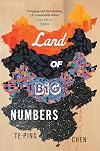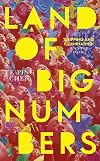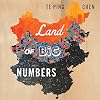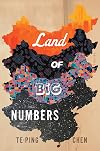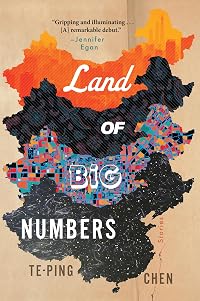
Land of Big Numbers: Stories
by Te-Ping Chen
On This Page
Description
"Chen has one of the year's big debut books." —Philadelphia Inquirer"Gripping and illuminating . . . At the heart of Te-Ping Chen's remarkable debut lies a question all too relevant in 21st Century America: What is freedom?" —Jennifer Egan
"Immensely rewarding, from the first sentence to the last . . . An exceptional collection." —Charles Yu
A "stirring and brilliant" debut story collection, offering vivid portrayals of the men and women of modern China and its diaspora, "both love show more letter and sharp social criticism," from a phenomenal new literary talent bringing great "insight from her years as a reporter with the Wall Street Journal" (Elle).
Gripping and compassionate, Land of Big Numbers traces the journeys of the diverse and legion Chinese people, their history, their government, and how all of that has tumbled—messily, violently, but still beautifully—into the present.
Cutting between clear-eyed realism and tongue-in-cheek magical realism, Chen's stories coalesce into a portrait of a people striving for openings where mobility is limited. Twins take radically different paths: one becomes a professional gamer, the other a political activist. A woman moves to the city to work at a government call center and is followed by her violent ex-boyfriend. A man is swept into the high-risk, high-reward temptations of China's volatile stock exchange. And a group of people sit, trapped for no reason, on a subway platform for months, waiting for official permission to leave.
With acute social insight, Te-Ping Chen layers years of experience reporting on the ground in China with incantatory prose in this taut, surprising debut, proving herself both a remarkable cultural critic and an astonishingly accomplished new literary voice.
. show less
Tags
Recommendations








Member Reviews
Te-Ping Chen's debut story collection Land of Big Numbers started out strong and ended with a mind-blowing parable that knocked my socks off.
I read the first story through BookishFirst and put in my name for the ARC. Set in China, twins go on separate life paths, the bright and driven girl challenging government repression, the boy excelling in competitive video gaming. A reversal of expectations challenges our values.
The stories are revelatory about life in modern China and the expat experience. I was unsettled by the portrait of life in China, seemingly normal people doing seemingly normal things, and yet so much at odds with American expectations.
The generational divide shows up clearly. The older characters had lived hard lives of show more manual labor and poverty. Some hold onto fantasies of achievement and acceptance into the Party. Their children become teenage factory workers in the city or hope for a rich benefactor or play the stock market dreaming of easy money.
It is a world at once very familiar--and very alien. The details are different, but the human experience universal.
All around Zhu Feng, it seemed, people were buying, buying, homes and stocks and second and third houses; there was a whole generation who'd gotten rich and needed to buy things for their kids, and the same dinky things from before didn't pass muster: penny rides on those plastic cartoon figures that flashed lights and gently rocked back and forth outside of drugstores; hawthorn impaled on ticks and sheathed in frozen yellow sugar casings, a cheap winter treat. They needed to buy because they had the money and that's what everyone else was doing...Also, the government said it was the buying opportunity of a generations...China was going up and up and nobody wanted to be left behind."~from Land of Big Numbers by Te-Ping Chen
The last story Guebeikou Spirit is amazing, a parable that reaches past it's setting to alert against the lure of complacence that becomes complicity. Characters become stranded on a new high-speed train station after trains pass them buy. Regulations state that passengers must depart from a different station than they entered, and so they remain.
Every day they hear the announcement that the train is delayed. The guards reassure, "we'll get there together," as they bring in food, blankets, personal health supplies, and as weeks go on, televisions and coloring books.
The stranded people become a media sensation and the organize to represent "Gubeikuo Spirit." Several dissident young men try to follow the train tracks to another station, but always return and finally give up. The outside world's hardships come through the television news. They become comfortable so that when a train finally stops, they are unwilling to leave.
Obedience to an illogical rule, becoming comfortable leading to the loss of volition and self-determination--it's a powerful message.
Te-Ping Chen is a marvelous writer and I look forward to reading more from her pen.
I received an ARC from the publisher through BookishFirst and an egalley through NetGalley. My review is fair and unbiased. show less
I read the first story through BookishFirst and put in my name for the ARC. Set in China, twins go on separate life paths, the bright and driven girl challenging government repression, the boy excelling in competitive video gaming. A reversal of expectations challenges our values.
The stories are revelatory about life in modern China and the expat experience. I was unsettled by the portrait of life in China, seemingly normal people doing seemingly normal things, and yet so much at odds with American expectations.
The generational divide shows up clearly. The older characters had lived hard lives of show more manual labor and poverty. Some hold onto fantasies of achievement and acceptance into the Party. Their children become teenage factory workers in the city or hope for a rich benefactor or play the stock market dreaming of easy money.
It is a world at once very familiar--and very alien. The details are different, but the human experience universal.
All around Zhu Feng, it seemed, people were buying, buying, homes and stocks and second and third houses; there was a whole generation who'd gotten rich and needed to buy things for their kids, and the same dinky things from before didn't pass muster: penny rides on those plastic cartoon figures that flashed lights and gently rocked back and forth outside of drugstores; hawthorn impaled on ticks and sheathed in frozen yellow sugar casings, a cheap winter treat. They needed to buy because they had the money and that's what everyone else was doing...Also, the government said it was the buying opportunity of a generations...China was going up and up and nobody wanted to be left behind."~from Land of Big Numbers by Te-Ping Chen
The last story Guebeikou Spirit is amazing, a parable that reaches past it's setting to alert against the lure of complacence that becomes complicity. Characters become stranded on a new high-speed train station after trains pass them buy. Regulations state that passengers must depart from a different station than they entered, and so they remain.
Every day they hear the announcement that the train is delayed. The guards reassure, "we'll get there together," as they bring in food, blankets, personal health supplies, and as weeks go on, televisions and coloring books.
The stranded people become a media sensation and the organize to represent "Gubeikuo Spirit." Several dissident young men try to follow the train tracks to another station, but always return and finally give up. The outside world's hardships come through the television news. They become comfortable so that when a train finally stops, they are unwilling to leave.
Obedience to an illogical rule, becoming comfortable leading to the loss of volition and self-determination--it's a powerful message.
Te-Ping Chen is a marvelous writer and I look forward to reading more from her pen.
I received an ARC from the publisher through BookishFirst and an egalley through NetGalley. My review is fair and unbiased. show less
I don't think I've ever read a short story collection where I loved or was impressed with each and every story, even from my favorite writers. That's the case here as well. However, I can say that each of the stories in "Land of Big Numbers" is thoughtfully crafted and interesting, all based in contemporary China. There are ten in all, and I read them over December and January, one every few days or so. I think I enjoyed them more that way; more than I would've had I read them all in few sittings.
The lead story, "Lulu," was brilliant. I also really loved "Hotline Girl," "Land of Big Numbers" and "Guebeikou Spirit."
One of my other favorites was "New Fruit," which is about qiquo, or "peculiar fruit," created through trial and error show more crossbreeding by a man named Fan Shiyi. It's this miraculous fruit that leaves different, but positive impressions on the person smelling or eating it. It has a sort of Proust effect on some, making them recall memories in vivid detail. For everyone, even newborn babies, it gives them inexplicable feelings of happiness, revitalizing some, that kind of thing. It gets massively popular. The catch is that when it's a bad season for the fruit, it has an opposite effect on people, making them feel sick, unhappy or even worse... Loved the concept and execution here and the note it ended on.
I'm more of a novel reader, and would be thrilled if Te-Ping Chen wrote one in the future. I'd also happily read more of her short stories!
*ARC received from HMH through BookishFirst show less
The lead story, "Lulu," was brilliant. I also really loved "Hotline Girl," "Land of Big Numbers" and "Guebeikou Spirit."
One of my other favorites was "New Fruit," which is about qiquo, or "peculiar fruit," created through trial and error show more crossbreeding by a man named Fan Shiyi. It's this miraculous fruit that leaves different, but positive impressions on the person smelling or eating it. It has a sort of Proust effect on some, making them recall memories in vivid detail. For everyone, even newborn babies, it gives them inexplicable feelings of happiness, revitalizing some, that kind of thing. It gets massively popular. The catch is that when it's a bad season for the fruit, it has an opposite effect on people, making them feel sick, unhappy or even worse... Loved the concept and execution here and the note it ended on.
I'm more of a novel reader, and would be thrilled if Te-Ping Chen wrote one in the future. I'd also happily read more of her short stories!
*ARC received from HMH through BookishFirst show less
Series Info/Source: This is a stand alone book of stories. I got a copy of this through Amazon Vine to review.
Story (5/5): This is a collection of stories mostly set in China (some are in the US too) and are set over a range of time. They are a pretty eclectic set of stories but I loved a lot of the irony to them. For example the story about twins; a successful and intelligent young woman and an ambition lacking young man. I loved how their fates twisted and the young woman ended up imprisoned while the young man ended up famous for playing video games; it shows a lot of the issues with a society's priorities today. Or the strange story about a group of people trapped on a train platform for no real reason who end having to form a show more society there to survive, which discusses how people will accept and adjust to the most arbitrary of rules and lifestyles.
All of these stories show incredible storytelling and thoughtfulness and resonate on a number of levels. They all left me thinking and were all easy to read and engage with. They gave some interesting insight into China’s culture too. There is a strong element of magical realism running through some of them as well.
Characters (5/5): Each story features a different set of characters. However, I found all the characters to be very human and engaging and fell into their stories very easily.
Setting (5/5): The description throughout is very well done and I never had trouble picturing the stories here. I love the China setting since I am fascinated with China and its culture. I also enjoyed the stories set in the US and looking through the eyes of a Chinese immigrant at the American people.
Writing Style (5/5): This is flawlessly written and shows amazing storytelling. I thought all of the stories ended in such perfect ways. I was amazed at how many parallels you can draw between these stories and current (and past) societal issues. These stories were engrossing, entertaining, and thought-provoking all at once. I was very impressed and enjoyed reading these immensely.
My Summary (5/5): Overall I loved this and think it’s something everyone should read. Not only was it highly entertaining, it was also very thought-provoking. Chen shows a skill in the art of telling a good short story that you don’t find often. I loved how some magical realism is woven into some of these stories and how ironic they all are. I will definitely be seeking out Chen’s future story collections. show less
Story (5/5): This is a collection of stories mostly set in China (some are in the US too) and are set over a range of time. They are a pretty eclectic set of stories but I loved a lot of the irony to them. For example the story about twins; a successful and intelligent young woman and an ambition lacking young man. I loved how their fates twisted and the young woman ended up imprisoned while the young man ended up famous for playing video games; it shows a lot of the issues with a society's priorities today. Or the strange story about a group of people trapped on a train platform for no real reason who end having to form a show more society there to survive, which discusses how people will accept and adjust to the most arbitrary of rules and lifestyles.
All of these stories show incredible storytelling and thoughtfulness and resonate on a number of levels. They all left me thinking and were all easy to read and engage with. They gave some interesting insight into China’s culture too. There is a strong element of magical realism running through some of them as well.
Characters (5/5): Each story features a different set of characters. However, I found all the characters to be very human and engaging and fell into their stories very easily.
Setting (5/5): The description throughout is very well done and I never had trouble picturing the stories here. I love the China setting since I am fascinated with China and its culture. I also enjoyed the stories set in the US and looking through the eyes of a Chinese immigrant at the American people.
Writing Style (5/5): This is flawlessly written and shows amazing storytelling. I thought all of the stories ended in such perfect ways. I was amazed at how many parallels you can draw between these stories and current (and past) societal issues. These stories were engrossing, entertaining, and thought-provoking all at once. I was very impressed and enjoyed reading these immensely.
My Summary (5/5): Overall I loved this and think it’s something everyone should read. Not only was it highly entertaining, it was also very thought-provoking. Chen shows a skill in the art of telling a good short story that you don’t find often. I loved how some magical realism is woven into some of these stories and how ironic they all are. I will definitely be seeking out Chen’s future story collections. show less
Land of Big Numbers, Te-Ping Chen author
In this book of short stories, the author has painted a broad picture of China, a country that sometimes subtly and sometimes overtly controls the lives of all its citizens. The stories illuminate life in China and life for the Chinese immigrant in America. Each tale is very unique. With a spare prose that needs no embellishment, each story fully develops and defines its main character as it shows the behavior that results from the brainwashing inculcated into the citizens in their daily lives. From the stories one gets the idea that many of the Chinese acquiesce as they succumb to something akin to the Stockholm Syndrome!
“Lulu” takes place in Beijing. The issue of one child per family is show more explored when a family is lucky enough to have twins. From there, the idea of the favorite child is tackled as the dreams of the parents are attached to one of them. Civil unrest that develops from the lack of freedom of choice and the regimented way of life allowing only for one set of ideas disrupts the country and the family.
In “Hotline Girls”, the theme illustrates the hopes and dreams of the young in China and the consequences they face if they fail. The reader learns how the workplace in China is controlled. The reader sees the development of personalities that grow from the strict discipline, coupled with the fear that accompanies their need to achieve or else face retribution which could affect their entire future. Poor performance is unacceptable. There is little room for dissent of any kind at work or in the political scene. Freedom has many meanings.
“New Fruit” is about a great tasting treat, a fruit that seems to make the eater more positive, more apt to help others, to like others and to be inspired to fulfill their dreams. Different behavior is motivated depending on the person’s personality, but the pattern was positive. When a crop is grown that does the opposite, that makes people feel guilty and remorseful for their past behavior, their shame makes them resentful and they become depressed, rude and selfish, reverting to their former selves. Can the government allow this?
In “The Flying Machine”, the resourcefulness and entrepreneurial spirit of the Chinese citizen is highlighted. An inventor who wants to join the Communist Party, but is always refused, never loses hope and keeps trying even after his many failures. Does he have hope for a reward someday? What gives him the hope?
“On The Street Where You Live” illustrates the consequences of compulsive and impulsive behavior. It exposes the way the jealous and suspicious mind works, always thinking someone has an ulterior motive, always finding it difficult to trust someone. The inability to accept responsibility for one’s one behavior and to face the truth about their own actions comes from the overriding atmosphere in China of mistrust.
In “Shanghai murmur”, a young woman, dissatisfied with her life, leaves home at 16 and runs away to Shanghai. She works odd jobs, never making much progress. In the flower shop she now works, her imagination about her feelings for a man who makes frequent purchases is her ruination. Because she covets his pen, her world collapses, but she is resilient, making excuses for her wicked behavior and does not repent. Has she learned anything from her mistakes or is her personality already irrevocably formed?
In the story with the book’s title, “Land of Big Numbers”, dreams of wealth and power cause a man to take foolhardy risks. Does he accept responsibility for his foolish choices? Is rebellion worthwhile? In a country which allows for little economic mobility and for no political activism against their policies, there is little hope for advancement. How does one survive?
In “Beautiful Country”, a young couple is on a trip. They have been involved for almost a decade, and still there is no marriage proposal. Should she believe his promises or his excuses? Is he faithful? She is a nurse living in America, but her personality has been nurtured in China.
“Gubeiku Spirit” is the most unusual story. Trapped in a train station, being held hostage by the government, the victims are at first patient, then they bicker, then they adapt and form a working community. Have they been so beaten down by propaganda that they cannot escape?
This author has captured the personality cultivated by an authoritarian government of obedience and acquiescence, always finding a reason to accept their plight and to tolerate the situation. It is about ordinary citizens who accede to authority, trusting them to provide for their lot in life. Even when they are unhappy, they adapt because what other choice do they really have? The characters are flawed, but flawed by the lives they are forced to lead. They are victims of their own poor choices, often made out of a sense of hopelessness because of the heavy hand of the government. The people that populate the stories seem totally authentic. This author has a gift for capturing memorable and emotional moments, of eliciting the human rights abuses and of providing examples of the character’s submission to circumstances, in each story. The characters are all flawed, all unable to recognize their bad choices, they simply move on. show less
In this book of short stories, the author has painted a broad picture of China, a country that sometimes subtly and sometimes overtly controls the lives of all its citizens. The stories illuminate life in China and life for the Chinese immigrant in America. Each tale is very unique. With a spare prose that needs no embellishment, each story fully develops and defines its main character as it shows the behavior that results from the brainwashing inculcated into the citizens in their daily lives. From the stories one gets the idea that many of the Chinese acquiesce as they succumb to something akin to the Stockholm Syndrome!
“Lulu” takes place in Beijing. The issue of one child per family is show more explored when a family is lucky enough to have twins. From there, the idea of the favorite child is tackled as the dreams of the parents are attached to one of them. Civil unrest that develops from the lack of freedom of choice and the regimented way of life allowing only for one set of ideas disrupts the country and the family.
In “Hotline Girls”, the theme illustrates the hopes and dreams of the young in China and the consequences they face if they fail. The reader learns how the workplace in China is controlled. The reader sees the development of personalities that grow from the strict discipline, coupled with the fear that accompanies their need to achieve or else face retribution which could affect their entire future. Poor performance is unacceptable. There is little room for dissent of any kind at work or in the political scene. Freedom has many meanings.
“New Fruit” is about a great tasting treat, a fruit that seems to make the eater more positive, more apt to help others, to like others and to be inspired to fulfill their dreams. Different behavior is motivated depending on the person’s personality, but the pattern was positive. When a crop is grown that does the opposite, that makes people feel guilty and remorseful for their past behavior, their shame makes them resentful and they become depressed, rude and selfish, reverting to their former selves. Can the government allow this?
In “The Flying Machine”, the resourcefulness and entrepreneurial spirit of the Chinese citizen is highlighted. An inventor who wants to join the Communist Party, but is always refused, never loses hope and keeps trying even after his many failures. Does he have hope for a reward someday? What gives him the hope?
“On The Street Where You Live” illustrates the consequences of compulsive and impulsive behavior. It exposes the way the jealous and suspicious mind works, always thinking someone has an ulterior motive, always finding it difficult to trust someone. The inability to accept responsibility for one’s one behavior and to face the truth about their own actions comes from the overriding atmosphere in China of mistrust.
In “Shanghai murmur”, a young woman, dissatisfied with her life, leaves home at 16 and runs away to Shanghai. She works odd jobs, never making much progress. In the flower shop she now works, her imagination about her feelings for a man who makes frequent purchases is her ruination. Because she covets his pen, her world collapses, but she is resilient, making excuses for her wicked behavior and does not repent. Has she learned anything from her mistakes or is her personality already irrevocably formed?
In the story with the book’s title, “Land of Big Numbers”, dreams of wealth and power cause a man to take foolhardy risks. Does he accept responsibility for his foolish choices? Is rebellion worthwhile? In a country which allows for little economic mobility and for no political activism against their policies, there is little hope for advancement. How does one survive?
In “Beautiful Country”, a young couple is on a trip. They have been involved for almost a decade, and still there is no marriage proposal. Should she believe his promises or his excuses? Is he faithful? She is a nurse living in America, but her personality has been nurtured in China.
“Gubeiku Spirit” is the most unusual story. Trapped in a train station, being held hostage by the government, the victims are at first patient, then they bicker, then they adapt and form a working community. Have they been so beaten down by propaganda that they cannot escape?
This author has captured the personality cultivated by an authoritarian government of obedience and acquiescence, always finding a reason to accept their plight and to tolerate the situation. It is about ordinary citizens who accede to authority, trusting them to provide for their lot in life. Even when they are unhappy, they adapt because what other choice do they really have? The characters are flawed, but flawed by the lives they are forced to lead. They are victims of their own poor choices, often made out of a sense of hopelessness because of the heavy hand of the government. The people that populate the stories seem totally authentic. This author has a gift for capturing memorable and emotional moments, of eliciting the human rights abuses and of providing examples of the character’s submission to circumstances, in each story. The characters are all flawed, all unable to recognize their bad choices, they simply move on. show less
Land of Big Numbers by Te-Ping Chen is a collection of stories that will have something for everyone and, if you like a variety of styles, a treasure full of gems.
In many single author collections there may or may not be a theme or idea that ties them together but the style or genre will be fairly constant throughout. This book offers a thematic thread (which I think is variable based on what a reader brings to it) that runs through a variety of storytelling modes.
For those inclined toward political or social ideas, these stories will offer some glimpses into what it is to live in or be an expat from contemporary China. You can then make some connections with social and political thought. If your interest is really about the people, show more the human beings as human beings, these stories show highs and lows that, while specific to Chinese culture, also speak to our common plights living on this planet. These two (of likely others as well) are woven into compelling stories that will move you, to sadness or anger, to joy or empathy. But they will move you. In other words, these stories speak to both your head and your heart.
If, like me, you keep a book of stories and/or essays at the ready for when you don't have time to dive back into one of the other books you're reading but you want to read something, you will find this an ideal companion. The variety will keep the stories from seeming like they are all variations of the same story being told with different characters.
Reviewed from a copy made available by the publisher via NetGalley. show less
In many single author collections there may or may not be a theme or idea that ties them together but the style or genre will be fairly constant throughout. This book offers a thematic thread (which I think is variable based on what a reader brings to it) that runs through a variety of storytelling modes.
For those inclined toward political or social ideas, these stories will offer some glimpses into what it is to live in or be an expat from contemporary China. You can then make some connections with social and political thought. If your interest is really about the people, show more the human beings as human beings, these stories show highs and lows that, while specific to Chinese culture, also speak to our common plights living on this planet. These two (of likely others as well) are woven into compelling stories that will move you, to sadness or anger, to joy or empathy. But they will move you. In other words, these stories speak to both your head and your heart.
If, like me, you keep a book of stories and/or essays at the ready for when you don't have time to dive back into one of the other books you're reading but you want to read something, you will find this an ideal companion. The variety will keep the stories from seeming like they are all variations of the same story being told with different characters.
Reviewed from a copy made available by the publisher via NetGalley. show less
As someone who spent several years living in Shanghai, I approached Land of Big Numbers with some trepidation as China has become so politicized and its citizens conflated with its government to such a great degree that it's rare to come across anything about the country that presents a balanced perspective. However, Te-Ping Chen does a wonderful job of bringing nuance in her collection. Her short stories run the gamut from contemporary fiction to magical realism. Standouts in the collection include "Lulu," "Shanghai Murmur," "Land of Big Numbers," and "Gubeikou Spirit."
A common pitfall of short stories is their brevity; often there are not enough pages to follow a traditional narrative structure with a climax and resolution. A couple show more of the stories in Land of Big Numbers felt a bit like unfinished vignettes. Whether by design or not, I wish Chen had dedicated a few more pages to fleshing out the stories rather than having them end abruptly and leaving the reader to wonder what happens next. Overall, I was very impressed by Chen as a debut author. There is a magical quality about her writing that I find wholly unique. I look forward to following her future literary projects. Many thanks to Mariner and Houghton Mifflin Harcourt for an advance reading copy. Land of Big Numbers will be out on February 2, 2021. show less
A common pitfall of short stories is their brevity; often there are not enough pages to follow a traditional narrative structure with a climax and resolution. A couple show more of the stories in Land of Big Numbers felt a bit like unfinished vignettes. Whether by design or not, I wish Chen had dedicated a few more pages to fleshing out the stories rather than having them end abruptly and leaving the reader to wonder what happens next. Overall, I was very impressed by Chen as a debut author. There is a magical quality about her writing that I find wholly unique. I look forward to following her future literary projects. Many thanks to Mariner and Houghton Mifflin Harcourt for an advance reading copy. Land of Big Numbers will be out on February 2, 2021. show less
Short stories have always been one of my favourite type of books to sink into, and this one was definitely worth the experience. Each story was so beautifully written, giving me a picture of China from the eyes of the people, a perspective that's very different from what I'm accustomed to. Themes like the political situation, rural lives, migration, etc., were explored; along with the challenges and questions one faces in their lifetime. I would read this book again!
Members
- Recently Added By
Published Reviews
Chen reveals herself to be a writer of extraordinary subtlety. Details accrue one by one, and as each story reaches its inevitable conclusion, a sense emerges that things could have gone no other way. Still, there’s nothing precious or overly neat here. Chen’s stories speak to both the granular mundanities of her characters’ lives and to the larger cultural, historical, and economic show more spheres that they inhabit. She is a tremendous talent. Chen’s stories are both subtle and rich, moving and wry, and in their poignancy, they seem boundless. show less
added by Lemeritus
Wall Street Journal correspondent Chen emerges as a fiction powerhouse, each of her 10 stories an immersive literary event.... Traversing continents and cultures, moving effortlessly between China and the U.S., Chen deftly presents everyday lives that entertain, educate, and universally resonate.
added by Lemeritus
Told in a straightforward journalist's style, Chen's stories are filled with individuals facing hardships of varying degrees, with no happy endings to be found. She delves into the human psyche to ponder just how far individuals go tolerate duress. Not light reading, but this collection may be of interest to those looking for book group titles addressing the challenges of finding success, show more happiness, love, and contentment. show less
added by Lemeritus
Lists

Obama Reads
181 works; 3 members

Books recommended by Barack Obama
295 works; 28 members

Books Read in 2021
5,361 works; 113 members

Barack Obama's Summer Reading List 2021
11 works; 2 members

TBR of Books I Don't Own
132 works; 1 member

Fiction: Asia
85 works; 2 members
Author Information
1+ Work 385 Members
Awards and Honors
Distinctions
Notable Lists
Common Knowledge
- Original publication date
- 2021
- Dedication
- To my parents
- First words
- The hour of our birth has been carefully forecast, a winter's day cesarean timed to coincide with Dr. Feng's lunch break. -Lulu
- Blurbers
- Egan, Jennifer
- Original language
- English
- Canonical DDC/MDS
- 813.6
- Canonical LCC
- PS3603.H4554
Classifications
Statistics
- Members
- 385
- Popularity
- 81,434
- Reviews
- 26
- Rating
- (3.73)
- Languages
- Chinese, English, German
- Media
- Paper, Audiobook, Ebook
- ISBNs
- 14
- ASINs
- 3