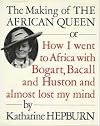
The Making of The African Queen: Or How I Went to Africa With Bogart, Bacall and Huston and Almost Lost My Mind
by Katharine Hepburn 
On This Page
Description
Recalls the adventures of Katharine Hepburn, John Huston, Humphrey Bogart, and Lauren Bacall during the grueling, on-location filming of The African Queen which prove to be as entertaining and unforgettable as the film classic itself. Includes 45 behind the scenes photos. Hepburn recalls her experience of making this popular film, revealing her emotional highs and lows during the filming, her competitiveness, and her insecurities.Tags
Recommendations
























Member Recommendations


by anonymous user

Member Reviews
More than 35 years after making “The African Queen” with Humphrey Bogart, Katherine Hepburn wrote about the experience in “The Making of The African Queen” (1987).
The short book, full of photographs (not movie stills), is loaded with charm. In a few, well-chosen words, Hepburn captures the personalities of those involved in making the movie, including director John Huston and producer Sam Spiegel. Her descriptions are often blunt, but never more so than when writing about herself. She calls herself an "old fusspot" at one point and says she "looked like a very freckled female impersonator."
About Bogart she says, "To put it simply: There was no bunk about Bogie. He was a man." As for Lauren Bacall, who does not appear in the show more film, Hepburn describes how effective she is working behind the scenes. She regards Huston as a genius despite what often seemed to her a lackadaisical attitude about the movie.
The adventure of making the movie in Africa almost rivals the adventure in the movie itself. At one point the African Queen sinks. Army ants stream through the middle of Hepburn's hut. She gets very sick, as do many others who drink the bottled water. Those who stick with alcohol do fine.
"Technical problems galore and no chairs — no dressings rooms — no toilet — hot ginger ale and fruit juice and beer — the problem of sending out lunch for forty people," she writes. Complete sentences are not a high priority for Hepburn.
Anyone who loves this movie would love this book. show less
The short book, full of photographs (not movie stills), is loaded with charm. In a few, well-chosen words, Hepburn captures the personalities of those involved in making the movie, including director John Huston and producer Sam Spiegel. Her descriptions are often blunt, but never more so than when writing about herself. She calls herself an "old fusspot" at one point and says she "looked like a very freckled female impersonator."
About Bogart she says, "To put it simply: There was no bunk about Bogie. He was a man." As for Lauren Bacall, who does not appear in the show more film, Hepburn describes how effective she is working behind the scenes. She regards Huston as a genius despite what often seemed to her a lackadaisical attitude about the movie.
The adventure of making the movie in Africa almost rivals the adventure in the movie itself. At one point the African Queen sinks. Army ants stream through the middle of Hepburn's hut. She gets very sick, as do many others who drink the bottled water. Those who stick with alcohol do fine.
"Technical problems galore and no chairs — no dressings rooms — no toilet — hot ginger ale and fruit juice and beer — the problem of sending out lunch for forty people," she writes. Complete sentences are not a high priority for Hepburn.
Anyone who loves this movie would love this book. show less
The African Queen starred Humphrey Bogart and Katharine Hepburn, and was released wide in 1952. If you don't know what it is, or why you should care about it, nothing I say hereinafter will make one drop of sense to you, and you'd far better use your eyeblinks elsewhere. Remember to shut the screen door not slam it! Papaw's nerves are raggedy at this hour of the day.
Katharine Hepburn was the Meryl Streep of her time. Well regarded, blessed with talent, a bit upper-crusty in her roles. When the story of the making of The African Queen begins, she is treading the boards in Shakespearean stuff and, frankly, pretty bored. She needs a challenge to spark her inner V-16 engine. A call comes to her friend's home, where she's staying...there's a show more script based on a novel...nothing new...but set in Africa! Yes please, Mr. Producer, send it to me and I shall read forthwith. Read she does; part's great, script's so-so, so....
On page 7, Hepburn writes of her initial meeting with Producer Sam Spiegel, wherein a raft of English actors were discussed for the part of Cockney Charlie Alnutt, and finally Spiegel says, "What about Bogart—he could be Canadian." And there it was, decided. Did getting Hepburn mean Spiegel could now stand a chance to get Bogart? Did it occur to him in a divine revelation on that spot? Was he hell-bent on the casting of both these American actors to play uber-British roles so American audiences would turn out en masse? We know that the Brits put up £250,000 (about $60 million in today's dollars) only after their Film Finance Board overcame demands for Brits to be cast in the British author [author:C.S. Forester|932179]'s bestselling 1936 novel about Brits in World War I East Africa.
Such are the things producers must concern themselves with and all at the same time, in the same calculation. The film's budget, in today's dollars, was about $100 million and the box office ended up at around $1 billion. But while Producer Spiegel chatted up the excited and eager Miss Hepburn in the kitchen that first day, he had bubkes except a script, a director (the already almost-legendary John Huston), and now a star. But this star, this force of nature Miss Katharine Hepburn, wanted to film this Technicolor all-outdoors vehicle for some major Hollywood egos on location. In Africa, that is. On big African rivers with real, malaria-sodden African mosquitoes and real, bilharzia-causing schistosoma snails. "We'll see," equivocates a rapidly thinning producer; "we'll see it in Africa," responds Miss Famous Actress with Fans, and guess where they filmed it.
Africa is hot. It's big. People in the Belgian Congo don't speak English, and even French is touch-and-go. Getting to Africa took days on planes, weeks on boats. Getting Technicolor cameras to Arizona was a huge deal! The mind boggles, the spirit quails, to imagine getting these multi-million-1951-dollar monsters to Africa! Not to mention two movie stars. Assorted crew, camera operators, thousands of props, safe drinking water, food...a director whose gun fetish and desire to murder elephants must be coddled...rich Americans all, and not a little high-handed even among themselves.
It's her saving grace that Hepburn, writing this book in the 1980s, realized that she was a Bigfoot stomping all over everyone. Didn't stop her, probably wouldn't if she'd gone again, but really now is any celebrity likely to behave differently? Not often.
The shoot is huge. The crew isn't all in place when they arrive. The advance construction of different things must needs be torn down and rebuilt, the piece supposed to fit here don't fit there, in short the bog-standard common-as-pigtracks problems of doing a complicated thing in a limited amount of time. Miss Hepburn acts as costume lady, invents a solution to wilting-chapeau syndrome (super creative, impressed me a lot), seamstresses, does hair...
"Those jerks" are Bogie and John Huston, Hepburn's costar and director. Her friends. She has little enough to say about Bogart, a good deal more to say about Bacall who came with him but not all of it kind. She's also not kind about Huston's inability to be on time, his indifference to the reality of others' feelings, emotions, existence, his bloodlust. But beginning on page 81 and ending on page 83, Miss Hepburn the journeyman actress recalls Director Huston's performance notes on Rosie Sayer's unsmiling, serious countenance. How hard it is to watch a serious face for so long...how Mrs. Roosevelt, an unhandsome lady, dealt with a similar issue.
And Miss Hepburn the journeyman actress, writing at a distance of thirty-five years, still lights up at the memory of receiving her entire performance in a short, simple, perfectly observed and conveyed image from a genius of image-making. She went on to make the film on a perfect note, sustained throughout by the single conversation and its illuminating insight. It is the most gorgeous moment in the book.
There aren't a lot of anecdotes in the book, the kind you'll whip out at parties to improve the shining hour, but there are lovely and honest observations, a lot of unnoticed privilege behind her quite self-aware self-regard, and photos. Lots of them...forty-five...from a man called Alfred E. Lemon, and some from a Life magazine photographer called Eliot Elisofon. The permissions must've taken forever to clear. The text design is clear and simple, using Garamond type and generous white space around the scattered halftone reproductions, including both endsheets. The binding is smyth-sewn with real cloth on the boards.
The book is as much an artifact of a vanished world as is the film it describes, as is the now-gone writer of this personal and charming memoir. Time pressed on her, those years so clear in memory but so distant in time, still eagerly sought by the Fans:
It's hard to get old and lose people, and places, and memories that meant something are increasingly one's own unshareable treasures. What matters, in the end? Is it something anyone can see or is it something so buried there's never going to be another soul who sees it whole and entire?
Katharine Hepburn was a star, but more, she was a genius because she had an answer to that question, one that most people (I think) can agree with and buy into. It is her last word on the topic of this book.
Now, what do you suppose ever happened to Charlie and Rosie? Where did they live? Did they stay in Africa? I always thought they must have. And lots of little Charlies and Rosies. And lived happily ever after. Because that's what we wanted them to do. And every summer they take a trip in the old Queen--and laugh and laugh and laugh and laugh.... show less
Katharine Hepburn was the Meryl Streep of her time. Well regarded, blessed with talent, a bit upper-crusty in her roles. When the story of the making of The African Queen begins, she is treading the boards in Shakespearean stuff and, frankly, pretty bored. She needs a challenge to spark her inner V-16 engine. A call comes to her friend's home, where she's staying...there's a show more script based on a novel...nothing new...but set in Africa! Yes please, Mr. Producer, send it to me and I shall read forthwith. Read she does; part's great, script's so-so, so....
On page 7, Hepburn writes of her initial meeting with Producer Sam Spiegel, wherein a raft of English actors were discussed for the part of Cockney Charlie Alnutt, and finally Spiegel says, "What about Bogart—he could be Canadian." And there it was, decided. Did getting Hepburn mean Spiegel could now stand a chance to get Bogart? Did it occur to him in a divine revelation on that spot? Was he hell-bent on the casting of both these American actors to play uber-British roles so American audiences would turn out en masse? We know that the Brits put up £250,000 (about $60 million in today's dollars) only after their Film Finance Board overcame demands for Brits to be cast in the British author [author:C.S. Forester|932179]'s bestselling 1936 novel about Brits in World War I East Africa.
Such are the things producers must concern themselves with and all at the same time, in the same calculation. The film's budget, in today's dollars, was about $100 million and the box office ended up at around $1 billion. But while Producer Spiegel chatted up the excited and eager Miss Hepburn in the kitchen that first day, he had bubkes except a script, a director (the already almost-legendary John Huston), and now a star. But this star, this force of nature Miss Katharine Hepburn, wanted to film this Technicolor all-outdoors vehicle for some major Hollywood egos on location. In Africa, that is. On big African rivers with real, malaria-sodden African mosquitoes and real, bilharzia-causing schistosoma snails. "We'll see," equivocates a rapidly thinning producer; "we'll see it in Africa," responds Miss Famous Actress with Fans, and guess where they filmed it.
Africa is hot. It's big. People in the Belgian Congo don't speak English, and even French is touch-and-go. Getting to Africa took days on planes, weeks on boats. Getting Technicolor cameras to Arizona was a huge deal! The mind boggles, the spirit quails, to imagine getting these multi-million-1951-dollar monsters to Africa! Not to mention two movie stars. Assorted crew, camera operators, thousands of props, safe drinking water, food...a director whose gun fetish and desire to murder elephants must be coddled...rich Americans all, and not a little high-handed even among themselves.
We packed our duds and I found myself moving all my odd stools—spears—arrows—chairs—down into the accountant's room on the first floor for him to send to New York for me. Things almost impossible to pack. A stink of a job to foist off on anyone. You remember him—the accountant—the rightful inhabitant of my third-floor room. ... How could I be so awful? Apparently easily.
It's her saving grace that Hepburn, writing this book in the 1980s, realized that she was a Bigfoot stomping all over everyone. Didn't stop her, probably wouldn't if she'd gone again, but really now is any celebrity likely to behave differently? Not often.
The shoot is huge. The crew isn't all in place when they arrive. The advance construction of different things must needs be torn down and rebuilt, the piece supposed to fit here don't fit there, in short the bog-standard common-as-pigtracks problems of doing a complicated thing in a limited amount of time. Miss Hepburn acts as costume lady, invents a solution to wilting-chapeau syndrome (super creative, impressed me a lot), seamstresses, does hair...
I never have a permanent, for it makes {hair} feel funny, it makes it smell, and I'm a sort of impractical character. Love the feeling of soft, clean hair. Can't remember that anyone ever made a comment, certainly not either of those jerks. But please yourself and at least someone is pleased.
"Those jerks" are Bogie and John Huston, Hepburn's costar and director. Her friends. She has little enough to say about Bogart, a good deal more to say about Bacall who came with him but not all of it kind. She's also not kind about Huston's inability to be on time, his indifference to the reality of others' feelings, emotions, existence, his bloodlust. But beginning on page 81 and ending on page 83, Miss Hepburn the journeyman actress recalls Director Huston's performance notes on Rosie Sayer's unsmiling, serious countenance. How hard it is to watch a serious face for so long...how Mrs. Roosevelt, an unhandsome lady, dealt with a similar issue.
And Miss Hepburn the journeyman actress, writing at a distance of thirty-five years, still lights up at the memory of receiving her entire performance in a short, simple, perfectly observed and conveyed image from a genius of image-making. She went on to make the film on a perfect note, sustained throughout by the single conversation and its illuminating insight. It is the most gorgeous moment in the book.
There aren't a lot of anecdotes in the book, the kind you'll whip out at parties to improve the shining hour, but there are lovely and honest observations, a lot of unnoticed privilege behind her quite self-aware self-regard, and photos. Lots of them...forty-five...from a man called Alfred E. Lemon, and some from a Life magazine photographer called Eliot Elisofon. The permissions must've taken forever to clear. The text design is clear and simple, using Garamond type and generous white space around the scattered halftone reproductions, including both endsheets. The binding is smyth-sewn with real cloth on the boards.
The book is as much an artifact of a vanished world as is the film it describes, as is the now-gone writer of this personal and charming memoir. Time pressed on her, those years so clear in memory but so distant in time, still eagerly sought by the Fans:
It's strange being a movie actor. The product goes out—it's popular—it's unpopular—or it's somewhere in between. And it's always to me a real part of myself. I mean it represents my own decision to do it: Was I wise? Was I dumb? I've tried never to do anything just for the money. I do it because I love it—the idea and the characters. And, my oh my, it is great when you—when the people like it too and make it theirs—that is the real reward.
So, suddenly, thirty-five years have rushed by. Bogie has gone. {Sam} Spiegel {the producer} has gone. The Queen herself is still alive--so are John {Huston} and Betty {Bacall} and Peter {Viertel, the German boat captain} and I.
It's hard to get old and lose people, and places, and memories that meant something are increasingly one's own unshareable treasures. What matters, in the end? Is it something anyone can see or is it something so buried there's never going to be another soul who sees it whole and entire?
Katharine Hepburn was a star, but more, she was a genius because she had an answer to that question, one that most people (I think) can agree with and buy into. It is her last word on the topic of this book.
A fun and quick read about the making of the Bogie/Hepburn movie. Lots of pictures, and rich descriptions of the setting, weather, hazards, and people, movie people and locals, both.
Katharine Hepburn reminiscences about the making of the movie thirty-five years after the fact. After signing on she becomes frustrated with John Huston's lack of attentiveness to the writing and revising of the script. He comes across as genius, but irresponsible and self-centered. Katharine sees the whole thing as an adventure and goes out of her way to see and experience the country and people. Bogie comes across as dedicated and easy to work with. Huston takes every opportunity to go off hunting and he and Bogie spend a lot of time drinking. Everyone gets sick at some point and the conditions are not great. The text is like listening to a Hepburn interview, very chatty. I need to go back and watch the movie again after reading this.
Not really a making of book more of a memoir of her time spent in Africa and the making of the film. Starts with the contract negotiations and the lack of a script. Her travels to get to Africa and then Africa itself. She talks about having to have the best hut in her viewpoint even going so far as to kick some others in the production crew out of their motel room. Her helping hand man who was a native. Very fun read and you can easily hear her voicing this book aloud and her very forthright attitude.
I read this 3 days after seeing the movie. It is written in the style of Hepburn's speech, and full of wonderful insights into the personalities of the people of the film, especially Hepburn herself, John Huston, and Humphrey Bogart.
One of my favorite small venues for an intimate, unique concert experience is The Kate—short for The Katharine Hepburn Cultural Arts Center—in Old Saybrook, Connecticut, a 285-seat theater with outstanding acoustics that hosts multi-genre entertainment in a historic building dating back to 1911 that once served as both theater and Town Hall. In 2013, my wife and I had the great pleasure of seeing Jefferson Airplane alum Marty Balin rock out at The Kate. More recently, we swayed in our seats to the cool Delta blues of Tab Benoit. On each occasion, prior to the show, we explored the photographs and memorabilia on display in the Katharine Hepburn Museum on the lower level, dedicated to the life and achievements of an iconic individual show more who was certainly one of greatest actors of her generation.
Hepburn was a little girl when she first stayed at her affluent family’s summer home in the tony Fenwick section of Old Saybrook, just a year after the opening of the then newly constructed Town Hall that today bears her name. She later dubbed the area “paradise,” returning frequently over the course of her long life and eventually retiring to her mansion in Fenwick overlooking the water, where she spent her final years until her death at 96 in 2003. The newly restored performing arts center named in her honor opened six years later, with the blessings of the Hepburn family and her estate.
One of the eye-catching attractions in the museum includes an exhibit behind glass showcasing Hepburn’s performance with co-star Humphrey Bogart in the celebrated 1951 film, The African Queen, that features a copy of the 1987 memoir credited to her whimsically entitled The Making of the African Queen: Or How I went to Africa With Bogart, Bacall and Huston and almost lost my mind. I turned to my wife and asked her to add this book to my Christmas list.
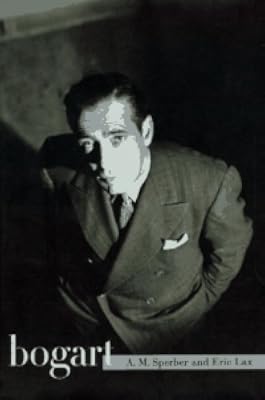
Now, full disclosure: I am a huge Bogie fan (my wife less so!). I recently read and reviewed the thick biography Bogart, by A.M. Sperber & Eric Lax, and in the process screened twenty of his films in roughly chronological order. My wife sat in on some of these, including The African Queen, certainly her favorite of the bunch. If I had to pick five of the finest Bogie films of all time, that would certainly make the list. Often denied the recognition that was his due, he won his sole Oscar for his role here. A magnificent performer, in this case Bogart benefited not only from his repeat collaboration with the immensely talented director John Huston, but also by starring opposite the inimitable Kate Hepburn.
For those who are unfamiliar with the film (what planet are you from?), The African Queen, based on the C. S. Forester novel of the same name, is the story of the unlikely alliance and later romantic relationship between the staid, puritanical British missionary and “spinster” (a term suitable to the times) Rose Sayers (Hepburn) and the gin-soaked Canadian Charlie Allnut (Bogart), skipper of the riverboat African Queen, set in German East Africa (present-day Tanzania) at the outbreak of World War I. After aggression by German forces leaves Rose stranded, she is taken onboard by Allnut. In a classic journey motif that brilliantly courts elements of drama, adventure, comedy, and romance, the film follows this mismatched duo as they conspire to arm the African Queen with explosives and pilot it on a mission to torpedo a German gunboat. Those who watch the movie for the first time will be especially struck by the superlative performances of both Bogie and Hepburn, two middle-aged stars who not only complement one another beautifully but turn out an unexpected on-screen chemistry that has the audience emotionally involved, rooting for their romance and their cause. It is a tribute to their mutual talents that the two successfully communicated palpable on-screen passion to audiences of the time who must have been struck by the stark disparity between the movie posters depicting Bogie as a muscular he-man and Hepburn as a kind of Rita Hayworth twin—something neither the scrawny Bogart nor the aging Hepburn live up to in the Technicolor print. But even more so because those same 1951 audiences were well acquainted with the real-life 51-year-old Bogart’s marriage to the beautiful 27-year-old starlet Lauren (real name Betty) Bacall, born of an on-set romance when she was just 19.
Katharine Hepburn had a long career in Hollywood marked by dramatic ebbs and flows. While she was nominated for an Academy Award twelve times and set a record for winning the Best Actress Oscar four times, more than once her star power waned, and at one point she was even widely considered “box office poison.” Her offscreen persona was both unconventional and eccentric. She defied contemporary expectations of how a woman and a movie star should behave: shunning celebrity, sparring with the press, expressing unpopular political opinions, wearing trousers at a time that was unacceptable for ladies, fiercely guarding her privacy, and stubbornly clinging to an independent lifestyle. She was pilloried as boyish, and accused of lesbianism at a time when that was a vicious expletive, but she evolved into a twentieth century cultural icon. Divorced at a young age, she once dated Howard Hughes, but spent nearly three decades in a relationship with the married, alcoholic Spencer Tracy, with whom she costarred in nine films. Rumors of liaisons with other women still linger. Perhaps no other female figure cut a groove in Hollywood as deep as Kate Hepburn did.
Hepburn’s book, The Making of the African Queen, showed up under the tree last Christmas morning—the original hardcover first edition, for that matter—and I basically inhaled it over the next couple of days. It’s an easy read. Hepburn gets the byline but it’s clear pretty early on that the “narrative” is actually comprised of excerpts from interviews she sat for, strung together to give the appearance of a book-length chronicle. But no matter. Those familiar with Kate’s distinctive voice and the cadence of her signature Transatlantic accent will start to hear her pronouncing each syllable of the text in your head as you go along. That quality is comforting. But it is nevertheless plagued by features that should make you crazy: it’s anecdotal, it’s uneven, it’s conversational, it’s meandering, and maddingly it reveals only what Hepburn is willing to share. In short, if this were any other book about any other subject related by any other person, you would grow not only annoyed but fully exasperated. But somehow, unexpectedly, it turns out to be nothing less than a delight!
If The African Queen is a cinema adventure, aspects of the film production were a real-life one. Unusual for its time, bulky Technicolor cameras were transported to on-location shoots in Uganda and Congo, nations today that then were still under colonial rule. The heat was oppressive, and danger seemed to lurk everywhere, but fears of lions and crocodiles were trumped by smaller but fiercer army ants and mosquitoes, a host of water-borne pathogens, as well as an existential horror of leeches. Tough guy Bogie was miserable from start to finish, but Hepburn reveled in the moment, savoring the exotic flora and fauna, and bursting with excitement. Still, almost everyone—including Kate—fell terribly ill at least some of the time with dysentery and a variety of other jungle maladies. At one point Hepburn was vomiting between takes into a bucket placed off-screen. The running joke was that the only two who never got sick were Bogie and director Huston, because they eschewed the local water and only drank Scotch!
Huston went to Africa hoping to “out-Hemingway” Hemingway in big game hunting, but his safari chasing herds of elephants turned into a lone antelope instead. He seemed to do better with Kate. The book does not openly admit to an affair, but the intimacy between them leaps off the page. Hepburn proves affable through every paragraph, although sometimes less than heroic. Readers will wince when upon first arrival in Africa she instantly flies into a fit of rage that has her evict a staff member from an assigned hotel room that to her mind rightly should belong to a VIP of her caliber! And while she is especially kind, almost to a fault, to every African recruited to serve her in various capacities, there is a patronizing tone in her recollections that can’t help but make us a bit uncomfortable today. Still, you cannot detect even a hint of racism. You get the feeling that she genuinely liked people of all stations of life, but could be unrepentantly condescending towards those who did not, like her, walk among the stars. Yet, warts and all—and these are certainly apparent—Kate comes off today, long after her passing, as likeable as she did to those who knew her in her times. And what times those must have been!
This book is pure entertainment, with the added bonus of forty-five wonderful behind-the-scenes photographs that readers may linger upon far longer than the pages of text. For those who loved the film as I do, the candid moments that are captured of Bogie, Hepburn, and Huston are precious relics of classic Hollywood that stir the heart and the soul. If you are a fan, carve out the time and read The Making of the African Queen. But more importantly, screen The African Queen again. Then you will truly know what I mean.
A link to The Kate: The Kate
A link to the The African Queen on IMDB: IMDB: The African Queen
My review of the Bogart bio: Review of: Bogart, by A.M. Sperber & Eric Lax
NOTE: My top five Bogie films: Casablanca, The Maltese Falcon, Treasure of the Sierra Madre, The African Queen, The Caine Mutiny—but there are so many, it’s difficult to choose…
Review of: The Making of the African Queen: Or How I went to Africa With Bogart, Bacall and Huston and almost lost my mind, by Katharine Hepburn – Regarp Book Blog https://regarp.com/2023/08/12/review-of-the-making-of-the-african-queen-or-how-i... show less
Hepburn was a little girl when she first stayed at her affluent family’s summer home in the tony Fenwick section of Old Saybrook, just a year after the opening of the then newly constructed Town Hall that today bears her name. She later dubbed the area “paradise,” returning frequently over the course of her long life and eventually retiring to her mansion in Fenwick overlooking the water, where she spent her final years until her death at 96 in 2003. The newly restored performing arts center named in her honor opened six years later, with the blessings of the Hepburn family and her estate.
One of the eye-catching attractions in the museum includes an exhibit behind glass showcasing Hepburn’s performance with co-star Humphrey Bogart in the celebrated 1951 film, The African Queen, that features a copy of the 1987 memoir credited to her whimsically entitled The Making of the African Queen: Or How I went to Africa With Bogart, Bacall and Huston and almost lost my mind. I turned to my wife and asked her to add this book to my Christmas list.
Now, full disclosure: I am a huge Bogie fan (my wife less so!). I recently read and reviewed the thick biography Bogart, by A.M. Sperber & Eric Lax, and in the process screened twenty of his films in roughly chronological order. My wife sat in on some of these, including The African Queen, certainly her favorite of the bunch. If I had to pick five of the finest Bogie films of all time, that would certainly make the list. Often denied the recognition that was his due, he won his sole Oscar for his role here. A magnificent performer, in this case Bogart benefited not only from his repeat collaboration with the immensely talented director John Huston, but also by starring opposite the inimitable Kate Hepburn.
For those who are unfamiliar with the film (what planet are you from?), The African Queen, based on the C. S. Forester novel of the same name, is the story of the unlikely alliance and later romantic relationship between the staid, puritanical British missionary and “spinster” (a term suitable to the times) Rose Sayers (Hepburn) and the gin-soaked Canadian Charlie Allnut (Bogart), skipper of the riverboat African Queen, set in German East Africa (present-day Tanzania) at the outbreak of World War I. After aggression by German forces leaves Rose stranded, she is taken onboard by Allnut. In a classic journey motif that brilliantly courts elements of drama, adventure, comedy, and romance, the film follows this mismatched duo as they conspire to arm the African Queen with explosives and pilot it on a mission to torpedo a German gunboat. Those who watch the movie for the first time will be especially struck by the superlative performances of both Bogie and Hepburn, two middle-aged stars who not only complement one another beautifully but turn out an unexpected on-screen chemistry that has the audience emotionally involved, rooting for their romance and their cause. It is a tribute to their mutual talents that the two successfully communicated palpable on-screen passion to audiences of the time who must have been struck by the stark disparity between the movie posters depicting Bogie as a muscular he-man and Hepburn as a kind of Rita Hayworth twin—something neither the scrawny Bogart nor the aging Hepburn live up to in the Technicolor print. But even more so because those same 1951 audiences were well acquainted with the real-life 51-year-old Bogart’s marriage to the beautiful 27-year-old starlet Lauren (real name Betty) Bacall, born of an on-set romance when she was just 19.
Katharine Hepburn had a long career in Hollywood marked by dramatic ebbs and flows. While she was nominated for an Academy Award twelve times and set a record for winning the Best Actress Oscar four times, more than once her star power waned, and at one point she was even widely considered “box office poison.” Her offscreen persona was both unconventional and eccentric. She defied contemporary expectations of how a woman and a movie star should behave: shunning celebrity, sparring with the press, expressing unpopular political opinions, wearing trousers at a time that was unacceptable for ladies, fiercely guarding her privacy, and stubbornly clinging to an independent lifestyle. She was pilloried as boyish, and accused of lesbianism at a time when that was a vicious expletive, but she evolved into a twentieth century cultural icon. Divorced at a young age, she once dated Howard Hughes, but spent nearly three decades in a relationship with the married, alcoholic Spencer Tracy, with whom she costarred in nine films. Rumors of liaisons with other women still linger. Perhaps no other female figure cut a groove in Hollywood as deep as Kate Hepburn did.
Hepburn’s book, The Making of the African Queen, showed up under the tree last Christmas morning—the original hardcover first edition, for that matter—and I basically inhaled it over the next couple of days. It’s an easy read. Hepburn gets the byline but it’s clear pretty early on that the “narrative” is actually comprised of excerpts from interviews she sat for, strung together to give the appearance of a book-length chronicle. But no matter. Those familiar with Kate’s distinctive voice and the cadence of her signature Transatlantic accent will start to hear her pronouncing each syllable of the text in your head as you go along. That quality is comforting. But it is nevertheless plagued by features that should make you crazy: it’s anecdotal, it’s uneven, it’s conversational, it’s meandering, and maddingly it reveals only what Hepburn is willing to share. In short, if this were any other book about any other subject related by any other person, you would grow not only annoyed but fully exasperated. But somehow, unexpectedly, it turns out to be nothing less than a delight!
If The African Queen is a cinema adventure, aspects of the film production were a real-life one. Unusual for its time, bulky Technicolor cameras were transported to on-location shoots in Uganda and Congo, nations today that then were still under colonial rule. The heat was oppressive, and danger seemed to lurk everywhere, but fears of lions and crocodiles were trumped by smaller but fiercer army ants and mosquitoes, a host of water-borne pathogens, as well as an existential horror of leeches. Tough guy Bogie was miserable from start to finish, but Hepburn reveled in the moment, savoring the exotic flora and fauna, and bursting with excitement. Still, almost everyone—including Kate—fell terribly ill at least some of the time with dysentery and a variety of other jungle maladies. At one point Hepburn was vomiting between takes into a bucket placed off-screen. The running joke was that the only two who never got sick were Bogie and director Huston, because they eschewed the local water and only drank Scotch!
Huston went to Africa hoping to “out-Hemingway” Hemingway in big game hunting, but his safari chasing herds of elephants turned into a lone antelope instead. He seemed to do better with Kate. The book does not openly admit to an affair, but the intimacy between them leaps off the page. Hepburn proves affable through every paragraph, although sometimes less than heroic. Readers will wince when upon first arrival in Africa she instantly flies into a fit of rage that has her evict a staff member from an assigned hotel room that to her mind rightly should belong to a VIP of her caliber! And while she is especially kind, almost to a fault, to every African recruited to serve her in various capacities, there is a patronizing tone in her recollections that can’t help but make us a bit uncomfortable today. Still, you cannot detect even a hint of racism. You get the feeling that she genuinely liked people of all stations of life, but could be unrepentantly condescending towards those who did not, like her, walk among the stars. Yet, warts and all—and these are certainly apparent—Kate comes off today, long after her passing, as likeable as she did to those who knew her in her times. And what times those must have been!
This book is pure entertainment, with the added bonus of forty-five wonderful behind-the-scenes photographs that readers may linger upon far longer than the pages of text. For those who loved the film as I do, the candid moments that are captured of Bogie, Hepburn, and Huston are precious relics of classic Hollywood that stir the heart and the soul. If you are a fan, carve out the time and read The Making of the African Queen. But more importantly, screen The African Queen again. Then you will truly know what I mean.
A link to The Kate: The Kate
A link to the The African Queen on IMDB: IMDB: The African Queen
My review of the Bogart bio: Review of: Bogart, by A.M. Sperber & Eric Lax
NOTE: My top five Bogie films: Casablanca, The Maltese Falcon, Treasure of the Sierra Madre, The African Queen, The Caine Mutiny—but there are so many, it’s difficult to choose…
Review of: The Making of the African Queen: Or How I went to Africa With Bogart, Bacall and Huston and almost lost my mind, by Katharine Hepburn – Regarp Book Blog https://regarp.com/2023/08/12/review-of-the-making-of-the-african-queen-or-how-i... show less
Members
- Recently Added By
Published Reviews
ThingScore 50
The Making of “The African Queen” is about Hepburn’s intense involvement with Huston, and the “and almost lost my mind,” in the title, is her pointing up that she knew he was impossible, but was smitten anyway. (He was forty-four and well known to be a charmer monster; she was forty-three). During a break in the filming, Huston decides to go hunting for elephants...
I don’t know show more that I would read this sort of gush by anyone else. But this is Katharine Hepburn writing about herself and John Huston; it’s an icon showing herself in a new light, and it has an element of giddy surprise. So do a couple of the photographs and the captions she has written. show less
I don’t know show more that I would read this sort of gush by anyone else. But this is Katharine Hepburn writing about herself and John Huston; it’s an icon showing herself in a new light, and it has an element of giddy surprise. So do a couple of the photographs and the captions she has written. show less
added by SnootyBaronet
Lists

Adventure Travel & Exploration In Africa
13 works; 4 members
Author Information

Actress Katharine Houghton Hepburn was born in Hartford, Connecticut on November 8, 1907. She attended the Oxford School for Girls and Bryn Mawr College. Hepburn wrote The Making of the African Queen and Me: Stories of My Life. She is one of America's best known actresses, and earned four Academy Awards. (Bowker Author Biography)
Katharine Hepburn has a Legacy Library. Legacy libraries are the personal libraries of famous readers, entered by LibraryThing members from the Legacy Libraries group.
Some Editions
Awards and Honors
Distinctions
Series
Belongs to Publisher Series
Heyne Allgemeine Reihe (8328)
Common Knowledge
- Canonical title
- The Making of The African Queen: Or How I Went to Africa With Bogart, Bacall and Huston and Almost Lost My Mind
- Original title
- The Making of The African Queen: Or How I Went to Africa With Bogart, Bacall and Huston and Almost Lost My Mind
- Original publication date
- 1987
- People/Characters
- Katharine Hepburn; Humphrey Bogart; Lauren Bacall; John Huston
- Important places
- Africa; Congo; Uganda
- Related movies
- The African Queen (1951 | IMDb)
- Dedication
- To Mother and Dad
- First words
- I've never written a diary—well, I mean, put down dreary things like when did my eye start twitching? when did it stop? why did it do it?—well, you know, things the doctor asks you and you've always forgotten them because... (show all) they are really fundamentally dull.
- Quotations
- Oh God, those stories. I don’t know how many words came out a minute—but articulation with this genius is a real problem and he’s so concentrated that nothing throws him. He doesn’t even seem aware of whether anyone i... (show all)s listening.
- Last words
- (Click to show. Warning: May contain spoilers.)And every summer they take a trip in the old Queen—and laugh and laugh and laugh and laugh...
- Original language
- English
Classifications
- Genres
- Biography & Memoir, Nonfiction, General Nonfiction, Travel
- DDC/MDS
- 791.43 — Arts & recreation Recreation, sports, and performing arts Public performances Motion pictures, radio, television, podcasting Motion pictures
- LCC
- PN1997 .A31163 .H47 — Language and Literature Literature (General) Literature (General) Drama Motion pictures Plays, scenarios, etc.
- BISAC
Statistics
- Members
- 829
- Popularity
- 33,206
- Reviews
- 16
- Rating
- (3.83)
- Languages
- 8 — English, Finnish, French, German, Italian, Japanese, Spanish, Swedish
- Media
- Paper
- ISBNs
- 20
- UPCs
- 1
- ASINs
- 9