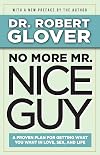
No More Mr Nice Guy: A Proven Plan for Getting What You Want in Love, Sex, and Life
by Robert A. Glover
On This Page
Description
Originally published as an e-book that became a controversial media phenomenon, No More Mr. Nice Guy!, landed its author, a certified marriage and family therapist, on The O'Reilly Factor and the Rush Limbaugh radio show. Dr. Robert Glover has dubbed the "Nice Guy Syndrome" trying too hard to please others while neglecting one's own needs, thus causing unhappiness and resentfulness. It's no wonder that unfulfilled Nice Guys lash out in frustration at their loved ones, claims Dr. Glover. He show more explains how they can stop seeking approval and start getting what they want in life, by presenting the information and tools to help them ensure their needs are met, to express their emotions, to have a satisfying sex life, to embrace their masculinity, and form meaningful relationships with other men, and to live up to their creative potential. show lessTags
Recommendations





































Member Reviews
For two years I was in a relationship with a man who constantly shame dumped me (tries to make me feel shame when I confront him when he hurts me by saying something negative about me so my shame will be greater than his), projects his insecurities into me, degrades everyone around him or any marginalized group, keeps tabs on hundreds of female friends while simultaneously bashing all the women who have hurt him. He has made me feel small and weak and like there was something wrong with me. This book didn’t just piss me off, it gave me the courage to say enough - go fix your behavior and stop treating everyone else like they’re the problem when the real issue is staring at you in the mirror. If you have a man who hates women, is show more passive aggressive, makes you feel guilt for things you don’t feel guilty about, has mostly female friends, won’t connect with other men or ask them for help, plays the victim time and time again - this is a book he needs to read. And probably you, too. It just might change your life. show less
Reading this book was like looking in a mirror, uncomfortably so. Glover discusses the causes, consequences, and solutions to something he deems Nice Guy syndrome. Nice Guys are fundamentally kind, non-confrontational, emotionally aware and intelligent people who are often fucking miserable in their lives. They have few friendships, their loves lives are a disaster, and they are dissatisfied in their careers. And if they (or you, or me) keep doing the same things they've always been doing, nothing will actually change.
Glover's basic frame is that Nice Guys are actually manipulative, unable to freely give and receive, out of touch with their own needs and the world around them. A desire to please people and to live a life without show more disruptions means concealing what they want, piling up resentment when those needs are not met, and not actually offering anything to others. Nice Guys are in fact the very opposite of nice.
The solution is not easy, requiring both a fair amount of inner work and life style changes, but it isn't impossible. Basically, you have reconstruct the flawed relationship with your parents and reach some kind of peace with all the past emotion damage. In the present, you have to draw firm boundaries, express yourself honestly, and make the time in your life for male friendships and exercise.
As the above might hint, Glover's premise is basically a variation on attachment styles. Children are absolutely dependent on their parents, usually their mother, and attention and validation seeking behaviors are only natural in children. The problem is that for various reasons, Nice Guys never grow up. Glover argues that traditional bonds between men, adolescents, and boys have been broken, that boys are primarily raised by women because fathers are absent from the home, either working or separated, and most teachers are women. He blames feminism, which I disagree with. It's not feminism that's kept men from working in schools or changed labor from primarily agricultural to industrial/intellectual. While Gender Studies departments are overwhelmingly populated by women primarily researching women's issues, it still falls upon male scholars to do the work for their own gender.
I have good antenna for manosphere bullshit and this book ain't it. While Glover believes there are basic differences between masculine and feminine energies, both are necessary and neither is superior. Nothing in this book advocates controlling, harassing, or abusing women. Recovering from Nice Guy Syndrome doesn't mean becoming a jerk, it means becoming yourself. show less
Glover's basic frame is that Nice Guys are actually manipulative, unable to freely give and receive, out of touch with their own needs and the world around them. A desire to please people and to live a life without show more disruptions means concealing what they want, piling up resentment when those needs are not met, and not actually offering anything to others. Nice Guys are in fact the very opposite of nice.
The solution is not easy, requiring both a fair amount of inner work and life style changes, but it isn't impossible. Basically, you have reconstruct the flawed relationship with your parents and reach some kind of peace with all the past emotion damage. In the present, you have to draw firm boundaries, express yourself honestly, and make the time in your life for male friendships and exercise.
As the above might hint, Glover's premise is basically a variation on attachment styles. Children are absolutely dependent on their parents, usually their mother, and attention and validation seeking behaviors are only natural in children. The problem is that for various reasons, Nice Guys never grow up. Glover argues that traditional bonds between men, adolescents, and boys have been broken, that boys are primarily raised by women because fathers are absent from the home, either working or separated, and most teachers are women. He blames feminism, which I disagree with. It's not feminism that's kept men from working in schools or changed labor from primarily agricultural to industrial/intellectual. While Gender Studies departments are overwhelmingly populated by women primarily researching women's issues, it still falls upon male scholars to do the work for their own gender.
I have good antenna for manosphere bullshit and this book ain't it. While Glover believes there are basic differences between masculine and feminine energies, both are necessary and neither is superior. Nothing in this book advocates controlling, harassing, or abusing women. Recovering from Nice Guy Syndrome doesn't mean becoming a jerk, it means becoming yourself. show less
A book by a self-declared “recovering nice guy” for nice guys seems like a hot mess. And yet. The very first chapter lays out how Nice Guys only think they’re nice (hence the name) and are in fact manipulative and passive aggressive. The book then lays out chapter by chapter how reform your life to have healthier relationships (both romantic and platonic). The titles of each chapter were red flags, “Get the Sex You Want”, “Reclaim Your Personal Power”, etc but it quickly became clear that a lot of this book was couched in sexist language to appeal to the kind of person who thought they were a Nice Guy.
A lot of the advice in this book is really useful and positive, such as having friends and/or a support group to talk show more through your issues, to not infantilize your partner or make her your emotional center (Robert A. Glover goes out of his way multiple times to tell you he helps straight and gay men, but this book is clearly written almost exclusively for straight men).
Nice guys are known for being anti-women, essentially blaming women for all of their problems. And for the most part “No More Mr Nice Guys” avoids falling into this trap, pressing men to take accountability for their actions and relationships. Some parts… get weird though. Glover goes through the history of America (presumably? He doesn’t specifically say its American but he also doesn’t talk about anything else). He decries elementary schools for being taught mostly by women. Does he get into the nitty gritty of why women are pushed into caregiving roles? No. But he does blame this for a stunting of young men’s emotional growth. He blames especially the fathers for the creation of Nice Guys but he also gets into some weird Freudian kill your father, sleep with your mother stuff. There is a whole section about monogamy to your mother that is a lot.
For a book written in 2003 for and by nice guys, this has a lot more positive than negative. There are definitely parts of this book that are red flags, but they’re smaller red flags than nice guys usually have so I’ll take that as a win.
A 2.5 rounded up to 3 stars because Goodreads won't give us half stars! show less
A lot of the advice in this book is really useful and positive, such as having friends and/or a support group to talk show more through your issues, to not infantilize your partner or make her your emotional center (Robert A. Glover goes out of his way multiple times to tell you he helps straight and gay men, but this book is clearly written almost exclusively for straight men).
Nice guys are known for being anti-women, essentially blaming women for all of their problems. And for the most part “No More Mr Nice Guys” avoids falling into this trap, pressing men to take accountability for their actions and relationships. Some parts… get weird though. Glover goes through the history of America (presumably? He doesn’t specifically say its American but he also doesn’t talk about anything else). He decries elementary schools for being taught mostly by women. Does he get into the nitty gritty of why women are pushed into caregiving roles? No. But he does blame this for a stunting of young men’s emotional growth. He blames especially the fathers for the creation of Nice Guys but he also gets into some weird Freudian kill your father, sleep with your mother stuff. There is a whole section about monogamy to your mother that is a lot.
For a book written in 2003 for and by nice guys, this has a lot more positive than negative. There are definitely parts of this book that are red flags, but they’re smaller red flags than nice guys usually have so I’ll take that as a win.
A 2.5 rounded up to 3 stars because Goodreads won't give us half stars! show less
I read this book because I’d heard it mentioned by a couple of people, who said it had some good and some bad. I found it had mostly the latter.
I’ll start with the positive, though, of which there were three main points:
First, Glover provides an excellent diagnosis of the “nice guy syndrome.” As a self-diagnosed, recovering nice guy, I found his assessments helpful. He pointed out behaviors that I need to watch out for and provided a fee helpful insights into their root causes.
Second, he points out that nice guys tend to operate on the basis of what he calls “covert contracts.” These contracts are essentially giving to get. His discussions on this helped me recognize how often I do this without realizing it and that I need show more to be better about simply giving out of love for others.
Third, he points out that nice guys operate from a paradigm that says, if they do everything right, they’ll avoid all conflict. That also means that nice guys then interpret conflict to mean they’ve done something wrong. As a Christian, it’s important to realize that this is untrue. According to Scripture, we’re actually more likely to end up in conflict if we are doing everything right.
As for the rest of the book, it’s not worth the time. More so, his chapter on sex included mostly harmful advice. Because he doesn’t have an overarching value system, he can diagnose problems but can’t give any helpful solution.
For example, Glover says he believes men should act with integrity, which he defines as, “deciding what’s right and then doing it.” I agree in theory but there has to be a measurement for what’s right. He explicitly says that men must decide for themselves what’s right. At that point, you end up with men simply deciding to do what they want and feeling justified in being self-centered. His principle works if you have Scripture defining what’s right but otherwise gives license to selfishness.
Most of the rest of the book is full of points like that. A good diagnosis of a problem and the underlying beliefs, but then terrible or half-true advice on how to actually solve the problem.
Overall, while his diagnoses were mostly true, he couldn’t provide any truly helpful solutions to these problems because he lacked a larger value system to decide what is right and wrong.
To sum up the points that are worth your time from a Christian perspective:
1. Be direct, not passive-aggressive. If you’re a “nice guy,” realize that your tendency is to be passive-aggressive. If you’re a man, God made you to be direct, so embrace it.
2.Recognize that conflict is a part of life and learn to handle it biblically. Stop making decisions based on conflict-avoidance; make them based on what the Word of God says.
3.Related to number 2, stop people-pleasing. Fear God more than man and be a man of integrity. Recognize what Scripture says is right and do it, period.
4.Give out of love for God and neighbor; don’t “give to get,” as Glover put it. Stop operating on unspoken agreements and be clear about your expectations, even if you think it won’t be received well. At least then you can discuss it with the person instead of getting upset that they didn’t uphold their end of a bargain they didn’t know existed.
My final point is this: don’t read this book. Its helpful points, listed above, can be found elsewhere, and I recommend that’s where you get them. Find some good, preferably Reformed, Christian resources on masculinity and read those instead of spending time wading through this sludge for a few gold nuggets. show less
I’ll start with the positive, though, of which there were three main points:
First, Glover provides an excellent diagnosis of the “nice guy syndrome.” As a self-diagnosed, recovering nice guy, I found his assessments helpful. He pointed out behaviors that I need to watch out for and provided a fee helpful insights into their root causes.
Second, he points out that nice guys tend to operate on the basis of what he calls “covert contracts.” These contracts are essentially giving to get. His discussions on this helped me recognize how often I do this without realizing it and that I need show more to be better about simply giving out of love for others.
Third, he points out that nice guys operate from a paradigm that says, if they do everything right, they’ll avoid all conflict. That also means that nice guys then interpret conflict to mean they’ve done something wrong. As a Christian, it’s important to realize that this is untrue. According to Scripture, we’re actually more likely to end up in conflict if we are doing everything right.
As for the rest of the book, it’s not worth the time. More so, his chapter on sex included mostly harmful advice. Because he doesn’t have an overarching value system, he can diagnose problems but can’t give any helpful solution.
For example, Glover says he believes men should act with integrity, which he defines as, “deciding what’s right and then doing it.” I agree in theory but there has to be a measurement for what’s right. He explicitly says that men must decide for themselves what’s right. At that point, you end up with men simply deciding to do what they want and feeling justified in being self-centered. His principle works if you have Scripture defining what’s right but otherwise gives license to selfishness.
Most of the rest of the book is full of points like that. A good diagnosis of a problem and the underlying beliefs, but then terrible or half-true advice on how to actually solve the problem.
Overall, while his diagnoses were mostly true, he couldn’t provide any truly helpful solutions to these problems because he lacked a larger value system to decide what is right and wrong.
To sum up the points that are worth your time from a Christian perspective:
1. Be direct, not passive-aggressive. If you’re a “nice guy,” realize that your tendency is to be passive-aggressive. If you’re a man, God made you to be direct, so embrace it.
2.Recognize that conflict is a part of life and learn to handle it biblically. Stop making decisions based on conflict-avoidance; make them based on what the Word of God says.
3.Related to number 2, stop people-pleasing. Fear God more than man and be a man of integrity. Recognize what Scripture says is right and do it, period.
4.Give out of love for God and neighbor; don’t “give to get,” as Glover put it. Stop operating on unspoken agreements and be clear about your expectations, even if you think it won’t be received well. At least then you can discuss it with the person instead of getting upset that they didn’t uphold their end of a bargain they didn’t know existed.
My final point is this: don’t read this book. Its helpful points, listed above, can be found elsewhere, and I recommend that’s where you get them. Find some good, preferably Reformed, Christian resources on masculinity and read those instead of spending time wading through this sludge for a few gold nuggets. show less
Синдромът "Nice guy" е добре известен и у нас, макар май да няма име на нашия език. Това са тоя тип мъже (главно младежи), които нямат успех с жените, въпреки (или по-скоро именно поради) всичките си старания да са добри.
Характерно за тях е, че нямат подход към нежния пол - не им идва отвътре да са самоуверени. Те много се стараят, прекалено премислят нещата, и много силно се опитват да се сприятелят с жените - show more дотолкова, че самата жена, обект на "ухажването" им не го възприема като такова, а почва да ги възприема просто като приятели.
Това положение на нещата разбира се води до постоянни разочарования и натрупване вътрешен гняв за тия мъже, така че всъщност те не са особено "добри" като характер и таят осъзнато или не, презрение към жените. Така че те хем поставят жените на пиадестал и се стремят всячески да им угаждат (а коя жена иска мъж изтривалка?), хем вътрешно негодуват срещу това и ненавиждат жените, че не им дават това, което смятат, че заслужават (т.е. любов и секс).
Причините за нарастващия брой такива мъже са комплексни, но добрата новина е, че тоя синдром се лекува. За целта обаче е нужна малко "сурова любов", т.е. някой да ти каже нещата право ти куме в очи и без да ги захаросва. Цялата red pill философия е насочена към това. Настоящият автор на тази книга обаче е психолог и терапевт, а те не са от хората, които казват нещата право ти куме в очи, даже съвсем обратното. Поради това той в цялата книга се върти около простите, но неудобни истини, без да има смелостта да ги каже, залива ни с психологичен жаргон и прави нещата много по-сложни, отколкото е нужно да бъдат, и при това доста по-трудно разбираеми и ултимативно - по-малко ефективни.
Понякога всеки има нужда от един силен шут в гъза, който да го стресне и да го насочи в правилната посока. Тази книга правилно идентифицира грешната посока и проблемите в мисленето и вижданията за света и отношенията между половете, които водят до нея, но според мен не осигурява достатъчно силен шут. show less
Характерно за тях е, че нямат подход към нежния пол - не им идва отвътре да са самоуверени. Те много се стараят, прекалено премислят нещата, и много силно се опитват да се сприятелят с жените - show more дотолкова, че самата жена, обект на "ухажването" им не го възприема като такова, а почва да ги възприема просто като приятели.
Това положение на нещата разбира се води до постоянни разочарования и натрупване вътрешен гняв за тия мъже, така че всъщност те не са особено "добри" като характер и таят осъзнато или не, презрение към жените. Така че те хем поставят жените на пиадестал и се стремят всячески да им угаждат (а коя жена иска мъж изтривалка?), хем вътрешно негодуват срещу това и ненавиждат жените, че не им дават това, което смятат, че заслужават (т.е. любов и секс).
Причините за нарастващия брой такива мъже са комплексни, но добрата новина е, че тоя синдром се лекува. За целта обаче е нужна малко "сурова любов", т.е. някой да ти каже нещата право ти куме в очи и без да ги захаросва. Цялата red pill философия е насочена към това. Настоящият автор на тази книга обаче е психолог и терапевт, а те не са от хората, които казват нещата право ти куме в очи, даже съвсем обратното. Поради това той в цялата книга се върти около простите, но неудобни истини, без да има смелостта да ги каже, залива ни с психологичен жаргон и прави нещата много по-сложни, отколкото е нужно да бъдат, и при това доста по-трудно разбираеми и ултимативно - по-малко ефективни.
Понякога всеки има нужда от един силен шут в гъза, който да го стресне и да го насочи в правилната посока. Тази книга правилно идентифицира грешната посока и проблемите в мисленето и вижданията за света и отношенията между половете, които водят до нея, но според мен не осигурява достатъчно силен шут. show less
A really thought provoking book for me. If a book actually makes you re-think your behavior and to make changes at some point; then it's a winner. This was one of those books for me. Recommended.
"Nice Guy Syndrome" - trying too hard to please others while neglecting one's own needs, thus causing unhappiness and resentfulness.
Don't be put off that Robert Glover found fame after he coined this phrase, and was interviewed by the most conservative elements in the media.
I listened to the audiobook in the background while I was doing something light - his clinical examples put in context according to his psychologist's framework were really interesting and I identified with many comments - a self-help book in a nutshell!
Caretaking comes up often, and the 'wrongness' of caretaking seemed to be particularly stark when seeing how these Nice Guys default to it and wield it.
Don't be put off that Robert Glover found fame after he coined this phrase, and was interviewed by the most conservative elements in the media.
I listened to the audiobook in the background while I was doing something light - his clinical examples put in context according to his psychologist's framework were really interesting and I identified with many comments - a self-help book in a nutshell!
Caretaking comes up often, and the 'wrongness' of caretaking seemed to be particularly stark when seeing how these Nice Guys default to it and wield it.
Members
- Recently Added By
Lists

Top Five Books of 2021
604 works; 181 members

Art of Manliness' Men's Reading List
37 works; 2 members

Books Read in 2021
5,361 works; 114 members
Men's healing resources
751 works; 1 member
Author Information

3 Works 653 Members
Common Knowledge
- Original publication date
- 2000
Classifications
Statistics
- Members
- 632
- Popularity
- 46,265
- Reviews
- 17
- Rating
- (3.82)
- Languages
- English, French, German
- Media
- Paper, Audiobook, Ebook
- ISBNs
- 14
- ASINs
- 5