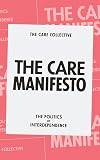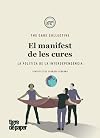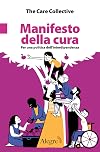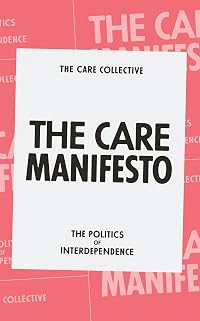
The Care Manifesto: The Politics of Interdependence
by The Care Collective
On This Page
Description
"The Care Manifesto puts care at the heart of the debates of our current crisis: from intimate care--childcare, healthcare, elder care--to care for the natural world. We live in a world where carelessness reigns, but it does not have to be this way. The Care Manifesto puts forth a vision for a truly caring world. The authors want to reimagine the role of care in our everyday lives, making it the organising principle in every dimension and at every scale of life. We are all dependent on each show more other, and only by nurturing these interdependencies can we cultivate a world in which each and every one of us can not only live but thrive. The Care Manifesto demands that we must put care at the heart of the state and the economy. A caring government must promote collective joy, not the satisfaction of individual desire. This means the transformation of how we organise work through co-operatives, localism and nationalisation. It proposes the expansion of our understanding of kinship for a more 'promiscuous care'. It calls for caring places through the reclamation of public space, to make a more convivial city. It sets out an agenda for the environment, most urgent of all, putting care at the centre of our relationship to the natural world" --Amazon.ca. show lessTags
Recommendations








































Member Reviews
Best for:
Those interested in a new way to think about society and community.
In a nutshell:
The Care Collective makes the case for a re-framing of our priorities, putting care at the top, and organizing society around that.
Worth quoting:
“The inherently careless practice of ‘growing the economy’ has taken priority over ensuring the well-being of citizens.”
“One of the great ironies surrounding care is that it is actually the rich who are most dependent on those they pay to service them in innumerable personal ways.”
“We must begin by recognising the myriad ways that our survival and our thriving are everywhere and always contingent on others.”
Why I chose it:
Verso books had a big sale. I might have bought a lot…
Review:
During show more the first UK lock down I joined a mutual aid WhatsApp group. I think the local council supported it with funds, but volunteers managed requests and then posted to the group to see who could fulfill them. Most required use of a car, which I didn’t have, but I was occasionally able to help out by printing a grocery gift certificate and home and then walking it over to a neighbor. When we were able to get a grocery delivery slot, we checked with our neighbor to see if they needed us to get them anything; we both shared extra food from produce boxes or extra things we had baked (our neighbor was a pastry chef, so I think we got the better end of that deal). I have friends with young kids who created ‘pods’ so they could spread the child caring responsibilities while also giving their children a way to socialize when they weren’t in-person in school.
I think for me and many others not raised in a culture of care and community, the pandemic has opened our eyes to what we can all do when we support each other, and how much better life is when we support and care for each other. This manifesto explores how much all of our lives could be improved by putting care at the center of our economy, government, and communities. It starts by making the case that we need to expand the idea of who is a carer in our life from immediate family to our friends and neighbors. Yes, some types of care (such as personal hygiene support) may require a close or intimate relationship, but many others just require being willing and supportive of our friends and neighbors.
In looking at the caring community, the authors argue for four main features. One is mutual support - so the types of things I mentioned at the start of this review. The second is public space - taking back green and other types of spaces that have been privatized and given to companies or private property owners. The third is shared resources - they discuss not just book libraries but other types of sharing systems like tool libraries or appliance shares (do you need a leaf blower every day, or can you perhaps borrow one a couple times a year?). And finally the last is local democracy - supporting the community at a local level based on what is needed.
I enjoyed reading this book as it got me thinking further about what our society really could be, and how deeply disappointing the concept of neoliberalism is, and how ridiculous capitalism is. We can do so much better.
Recommend to a Friend / Keep / Donate it / Toss it:
Recommend to a Friend and Keep show less
Those interested in a new way to think about society and community.
In a nutshell:
The Care Collective makes the case for a re-framing of our priorities, putting care at the top, and organizing society around that.
Worth quoting:
“The inherently careless practice of ‘growing the economy’ has taken priority over ensuring the well-being of citizens.”
“One of the great ironies surrounding care is that it is actually the rich who are most dependent on those they pay to service them in innumerable personal ways.”
“We must begin by recognising the myriad ways that our survival and our thriving are everywhere and always contingent on others.”
Why I chose it:
Verso books had a big sale. I might have bought a lot…
Review:
During show more the first UK lock down I joined a mutual aid WhatsApp group. I think the local council supported it with funds, but volunteers managed requests and then posted to the group to see who could fulfill them. Most required use of a car, which I didn’t have, but I was occasionally able to help out by printing a grocery gift certificate and home and then walking it over to a neighbor. When we were able to get a grocery delivery slot, we checked with our neighbor to see if they needed us to get them anything; we both shared extra food from produce boxes or extra things we had baked (our neighbor was a pastry chef, so I think we got the better end of that deal). I have friends with young kids who created ‘pods’ so they could spread the child caring responsibilities while also giving their children a way to socialize when they weren’t in-person in school.
I think for me and many others not raised in a culture of care and community, the pandemic has opened our eyes to what we can all do when we support each other, and how much better life is when we support and care for each other. This manifesto explores how much all of our lives could be improved by putting care at the center of our economy, government, and communities. It starts by making the case that we need to expand the idea of who is a carer in our life from immediate family to our friends and neighbors. Yes, some types of care (such as personal hygiene support) may require a close or intimate relationship, but many others just require being willing and supportive of our friends and neighbors.
In looking at the caring community, the authors argue for four main features. One is mutual support - so the types of things I mentioned at the start of this review. The second is public space - taking back green and other types of spaces that have been privatized and given to companies or private property owners. The third is shared resources - they discuss not just book libraries but other types of sharing systems like tool libraries or appliance shares (do you need a leaf blower every day, or can you perhaps borrow one a couple times a year?). And finally the last is local democracy - supporting the community at a local level based on what is needed.
I enjoyed reading this book as it got me thinking further about what our society really could be, and how deeply disappointing the concept of neoliberalism is, and how ridiculous capitalism is. We can do so much better.
Recommend to a Friend / Keep / Donate it / Toss it:
Recommend to a Friend and Keep show less
A manifesto I wholeheartedly agree with. The problem and disappointment is that it was written in 2020 after the pandemic began, when there was hope we’d come out of that to do things differently, while instead we have just doubled down on the old ways and sadly making it worse
I like the idea of this book, and the concept of reorganizing society around the concept of caring for one another and the planet. But I wish it had gone into more detail and examples. Instead, every chapter felt like it was just repeating the same thing.
theres some salient points here abt the nature of "care" and how it should b guiding certain political desiderata
but as a manifesto its weak, spineless, and reformist at best
but as a manifesto its weak, spineless, and reformist at best
Weirdly and I would not have expected this, but I needed this book to remind me to be more kind to myself.
Ratings
Members
- Recently Added By
Published Reviews
[A] slim volume by a group of five authors from different academic disciplines under the name of the Care Collective. Written in response to the [coronavirus] pandemic, it asserts: “Dependence on care has been pathologised, rather than recognised as part of our human condition.”
added by Nevov
Lists

Mo's Reading List
218 works; 1 member

2025
42 works; 1 member
Author Information
3 Works 242 Members
All Editions
Some Editions
Awards and Honors
Distinctions
The Guardian Book of the Day (2020-10-28)
Series
Belongs to Publisher Series
Classifications
- Genres
- Sociology, Nonfiction, Politics and Government, General Nonfiction, Economics, Sexuality and Gender Studies
- DDC/MDS
- 320 — Society, government, & culture Political science Types of Government
- LCC
- HD2963 .C365 — Social sciences Industries. Land use. Labor Industries. Land use. Labor Industry Cooperation. Cooperative societies
- BISAC
Statistics
- Members
- 238
- Popularity
- 136,720
- Reviews
- 5
- Rating
- (3.77)
- Languages
- Catalan, English, Turkish
- Media
- Paper, Ebook
- ISBNs
- 5
- ASINs
- 3