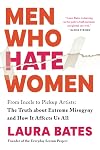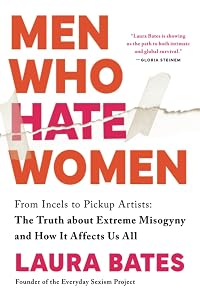
Men Who Hate Women: From Incels to Pickup Artists: The Truth about Extreme Misogyny and How it Affects Us All
by Laura Bates
On This Page
Description
"Women's rights activist Laura Bates is no stranger to misogynistic attacks online, but over time, the vitriol hinted at something widespread and toxic. Men Who Hate Women examines the rise of secretive extremist communities who despise women as Bates traces the roots of misogyny across a complex spiderweb of groups. Drawing parallels to other extremist movements around the world, Bates shows what attracts men to the movement, how it grooms and radicalizes boys, the structure in which it show more operates, and what can be done to stop it. Most urgently of all, she follows the pathways this extreme ideology has taken from the darkest corners of the internet to emerge covertly in our mainstream media, our playgrounds, and our government. By turns fascinating and horrifying, Men Who Hate Women is a broad, unflinching account of the deep current of loathing toward women and anti-feminism that underpins our society and is a must-read for parents, educators, and anyone who believes in equality for women"-- show lessTags
Recommendations















Member Reviews
The title is off-putting but the content is extraordinary. In a compelling style, using many examples and an easy-to-follow structure, Bates shows how the growing trend of misogyny is having real consequences of violence in streets, policy discourse and politics. Showing the many manifestations of misogyny and the tactics employed akin to radicalization of boys and young men, she unravels the impacts and seepage into public discourse. It's brilliant and it's alarming. As someone who works in cybersecurity, I can also say it echoes my experience.
The last chapter is dedicated to solutions and initiatives to combat growing trends but until it's acknowledged as the problem that it is, it will not be addressed adequately, and it will affect show more both boys and girls.
It's a fast moving environment (the books dates from 2020), and shifts can happen quickly, but the online hate is still strong and has ongoing ramifications for women but also all minorities as white supremacy gains a foothold all around the world. show less
The last chapter is dedicated to solutions and initiatives to combat growing trends but until it's acknowledged as the problem that it is, it will not be addressed adequately, and it will affect show more both boys and girls.
It's a fast moving environment (the books dates from 2020), and shifts can happen quickly, but the online hate is still strong and has ongoing ramifications for women but also all minorities as white supremacy gains a foothold all around the world. show less
This book deals with a difficult subject to read about: misogyny. The focus is online groups, such an Incels, pickup artists and various men's rights groups. The author herself has been the target of several online hate campaigns, receiving hundreds of hateful messages and threats for posting and speaking about misogyny.
The book gives graphic examples of the kinds of views expressed online, and how those views lead to violence in the real world. It also talks about how misogyny affects our society, including its effects on men themselves. Relatively few men's rights activists are fighting for more services for men; rather, they are focused on removing services and freedoms from women.
As a person with virtually no social media show more presence, I feel largely sheltered from the daily hatred spewed online. But that hatred has real world implications. The author argues that misogyny and violence against women because they are women meet the criteria for terrorist acts in several countries, including Canada, and should be treated as such. She says we cannot solve the problem of violence against women if we are unable/unwilling to identify it for what it is.
Disturbing stuff. But an important issue to be more aware of. show less
The book gives graphic examples of the kinds of views expressed online, and how those views lead to violence in the real world. It also talks about how misogyny affects our society, including its effects on men themselves. Relatively few men's rights activists are fighting for more services for men; rather, they are focused on removing services and freedoms from women.
As a person with virtually no social media show more presence, I feel largely sheltered from the daily hatred spewed online. But that hatred has real world implications. The author argues that misogyny and violence against women because they are women meet the criteria for terrorist acts in several countries, including Canada, and should be treated as such. She says we cannot solve the problem of violence against women if we are unable/unwilling to identify it for what it is.
Disturbing stuff. But an important issue to be more aware of. show less
After last year’s Harmange’s “I hate Men” I thought I’d have better luck with Bates on the subject. Nope. Feminists who write propaganda books imply two propositions about violence towards women that I believe are intellectually shallow. First, that violence towards women is caused by misogyny and is therefore idealistic as it is an effect of thought, and second that violence towards women should be understood as sui generis - unique in its own characteristics - and unrelated to the causes of other social violence. I think both of these implications are untrue and it would be more constructive to understand violence towards women in terms of what we know about violence more generally. Significantly, that a predisposition show more towards violence is a psychological trait usually linked with a lack of empathy and this is developed in children's early years (and not necessarily through exposure to misogynistic ideas but more profoundly neglect, violence, bullying etc.). Also, I would like to know more about the perpetrators of violence towards women. I would be surprised if the people who were beating and killing their girlfriends and wives were not also violent towards other men and children and that violence towards women did not occur in isolation. A thought experiment might be instructive - imagine a society where misogynistic ideas had been totally eliminated. Has violence towards women including rape completely disappeared? I'd suggest no. That doesn't mean fighting misogyny is not important but it does mean we should try to understand the causes of violence towards women more broadly and using knowledge from other disciplines instead of just cultural theory. Most violence against women (in the US and UK – Bates who is British doesn't often mention non-Western women so let's safely assume we're talking US and UK) is domestic and is therefore carried out by someone they know. Which proves feminist assumptions - that violence against women is caused by misogyny - completely wrong. It's useful to say that this kind of book is exactly what a misandrist or a misogynist hates. This is part of the problem. What’s really at stake is the hater's picture of actual people who've hurt them, based not on the people but on the hurt. The other part- the 'gendered' part- is a social idea of what a man or a woman is like inside. From this mix emerges the object of hate, a gendered concept: a creep or a bastard or a slut or a witch. Actual people with all their contradictions are beside the point. It's this lazy conceit that we can know people in 'identity' terms, reducing them to the crudest concepts, that converts personal enmities into sexism, racism, xenophobia, homophobia, snobbery and the like. I sometimes wonder if it’s not counter-productive, since it just gives those who believe feminists are misandrists a reason to go “see, they do hate us!!” But then, would they think otherwise no matter how pleasant or polite the opposition was? Well, it certainly doesn't do feminism any favours - quite the opposite, it undermines credibility - and I think anyone who is genuinely interested in the rights of women should be bothered about that. It's just a shame so many feminists would rather defend the indefensible rather than tackle the job at hand. It sometimes seems as if the label is so much more important than the cause.
NB: All women beaters are arseholes. show less
NB: All women beaters are arseholes. show less
I adored, adored Laura Bates’ masterpiece Everyday Sexism, and her latest, Men Who Hate Women: From Incels to Pickup Artists: The Truth about Extreme Misogyny and How It Affects Us All, proves as illuminating. I had heard about the misogynist nightmare that was GamerGate, but there was so much in this book that I didn’t know, particularly how pervasive incel and Men’s Right Activist lingo has become. I began to recognize memes and turns of phrase that I see on Facebook from men who don’t know where their faulty arguments and misconceptions come from. Highly, highly, highly recommended.
I swore I wrote a review for this earlier. Or maybe I just kept a draft of one in my notes apps to revise for later posting. Anyway, this is one of those books I think deserves the adjective of important when compared to the flooded market of other ostensibly "important" books like the ones that tell you how to "Unfuck Your Life" or some airport bookstore tier garbage. I say this not because I'm biased towards the subject matter, but because the content matter within the book is delievered in a way that is insightful to both newcomers to feminist studies and people who have been in the proverbial trenches. For example, one of the highly accessible (and personal favorite) arguments Bates makes in her book is that by reframing show more femicide/violence against women as acts of terror with political supression in mind, we can fundamentally change how courts, societies, and individuals handle these horrid actions. Harrowing stuff, but like I said earlier, also important stuff. show less
#NotAllMen they yell whenever a woman shares an encounter with an aggressive admirer, a handsy boss, a leering stranger, a violent rapist, a condescending colleague, an abusive partner. They are right, but there are definitely too many men, and their numbers don’t seem to be decreasing.
In Men Who Hate Women: From Incels to Pickup Artists: The Truth about Extreme Misogyny and How It Affects Us All, journalist Laura Bates investigates the online communities whose ideology centers around having power and control over women, how these affect society, and what can be done to change it moving forward.
Whilst incels (Involuntary celibates) beg for sex on demand, pickup artists (PUA) deploy predatory “gaming” tactics, Men Going Their Own show more Way (MGTOW) choose to eschew relationships with women altogether, and Men’s Rights Activists (MRA/MRM) insist women return their stolen power, there remains a wide range of common ideas and tactics underpinning what Bates terms ‘manosphere’ communities.
As ‘Alex’, a lonely young man, she allowed herself to be recruited into an online world in which nothing was his fault, in which he was an aggrieved martyr, not the privileged loser he felt society painted him as. And the cause of all his woes? Women. ‘Foids’ that won’t sleep with him, ‘sluts’ who say no when they really mean yes, ‘nags’ who sap their energy, ‘feminazi’s’ who want to rule the world.
While such groups are often dismissed as ‘fringe’ online activities, Bates shows how savvy members of these groups have actively spearheaded campaigns that downplay, distort and discredit women’s issues, amplified by trolls who enjoy the controversy, the irresponsible practices of clickbait mainstream media, and social media algorithms. Bates also explores how the manosphere rhetoric spills into the real world, inspiring everything from wordless intimidation to mass murders, and even influencing politics.
If terrorism is a means of attempting to exert control and wield power by creating fear, then at an individual level, it also describes men who intimidate, harass, coerce and abuse women. Bates is aware that the publication of this book will again make her a target of derision, vile abuse, rape, and death threats, and that her physical safety could be at risk. No one will be surprised to hear it, few will believe that there is anything that can be done about it. As a society, we seem to assume violence against women is inevitable.
#NotAllMen hate women, but some do. Some men blame women for every frustration, every grievance, every loss. Some men see women as objects, undeserving of respect or autonomy. And they are emboldened when these views remain unchallenged. These men are an obvious danger, not only to women, but also to society at large. A significant percentage of those who commit acts of terrorism and mass murderer have a history of violence against women.
I agree with Bates that intervention is needed well before some boys/men wander down this path. We, both women and men, need to be informed, to admit there is a problem, and work together to change it. We need to challenge instances of sexism, and fake ‘news’, to encourage boys and young men to define masculinity in a manner that doesn’t put them in opposition to women. “Ultimately, there are major changes that need to happen across a wide range of sectors, from government to tech companies, from media to education...”
I am the wife of a man who loves me, and whom I love. I am a mother of two daughters, and two sons whom I adore. So I know it’s #NotAllMen, but it is #SomeMen, many of whom I have had the misfortune to encounter in my lifetime. Men Who Hate Women is a book that will disturb, infuriate, challenge, and perhaps change you, for the better. show less
In Men Who Hate Women: From Incels to Pickup Artists: The Truth about Extreme Misogyny and How It Affects Us All, journalist Laura Bates investigates the online communities whose ideology centers around having power and control over women, how these affect society, and what can be done to change it moving forward.
Whilst incels (Involuntary celibates) beg for sex on demand, pickup artists (PUA) deploy predatory “gaming” tactics, Men Going Their Own show more Way (MGTOW) choose to eschew relationships with women altogether, and Men’s Rights Activists (MRA/MRM) insist women return their stolen power, there remains a wide range of common ideas and tactics underpinning what Bates terms ‘manosphere’ communities.
As ‘Alex’, a lonely young man, she allowed herself to be recruited into an online world in which nothing was his fault, in which he was an aggrieved martyr, not the privileged loser he felt society painted him as. And the cause of all his woes? Women. ‘Foids’ that won’t sleep with him, ‘sluts’ who say no when they really mean yes, ‘nags’ who sap their energy, ‘feminazi’s’ who want to rule the world.
While such groups are often dismissed as ‘fringe’ online activities, Bates shows how savvy members of these groups have actively spearheaded campaigns that downplay, distort and discredit women’s issues, amplified by trolls who enjoy the controversy, the irresponsible practices of clickbait mainstream media, and social media algorithms. Bates also explores how the manosphere rhetoric spills into the real world, inspiring everything from wordless intimidation to mass murders, and even influencing politics.
If terrorism is a means of attempting to exert control and wield power by creating fear, then at an individual level, it also describes men who intimidate, harass, coerce and abuse women. Bates is aware that the publication of this book will again make her a target of derision, vile abuse, rape, and death threats, and that her physical safety could be at risk. No one will be surprised to hear it, few will believe that there is anything that can be done about it. As a society, we seem to assume violence against women is inevitable.
#NotAllMen hate women, but some do. Some men blame women for every frustration, every grievance, every loss. Some men see women as objects, undeserving of respect or autonomy. And they are emboldened when these views remain unchallenged. These men are an obvious danger, not only to women, but also to society at large. A significant percentage of those who commit acts of terrorism and mass murderer have a history of violence against women.
I agree with Bates that intervention is needed well before some boys/men wander down this path. We, both women and men, need to be informed, to admit there is a problem, and work together to change it. We need to challenge instances of sexism, and fake ‘news’, to encourage boys and young men to define masculinity in a manner that doesn’t put them in opposition to women. “Ultimately, there are major changes that need to happen across a wide range of sectors, from government to tech companies, from media to education...”
I am the wife of a man who loves me, and whom I love. I am a mother of two daughters, and two sons whom I adore. So I know it’s #NotAllMen, but it is #SomeMen, many of whom I have had the misfortune to encounter in my lifetime. Men Who Hate Women is a book that will disturb, infuriate, challenge, and perhaps change you, for the better. show less
I was already familiar with a lot of the ground Bates covers in this book, but she does a good job of putting it together and analyzing it, especially the political and media coverage and how violence against women is minimized and normalized. It's worrying and enraging to know how boys are being sucked into this through websites and YouTube, but I know from experience that she's not wrong.
Members
- Recently Added By
Lists

feminism & gender studies
17 works; 1 member

important
24 works; 1 member

current
52 works; 1 member

Recovery from Psychopath
128 works; 1 member

el
1,139 works; 1 member
Author Information

12+ Works 2,220 Members
Awards and Honors
Distinctions
The Guardian Book of the Day (2020-09-02)
Work Relationships
Is contained in
Common Knowledge
- Canonical title
- Men Who Hate Women: From Incels to Pickup Artists: The Truth about Extreme Misogyny and How it Affects Us All
- Original publication date
- 2020-09-03
- Dedication
- For Nick, without whom none of this would have been possible.
- First words
- Imagine a world in which millions of women are raped, beaten. mutilated, abused, or murdered every years because of the simple fact that they are women.
- Last words
- (Click to show. Warning: May contain spoilers.)That's how we get the whole worm.
- Blurbers
- Steinem, Gloria; Chemaly, Soraya; Gannon, Emma; Curtis, Scarlett; Chakrabarti, Shami; Kennedy, Helena (show all 7); Sheers, Owen
- Original language
- English
Classifications
- Genres
- Sexuality and Gender Studies, Sociology, General Nonfiction, Nonfiction
- DDC/MDS
- 305.3 — Society, government, & culture Social sciences, sociology & anthropology Social group - Age, Gender, Ethnicity People by gender or sex
- LCC
- HQ1237 — Social sciences The family. Marriage, Women and Sexuality The Family. Marriage. Women Women. Feminism
- BISAC
Statistics
- Members
- 780
- Popularity
- 35,816
- Reviews
- 21
- Rating
- (4.24)
- Languages
- English, German, Polish, Spanish
- Media
- Paper, Audiobook, Ebook
- ISBNs
- 12
- UPCs
- 1
- ASINs
- 5