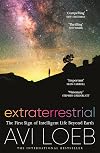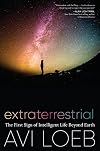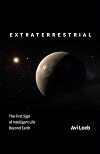
Extraterrestrial: The First Sign of Intelligent Life Beyond Earth
by Avi Loeb
On This Page
Description
"Harvard's top astronomer lays out his controversial theory that our solar system was recently visited by advanced alien technology from a distant star"--Tags
Recommendations

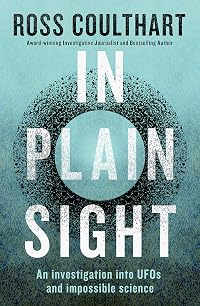
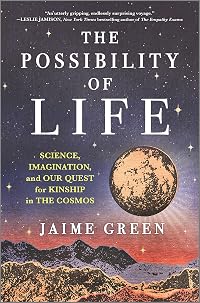
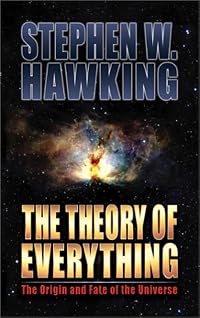
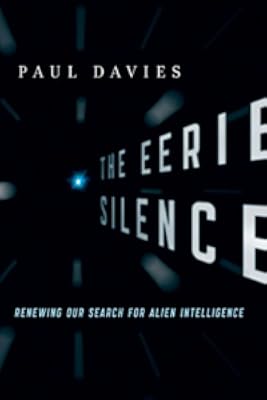















Member Reviews
I wanted to read Avi Loeb’s book because I have followed his comments, both academic and public, about Oumuamua, the interstellar object that passed through our solar system in 2017.
Astronomers detected Oumuamua, a relatively small object, too late, and it passed through our system too quickly for the kind of dedicated data-gathering and analysis they would have liked to have done, to identify its nature definitively. As it was, Oumuamua posed some mysteries regarding its shape, reflectivity, and path — mysteries that defied simple identifications of it as an interstellar asteroid or comet (remarkable for being the first one detected in flight).
Loeb’s own hypothesis was, and still is, that Oumuamua was extraterrestrial show more technology, likely a light sail meant to provide propulsion for an instrument, a buoy, or some other sort of alien spacecraft. He wasn’t proposing “little green men” piloting Oumuamua, only that it was likely a relic of some sort, albeit one that had been built and deployed by an extraterrestrial civilization.
As a well-reputed astrophysicist, Loeb’s hypothesis deserved some attention, and it certainly got that attention in the public press. And it got enough attention from his fellow scientists to generate skepticism and opposing arguments.
Setting aside for the moment whether or not Loeb’s hypothesis is correct, what especially interested me was the apparent reluctance of the scientific community to seriously entertain the hypothesis. And for that matter, my own intuitive skepticism ran along the same lines.
The fact was that some of Oumuamua’s behavior, in particular its deviation from an expected path once it rounded our Sun and began to speed away, was difficult to explain. More than difficult, maybe downright mysterious. It behaved a bit like a comet whose trajectory can be altered as it outgasses material heated by its approach to the Sun. But no such outgassing was detected. The deviation was not well explained. But, as Loeb says. echoing Galileo’s remark about the Earth’s motion around the Sun, “And yet it deviated.”
Loeb’s hypothesis thus is one solution to the mystery. If it is a valid solution, meaning that the physics and math works out for the trajectory of a light sail a size and shape consistent with observations of Oumuamua, then his hypothesis should be taken seriously as a candidate explanation.
And, as he argues, if you eliminate all other possible explanations, no matter how unexpected his hypothesis, it may well be true.
Loeb’s story reminded me of other confrontations between disturbing hypotheses or observations and scientific orthodoxy. In particular, it reminded me of Halton Arp’s observations of apparently connected galaxies that, by conventional methods of determining galactic distances, were very far away from one another. If Arp were right, and these galaxies were actually physically connected, something was wrong with the way we determine distances — the redshift/distance correlation that is fundamental to modern cosmology. See Arp’s book, Seeing Red, for more.
Like Arp, Loeb criticizes the conservative mindsets and practices (e.g., allocations of grants and scarce resources like telescope time) of the scientific community. And no doubt there is something to that criticism. That’s what I think is valid in Loeb’s book, regardless of whether or not he is actually right about Oumuamua. His hypothesis should be taken seriously and investigated, allowing at least some prioritization, given its dramatic implications.
Okay. That’s the Oumuamua story, and it’s a good one, I think. Loeb goes on to propose an entirely new discipline, one he calls “astro-archaeology” to focus on detecting and studying alien technological artifacts, something that expands on existing efforts to detect “technosignatures” in the SETI community.
I found Loeb’s Oumuamua story, and the systemic conservatism of the astronomical community provocative.
So that’s the good stuff. There’s other stuff.
Loeb’s story-telling style, I have to admit, grated on me. It just seemed . . . . Loeb-centric. Early on he cites all the positions he holds at Harvard and within the scientific community. It’s impressive, but it feels like it was meant to be impressive. He repeatedly refers to proposals, insights, and findings in which he (or he and a collaborator) were “the first to” propose, discover, etc. Great, but it becomes gratuitous and even, by inference, dismissive of the contributions by so many others in the many fields — cosmology, black hole physics, SETI — that Loeb traverses. He mentions others, but, always, there is Loeb standing within or above the giants.
At the end of the book, Loeb offers a list of “Additional Reading,” something I’m always grateful to authors for. But every entry in the nine page list was authored or co-authored by Loeb. If we are to take scientific debate seriously, let’s “additionally read” more than one person’s viewpoint.
Enough on that. I’ll end with something more substantive that Loeb’s speculations about extraterrestrial intelligence and the prospects of detection and study of extraterrestrial technologies provoked.
We popularly imagine, and so do some scientists (like Loeb), that we will know intelligence in the universe when we see it. And for that matter, that other intelligences will know us for peers of some sort.
“Intelligence” though, in that way of thinking, is an unanalyzed concept, or at least an insufficiently analyzed one. Intelligence, to the biologist, is an evolutionary adaptation. On our own planet, it takes some pretty divergent forms — the intelligence of insect colonies, of dolphins or whales, of crows, of octopuses.
Intelligence is not something that a species has or doesn’t have. It takes many, many different forms, some quite likely to diverge so far from others as to be unrecognized as some version of “the same thing” — that “intelligence” that would make us peers.
As that point goes for terrestrial species, it would go in spades for extraterrestrial ones. Evolutionary, historical, and technological divergences could well, maybe even likely, make mutual understanding and recognition as peers difficult, to say the least.
I’m reminded of the science fiction book, Roadside Picnic by Arkady and Boris Strugatsky. Aliens visit Earth. They don’t seek us out as peers, as fellow participants in a galactic club of intelligent species. We don’t know what they think of us, if anything. They stop over on Earth, leave what seems to be a big pile of garbage (from their “picnic”), and go on about their business. Earth — nothing to see here, move on.
Okay that was a downer. I’ll come back to say I appreciated Loeb’s story about Oumuamua and his criticisms of scientific orthodoxy. That’s the good stuff. show less
Astronomers detected Oumuamua, a relatively small object, too late, and it passed through our system too quickly for the kind of dedicated data-gathering and analysis they would have liked to have done, to identify its nature definitively. As it was, Oumuamua posed some mysteries regarding its shape, reflectivity, and path — mysteries that defied simple identifications of it as an interstellar asteroid or comet (remarkable for being the first one detected in flight).
Loeb’s own hypothesis was, and still is, that Oumuamua was extraterrestrial show more technology, likely a light sail meant to provide propulsion for an instrument, a buoy, or some other sort of alien spacecraft. He wasn’t proposing “little green men” piloting Oumuamua, only that it was likely a relic of some sort, albeit one that had been built and deployed by an extraterrestrial civilization.
As a well-reputed astrophysicist, Loeb’s hypothesis deserved some attention, and it certainly got that attention in the public press. And it got enough attention from his fellow scientists to generate skepticism and opposing arguments.
Setting aside for the moment whether or not Loeb’s hypothesis is correct, what especially interested me was the apparent reluctance of the scientific community to seriously entertain the hypothesis. And for that matter, my own intuitive skepticism ran along the same lines.
The fact was that some of Oumuamua’s behavior, in particular its deviation from an expected path once it rounded our Sun and began to speed away, was difficult to explain. More than difficult, maybe downright mysterious. It behaved a bit like a comet whose trajectory can be altered as it outgasses material heated by its approach to the Sun. But no such outgassing was detected. The deviation was not well explained. But, as Loeb says. echoing Galileo’s remark about the Earth’s motion around the Sun, “And yet it deviated.”
Loeb’s hypothesis thus is one solution to the mystery. If it is a valid solution, meaning that the physics and math works out for the trajectory of a light sail a size and shape consistent with observations of Oumuamua, then his hypothesis should be taken seriously as a candidate explanation.
And, as he argues, if you eliminate all other possible explanations, no matter how unexpected his hypothesis, it may well be true.
Loeb’s story reminded me of other confrontations between disturbing hypotheses or observations and scientific orthodoxy. In particular, it reminded me of Halton Arp’s observations of apparently connected galaxies that, by conventional methods of determining galactic distances, were very far away from one another. If Arp were right, and these galaxies were actually physically connected, something was wrong with the way we determine distances — the redshift/distance correlation that is fundamental to modern cosmology. See Arp’s book, Seeing Red, for more.
Like Arp, Loeb criticizes the conservative mindsets and practices (e.g., allocations of grants and scarce resources like telescope time) of the scientific community. And no doubt there is something to that criticism. That’s what I think is valid in Loeb’s book, regardless of whether or not he is actually right about Oumuamua. His hypothesis should be taken seriously and investigated, allowing at least some prioritization, given its dramatic implications.
Okay. That’s the Oumuamua story, and it’s a good one, I think. Loeb goes on to propose an entirely new discipline, one he calls “astro-archaeology” to focus on detecting and studying alien technological artifacts, something that expands on existing efforts to detect “technosignatures” in the SETI community.
I found Loeb’s Oumuamua story, and the systemic conservatism of the astronomical community provocative.
So that’s the good stuff. There’s other stuff.
Loeb’s story-telling style, I have to admit, grated on me. It just seemed . . . . Loeb-centric. Early on he cites all the positions he holds at Harvard and within the scientific community. It’s impressive, but it feels like it was meant to be impressive. He repeatedly refers to proposals, insights, and findings in which he (or he and a collaborator) were “the first to” propose, discover, etc. Great, but it becomes gratuitous and even, by inference, dismissive of the contributions by so many others in the many fields — cosmology, black hole physics, SETI — that Loeb traverses. He mentions others, but, always, there is Loeb standing within or above the giants.
At the end of the book, Loeb offers a list of “Additional Reading,” something I’m always grateful to authors for. But every entry in the nine page list was authored or co-authored by Loeb. If we are to take scientific debate seriously, let’s “additionally read” more than one person’s viewpoint.
Enough on that. I’ll end with something more substantive that Loeb’s speculations about extraterrestrial intelligence and the prospects of detection and study of extraterrestrial technologies provoked.
We popularly imagine, and so do some scientists (like Loeb), that we will know intelligence in the universe when we see it. And for that matter, that other intelligences will know us for peers of some sort.
“Intelligence” though, in that way of thinking, is an unanalyzed concept, or at least an insufficiently analyzed one. Intelligence, to the biologist, is an evolutionary adaptation. On our own planet, it takes some pretty divergent forms — the intelligence of insect colonies, of dolphins or whales, of crows, of octopuses.
Intelligence is not something that a species has or doesn’t have. It takes many, many different forms, some quite likely to diverge so far from others as to be unrecognized as some version of “the same thing” — that “intelligence” that would make us peers.
As that point goes for terrestrial species, it would go in spades for extraterrestrial ones. Evolutionary, historical, and technological divergences could well, maybe even likely, make mutual understanding and recognition as peers difficult, to say the least.
I’m reminded of the science fiction book, Roadside Picnic by Arkady and Boris Strugatsky. Aliens visit Earth. They don’t seek us out as peers, as fellow participants in a galactic club of intelligent species. We don’t know what they think of us, if anything. They stop over on Earth, leave what seems to be a big pile of garbage (from their “picnic”), and go on about their business. Earth — nothing to see here, move on.
Okay that was a downer. I’ll come back to say I appreciated Loeb’s story about Oumuamua and his criticisms of scientific orthodoxy. That’s the good stuff. show less
Extraterrestrial: The First Sign of Intelligent Life Beyond Earth by Avi Loeb makes an interesting and compelling case for both extraterrestrial life and thinking outside the box (or at least being willing to push against the sides).
It actually took me a little while to get into the book, it starts almost like a memoir. But that short bit sets up the aspect of the argument that urges us to think big picture and to not get too stuck in our own specialties that we are essentially wearing blinders. If the first part makes you consider putting the book down, don't, it will all come together and be worth it.
The writing is accessible and suitable for any reader with an interest in the topic. Enough science to support his theory, all explained show more clearly. Big ideas expressed with an openness and curiosity that will make active readers consider the possibilities.
I think we all tend to have less of a problem with abstractly or theoretically accepting an idea than with actually acknowledging something tangible that might support that idea. It seems that while many scientists have no problem believing that there is likely to be some form(s) of life on other planets, they are resistant to considering this interstellar object as possible evidence of intelligent life elsewhere. It is just that wall which Loeb appears to be trying to scale in this work, with both fellow scientists and laypeople.
I recommend this to any reader with an interest in the possibility of extraterrestrial life.
Reviewed from a copy made available by the publisher via NetGalley. show less
It actually took me a little while to get into the book, it starts almost like a memoir. But that short bit sets up the aspect of the argument that urges us to think big picture and to not get too stuck in our own specialties that we are essentially wearing blinders. If the first part makes you consider putting the book down, don't, it will all come together and be worth it.
The writing is accessible and suitable for any reader with an interest in the topic. Enough science to support his theory, all explained show more clearly. Big ideas expressed with an openness and curiosity that will make active readers consider the possibilities.
I think we all tend to have less of a problem with abstractly or theoretically accepting an idea than with actually acknowledging something tangible that might support that idea. It seems that while many scientists have no problem believing that there is likely to be some form(s) of life on other planets, they are resistant to considering this interstellar object as possible evidence of intelligent life elsewhere. It is just that wall which Loeb appears to be trying to scale in this work, with both fellow scientists and laypeople.
I recommend this to any reader with an interest in the possibility of extraterrestrial life.
Reviewed from a copy made available by the publisher via NetGalley. show less
I’m not sure what I expected from a book that posits that advanced alien technology passed through our solar system in 2017. Yes, I expected to read about some kind of weird anomalous, unexplainable object that passed through our solar system, and that’s definitely here. In the 11 days that we astronomers were able to observe it—noticed too late to possibly catch it before the interstellar object was on the way out of the solar system—it didn’t seem to fit all the characteristics of an asteroid or comet. Weird geometry, its luminosity, its lack of a cometary tail, the strange fact that it appeared to have accelerated away from the sun in a straight line, out of its orbit, somehow propelled...
All that I expected. And it’s show more really interesting. I’m not a scientist, but I find the natural world and Avi Loeb is an excellent writer. His book is replete with examples to demonstrate complex principals of physics. But the Extraterrestrial is not just a scientific argument for an interstellar visitor of alien origins. Also here are Loeb’s philosophical examination for what it means to look for evidence of aliens, why we should care, and why we should question scientific orthodoxy.
Yeah, that. It’s not as if Loeb is finding common cause with Galileo, who died accused of heresy by the Catholic Church because he would not agree with the orthodoxy of the day, though he’s certainly willing to point out the similarities. In his case, it’s the willingness to look for extraterrestrial life, something many of his colleagues in the field of astronomy are unwilling to do. The longest-serving chair of Harvard’s astronomy department, Loeb sees the impact of tenure, and the fight for tenure by young astronomers, as a force that influences young astronomers towards conformity instead of encouraging creativity and out of the box thinking.
Loeb is good writer and his life-long interest in philosophy and an inclination to examine the big questions makes for an interesting narrative and mini-biography intermingled with how he got to a place where he’s mixing with Stephen Hawking, theorizing about black holes, and searching for evidence of extraterrestrial life. It’s really interesting stuff.
Is he right? Heck if I know. But he’s got me convinced that the questions we ask are about as important as the stuff we observe out there. If the universe is as big as we think it is, there’s good reason to think that other civilizations have arisen and, maybe, are even more advanced than we are. When might we find evidence of them? Or they of us? show less
All that I expected. And it’s show more really interesting. I’m not a scientist, but I find the natural world and Avi Loeb is an excellent writer. His book is replete with examples to demonstrate complex principals of physics. But the Extraterrestrial is not just a scientific argument for an interstellar visitor of alien origins. Also here are Loeb’s philosophical examination for what it means to look for evidence of aliens, why we should care, and why we should question scientific orthodoxy.
Yeah, that. It’s not as if Loeb is finding common cause with Galileo, who died accused of heresy by the Catholic Church because he would not agree with the orthodoxy of the day, though he’s certainly willing to point out the similarities. In his case, it’s the willingness to look for extraterrestrial life, something many of his colleagues in the field of astronomy are unwilling to do. The longest-serving chair of Harvard’s astronomy department, Loeb sees the impact of tenure, and the fight for tenure by young astronomers, as a force that influences young astronomers towards conformity instead of encouraging creativity and out of the box thinking.
Loeb is good writer and his life-long interest in philosophy and an inclination to examine the big questions makes for an interesting narrative and mini-biography intermingled with how he got to a place where he’s mixing with Stephen Hawking, theorizing about black holes, and searching for evidence of extraterrestrial life. It’s really interesting stuff.
Is he right? Heck if I know. But he’s got me convinced that the questions we ask are about as important as the stuff we observe out there. If the universe is as big as we think it is, there’s good reason to think that other civilizations have arisen and, maybe, are even more advanced than we are. When might we find evidence of them? Or they of us? show less
قرأته بنهم بعد مشاهدة مقابلة طويلة ورائعة للمؤلف ضمن برنامج جو روغان. أُعجبت بتواضعه وحججه المنطقية وحرصه على جوهر المنهجية العلمية.
ملخص القصة أنه في عام ٢٠١٧، اكتشف علماء الفضاء عبر مرصد هاليكالا في هاواي أول جسم غريب يعبر نظامنا الشمسي ولا ينتمي إليه، أي قادم من خارجه. أطلقوا عليه اسم ”أوموّاموّا“ أو ”المرسال القادم من بعيد“. لا أحد يعرف على وجه اليقين ماهية هذا الشيء الغريب. له العديد من الخصائص التي لا show more تتوافق مع الأجسام الفلكية التي تُرصد عادةً في جوارنا الشمسي كالمذنبات وغيرها. بسبب شكله الشبيه بالصفيحة، وسطوع إضاءته، وحركته الغير متوقعة، لم يتمكن الباحثون من إدراجه تحت أي من التصنيفات المعروفة للأجسام الفلكية، مما دفع المؤلف آفي لوب -أستاذ الفيزياء الفلكية بجامعة هارفرد- أن يبقي الباب مفتوحاً أمام احتمال أن يكون هذا الجسم الغريب العجيب من مخلّفات حضارة أخرى من هذا الفضاء الشاسع.
استهواني الموضوع للغاية، ووجدت ردة فعل المجتمع العلمي والرفض القاطع والاستهزاء الذي واجهه المؤلف قمة الغرور والعنجهية وأبعد ما يكون عن روح العلم الاستكشافية. صحيح أننا لا نملك أي دليل على وجود كائنات أخرى في هذا الكون اللامنتاهي، إلا أنّ الأرقام تتكلّم والرياضيات لا تكذب، وقد يكون ظهور الحياة على الأرض بحد ذاته دليلاً على أن الحياة في الكون شيءٌ ممكن، ما يزيد احتمالية ظهورها في مواضع أخرى منه. لذلك، أرى أن الجواب الصادق الوحيد على سؤال كهذا هو: لا نعرف، لا أحد يعرف، وربما لن نعرف مطلقاً. ونظراً لاستحالة التأكد بأي شكل من الأشكال، يبقى الباب مفتوحاً أمام جميع الاحتمالات. show less
ملخص القصة أنه في عام ٢٠١٧، اكتشف علماء الفضاء عبر مرصد هاليكالا في هاواي أول جسم غريب يعبر نظامنا الشمسي ولا ينتمي إليه، أي قادم من خارجه. أطلقوا عليه اسم ”أوموّاموّا“ أو ”المرسال القادم من بعيد“. لا أحد يعرف على وجه اليقين ماهية هذا الشيء الغريب. له العديد من الخصائص التي لا show more تتوافق مع الأجسام الفلكية التي تُرصد عادةً في جوارنا الشمسي كالمذنبات وغيرها. بسبب شكله الشبيه بالصفيحة، وسطوع إضاءته، وحركته الغير متوقعة، لم يتمكن الباحثون من إدراجه تحت أي من التصنيفات المعروفة للأجسام الفلكية، مما دفع المؤلف آفي لوب -أستاذ الفيزياء الفلكية بجامعة هارفرد- أن يبقي الباب مفتوحاً أمام احتمال أن يكون هذا الجسم الغريب العجيب من مخلّفات حضارة أخرى من هذا الفضاء الشاسع.
استهواني الموضوع للغاية، ووجدت ردة فعل المجتمع العلمي والرفض القاطع والاستهزاء الذي واجهه المؤلف قمة الغرور والعنجهية وأبعد ما يكون عن روح العلم الاستكشافية. صحيح أننا لا نملك أي دليل على وجود كائنات أخرى في هذا الكون اللامنتاهي، إلا أنّ الأرقام تتكلّم والرياضيات لا تكذب، وقد يكون ظهور الحياة على الأرض بحد ذاته دليلاً على أن الحياة في الكون شيءٌ ممكن، ما يزيد احتمالية ظهورها في مواضع أخرى منه. لذلك، أرى أن الجواب الصادق الوحيد على سؤال كهذا هو: لا نعرف، لا أحد يعرف، وربما لن نعرف مطلقاً. ونظراً لاستحالة التأكد بأي شكل من الأشكال، يبقى الباب مفتوحاً أمام جميع الاحتمالات. show less
I Want to Believe
Are we here on Earth the only intelligent life there will ever be in the whole enormous universe? Yes, to this question is harder to believe than no, an acknowledgement that because we exist other intelligent life must exist as well. This is not the same as saying we will ever see these intelligent beings, nor that they will physically visit us. Space is just to vast and the known laws of physics are just too restricting. However, we might detect them in the same way they may detect us, by radio signals and by long-distance exploratory efforts wandering into our realm, though probably not quite as spectacularly as in Arthur C. Clarke’s Rendezvous with Rama. Avi Loeb’s case for ‘Oumuamua being such an effort of a show more faraway civilization probably is closer to the truth. And even this, if you listen to critics, is just too hard to believe.
To all of you who have copies of the Fox Mulder poster “I want to believe” and to all the more of you, of us, who agree with the sentiment and believe we are not alone, Avi Loeb’s book will be akin to a scientific thrill ride. Loeb describes the arrival and quick departure of interstellar object ‘Oumuamua and his scientifically reasoned argument that this was probably our first contact with an artifact created by intelligent extraterrestrial life. Among other things, he describes what sets this object apart from a naturally occurring one, such as comet. That it was moving too fast, that it changed course slightly when it encountered our sun, that it was bright and uniquely shaped, being quite flat, suggesting it was fashioned for a purpose.
Naturally, as you would expect, Loeb, an astrophysicist, among other things, builds his argument on scientific facts and accumulated research, which, if he had used strictly scientific language, would certainly have been dense and impenetrable to the layperson. Fortunately, Loeb is one of those gifted people who can express himself in easily understood language, and even better, able to draw examples explaining concepts from most people’s everyday experiences.
Now, whether you accept his argument is entirely up to you. If your desire to believe that we might know in some definitive way whether other life exists in the vast universe, you’ll probably be on his side. Of course, you shouldn’t wait for extraterrestrials to drop in any time soon. The laws of physics and the distance between stars almost certainly guarantee that will not happen, and may never happen. And, honestly, would we really want a technologically superior civilization dropping in on us? show less
Are we here on Earth the only intelligent life there will ever be in the whole enormous universe? Yes, to this question is harder to believe than no, an acknowledgement that because we exist other intelligent life must exist as well. This is not the same as saying we will ever see these intelligent beings, nor that they will physically visit us. Space is just to vast and the known laws of physics are just too restricting. However, we might detect them in the same way they may detect us, by radio signals and by long-distance exploratory efforts wandering into our realm, though probably not quite as spectacularly as in Arthur C. Clarke’s Rendezvous with Rama. Avi Loeb’s case for ‘Oumuamua being such an effort of a show more faraway civilization probably is closer to the truth. And even this, if you listen to critics, is just too hard to believe.
To all of you who have copies of the Fox Mulder poster “I want to believe” and to all the more of you, of us, who agree with the sentiment and believe we are not alone, Avi Loeb’s book will be akin to a scientific thrill ride. Loeb describes the arrival and quick departure of interstellar object ‘Oumuamua and his scientifically reasoned argument that this was probably our first contact with an artifact created by intelligent extraterrestrial life. Among other things, he describes what sets this object apart from a naturally occurring one, such as comet. That it was moving too fast, that it changed course slightly when it encountered our sun, that it was bright and uniquely shaped, being quite flat, suggesting it was fashioned for a purpose.
Naturally, as you would expect, Loeb, an astrophysicist, among other things, builds his argument on scientific facts and accumulated research, which, if he had used strictly scientific language, would certainly have been dense and impenetrable to the layperson. Fortunately, Loeb is one of those gifted people who can express himself in easily understood language, and even better, able to draw examples explaining concepts from most people’s everyday experiences.
Now, whether you accept his argument is entirely up to you. If your desire to believe that we might know in some definitive way whether other life exists in the vast universe, you’ll probably be on his side. Of course, you shouldn’t wait for extraterrestrials to drop in any time soon. The laws of physics and the distance between stars almost certainly guarantee that will not happen, and may never happen. And, honestly, would we really want a technologically superior civilization dropping in on us? show less
I Want to Believe
Are we here on Earth the only intelligent life there will ever be in the whole enormous universe? Yes, to this question is harder to believe than no, an acknowledgement that because we exist other intelligent life must exist as well. This is not the same as saying we will ever see these intelligent beings, nor that they will physically visit us. Space is just to vast and the known laws of physics are just too restricting. However, we might detect them in the same way they may detect us, by radio signals and by long-distance exploratory efforts wandering into our realm, though probably not quite as spectacularly as in Arthur C. Clarke’s Rendezvous with Rama. Avi Loeb’s case for ‘Oumuamua being such an effort of a show more faraway civilization probably is closer to the truth. And even this, if you listen to critics, is just too hard to believe.
To all of you who have copies of the Fox Mulder poster “I want to believe” and to all the more of you, of us, who agree with the sentiment and believe we are not alone, Avi Loeb’s book will be akin to a scientific thrill ride. Loeb describes the arrival and quick departure of interstellar object ‘Oumuamua and his scientifically reasoned argument that this was probably our first contact with an artifact created by intelligent extraterrestrial life. Among other things, he describes what sets this object apart from a naturally occurring one, such as comet. That it was moving too fast, that it changed course slightly when it encountered our sun, that it was bright and uniquely shaped, being quite flat, suggesting it was fashioned for a purpose.
Naturally, as you would expect, Loeb, an astrophysicist, among other things, builds his argument on scientific facts and accumulated research, which, if he had used strictly scientific language, would certainly have been dense and impenetrable to the layperson. Fortunately, Loeb is one of those gifted people who can express himself in easily understood language, and even better, able to draw examples explaining concepts from most people’s everyday experiences.
Now, whether you accept his argument is entirely up to you. If your desire to believe that we might know in some definitive way whether other life exists in the vast universe, you’ll probably be on his side. Of course, you shouldn’t wait for extraterrestrials to drop in any time soon. The laws of physics and the distance between stars almost certainly guarantee that will not happen, and may never happen. And, honestly, would we really want a technologically superior civilization dropping in on us? show less
Are we here on Earth the only intelligent life there will ever be in the whole enormous universe? Yes, to this question is harder to believe than no, an acknowledgement that because we exist other intelligent life must exist as well. This is not the same as saying we will ever see these intelligent beings, nor that they will physically visit us. Space is just to vast and the known laws of physics are just too restricting. However, we might detect them in the same way they may detect us, by radio signals and by long-distance exploratory efforts wandering into our realm, though probably not quite as spectacularly as in Arthur C. Clarke’s Rendezvous with Rama. Avi Loeb’s case for ‘Oumuamua being such an effort of a show more faraway civilization probably is closer to the truth. And even this, if you listen to critics, is just too hard to believe.
To all of you who have copies of the Fox Mulder poster “I want to believe” and to all the more of you, of us, who agree with the sentiment and believe we are not alone, Avi Loeb’s book will be akin to a scientific thrill ride. Loeb describes the arrival and quick departure of interstellar object ‘Oumuamua and his scientifically reasoned argument that this was probably our first contact with an artifact created by intelligent extraterrestrial life. Among other things, he describes what sets this object apart from a naturally occurring one, such as comet. That it was moving too fast, that it changed course slightly when it encountered our sun, that it was bright and uniquely shaped, being quite flat, suggesting it was fashioned for a purpose.
Naturally, as you would expect, Loeb, an astrophysicist, among other things, builds his argument on scientific facts and accumulated research, which, if he had used strictly scientific language, would certainly have been dense and impenetrable to the layperson. Fortunately, Loeb is one of those gifted people who can express himself in easily understood language, and even better, able to draw examples explaining concepts from most people’s everyday experiences.
Now, whether you accept his argument is entirely up to you. If your desire to believe that we might know in some definitive way whether other life exists in the vast universe, you’ll probably be on his side. Of course, you shouldn’t wait for extraterrestrials to drop in any time soon. The laws of physics and the distance between stars almost certainly guarantee that will not happen, and may never happen. And, honestly, would we really want a technologically superior civilization dropping in on us? show less
For someone who continually brings up the need for humility, Loeb is nothing by brazen in his polemic against the scientific establishment and what he characterizes as a "gamble" that alien technology is whizzing around our solar system. Just as we don't know who exactly built the Sphinx, resorting to aliens is not Occam's Razor. There are logical problems. Still, it's a fun read and he does have a point that if alien space trash is around, it is probably everywhere. A new direction for SETI research.
Members
- Recently Added By
Lists

Science: Astronomy
62 works; 2 members
Author Information
2 Works 457 Members
Awards and Honors
Common Knowledge
- Original publication date
- 2021
Classifications
Statistics
- Members
- 373
- Popularity
- 84,151
- Reviews
- 16
- Rating
- (3.80)
- Languages
- 10 — Dutch, English, Finnish, French, German, Hungarian, Polish, Portuguese, Spanish, Swedish
- Media
- Paper, Audiobook, Ebook
- ISBNs
- 25
- ASINs
- 5