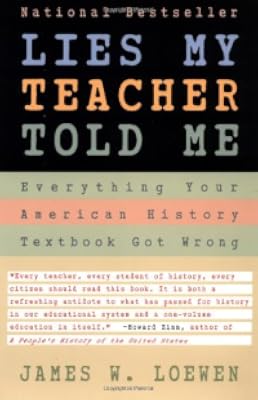
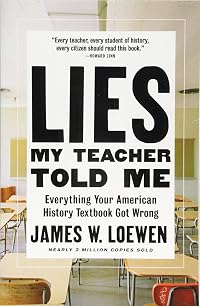
Lies My Teacher Told Me: Everything Your American History Textbook Got Wrong
by James W. Loewen
On This Page
Description
Criticizes the way history is presented in current textbooks, and suggests a fresh and more accurate approach to teaching American history.Tags
Recommendations


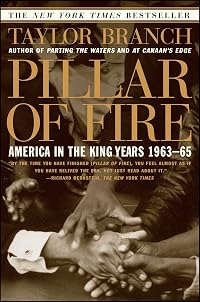
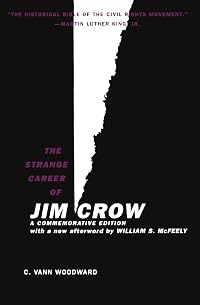
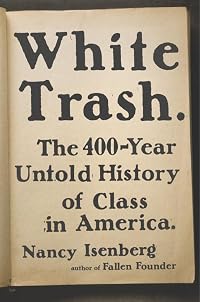
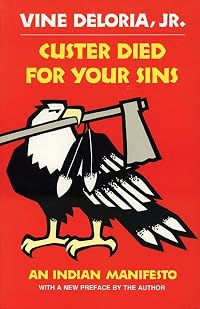



Member Recommendations
pammab Immerwahr focuses on history outside the continental US and how everyone in the world conveniently forgets how much US population and territory existed outside the mainland, through telling stories that never made it into the American canon. Immerwahr's book is a much better structured book to my mind than Lies My Teacher Told Me; it has an overarching thesis, and each of the chapters have a subthesis that is well-substantiated and argued. It goes beyond the thrust of Loewen's book, which felt to me like a collection of mostly unrelated facts strung together with nothing more than the idea of "filing off complexities".
Member Reviews
Summary: Based on an examination of twelve American history high school textbooks, looks at how these oversimplify, omit, distort, and sometimes perpetuate false myths of American history, and make the teaching of history boring in the process.
The late James Loewen wrote this book after surveying twelve history textbooks used to teach high school students in the early 1990’s. He found that most of these often passed along lies or distortions of the material they covered. Often this was the result of omitting important discussions. Loewen opens this study considering what most history books don’t tell us about Woodrow Wilson. They don’t tell us that he launched a war with Communist Russia at the end of the First World War. Wilson show more also launched invasions of several Latin America, and after an era of progress, instituted racist policies in government that may have contributed to the resurgence of the Klan in the 1920’s. Likewise with Helen Keller. We hear about how she overcomes blindness and deafness but most say little about the other six decades of her life, probably because of her socialist activism.
Loewen goes on to discuss a number of examples throughout American history and what the twelve textbooks do with them: Christopher Columbus and what his “discovery” meant to indigenous peoples who were “discovered,” the realities of the first Thanksgiving, how we narrate the history of Native Americans, how we whitewash racism from textbooks, even in accounts of the Civil War and in our treatments of both John Brown and Abraham Lincoln. He goes on to discuss federal power and how our government sought to bring down regime after regime, rarely discussed in our history books and how many texts are nearly silent about Vietnam, with the results that students think it was a war between North and South Korea!
Why does this happen? Loewen, who had worked with editorial committees of textbook publishers, discusses the aversion these publishers have to controversy. Controversy can mean losses of millions of dollars. Patriotism sells. America’s failures to live up to its stated ideals do not. They realize how consequential state and local boards are to the adoption of textbooks. He believes a large part of the fault lies here. He is more forgiving of teachers, recognizing both that they may not always have the knowledge or the time to gain the knowledge to challenge the textbooks–and they have huge demands on their lives.
The tragedy of all this in Loewen’s mind is that in making history uncontroversial we have made it dull. Accurate history, in all its complicatedness, is far more interesting. When students explore a president like Wilson at both his best and worst, they stop worshipping heroes and see historical figures as real and fallible human beings. History that is honest about both our failings and how people stood up to resist corruption and power because of their belief in America’s ideals doesn’t teach students to hate the country, it teaches them to care.
Loewen was writing this in 1995 and what reading him helped me realize is that what is going on in many of our state legislatures and parents groups around what is taught as our history is not a new discussion, simply a reinvigorated one. For a long time, we have been a nation that wants to feel good about ourselves without doing the hard work of facing what has been and is not good about us and learning from those who have brought progress toward our American ideals. For a long time, powerful interests have sought to hide what they are doing to the rest of the country behind facades of American greatness. How can it be that the wealth disparities between the top 1 percent and the rest of the country are just because the rest of us are benighted losers?
What is saddest is that we don’t turn students into patriots, we turn them into cynics, because they are good at detecting falsehoods. The tragedy is that we also teach them that truth cannot be found in our history, or really in anything else. And when there is no basis for liberty and justice in truth, then all that we have left is power.
I was one educated in the way Loewen describes. Thankfully, several college professors opened my eyes to what it really means to do history without the lies, to look at our complicated human condition, and to keep asking questions, and to care about the answers. They taught me to love history. They also helped teach me that for love of country to really mean something, it has to be able to look at ourselves at our best and worst and to keep showing up as citizens, pursuing the common good.
Loewen holds out to us the hope that we can do so much better, not by sanitized versions of our history but through texts and teachers that teach both the good and the bad, that will not only capture our children’s interest, but help them become passionate about making our country at least a little better in their generation. It seems to me that this is something all true patriots ought support. show less
The late James Loewen wrote this book after surveying twelve history textbooks used to teach high school students in the early 1990’s. He found that most of these often passed along lies or distortions of the material they covered. Often this was the result of omitting important discussions. Loewen opens this study considering what most history books don’t tell us about Woodrow Wilson. They don’t tell us that he launched a war with Communist Russia at the end of the First World War. Wilson show more also launched invasions of several Latin America, and after an era of progress, instituted racist policies in government that may have contributed to the resurgence of the Klan in the 1920’s. Likewise with Helen Keller. We hear about how she overcomes blindness and deafness but most say little about the other six decades of her life, probably because of her socialist activism.
Loewen goes on to discuss a number of examples throughout American history and what the twelve textbooks do with them: Christopher Columbus and what his “discovery” meant to indigenous peoples who were “discovered,” the realities of the first Thanksgiving, how we narrate the history of Native Americans, how we whitewash racism from textbooks, even in accounts of the Civil War and in our treatments of both John Brown and Abraham Lincoln. He goes on to discuss federal power and how our government sought to bring down regime after regime, rarely discussed in our history books and how many texts are nearly silent about Vietnam, with the results that students think it was a war between North and South Korea!
Why does this happen? Loewen, who had worked with editorial committees of textbook publishers, discusses the aversion these publishers have to controversy. Controversy can mean losses of millions of dollars. Patriotism sells. America’s failures to live up to its stated ideals do not. They realize how consequential state and local boards are to the adoption of textbooks. He believes a large part of the fault lies here. He is more forgiving of teachers, recognizing both that they may not always have the knowledge or the time to gain the knowledge to challenge the textbooks–and they have huge demands on their lives.
The tragedy of all this in Loewen’s mind is that in making history uncontroversial we have made it dull. Accurate history, in all its complicatedness, is far more interesting. When students explore a president like Wilson at both his best and worst, they stop worshipping heroes and see historical figures as real and fallible human beings. History that is honest about both our failings and how people stood up to resist corruption and power because of their belief in America’s ideals doesn’t teach students to hate the country, it teaches them to care.
Loewen was writing this in 1995 and what reading him helped me realize is that what is going on in many of our state legislatures and parents groups around what is taught as our history is not a new discussion, simply a reinvigorated one. For a long time, we have been a nation that wants to feel good about ourselves without doing the hard work of facing what has been and is not good about us and learning from those who have brought progress toward our American ideals. For a long time, powerful interests have sought to hide what they are doing to the rest of the country behind facades of American greatness. How can it be that the wealth disparities between the top 1 percent and the rest of the country are just because the rest of us are benighted losers?
What is saddest is that we don’t turn students into patriots, we turn them into cynics, because they are good at detecting falsehoods. The tragedy is that we also teach them that truth cannot be found in our history, or really in anything else. And when there is no basis for liberty and justice in truth, then all that we have left is power.
I was one educated in the way Loewen describes. Thankfully, several college professors opened my eyes to what it really means to do history without the lies, to look at our complicated human condition, and to keep asking questions, and to care about the answers. They taught me to love history. They also helped teach me that for love of country to really mean something, it has to be able to look at ourselves at our best and worst and to keep showing up as citizens, pursuing the common good.
Loewen holds out to us the hope that we can do so much better, not by sanitized versions of our history but through texts and teachers that teach both the good and the bad, that will not only capture our children’s interest, but help them become passionate about making our country at least a little better in their generation. It seems to me that this is something all true patriots ought support. show less
This book is an expose on why high school students hate history and why Americans in general are ignorant of the historical facts of the United States. With the teaching of American history once again being challenged as "woke" and more ridiculously as "critical race theory" I thought it was a good time to revisit this book. Despite the title, this book is not an attack on teachers but on history textbooks which Lowen describes in detail as containing many inaccuracies and irrelevant details, as well as a boring writing style.
I have to note that when I was in middle school and high school, far from being bored, I was obsessed with history. I was privileged to have teachers who somehow dodged many of the pitfalls of American history show more teaching as well as the proclivity to learn a lot on my own through reading, watching documentaries, and visiting historic sites. I read the first edition way back when it came out in the mid 90s and remember it being mostly debunking the false histories propagated in several prominent history textbooks. On this reading I found it was less about debunking and more about why history isn't taught in a way that allows for critical thinking.
The original edition evaluated a dozen textbooks, while the 2004 second edition revisited some of those books as well as 6 new textbooks. This third and final edition was identical to the third edition but with a new introduction that pretty much noted that little progress had been made. The problem with history teaching isn't simple as one might imagine, and while fingers can be pointed at right wing politicians and parents for objecting to teaching warts and all history, they are just part of many complex and overlapping hindrances. From publishers who appeal to the lowest denominator to sell the most books to the authors whose names are on the cover having little to nothing to do with the books (and the ghost writers who do write the book having very little knowledge of the history), there's plenty of blame to go around.
As someone who loves history and thinks that kids should love studying as much as I did and gain the sense of perspective that critical thinking of history provides, I find this is an important book and highly recommend reading it.
Favorite Passages:
show less
I have to note that when I was in middle school and high school, far from being bored, I was obsessed with history. I was privileged to have teachers who somehow dodged many of the pitfalls of American history show more teaching as well as the proclivity to learn a lot on my own through reading, watching documentaries, and visiting historic sites. I read the first edition way back when it came out in the mid 90s and remember it being mostly debunking the false histories propagated in several prominent history textbooks. On this reading I found it was less about debunking and more about why history isn't taught in a way that allows for critical thinking.
The original edition evaluated a dozen textbooks, while the 2004 second edition revisited some of those books as well as 6 new textbooks. This third and final edition was identical to the third edition but with a new introduction that pretty much noted that little progress had been made. The problem with history teaching isn't simple as one might imagine, and while fingers can be pointed at right wing politicians and parents for objecting to teaching warts and all history, they are just part of many complex and overlapping hindrances. From publishers who appeal to the lowest denominator to sell the most books to the authors whose names are on the cover having little to nothing to do with the books (and the ghost writers who do write the book having very little knowledge of the history), there's plenty of blame to go around.
As someone who loves history and thinks that kids should love studying as much as I did and gain the sense of perspective that critical thinking of history provides, I find this is an important book and highly recommend reading it.
Favorite Passages:
When confronting a claim about the distant past or a statement about what happened yesterday, students—indeed, all Americans—need to develop informed skepticism, not nihilistic cynicism.
show less
Good bits: the discussion of history and the textbooks themselves is highly readable and interesting even when I know most of it. The sheer audacity of reading, for example, that "chaos broke out" in Chile or Iran as the only explanation of any events going on there would be hilarious if it didn't have such serious real world consequences. Loewen tackles important myths that are at the root of American culture - ideas of an empty Americas, "civilising", uncritical ideas of "progress" in areas such as racism etc. He points out their status of "national myths". He opposes the process of heroification where all flaws are rubbed away, turning the past into a bunch of adonises with perfect foresight and intelligence. This is all important show more work and I'm glad he did it and did it *well*. His presentation of facts from the past is generally pretty excellent.
Worse bits: I find it very funny that people in the reviews section here reject the book for being "politically correct" or "socialist" or "laden with white guilt." Given that in his analysis he explictly rejects Marxist ideas and at all times upholds at least a minority of white people as a powerful force for good, these criticisms are hard to swallow. This is most notable in his treatment of the Civil War and Reconstruction. Lincoln becomes an unrepentant, stubborn abolitionist with strong anti-racist views. Earlier, when quoting the Lincoln-Douglas debates, he had shown that Lincoln was still white supremacist. Yet, as President, he becomes a hero. His statements about his focus on "saving the union" are rejected because "he was speaking to a certain audience." He states that a majority of whites were for Reconstruction and completely supported civil rights. The end to Reconstruction isn't really treated as anything more than unfortunate - a common theme. He never challenges ideas of the USA as somehow fundamentally "good". He talks about segregation and slavery somehow "discarding the ideals of the US" - despite devoting previous chapters to showing how the USA never held to such ideals in the first place, outside of maybe for white people! Ultimately this belief doesn't show through explicitly too often but it informs his analysis at all points. He states important - and to many world-shattering - facts and then concludes with something that defends America. His view is ultimately a typical liberal "progressive" one, regardless of the facts which make this view untenable.
Possibly the most ridiculous statement in the book is "Antiracism is one of America's great gifts to the world"!!!! Like, holy shit. Where to begin. He refers to movements for the empowerment of African-Americans as "reinvigorating our democratic spirit." He says that "from South Africa to Northern Ireland, movements of oppressed people continue to use tactics and words borrowed from our abolitionist and civil rights movements... Iranians used nonviolent methods borrowed from Thoreau and Martin Luther King Jr. to overthrow their hated shah... On Ho Chi Minh's desk in Hanoi ... lay a biography of John Brown." Abraham Lincoln "inspired" the students of Tienanmen Square. Despite his own good work attacking the ideas of Amerocentricism and obsession with America as some sort of "light" for the world, here he falls straight back into it. He should know full well that America was in fact a birthplace of *racism* as we know it today, as a form of oppression by white people. To let America take credit for not only ending the most hideous examples of a system they created *but the entire idea of anti racism* is absolutely ludicrous and denies the agency of the oppressed. This seems like one small example but I feel it is representative of an "America the great" ideology that pervades the book. A further small example that I feel is also in the spirit of anti-racism as a great gift bestowed by whites are when he talks about black nationalist movements in the same breath as the KKK! This completely ignores the realities of the power differential. We don't need "role models to turn people away from anti-white racism" as he suggests - we need to confront the *reality of why African Americans so often dislike or hate whites* (hint: it's not because of a lack of "good whites").
Another problem he refuses to really engage with is the idea of "telling both sides". He at several points uncritically suggests putting "both sides" in a history textbook so students can "decide for themselves" without considering the serious deficencies in this approach. There is *no way* a student can be expected to critically understand the differences between environmentalists and people who believe progress solves all environmental woes in, say, 4 quotes on a 2 page spread or similar (that sort of level of presentation is typical in my experience from textbooks). Thinking critically about things is important but how can students given an hour of lesson time or so in a history lesson reasonably analyse issues like this, with such woeful evidence to go on, especially when they require so much scientific knowledge to definitely come down on one side? Nowhere else does the issue become quite as ridiculous as it does here, but suggesting a "both sides" approach to serious historical and political problems ignores that not all sides are of equal validity, treats the only "valid" views as the most popular and is a failure in the supposed duty of an educator to tell the truth to the student - weak evidence is included in an effort to make each side seem equally believable. (Incidentally, he later rejects ideas that say that there is no objective truth. I can only put his failure to be consistent on this to him not wanting to think through the full consequences of his facts)
He concludes with ideas about changing things. I admit to being somewhat unclear on if he has a plan. I don't feel like he has. He in turn rejects the ideas that publishers, elites, teachers, state textbook committees can really be held responsible and instead turns to a nebulous "society" to take responsibility for history teaching problems. Again though, this isn't part of a wider criticism of society and still holds on to ideas of "democracy" and "informed citizenry" as motivations for change and indeed as a way that things can change - that by somehow being a proper "citizen" then things will change. Rather incredibly, he quotes Thomas Jefferson to back up his point on this - a person who he spent the second chapter demolishing the myth of. This is in a way symptomatic of the problems with the book - a refusal to follow through from the facts and attack the system of which history textbooks are only a part. In the modern politics sections, he ultimately resigns himself to talking about "increasing executive power", "lack of checks and balances" - typical liberal canards - to explain the actions of people like Nixon. His conclusion appears to be that failure in this respect - and every other one - can be explained by a failure of "citizens" to work well enough within the system. This is his only solution to every historical problem, it seems. Because of this, his analysis feels futile and does not reflect the facts as we know them. It's a shame because it starts out promisingly and hits a lot of good points along the way. show less
Worse bits: I find it very funny that people in the reviews section here reject the book for being "politically correct" or "socialist" or "laden with white guilt." Given that in his analysis he explictly rejects Marxist ideas and at all times upholds at least a minority of white people as a powerful force for good, these criticisms are hard to swallow. This is most notable in his treatment of the Civil War and Reconstruction. Lincoln becomes an unrepentant, stubborn abolitionist with strong anti-racist views. Earlier, when quoting the Lincoln-Douglas debates, he had shown that Lincoln was still white supremacist. Yet, as President, he becomes a hero. His statements about his focus on "saving the union" are rejected because "he was speaking to a certain audience." He states that a majority of whites were for Reconstruction and completely supported civil rights. The end to Reconstruction isn't really treated as anything more than unfortunate - a common theme. He never challenges ideas of the USA as somehow fundamentally "good". He talks about segregation and slavery somehow "discarding the ideals of the US" - despite devoting previous chapters to showing how the USA never held to such ideals in the first place, outside of maybe for white people! Ultimately this belief doesn't show through explicitly too often but it informs his analysis at all points. He states important - and to many world-shattering - facts and then concludes with something that defends America. His view is ultimately a typical liberal "progressive" one, regardless of the facts which make this view untenable.
Possibly the most ridiculous statement in the book is "Antiracism is one of America's great gifts to the world"!!!! Like, holy shit. Where to begin. He refers to movements for the empowerment of African-Americans as "reinvigorating our democratic spirit." He says that "from South Africa to Northern Ireland, movements of oppressed people continue to use tactics and words borrowed from our abolitionist and civil rights movements... Iranians used nonviolent methods borrowed from Thoreau and Martin Luther King Jr. to overthrow their hated shah... On Ho Chi Minh's desk in Hanoi ... lay a biography of John Brown." Abraham Lincoln "inspired" the students of Tienanmen Square. Despite his own good work attacking the ideas of Amerocentricism and obsession with America as some sort of "light" for the world, here he falls straight back into it. He should know full well that America was in fact a birthplace of *racism* as we know it today, as a form of oppression by white people. To let America take credit for not only ending the most hideous examples of a system they created *but the entire idea of anti racism* is absolutely ludicrous and denies the agency of the oppressed. This seems like one small example but I feel it is representative of an "America the great" ideology that pervades the book. A further small example that I feel is also in the spirit of anti-racism as a great gift bestowed by whites are when he talks about black nationalist movements in the same breath as the KKK! This completely ignores the realities of the power differential. We don't need "role models to turn people away from anti-white racism" as he suggests - we need to confront the *reality of why African Americans so often dislike or hate whites* (hint: it's not because of a lack of "good whites").
Another problem he refuses to really engage with is the idea of "telling both sides". He at several points uncritically suggests putting "both sides" in a history textbook so students can "decide for themselves" without considering the serious deficencies in this approach. There is *no way* a student can be expected to critically understand the differences between environmentalists and people who believe progress solves all environmental woes in, say, 4 quotes on a 2 page spread or similar (that sort of level of presentation is typical in my experience from textbooks). Thinking critically about things is important but how can students given an hour of lesson time or so in a history lesson reasonably analyse issues like this, with such woeful evidence to go on, especially when they require so much scientific knowledge to definitely come down on one side? Nowhere else does the issue become quite as ridiculous as it does here, but suggesting a "both sides" approach to serious historical and political problems ignores that not all sides are of equal validity, treats the only "valid" views as the most popular and is a failure in the supposed duty of an educator to tell the truth to the student - weak evidence is included in an effort to make each side seem equally believable. (Incidentally, he later rejects ideas that say that there is no objective truth. I can only put his failure to be consistent on this to him not wanting to think through the full consequences of his facts)
He concludes with ideas about changing things. I admit to being somewhat unclear on if he has a plan. I don't feel like he has. He in turn rejects the ideas that publishers, elites, teachers, state textbook committees can really be held responsible and instead turns to a nebulous "society" to take responsibility for history teaching problems. Again though, this isn't part of a wider criticism of society and still holds on to ideas of "democracy" and "informed citizenry" as motivations for change and indeed as a way that things can change - that by somehow being a proper "citizen" then things will change. Rather incredibly, he quotes Thomas Jefferson to back up his point on this - a person who he spent the second chapter demolishing the myth of. This is in a way symptomatic of the problems with the book - a refusal to follow through from the facts and attack the system of which history textbooks are only a part. In the modern politics sections, he ultimately resigns himself to talking about "increasing executive power", "lack of checks and balances" - typical liberal canards - to explain the actions of people like Nixon. His conclusion appears to be that failure in this respect - and every other one - can be explained by a failure of "citizens" to work well enough within the system. This is his only solution to every historical problem, it seems. Because of this, his analysis feels futile and does not reflect the facts as we know them. It's a shame because it starts out promisingly and hits a lot of good points along the way. show less
This book made me rethink everything I remembered from my high school history classes. I grew up in New England and never knew the truth about the First Thanksgiving!
Infuriating, yet liberating, this is one of the best non-fiction books I have ever read, if only because it turned me on to history again, and made me seek out better sources. My Thermo prof from my engineering undergrad hammered in our heads: "check your sources, check your sources." Well, this book drove home the need to do the same for history. Of course, history is written by the victors, but there are other accounts, and they aren't nearly as pretty as the flag wavers would have us believe. Pull the thread hard enough and the fabric of the tapestry crafted to justify show more the atrocities comes unraveled, exposing the sad little man behind the curtain: the sugar-coated racial supremacist.
Too extreme? Read the book. It's required reading in our house. show less
Infuriating, yet liberating, this is one of the best non-fiction books I have ever read, if only because it turned me on to history again, and made me seek out better sources. My Thermo prof from my engineering undergrad hammered in our heads: "check your sources, check your sources." Well, this book drove home the need to do the same for history. Of course, history is written by the victors, but there are other accounts, and they aren't nearly as pretty as the flag wavers would have us believe. Pull the thread hard enough and the fabric of the tapestry crafted to justify show more the atrocities comes unraveled, exposing the sad little man behind the curtain: the sugar-coated racial supremacist.
Too extreme? Read the book. It's required reading in our house. show less
What an eye-opener. "Lies" hardly describes the massive conspiracy amongst high school history text book writers (all of 'em) to render a mythical America while leaving out EVERY negative aspect of our English/Spanish society.
I suppose it would hurt the sensibilities of young students and enrage their parents if they wrote about how John Winthrop and his followers in Massachusetts Bay Colony of the 17 century used Biblical passage to justify burning Wampanoag Native American women and children alive in their teepees.
Or how Columbus managed to completely wipe out the Native American tribe the Arawaks in just 25 years. Or, how President of the USA Woodrow Wilson reinstated strict segregation into the US government that led to lynchings show more throughout the South in the early twentieth century.
Now we wouldn't want our sensitive children to learn about that, would we? show less
I suppose it would hurt the sensibilities of young students and enrage their parents if they wrote about how John Winthrop and his followers in Massachusetts Bay Colony of the 17 century used Biblical passage to justify burning Wampanoag Native American women and children alive in their teepees.
Or how Columbus managed to completely wipe out the Native American tribe the Arawaks in just 25 years. Or, how President of the USA Woodrow Wilson reinstated strict segregation into the US government that led to lynchings show more throughout the South in the early twentieth century.
Now we wouldn't want our sensitive children to learn about that, would we? show less
I have long been fascinated with historiography -- the biases in versions of history that appear over time. The notion that history is a factual recitation of objective truths about the past is just not true. There are many cultural, societal and ideological influences that shape and slant interpretations of history. I recall from my youth, going to high school in the south as I did, the view of Reconstruction that emphasized the corruption of northern "carpetbaggers" and their southern "scalawag" conspirators to manipulate naive and ignorant blacks over the control of political affairs. We understand now that the influence of white supremacy in the post-reconstruction era produced a strikingly distorted picture than what really show more happened.
Loewen utilizes his review of more than a dozen high school history textbooks to demonstrate just how dangerous practice can be to educating students about the past, and, importantly, on their ability to critically assess our past for its implications on the present and future. Utilizing many themes in American history (Columbus, the centuries of conflict with the native population, slavery, etc.) Loewen shows how textbooks utterly fail to open the power of critical anaysis in students. He says that the "heroification" of figures and events of our past wildly distorts the deeper and significant meanings of their actions. For instance, he says that the myth of Columbus as the explorer who opened the savage cultures of the Americas to the benefits of European advancements completely leaves out the devastation that Europeans brought to the florishing societies existing throughout the Americas. In this analysis, and others in his book, he shows how totally "Eurocentric" is most of American history still in our time. He presents a fascinating chapter on John Brown and Lincoln in which he shows the manipulation by historians of images and appraisals of both figures to fit packaged conceptions of their views on slavery and race. As well, on slavery, Loewen posits convincingly that our histories portray slavery as a "tragedy" that just happened -- that no one was really responsible for it. He reminds us of the time in history that slavery as the root cause of the Civil War was shunted into th background by emphasis on other esoteric fctors: "states' rights", economic imbalances between the regions, etc. He does similar analysis on the conceptions of social/economic class throughout our country's history.
He says that in the bland and neutral historical treatment of America as a world power we are usually shown to be international "good guys" with the betterment all of humanity as our motivating force. Any complete examination of the facts and outcomes of our actions show that this was very often far from our motivating impulses, e.g. the war in the Phillipines, Vietnam and more. Much of American history written for high school students seeks to show our country as a place where higher and higher attainment of our morally superior ethos is what makes us distinctive; there is little place in the texts for criticism that might make us challenge ourselves and forestall repeating mistakes of the past.
Textbooks are written for certain influential audiences, namely political forces, state and local approval committees, parents -- anyone other than the students they should be serving. They are commerically-driven ventures whose profits are best insured by not risking anything that would generate controversy. Loewen describes his conversations with "big name" historians whose names appear as authors of widely distributed textbooks. When he points out certain passages of highly questionable accuracy, these "authors" convey shock at the content; they evidently have been paid only to append their names and prestige for marketing value the publishers hope for. They have not only not written, they have not read the works it is claimed they authored. He says that quite a lot of the content is written by anonymous jobbers who almost never do research in primary and secondary sources.
What Loewen criticizes and laments most is the missed opportunity to use history in ways that stimulate critical thinking; in stultifying high school students' interest and ability to analyze and challenge, to dig deeper beneath the surface of neatly packaged versions of our past. Thus, that students are bored with, and turned off by, history should not come as a surprise, but regretablly leaves them with a disregard for the potential for history to become a useful element in their civic lives as adults. show less
Loewen utilizes his review of more than a dozen high school history textbooks to demonstrate just how dangerous practice can be to educating students about the past, and, importantly, on their ability to critically assess our past for its implications on the present and future. Utilizing many themes in American history (Columbus, the centuries of conflict with the native population, slavery, etc.) Loewen shows how textbooks utterly fail to open the power of critical anaysis in students. He says that the "heroification" of figures and events of our past wildly distorts the deeper and significant meanings of their actions. For instance, he says that the myth of Columbus as the explorer who opened the savage cultures of the Americas to the benefits of European advancements completely leaves out the devastation that Europeans brought to the florishing societies existing throughout the Americas. In this analysis, and others in his book, he shows how totally "Eurocentric" is most of American history still in our time. He presents a fascinating chapter on John Brown and Lincoln in which he shows the manipulation by historians of images and appraisals of both figures to fit packaged conceptions of their views on slavery and race. As well, on slavery, Loewen posits convincingly that our histories portray slavery as a "tragedy" that just happened -- that no one was really responsible for it. He reminds us of the time in history that slavery as the root cause of the Civil War was shunted into th background by emphasis on other esoteric fctors: "states' rights", economic imbalances between the regions, etc. He does similar analysis on the conceptions of social/economic class throughout our country's history.
He says that in the bland and neutral historical treatment of America as a world power we are usually shown to be international "good guys" with the betterment all of humanity as our motivating force. Any complete examination of the facts and outcomes of our actions show that this was very often far from our motivating impulses, e.g. the war in the Phillipines, Vietnam and more. Much of American history written for high school students seeks to show our country as a place where higher and higher attainment of our morally superior ethos is what makes us distinctive; there is little place in the texts for criticism that might make us challenge ourselves and forestall repeating mistakes of the past.
Textbooks are written for certain influential audiences, namely political forces, state and local approval committees, parents -- anyone other than the students they should be serving. They are commerically-driven ventures whose profits are best insured by not risking anything that would generate controversy. Loewen describes his conversations with "big name" historians whose names appear as authors of widely distributed textbooks. When he points out certain passages of highly questionable accuracy, these "authors" convey shock at the content; they evidently have been paid only to append their names and prestige for marketing value the publishers hope for. They have not only not written, they have not read the works it is claimed they authored. He says that quite a lot of the content is written by anonymous jobbers who almost never do research in primary and secondary sources.
What Loewen criticizes and laments most is the missed opportunity to use history in ways that stimulate critical thinking; in stultifying high school students' interest and ability to analyze and challenge, to dig deeper beneath the surface of neatly packaged versions of our past. Thus, that students are bored with, and turned off by, history should not come as a surprise, but regretablly leaves them with a disregard for the potential for history to become a useful element in their civic lives as adults. show less
Loewen painstakingly critiques American history textbooks (and it sounds like he's read them all, which - ugh - they sound awful) in fact and theme. He also fills in some of the missing bits, including facets of the contact between European settlers and Native Americans, chattel slavery, the aftermath of chattel slavery, and the post-WWII era. As the title indicates, he works up quite a righteous indignation over how American history is taught, and how in the best case, it robs students of interest in history, and in the worst case, it solidifies the dominant narrative of white America. You picked up a book with "lies" in the title, so you probably know it's likely to make you angry :)
Thankfully none of my American History teachers got show more history quite so wrong as what is described in this book. I remember only one textbook, which I mostly ignored, but by high school we were reading Edmund Morgan and other books written by actual historians. I always wondered why more people weren't interested in history, and now I know. show less
Thankfully none of my American History teachers got show more history quite so wrong as what is described in this book. I remember only one textbook, which I mostly ignored, but by high school we were reading Edmund Morgan and other books written by actual historians. I always wondered why more people weren't interested in history, and now I know. show less
Members
- Recently Added By
Lists

History is a Weapon Recommended Reading List
43 works; 3 members

Ten books that most shaped your view of history
91 works; 12 members

Books discovered on LibraryThing
256 works; 36 members

Sonlight Books
1,487 works; 25 members

Books Read in 2010
631 works; 11 members

Five star books
1,767 works; 110 members

History & Political Science: US
158 works; 1 member

Books That Changed Our Perspective
423 works; 168 members
Books Cited in Digging Up the Dead by Michael Kammen
183 works; 1 member
Author Information

Social scientist and professor James Loewen is an outspoken critic of "feel-good" history. In his book "Lies My Teacher Told Me: Everything Your American Textbook Got Wrong" (1996) he debunks the myths and exposes the omissions he feels are taught in the nation's high schools. Disturbed by his college students' lack of knowledge of history and show more concerned about minority misconceptions, Loewen spent two years at the Smithsonian analyzing 12 leading history texts and 11 years writing this best-selling indictment of history teaching. Loewen believes that controversy has been removed from classrooms in favor of blind patriotism. "Any history book that celebrates, rather than examines, our heritage has the by-product, intended or not, of alienating all those in the 'out group', those who have not become affluent, and denies them a tool for understanding their own group's lack of success." Loewen's other books include ""Mississippi: Conflict and Change" (1974, rev. 1980), a revisionist history of the state written with a coalition of students and faculty at Tougaloo College, Mississippi; "Mississippi Chinese: Between Black and White" (1971), a study of this minority's role in society; "Social Science in the Courtroom" (1983), based on the author's experiences as an expert witness in civil rights cases and "The Truth About Columbus: A Subversively True Poster Book For A Dubiously Celebratory Occasion" (1992). In addition, the author is a frequent contributor to professional publications, sometimes under the pseudonym James Lyons. James W. Loewen was born February 6, 1942 in Decatur, Illinois and was educated at Carleton College (B.A., 1964) and Harvard University (M.A, 1967; Ph.D., 1968). He was a sociologist and teacher specializing in race relations at Tougaloo College, Mississippi from 1968 to 1974. (Bowker Author Biography) show less
All Editions
Some Editions
Awards and Honors
Work Relationships
Has the adaptation
Is an expanded version of
Common Knowledge
- Original title
- Lies My Teacher Told Me: Everything Your American History Textbook Got Wrong
- Original publication date
- 1995
- People/Characters
- James W. Loewen; Woodrow Wilson; Helen Keller; Anne Sullivan; Eugene V. Debs; Elizabeth Gurley Flynn (show all 95); George Barnett; Béla Kun; Ho Chi Minh; D. W. Griffith; Thomas Dixon; William Simmons; Robert Goldstein; Attorney General Palmer; The Creel Committee; James Cox; Warren G. Harding; Michael Frisch; Betsy Ross; Ragnhild Kata; Laura Bridgman; Christopher Columbus; Roland Libonati; Prince Henry the Navigator; Bartholomeu Dias; Thorfinn Karlsefni; Gudrid Karlsefni; Ferdinand Columbus; Pedro de Cordoba; Squanto; John Winthrop; Ferdinando Gorges; Hobomok; Frank James; Metacomet; Crispus Attucks; Sequoyah; Juan Ponce de León; Pierson Reading; Benjamin Franklin; William Bradford; Miantonomo; Manhates; Canarsees; Weckquaesgeeks; Clatsops; Tecumseh; William Henry Harrison; Wiyots; William Fessenden; Inmuttooyahlatlat; Chief Joseph; Jane Elliot; Thomas Jefferson; Eston Hemmings; David Walker; Stephen A. Douglas; John Brown, abolitionist; Haywood Shepherd; Michael Schwerner; Andrew Goodman; James Reeb; Viola Liuzzo; Martin Delaney; Henry Highland Garnet; Frederick Douglass; Harriet Tubman; Nat Turner; Nathan Bedford Forrest; Jacobo Arbenz; Patrice Lumumba; Joseph Mobutu; Fidel Castro; Gary Powers; Richard M. Nixon; Lost Pilots; Martin Luther King, Jr.; Coretta Scott King; Robert F. Kennedy; J. Edgar Hoover; Fred Hampton; Quang Duc; Kim Phuc; Nguyen Ngoc Loan; Ronald Haeberle; Muhammad Ali; Saddam Hussein; Abdul Karim Qassem; George Bush; Osama bin Laden; Tony Blair; Daniel Boorstin; Brooks Mather Kelley; Allan Winkler; Rodney King
- Important places
- USA; Cuba; Dominican Republic; Haiti; Nicaragua; Mexico (show all 19); Greenland; Vineland; Massachusetts, USA; Manhattan, New York, New York, USA; Roanoke, Virginia, USA; Sundown Towns; Pottawattamie Territory; Harpers Ferry; Congo; Zaire; Iran; Iraq; Israel
- Important events
- American Indian Movement
- Dedication
- Dedicated to all American history teachers who teach against their textbooks (and their ranks keep growing)
- First words
- This chapter is about heroification, a degenerative process (much like calcification) that makes people over into heroes.
Readers new to Lies My Teacher Told Me should go straight to page one.
High school students hate history. - Last words
- (Click to show. Warning: May contain spoilers.)Students will start finding history interesting when their teachers and textbooks stop lying to them.
(Click to show. Warning: May contain spoilers.)Bon voyage to us both! - Publisher's editor
- Patten, Amanda
- Blurbers
- Zinn, Howard
- Canonical DDC/MDS
- 973
- Canonical LCC
- E175.85
- Disambiguation notice
- This LT Work is the completely revised and updated edition of James Loewen's book, Lies My Teacher Told Me: Everything Your American History Textbook Got Wrong (2007). Please do not combine it with either the origi... (show all)nal edition (1995) or the later new edition (2018). Thank you.
Classifications
Statistics
- Members
- 6,976
- Popularity
- 1,697
- Reviews
- 99
- Rating
- (3.99)
- Languages
- English
- Media
- Paper, Audiobook, Ebook
- ISBNs
- 9
- ASINs
- 9