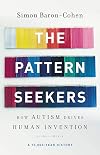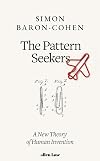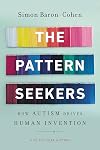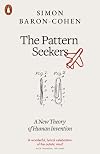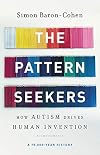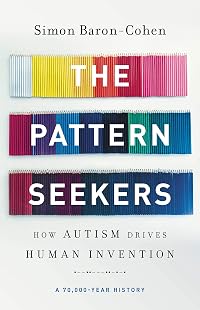
The Pattern Seekers: How Autism Drives Human Invention
by Simon Baron-Cohen
On This Page
Description
Simon Baron-Cohen reveals the surprising answer to two apparently distinct questions: Why are humans so inventive? And why does autism exist? The first question hangs over almost every human endeavor: business people want to know how to innovate. Cognitive psychologists want to understand the nature of creativity. Evolutionary scientists and comparative psychologists want to understand why we are capable of such cultural complexity and diversity, when other animals, at best, have learned how show more to use a rock as a simple tool. At the same time, the study of autism has become a preeminent concern among overlapping groups, from educators to scientists to business people and parents -- and of course to people with autism themselves. Baron-Cohen argues these two questions are actually the same: understanding autism -- specifically the fixation on patterns that is considered characteristic of the condition -- is the key to understanding both the ancient origins and the modern flowering of human creativity. show lessTags
Recommendations







Member Reviews
Disclaimer - I'm biased. I've been diagnosed with Asperger's Syndrome / high functional ASD, I successfully work in STEM. So naturally, I quite vibed with the idea of "we're all neurodiverse, it all is an expression of human diversity and part of human evolution". Baron-Cohen passionately argues for more inclusion at the workspace, which is another high five from me. Quite enjoyed it, his studies regarding the relation between STEM parents and probability of offspring on the spectrum are quite interesting. It's mostly a casual read and well narrated in the audiobook version.
Intriguing Theory. Full disclosure up front: I *am* Autistic, and thus these types of books tend to demand my attention as I attempt to understand my own mind and body. That noted, Baron-Cohen (no apparent relation to the actor of the same surname) here proposes a theory that those who are "high systemizers" - those he defines as people driven by a process many in programming will recognize as a version of Agile Programming - are the ones who have driven human innovation from the dawn of the species. It is a theory that has at least some degree of merit, but perhaps has a few weaknesses that the author omits - though he does make a point of discussing some competing theories, it is possible that there are other explanations that fit at show more least some of the data better according to Occam's Razor. Still, he makes a repeated point that even those suspected of being Autistic should not seek a diagnosis unless their abilities are somehow causing problems, which is a point that many in the Autism literature - at least that which I have read - fail to make or even contradict, and for that reason alone this book is a refreshing change of pace. (It also opens with one of my favorite quotes, from The Imitation Game - the story of Alan Turing, the father of Computer Science and a suspected Autistic - that "Sometimes it is the people no one imagines anything of who do the things no one can imagine.")
Overall a a must-read book for those seeking to understand Autistics, as it really does make a lot of very solid points - points that were affecting me nearly as much as my first viewing of The Imitation Game. This is yet another one that I will absolutely be recommending those seeking to work with me professionally read, as it can give them many clues both how to understand me - and how to use me much more effectively. Very much recommended. show less
Overall a a must-read book for those seeking to understand Autistics, as it really does make a lot of very solid points - points that were affecting me nearly as much as my first viewing of The Imitation Game. This is yet another one that I will absolutely be recommending those seeking to work with me professionally read, as it can give them many clues both how to understand me - and how to use me much more effectively. Very much recommended. show less
Simon Baron-Cohen is a psychology professor and author of six hundred scientific articles and four books. He is proposing a theory of Systemizing vs. Empathizing brain types, with the former associated with both autism (well established) and inventiveness (his new theory). Chapters were most interesting when discussing the brain types, and autistic and intensively systemizing people in particular and in general. There were less interesting chapters about how early we can date true inventiveness on the part of homo sapiens; and whether animals can invent. These things did not seem relevant to the theory to me. Baron-Cohen passionately calls out for better accommodations in society for autistic people - they need remunerative work, and to show more feel valued, and to have friends. These passages made me want to go out and befriend an autistic person. I guess that proves I have an Empathic side of my brain after all. That's just a joke - he emphasizes that the "empathy" skills that autistic people lack are not those of "affective empathy" - feeling compassion and a sense of justice for others; but "cognitive empathy" - able to put oneself in another's shoes, commonly called "emotional intelligence". There are tests you can take in the appendices to see whether you rate as a Systemizer, an Empath, or a "Balance" of the two. I think there was an error reversing the legends of the axes of the graph in Appendix A, however, so I am not sure if I am something of a "Systemizer" (though I am definitely not an extreme one) or a "Balanced" individual. Another appendix lets you quiz yourself to see how many autistic traits you have. I rate about six; so does my husband; this puts us on the "low" end of being "high" in autistic traits. I was originally mildly surprised that he wasn't rating more "systemic" or more "autistic" than me; but upon further reflection, I buy it - I think we are both true Systemizers, but in different ways. show less
Citations needed. I guess it's a book for parents of autistic kids?
Ratings
Members
- Recently Added By
Lists

Science: Health & Medical
100 works; 1 member
Author Information

23+ Works 1,669 Members
Simon Baron-Cohen is professor of psychology and psychiatry at Cambridge University and director of its Autism Research Centre
Classifications
- Genres
- Nonfiction, Science & Nature, General Nonfiction
- DDC/MDS
- 616.85 — Applied science & technology Medicine & health Diseases, Allergies, Skin Conditions Nervous Disorders: Autism, Anorexia, OCD Miscellaneous
- LCC
- RC553 .A88 .B3684 — Medicine Internal medicine Internal medicine Neurosciences. Biological psychiatry. Neuropsychiatry Psychiatry Psychopathology
- BISAC
Statistics
- Members
- 162
- Popularity
- 202,242
- Reviews
- 4
- Rating
- (3.59)
- Languages
- English, Italian
- Media
- Paper, Audiobook, Ebook
- ISBNs
- 10
- ASINs
- 5