On This Page
Description
INTERNATIONAL BESTSELLER "[W]itty, original...a delight." --The New York Times Perfect for fans of Ruth Ware and Lisa Jewell, this international bestseller and "dazzlingly clever" (The Sunday Times, London) murder mystery follows a community rallying around a sick child--but when escalating lies lead to a dead body, everyone is a suspect. The Fairway Players, a local theatre group, is in the midst of rehearsals when tragedy strikes the family of director Martin Hayward and his wife Helen, show more the play's star. Their young granddaughter has been diagnosed with a rare form of cancer, and with an experimental treatment costing a tremendous sum, their castmates rally to raise the money to give her a chance at survival. But not everybody is convinced of the experimental treatment's efficacy--nor of the good intentions of those involved. As tension grows within the community, things come to a shocking head at the explosive dress rehearsal. The next day, a dead body is found, and soon, an arrest is made. In the run-up to the trial, two young lawyers sift through the material--emails, messages, letters--with a growing suspicion that the killer may be hiding in plain sight. The evidence is all there, between the lines, waiting to be uncovered. A wholly modern and gripping take on the epistolary novel, The Appeal is a "daring...clever, and funny" (The Times, London) debut for fans of Richard Osman and Lucy Foley. show lessTags
Recommendations










Member Reviews
This originally appeared at The Irresponsible Reader.
---
WHAT'S THE APPEAL ABOUT?
The setup is basically this: a pair of law students have been given a stack of documents—emails, texts, voicemail transcripts, letters, and so on. They're to read through this stack and be prepared to work out what crime(s) happened in what's documented and who did what (and maybe why).
The correspondence focuses on a period of March-July in the lives of people in The Fairway Players or their associates. The Fairway Players are a local amateur theater group from a small community. As the group starts to plan their next play, the director makes a horrible announcement: his granddaughter, Poppy, has just been diagnosed with a rare form of brain cancer. He's show more going to have to step back for a while, and Poppy's uncle will be stepping up to direct, etc. There's an experimental drug from the U.S. that's her best shot at a cure, but it's expensive and the family's trying to crowdfund the treatment.
The Players are galvanized into action—individually and as a whole. People do charity runs, have a fundraising gala, a raffle, direct contributions, and so on—and, of course, all the proceeds from The Fairway Players' next play will go to the Fund.
The stack of documents chronicles the messages about this fundraising appeal, the emails of support, and a lot of the behind-the-scenes work at the appeal and the play, and assorted tangential matters. There's a lot of gossip, backstabbing, emotional manipulation, and...well, you start to get the idea that not everything is on the up-and-up with the appeal, the treatment, and some of the people involved. The more you start to piece together the picture these emails, etc. are painting, the more you're pretty sure you're missing something big. Maybe a few somethings. A crime has been committed, one or two may be in progress, and there may be more on the way.
The only way to find out is to see what the next email has to say.
ISABEL BECK
When it comes to sheer word count, we hear more from Isabel Beck than any of the other characters. This doesn't necessarily mean that we know more about her than some of the others—we just get more input from her about what's going on. Or at least what she says is going on.
Issy is clearly a lonely person. Until she recruits a couple of new colleagues, she's the newest member of The Fairway Players and isn't really liked by most (and, in fact, the people she brings in are quickly more welcome than she is). She's described as "mousy," "drippy," who "latches on to" people—and some things not as complimentary. Between her emails and what others say about her, you really start to pity Issy.
And that feeling just grows—like just about every person in the book, she does some truly lousy things. But unlike just about every person in the book, I only felt bad for her. I really hoped for a heaping dose of comeuppance to be given to everyone else but kept hoping something good would happen for Issy.
If I liked nothing else about The Appeal, Isabel Beck would be enough for me to tell you to go read this book. I'm so glad I met this character, one of the best of 2021.
THE STROKE OF GENIUS
The law students, Femi and Charlotte, communicate with each other via WhatsApp about these documents as they read—as you read, too. They get exactly the same information as the reader does when the reader does. As they write back and forth, it's like you're a part of the conversation with them. Instead of texting/messaging your friend(s) as you read the same novel, in this case, you're reading along with a couple of the characters.
In mysteries, as the reader, you're always looking back at things, seeing what happened. Even if the narration is in the present tense, it's going through things that have already happened. Which is the case here, too. But you're with Femi and Charlotte in the trenches—it feels very "now"—while you and those two are looking towards the future, what documents are going to be coming? As they start to put things together, you do, too (sometimes faster than them, sometimes a beat or two behind them). It's a fun—and brilliant—layer on top of what's already a great book that kicks it up a notch or two of cleverness.
LINGERING QUESTIONS
One of the downsides/advantages (depending on your point of view) of this type of storytelling is that you don't have an omniscient narrator—or even a first person—to tie up all the loose ends.
I have several lingering questions about some of the events of the book, many of which can't even make a decent guess about the answer for. If Connelly, Rankin, Holten, Goldberg, or anyone else had left this much hanging—you can believe I'd be jumping up and down shouting my objections to the heavens. But I'm oddly at peace with this. I have been and am going to be spending some time chewing on my questions, make no mistake, but I'm fine with Hallett not tieing everything up in a nice bow.
I should stress that all the important questions, the ones that keep the reader turning pages for, are answered in definitive ways.
SO, WHAT DID I THINK ABOUT THE APPEAL?
I ordered this book as soon as I read Noelle Holten's post about it in July. Then listening to Hallet on The Blood Brothers Podcast just made me anticipate it more. So when I saw this on NetGalley, I had to jump—who wants to wait until January for the US release?
I am so glad that I didn't wait.
As I read this, I kept saying to myself things like, "oh, this is clever;" "this is great;" "oohh, impressive;" and so on. And then 30-60 minutes later, I'd say the same thing again, but mean it more. And then again 30-minutes later. Right up to the final paragraphs, this kept getting better and better—and it started off great.
Now that I've said such grandiose things that no book can possibly live up to them, I'm not sure there's a whole lot left to say.
The Appeal is a funny, thought-provoking, and suspenseful novel full of great, believable characters—not a whole lot of likable characters, but believable and interesting, sure—with a multi-layered plot that will keep you guessing and thinking as it pushes you to keep going; all presented in a format that you've seen rarely (if ever) in a mystery novel. If the execution isn't flawless, it's close enough that you won't notice.
One of the best of the year. Period.
Disclaimer: I received this eARC from Atria via NetGalley in exchange for this post and my honest opinion—thanks to both for this. show less
---
WHAT'S THE APPEAL ABOUT?
The setup is basically this: a pair of law students have been given a stack of documents—emails, texts, voicemail transcripts, letters, and so on. They're to read through this stack and be prepared to work out what crime(s) happened in what's documented and who did what (and maybe why).
The correspondence focuses on a period of March-July in the lives of people in The Fairway Players or their associates. The Fairway Players are a local amateur theater group from a small community. As the group starts to plan their next play, the director makes a horrible announcement: his granddaughter, Poppy, has just been diagnosed with a rare form of brain cancer. He's show more going to have to step back for a while, and Poppy's uncle will be stepping up to direct, etc. There's an experimental drug from the U.S. that's her best shot at a cure, but it's expensive and the family's trying to crowdfund the treatment.
The Players are galvanized into action—individually and as a whole. People do charity runs, have a fundraising gala, a raffle, direct contributions, and so on—and, of course, all the proceeds from The Fairway Players' next play will go to the Fund.
The stack of documents chronicles the messages about this fundraising appeal, the emails of support, and a lot of the behind-the-scenes work at the appeal and the play, and assorted tangential matters. There's a lot of gossip, backstabbing, emotional manipulation, and...well, you start to get the idea that not everything is on the up-and-up with the appeal, the treatment, and some of the people involved. The more you start to piece together the picture these emails, etc. are painting, the more you're pretty sure you're missing something big. Maybe a few somethings. A crime has been committed, one or two may be in progress, and there may be more on the way.
The only way to find out is to see what the next email has to say.
ISABEL BECK
When it comes to sheer word count, we hear more from Isabel Beck than any of the other characters. This doesn't necessarily mean that we know more about her than some of the others—we just get more input from her about what's going on. Or at least what she says is going on.
Issy is clearly a lonely person. Until she recruits a couple of new colleagues, she's the newest member of The Fairway Players and isn't really liked by most (and, in fact, the people she brings in are quickly more welcome than she is). She's described as "mousy," "drippy," who "latches on to" people—and some things not as complimentary. Between her emails and what others say about her, you really start to pity Issy.
And that feeling just grows—like just about every person in the book, she does some truly lousy things. But unlike just about every person in the book, I only felt bad for her. I really hoped for a heaping dose of comeuppance to be given to everyone else but kept hoping something good would happen for Issy.
If I liked nothing else about The Appeal, Isabel Beck would be enough for me to tell you to go read this book. I'm so glad I met this character, one of the best of 2021.
THE STROKE OF GENIUS
The law students, Femi and Charlotte, communicate with each other via WhatsApp about these documents as they read—as you read, too. They get exactly the same information as the reader does when the reader does. As they write back and forth, it's like you're a part of the conversation with them. Instead of texting/messaging your friend(s) as you read the same novel, in this case, you're reading along with a couple of the characters.
In mysteries, as the reader, you're always looking back at things, seeing what happened. Even if the narration is in the present tense, it's going through things that have already happened. Which is the case here, too. But you're with Femi and Charlotte in the trenches—it feels very "now"—while you and those two are looking towards the future, what documents are going to be coming? As they start to put things together, you do, too (sometimes faster than them, sometimes a beat or two behind them). It's a fun—and brilliant—layer on top of what's already a great book that kicks it up a notch or two of cleverness.
LINGERING QUESTIONS
One of the downsides/advantages (depending on your point of view) of this type of storytelling is that you don't have an omniscient narrator—or even a first person—to tie up all the loose ends.
I have several lingering questions about some of the events of the book, many of which can't even make a decent guess about the answer for. If Connelly, Rankin, Holten, Goldberg, or anyone else had left this much hanging—you can believe I'd be jumping up and down shouting my objections to the heavens. But I'm oddly at peace with this. I have been and am going to be spending some time chewing on my questions, make no mistake, but I'm fine with Hallett not tieing everything up in a nice bow.
I should stress that all the important questions, the ones that keep the reader turning pages for, are answered in definitive ways.
SO, WHAT DID I THINK ABOUT THE APPEAL?
I ordered this book as soon as I read Noelle Holten's post about it in July. Then listening to Hallet on The Blood Brothers Podcast just made me anticipate it more. So when I saw this on NetGalley, I had to jump—who wants to wait until January for the US release?
I am so glad that I didn't wait.
As I read this, I kept saying to myself things like, "oh, this is clever;" "this is great;" "oohh, impressive;" and so on. And then 30-60 minutes later, I'd say the same thing again, but mean it more. And then again 30-minutes later. Right up to the final paragraphs, this kept getting better and better—and it started off great.
Now that I've said such grandiose things that no book can possibly live up to them, I'm not sure there's a whole lot left to say.
The Appeal is a funny, thought-provoking, and suspenseful novel full of great, believable characters—not a whole lot of likable characters, but believable and interesting, sure—with a multi-layered plot that will keep you guessing and thinking as it pushes you to keep going; all presented in a format that you've seen rarely (if ever) in a mystery novel. If the execution isn't flawless, it's close enough that you won't notice.
One of the best of the year. Period.
Disclaimer: I received this eARC from Atria via NetGalley in exchange for this post and my honest opinion—thanks to both for this. show less
The wraparound story that sets up this contemporary mystery features a Queen's Counsel who has instructed two of his articled clerks(? — I welcome corrections of my imperfect understanding of the UK legal system) to examine a packet of written evidence used in a trial — emails, text messages, letters — to determine if there are grounds to appeal a murder conviction that the QC believes was wrongly decided. As the two clerks review all of the information, they exchange texts and emails with each other and with their boss, providing exposition to the reader in the guise of asking for clarification or talking through scenarios.
The legal case is not the only appeal that the title refers to. At the heart of the story is a village show more community theater group, the Fairway Players, which is run more or less benevolently by the local "alpha" family, the Haywards. They receive shocking news when their young granddaughter, Poppy, is diagnosed with cancer. Her only hope is an experimental drug treatment that has not been approved in the UK and is only available at enormous cost directly from the American doctors conducting a clinical trial. The family launches an ambitious crowdfunding campaign to raise the funds, while simultaneously rehearsing and preparing to debut the theater group's current play, Arthur Miller's All My Sons.
It's pretty clear from the setup and the opening pages that there's something rotten in Lockwood, but we don't find out who the victim is until quite late, which makes reading all of the emails and texts akin to putting together a jigsaw puzzle without being able to refer to the picture on the box. I found it to be a compelling page-turner, and it was enjoyable to continually make and revise guesses about what was really going on, to whom and by whom, throughout. (Let's just say murder isn't the only criminal activity going on among this lot.) The characters were fully formed and distinct enough to both distinguish from each other and allow the reader to form definite opinions about them based on their communications.
All in all, I found this a rollicking good time. Because the story is told in an epistolary style, there's no blood or gore — the focus really is on trying to put the puzzle together and arrive at the same conclusion as the lawyers. The final chapter seemed like the perfect payoff for the setup that occurred throughout the story, which is always a satisfying way to end a mystery. show less
The legal case is not the only appeal that the title refers to. At the heart of the story is a village show more community theater group, the Fairway Players, which is run more or less benevolently by the local "alpha" family, the Haywards. They receive shocking news when their young granddaughter, Poppy, is diagnosed with cancer. Her only hope is an experimental drug treatment that has not been approved in the UK and is only available at enormous cost directly from the American doctors conducting a clinical trial. The family launches an ambitious crowdfunding campaign to raise the funds, while simultaneously rehearsing and preparing to debut the theater group's current play, Arthur Miller's All My Sons.
It's pretty clear from the setup and the opening pages that there's something rotten in Lockwood, but we don't find out who the victim is until quite late, which makes reading all of the emails and texts akin to putting together a jigsaw puzzle without being able to refer to the picture on the box. I found it to be a compelling page-turner, and it was enjoyable to continually make and revise guesses about what was really going on, to whom and by whom, throughout. (Let's just say murder isn't the only criminal activity going on among this lot.) The characters were fully formed and distinct enough to both distinguish from each other and allow the reader to form definite opinions about them based on their communications.
All in all, I found this a rollicking good time. Because the story is told in an epistolary style, there's no blood or gore — the focus really is on trying to put the puzzle together and arrive at the same conclusion as the lawyers. The final chapter seemed like the perfect payoff for the setup that occurred throughout the story, which is always a satisfying way to end a mystery. show less
A lawyer gives two of his staff members a challenge: solve a crime by examining a collection of related emails, messages, documents, and ephemera. Here's the scenario: a tight-knit community theatre group is shaken when a child of their most prominent family is diagnosed with brain cancer. They pull together a fundraising appeal to buy the experimental drugs that are her best hope for treatment, but things start falling apart. Scammers are drawn to the fundraising effort, and there's suspicion that somebody might be mishandling funds. People are not who they seem, and some of them may not exist at all. There are petty disagreements, social snubs, friendships made and destroyed, and, eventually, murder. The wrong person may be in jail -- show more but can the case be solved with only the evidence provided?
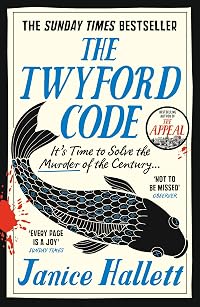
I think I actually like this book ever so slightly better than The Twyford Code by the same author, though both are so good it's hard to make a judgement. While that book hearkened to my love of children's literature, this one appeals to my fondness for community theatre. (Clearly I am being targeted by this author, and I'm okay with that.) She certainly hits all the right notes regarding the high emotions of a small community theatre group; I think I have met all of these individuals, and been a few of them! I was pleased to guess certain parts of the mystery before they were revealed, but it was by no means an easy one to puzzle out, as there are a lot of moving pieces. Definitely recommended to mystery fans. show less
I think I actually like this book ever so slightly better than The Twyford Code by the same author, though both are so good it's hard to make a judgement. While that book hearkened to my love of children's literature, this one appeals to my fondness for community theatre. (Clearly I am being targeted by this author, and I'm okay with that.) She certainly hits all the right notes regarding the high emotions of a small community theatre group; I think I have met all of these individuals, and been a few of them! I was pleased to guess certain parts of the mystery before they were revealed, but it was by no means an easy one to puzzle out, as there are a lot of moving pieces. Definitely recommended to mystery fans. show less
Okay, you know what they say about too much of a good thing? I LOVE epistolary novels but this book became cloying even before the half-way mark. The concept was great, the delivery at times hilarious, but literally there was not one word in the book that was not in the form of an email, a sticky note, sms, or WhatsApp message. The ones sent from the telephones were sooo funny because of the spelling, but especially because of the little advertisements tacked on to the messages by the software, including for sex services!
The Appeal...Crowdfunding for poor Poppy, a toddler who is battling cancer (please don't be put off by the amusement this generates - I can assure you that Poppy is in no danger of dying at any time in this novel). A show more murder … you won't find out until nearly the end of the book, who and by whom. A slew of characters whose lives revolve around their amateur theater troupe, the chief honcho and family in the community, and all the wannabees hankering to be part of the "in crowd".
This is a spoof that pokes fun at many sacred cows - Drs without borders, Drs without morals, medical relief workers in Africa, crowdfunding, contractors, obsessive online communication, technology glitches, amateur theater, lawyers, legal apprentices, yes - and even cancer andMunchausen .
I laughed out loud with the author as the fund-raising went out of control and definitely off the records, as a bunch of self-serving characters freely dipped their fingers in the till and generated a money making enterprise, fueled by the frenetic efforts of a satellite of altruistic numnuts, begging to be fleeced.
…and that’s the least of it. Yes, I loved this book, but Geez Louise, I think I have a toothache! show less
The Appeal...Crowdfunding for poor Poppy, a toddler who is battling cancer (please don't be put off by the amusement this generates - I can assure you that Poppy is in no danger of dying at any time in this novel). A show more murder … you won't find out until nearly the end of the book, who and by whom. A slew of characters whose lives revolve around their amateur theater troupe, the chief honcho and family in the community, and all the wannabees hankering to be part of the "in crowd".
This is a spoof that pokes fun at many sacred cows - Drs without borders, Drs without morals, medical relief workers in Africa, crowdfunding, contractors, obsessive online communication, technology glitches, amateur theater, lawyers, legal apprentices, yes - and even cancer and
I laughed out loud with the author as the fund-raising went out of control and definitely off the records, as a bunch of self-serving characters freely dipped their fingers in the till and generated a money making enterprise, fueled by the frenetic efforts of a satellite of altruistic numnuts, begging to be fleeced.
…and that’s the least of it. Yes, I loved this book, but Geez Louise, I think I have a toothache! show less
This is an epistolary novel told mainly through emails and text messages about an amateur theatre group and the campaign to raise funds for a toddler’s cancer treatment.
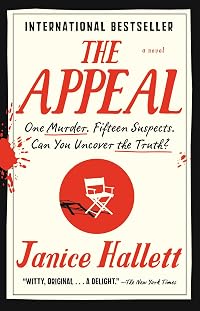
The cover makes it clear this is going to be a murder mystery -- “One murder. Fifteen suspects. Can you uncover the truth?” -- and so I kept expecting the murder to occur sooner. But instead, the story is predominately about everything which happens in the lead-up.
I love this sort of epistolary format. I love reading between the lines to draw conclusions about what is being left out, and that’s an approach which fits in well with trying to solve a mystery. (By 90% through, I strongly suspected who the murderer was, because that theory would explain a particular show more piece of the puzzle, although I hadn’t figured out how all the other puzzle pieces would fit around and prove it.) I found it interesting to have characters who are only seen through other’s eyes and not through their own correspondence.
I also liked the narrative device for explaining why these documents -- and not others -- have been gathered together. They are evidence from a court case and have been given to two apprentices to analyse from an unbiased perspective.
Because while I found the epistolary format and the multiple mysteries and the array of personalities fascinating and compelling, and although the resolution was satisfying, in the end I wished that putting this group of characters under the microscope had revealed something more positive. show less
The cover makes it clear this is going to be a murder mystery -- “One murder. Fifteen suspects. Can you uncover the truth?” -- and so I kept expecting the murder to occur sooner. But instead, the story is predominately about everything which happens in the lead-up.
I love this sort of epistolary format. I love reading between the lines to draw conclusions about what is being left out, and that’s an approach which fits in well with trying to solve a mystery. (By 90% through, I strongly suspected who the murderer was, because that theory would explain a particular show more piece of the puzzle, although I hadn’t figured out how all the other puzzle pieces would fit around and prove it.) I found it interesting to have characters who are only seen through other’s eyes and not through their own correspondence.
I also liked the narrative device for explaining why these documents -- and not others -- have been gathered together. They are evidence from a court case and have been given to two apprentices to analyse from an unbiased perspective.
If you can solve these further riddles, then it’s more than I could at the original hearing: three people are not who they say they are. Three masquerade as others. One does not exist at all.As the book progresses, Femi and Charlotte’s discussions become more of the focus, and I was surprised to discover that rather than resenting this intrusion to the narrative, I was really interested in what they had to say. In fact, a part of me wishes the two of them had been given even more page-time, if I’d got to know them and their lives, and not just their opinions on the case. It might have been nice to feel invested in some characters who were unambiguously likeable.
Because while I found the epistolary format and the multiple mysteries and the array of personalities fascinating and compelling, and although the resolution was satisfying, in the end I wished that putting this group of characters under the microscope had revealed something more positive. show less
The Appeal is going to be a tricky book for me to review. I don't want to give away anything that gives too much of an insight into the actual storyline or characters. It's a small-town murder mystery based around two pivotal events: the amateur production of a play and the requirement of funds for a little girl's potentially life-saving treatment.
What's so innovative about this story is it's told almost completely in emails and messages. I must admit to being simultaneously intrigued and wary of this format as I don't always get on with epistolary novels, but I needn't have worried. Hallett has made this such an addictive read with a feeling akin to peeping through a window and observing the (pretty unlikeable, to be fair) characters' show more behaviour both first- and second-hand, and watching their stories unfold.
Through the various correspondence devices we learn how each character feels about the others and about the situations they find themselves in. We also learn the reason for the correspondence being collated and its relevance. We get to see it dissected and at this point the pace slows down somewhat, requiring a more considered, yet still fascinating, read.
In The Appeal nothing and nobody is what they seem. Even the title surprised me as it has more than one meaning. I have come to the conclusion I would be a terrible detective and am hopeless at reading between the lines. Janice Hallett, however, is a masterful plotter, pulling all of the different strands together with aplomb. It gives me a headache just thinking about the planning of this novel. This is an accomplished debut novel and a compelling mystery, with a very original style. I loved it. show less
What's so innovative about this story is it's told almost completely in emails and messages. I must admit to being simultaneously intrigued and wary of this format as I don't always get on with epistolary novels, but I needn't have worried. Hallett has made this such an addictive read with a feeling akin to peeping through a window and observing the (pretty unlikeable, to be fair) characters' show more behaviour both first- and second-hand, and watching their stories unfold.
Through the various correspondence devices we learn how each character feels about the others and about the situations they find themselves in. We also learn the reason for the correspondence being collated and its relevance. We get to see it dissected and at this point the pace slows down somewhat, requiring a more considered, yet still fascinating, read.
In The Appeal nothing and nobody is what they seem. Even the title surprised me as it has more than one meaning. I have come to the conclusion I would be a terrible detective and am hopeless at reading between the lines. Janice Hallett, however, is a masterful plotter, pulling all of the different strands together with aplomb. It gives me a headache just thinking about the planning of this novel. This is an accomplished debut novel and a compelling mystery, with a very original style. I loved it. show less
Genuinely delicious and fascinating mystery novel that utterly perturbs and bewilders the reader. A story about an amateur dramatic society might be enough for some, a story about an appeal for aid for a sick child might be enough for some, a story about people returning from time spent working as medical volunteers in violent parts of the world might be enough for some, but here we have all three, and one or two more, woven together fiendishly through an epistolary narrative of emails and text messages into a complex tale that keeps the reader guessing until the final solution is presented.
Members
- Recently Added By
Lists

Books Read in 2022
5,168 works; 114 members

Favorite Epistolary Fiction
143 works; 144 members

Books Read in 2023
5,547 works; 145 members

READ in 2024
262 works; 1 member

Books Read in 2024
4,623 works; 126 members

Books recommended by Calgary Public Library staff
1,588 works; 4 members

Library Mystery/Thriller
181 works; 1 member
Author Information

11+ Works 4,603 Members
Some Editions
Awards and Honors
Awards
Distinctions
Notable Lists
Series

Work Relationships
Common Knowledge
- Canonical title
- The Appeal
- Original title
- The Appeal
- Original publication date
- 2021-01-14
- People/Characters
- Samantha "Sam" Greenwood; Isabel Beck; Poppy Reswick; Martin Hayward; Sarah-Jane MacDonald; Tish Bhatoa
- Important places
- Lockwood, UK
- Dedication
- For the Raglan Players
- First words
- Sandra, please deliver to Femi and Charlotte
- Canonical DDC/MDS
- 823.92
- Canonical LCC
- PR6108.A4955
Classifications
Statistics
- Members
- 1,735
- Popularity
- 12,748
- Reviews
- 66
- Rating
- (3.88)
- Languages
- 9 — Dutch, English, Finnish, French, German, Hungarian, Italian, Portuguese, Spanish
- Media
- Paper, Audiobook, Ebook
- ISBNs
- 26
- ASINs
- 6