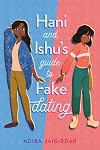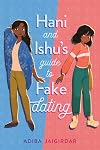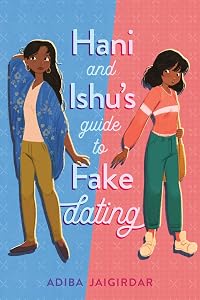
Hani and Ishu's Guide to Fake Dating
by Adiba Jaigirdar
On This Page
Description
Romance. Young Adult Fiction. Young Adult Literature. LGBTQIA+ (Fiction.) HTML:Everyone likes Humaira "Hani" Khan?she’s easy going and one of the most popular girls at school. But when she comes out to her friends as bisexual, they invalidate her identity, saying she can’t be bi if she’s only dated guys. Panicked, Hani blurts out that she’s in a relationship…with a girl her friends absolutely hate?Ishita "Ishu" Dey. Ishu is the complete opposite of Hani. She’s an academic show more overachiever who hopes that becoming head girl will set her on the right track for college. But Ishita agrees to help Hani, if Hani will help her become more popular so that she stands a chance of being elected head girl.Despite their mutually beneficial pact, they start developing real feelings for each other. But relationships are complicated, and some people will do anything to stop two Bengali girls from achieving happily ever after. show less
Tags
Recommendations
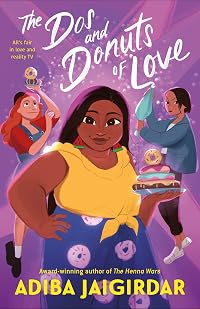
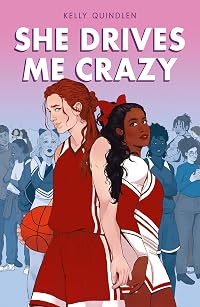


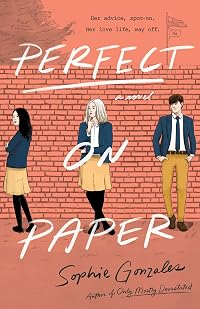
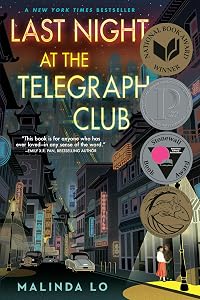
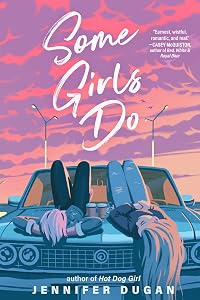
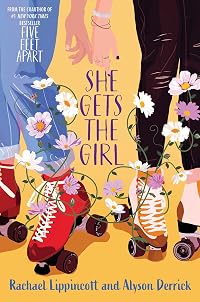
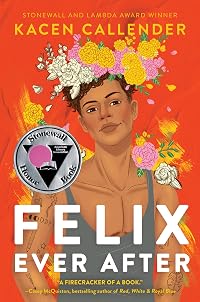
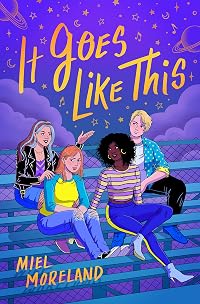

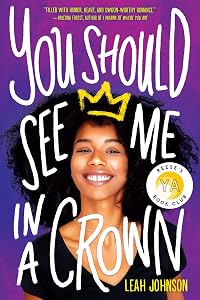
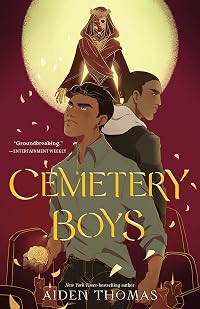
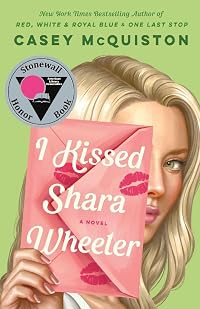
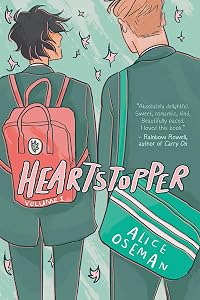














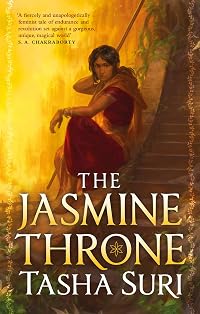


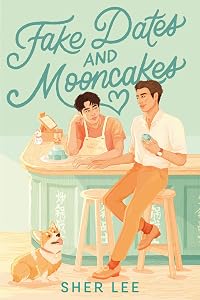
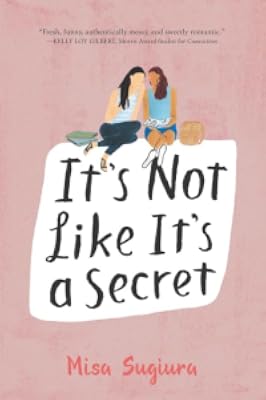
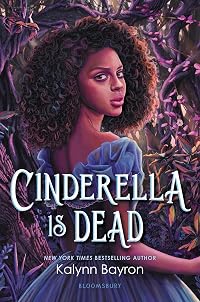

Member Recommendations

Member Reviews
Thanks to Netgalley, the publisher and the author for providing me with an ARC
Rating: 5/5
CWs/TWs: biphobia, homophobia, toxic friendships, islamophobia, racism
Important note: While I do share some experiences and marginalisations with the characters (I am bi and I’ve experienced biphobia and toxic friendships), please seek out reviews by South Asian reviewers and pay particular attention to what South Asian queer folks have said about this book!
...
Review:
When I started this book I expected it to be quite good – after all all people I’ve heard talk about the Henna War by the same author have been practically in love with it – but I didn’t know it was going to become such a favourite. It is adorable and fluffy, but still has show more some quite serious discussions about friendship, queerness, and bigotry, and it opens these discussions through its layered and engaging writing.
Hani and Ishu are characters that at first seem quite different, but actually parallel each-other in many ways. They are both under a lot of external pressure - Hani is constantly trying to bend herself to fit in her friend group’s very white and heteronormative ideas of how she should behave, while Ishu spends almost all her free time studying, to fulfil her parents’ overambitious academic expectations. The relationship they form is one of the cutest I’ve read recently. Fake dating is one of my favourite tropes, and I really loved how it was executed in this book – it was such a sweet and healthy romance.
One thing I can say for sure is that the biphobia in this book was depicted quite well. It felt so real that I found it a bit challenging to get through some parts, since they were so close to experiences that I’ve had. Even though reading these scenes caused me some anxiety, it was so validating and gratifying to see biphobia accurately depicted and subsequently challenged in a narrative. The story also tackles themes like religion, islamophobia, racism, and the pressure the children of immigrants can feel to succeed professionally.
All in all, Hani and Ishu is an amazing queer story that is about a lot more than just queerness or a fluffy romance, or toxic friendships, or challenging bigotry – what makes it great is that it manages to combine all those things into a cohesive story that speaks about it all in-depth, while maintaining a light and validating tone. show less
Rating: 5/5
CWs/TWs: biphobia, homophobia, toxic friendships, islamophobia, racism
Important note: While I do share some experiences and marginalisations with the characters (I am bi and I’ve experienced biphobia and toxic friendships), please seek out reviews by South Asian reviewers and pay particular attention to what South Asian queer folks have said about this book!
...
Review:
When I started this book I expected it to be quite good – after all all people I’ve heard talk about the Henna War by the same author have been practically in love with it – but I didn’t know it was going to become such a favourite. It is adorable and fluffy, but still has show more some quite serious discussions about friendship, queerness, and bigotry, and it opens these discussions through its layered and engaging writing.
Hani and Ishu are characters that at first seem quite different, but actually parallel each-other in many ways. They are both under a lot of external pressure - Hani is constantly trying to bend herself to fit in her friend group’s very white and heteronormative ideas of how she should behave, while Ishu spends almost all her free time studying, to fulfil her parents’ overambitious academic expectations. The relationship they form is one of the cutest I’ve read recently. Fake dating is one of my favourite tropes, and I really loved how it was executed in this book – it was such a sweet and healthy romance.
One thing I can say for sure is that the biphobia in this book was depicted quite well. It felt so real that I found it a bit challenging to get through some parts, since they were so close to experiences that I’ve had. Even though reading these scenes caused me some anxiety, it was so validating and gratifying to see biphobia accurately depicted and subsequently challenged in a narrative. The story also tackles themes like religion, islamophobia, racism, and the pressure the children of immigrants can feel to succeed professionally.
All in all, Hani and Ishu is an amazing queer story that is about a lot more than just queerness or a fluffy romance, or toxic friendships, or challenging bigotry – what makes it great is that it manages to combine all those things into a cohesive story that speaks about it all in-depth, while maintaining a light and validating tone. show less
There was so much I loved about this book, but so much that frustrated me at the same time. I loved Hani and Ishu. Both of them had great individual character development and their development as a couple was great too. I really liked them together and although both of them sometimes frustrated me, I really understood where they were coming from. The fake dating was cute and sweet and this use of the trope was good.
That being said... the conflict in the book was SO frustrating. I know that the Hani's friends were not supposed to be likeable, but they were just downright EVIL. Neither of them had any redeeming qualities and reading about how horrible they were over and over and over again with no consequences was infuriating. At the end show more of the book, Ishu gets accused of cheating on a test (even though she obviously didn't) and the resolution is like... BARELY a resolution. It seems like everybody at their entire school except for Hani and Ishu are just completely awful. The head of the school is a monster. She just hates Ishu for no reason and it seems like everybody else does too even though she's never done anything wrong except for being a smart loner kid. It all just kind of ruined a lot of the book for me. I know not every second of a romance book is going to be cute and fun, obviously there's going to be conflict but this was just too much for me. Almost all of the background characters are just cartoonishly evil except Hani's parents and Ishu's sister. At the end of the book Hani and Ishu are happy together but it wasn't as satisfying as it could have been. I had a similar issue in Adiba's other book (The Henna Wars), but I thought the resolution there was better overall. I'm just so mad for both Hani and Ishu (but especially Ishu). show less
That being said... the conflict in the book was SO frustrating. I know that the Hani's friends were not supposed to be likeable, but they were just downright EVIL. Neither of them had any redeeming qualities and reading about how horrible they were over and over and over again with no consequences was infuriating. At the end show more of the book, Ishu gets accused of cheating on a test (even though she obviously didn't) and the resolution is like... BARELY a resolution. It seems like everybody at their entire school except for Hani and Ishu are just completely awful. The head of the school is a monster. She just hates Ishu for no reason and it seems like everybody else does too even though she's never done anything wrong except for being a smart loner kid. It all just kind of ruined a lot of the book for me. I know not every second of a romance book is going to be cute and fun, obviously there's going to be conflict but this was just too much for me. Almost all of the background characters are just cartoonishly evil except Hani's parents and Ishu's sister. At the end of the book Hani and Ishu are happy together but it wasn't as satisfying as it could have been. I had a similar issue in Adiba's other book (The Henna Wars), but I thought the resolution there was better overall. I'm just so mad for both Hani and Ishu (but especially Ishu). show less
Hani and Ishu are two Bengali girls going to high school in Ireland. Hani is a popular people pleaser who feels like she has to hide her faith and culture from her school friends, because she doesn’t want to be “difficult”. Ishu, on the other hand, doesn’t really have friends at all and all that matters to her is that she can be the best student at school, in order to ensure that she can achieve everything her parents expect of her, academically and otherwise.
The girls attend some of the same family events and are on each other’s radars because of that, but they don’t really interact beyond that. That is, until they both find themselves in need of a fake relationship; Hani in order to convince her friends that she is, in show more fact, bisexual, and Ishu because she needs to be more popular in order to be voted head girl at school.
The fake dating plotline is pretty run-of-the-mill, and I actually picked this up because that’s one of my favorite tropes. However, it wasn’t really what I enjoyed about this book, even though the romance was cute.
What I enjoyed a lot more were the discussions about friendship, family, faith, and expectations. Hani’s friends are entitled assholes who treat her like shit, and Hani is pretty much a doormat who’s incapable of having her own opinions. She grows a spine by the end, but she was a really frustrating character to read about. I did really like reading about how important Islam was in her life and what kind of difficulties she had with her so called friends because of her faith.
On the other end of the spectrum we had Ishu, who didn’t really care at all about what her peers thought of her, but her actions and decisions were basically dictated by her parents. Ishu’s big sister drops out of school at the beginning of the story, which causes a lot of tension with her parents, who basically shun her for her choices.
This was a really good read, but I feel like the romance was pretty heavily overshadowed by the bigger issues like biphobia, islamophobia, racism, and coping with the burden of familial expectations. show less
The girls attend some of the same family events and are on each other’s radars because of that, but they don’t really interact beyond that. That is, until they both find themselves in need of a fake relationship; Hani in order to convince her friends that she is, in show more fact, bisexual, and Ishu because she needs to be more popular in order to be voted head girl at school.
The fake dating plotline is pretty run-of-the-mill, and I actually picked this up because that’s one of my favorite tropes. However, it wasn’t really what I enjoyed about this book, even though the romance was cute.
What I enjoyed a lot more were the discussions about friendship, family, faith, and expectations. Hani’s friends are entitled assholes who treat her like shit, and Hani is pretty much a doormat who’s incapable of having her own opinions. She grows a spine by the end, but she was a really frustrating character to read about. I did really like reading about how important Islam was in her life and what kind of difficulties she had with her so called friends because of her faith.
On the other end of the spectrum we had Ishu, who didn’t really care at all about what her peers thought of her, but her actions and decisions were basically dictated by her parents. Ishu’s big sister drops out of school at the beginning of the story, which causes a lot of tension with her parents, who basically shun her for her choices.
This was a really good read, but I feel like the romance was pretty heavily overshadowed by the bigger issues like biphobia, islamophobia, racism, and coping with the burden of familial expectations. show less
Hani and Ishu’s Guide to Fake Dating takes the oft-used romance novel trope of “fake relationships” and turns it on its ears by giving the reader two girls of color living in Ireland. Hani and Ishu are both Bengali, but have very little else in common despite their school’s insistence. Hani is Bangladeshi Irish and speaks with an Irish lilt. She’s a practicing Muslim, out to her family as bisexual and one of the popular girls at school. Ishu, on the other hand, is Hindu, a studious overachiever, friendless, socially awkward, and firmly in the closet. The two agree to begin a fake relationship because Hani’s white Irish friends invalidate her sexuality, and Ishu wants to become head girl at her school to distract her show more parents’ from their disappointment in her older sister who has dropped out of college to get married.
The story of Hani and Ishu’s relationship and life struggles are told in alternating chapters, and the reader is never at a loss as to which character is speaking. Distinct personality traits and ways of thinking never waver. In the audiobook version, their voices are even more distinct as Hani speaks with an Irish accent and Ishu’s accent is Indian.
Taking place in a 21st Century pre-COVID but post-Brexit era, the challenges that Hani and Ishu experience as two non-Christian Brown girls in a majority white world is accurate. Hani’s white friends are terribly insensitive and ignorant about Hani’s culture, sexuality, and religion although they claim to be her best friends. Hani doesn’t call her friends out for their microaggressions, small acts of racism, xenophobia, homophobia or Islamophobia. She doesn’t want to rock the boat and accepts being in this toxic friendship. Ishu constantly reminds Hani that she doesn’t have to hide her true self, and that real friends would compromise and not keep forgetting that she doesn’t drink alcohol or pork.
Ishu’s toxic relationship with her parents and her sister are familiar but no less painful to watch Ishu endure. We know about the jokes about the Asian Immigrant Parent stereotypes from the likes of Ronny Chieng, Hasan Minhaj, and Russell Peters. The pressure for their children to perform academic greatness to the detriment of everything else, and attend a university where the career options are to become a doctor, a lawyer, or an engineer. There’s no wiggle room, and the child is a disappointment if they achieve anything less. Ishu has been in competition with her perfect older sister her whole life. When her sister Nik drops out of university to get married, Ishua sees this as an opportunity to leapfrog to the spot of number 1 daughter. The level of competition and jealousy that Ishu has for Nik is so deep that she believes her sister would blackmail her once she realizes Ishu is queer.
Despite the dearth of young adult novels about the Asian experience that has come out over the past 5 years by authors like Gloria Chao, Maureen Goo, Jenny Hann, David Yoon, and S.K. Ali, Han and Ishu’s Guide to Fake Dating still feels fresh as it explores the nuances of Desi culture and the balance of embracing and breaking from tradition. The slow-burn and mutual pining between Ishu and Hani also feels authentic particularly for two people who just now freely exploring their sexuality and venturing into the world of dating. The romantic moments between the two girls are swoon worthy without being cheesy.
In a post-George Floyd and be an anti-racist year, it would be easy to award a book like Hani and Ishu’s Guide to Fake Dating based on the merit of having diverse characters. This book shouldn’t be read, enjoyed, or win awards based on liberal guilt or tokenism, but based on the writing. Adiba Jaigirdar immersed us in the unique world of two brown girls living in a white, heteronormative world. For women-presenting, queer, BIPOC, and immigrant readers, Adiba told a wholly relatable story about two outsiders trying to fit in the only ways they know how. Even if the reader doesn’t consider themselves an outsider or a member of a marginalized community, the book reminds us about the fear and exhilaration of falling in love for the first time. In a year that has been filled with so much pain and tragedy and divisiveness, it’s refreshing read a book that Celebrates Brown Queer Joy. show less
The story of Hani and Ishu’s relationship and life struggles are told in alternating chapters, and the reader is never at a loss as to which character is speaking. Distinct personality traits and ways of thinking never waver. In the audiobook version, their voices are even more distinct as Hani speaks with an Irish accent and Ishu’s accent is Indian.
Taking place in a 21st Century pre-COVID but post-Brexit era, the challenges that Hani and Ishu experience as two non-Christian Brown girls in a majority white world is accurate. Hani’s white friends are terribly insensitive and ignorant about Hani’s culture, sexuality, and religion although they claim to be her best friends. Hani doesn’t call her friends out for their microaggressions, small acts of racism, xenophobia, homophobia or Islamophobia. She doesn’t want to rock the boat and accepts being in this toxic friendship. Ishu constantly reminds Hani that she doesn’t have to hide her true self, and that real friends would compromise and not keep forgetting that she doesn’t drink alcohol or pork.
Ishu’s toxic relationship with her parents and her sister are familiar but no less painful to watch Ishu endure. We know about the jokes about the Asian Immigrant Parent stereotypes from the likes of Ronny Chieng, Hasan Minhaj, and Russell Peters. The pressure for their children to perform academic greatness to the detriment of everything else, and attend a university where the career options are to become a doctor, a lawyer, or an engineer. There’s no wiggle room, and the child is a disappointment if they achieve anything less. Ishu has been in competition with her perfect older sister her whole life. When her sister Nik drops out of university to get married, Ishua sees this as an opportunity to leapfrog to the spot of number 1 daughter. The level of competition and jealousy that Ishu has for Nik is so deep that she believes her sister would blackmail her once she realizes Ishu is queer.
Despite the dearth of young adult novels about the Asian experience that has come out over the past 5 years by authors like Gloria Chao, Maureen Goo, Jenny Hann, David Yoon, and S.K. Ali, Han and Ishu’s Guide to Fake Dating still feels fresh as it explores the nuances of Desi culture and the balance of embracing and breaking from tradition. The slow-burn and mutual pining between Ishu and Hani also feels authentic particularly for two people who just now freely exploring their sexuality and venturing into the world of dating. The romantic moments between the two girls are swoon worthy without being cheesy.
In a post-George Floyd and be an anti-racist year, it would be easy to award a book like Hani and Ishu’s Guide to Fake Dating based on the merit of having diverse characters. This book shouldn’t be read, enjoyed, or win awards based on liberal guilt or tokenism, but based on the writing. Adiba Jaigirdar immersed us in the unique world of two brown girls living in a white, heteronormative world. For women-presenting, queer, BIPOC, and immigrant readers, Adiba told a wholly relatable story about two outsiders trying to fit in the only ways they know how. Even if the reader doesn’t consider themselves an outsider or a member of a marginalized community, the book reminds us about the fear and exhilaration of falling in love for the first time. In a year that has been filled with so much pain and tragedy and divisiveness, it’s refreshing read a book that Celebrates Brown Queer Joy. show less
In Hani and Ishu's Guide to Fake Dating, Hani comes out as bi to her friends, who react in a less than supportive way. She wants to prove to her biphobic friends that she really is bi, decides that what she needs is a fake girlfriend. Enter Ishu, who wants to be head girl to impress her parents, but needs to become popular in school to get the class vote. Fake dating Hani could be her ticket to popularity and the head girl position.
Ishu and Hani are super different. I absolutely adore the grump and ray of sunshine pairing, and I loved all of Ishu and Hani's interactions, especially their banter. Ishu is focused on studying. She has a complicated relationship with her sister and parents that have very high expectations, and she doesn't show more see the point in being friendly to people she knows don't like her. Hani is the opposite. She is popular, because she works hard to be friendly with everyone. She tries so hard to fit in, but her white friends don't understand her culture. Hani and Ishu sound like they wouldn't get on, but perhaps they are each what each other needs. Both characters are Bengali and Irish, although they have different Bengali backgrounds.
The book deals with parental expectations, peer pressure, cultural pressure, biphobia, family relationships and learning how to be yourself and follow your own dreams. It's a beautiful book, with engaging characters and a story that had me hooked. I particularly liked how Hani has supportive parents, because I'm so used to reading YA where everyone has major issues with their parents. I also loved Hani's relationship with religion, as a queer character who takes comfort in religion rather than being hurt by it.
The fake dating trope! I love this so much. I love that they have a document for the rules of fake dating. I love the slowburn as their relationship begins to develop and change. I love the banter between two very different personalities. I just love all of it! And the drama was so good. I binged the second half of the book because I desperately needed to know how it ended, and I wasn't disappointed.
I loved this as an adult, and I just know it's the kind of book I wish I'd been able to read as a teen. That must go double for any Bengali or other teens of colour, and I hope everyone who needs a book like this gets to read it. show less
Ishu and Hani are super different. I absolutely adore the grump and ray of sunshine pairing, and I loved all of Ishu and Hani's interactions, especially their banter. Ishu is focused on studying. She has a complicated relationship with her sister and parents that have very high expectations, and she doesn't show more see the point in being friendly to people she knows don't like her. Hani is the opposite. She is popular, because she works hard to be friendly with everyone. She tries so hard to fit in, but her white friends don't understand her culture. Hani and Ishu sound like they wouldn't get on, but perhaps they are each what each other needs. Both characters are Bengali and Irish, although they have different Bengali backgrounds.
The book deals with parental expectations, peer pressure, cultural pressure, biphobia, family relationships and learning how to be yourself and follow your own dreams. It's a beautiful book, with engaging characters and a story that had me hooked. I particularly liked how Hani has supportive parents, because I'm so used to reading YA where everyone has major issues with their parents. I also loved Hani's relationship with religion, as a queer character who takes comfort in religion rather than being hurt by it.
The fake dating trope! I love this so much. I love that they have a document for the rules of fake dating. I love the slowburn as their relationship begins to develop and change. I love the banter between two very different personalities. I just love all of it! And the drama was so good. I binged the second half of the book because I desperately needed to know how it ended, and I wasn't disappointed.
I loved this as an adult, and I just know it's the kind of book I wish I'd been able to read as a teen. That must go double for any Bengali or other teens of colour, and I hope everyone who needs a book like this gets to read it. show less
ya know what? 5 stars. this book fits perfectly into the niche it’s going for. it has realistic feelings and reactions and troubles. i can’t speak for the specific cultural pressures the characters went through, but as far as i could tell, they seemed really realistic too. i could actually feel my heart breaking for the people who unfortunately go through these consequences of being first generation citizens. the idea of your parents abandoning you because you don’t meet the hopes they had for you (hopes that definitely started as love) is just so saddening :(
anyway, i think this is definitely a book worth reading. it’s a overdone trope that is pulled off very well :)
anyway, i think this is definitely a book worth reading. it’s a overdone trope that is pulled off very well :)
This was a fun story that also tackles real issues like racism and homophobia. Although the ending was predictable, I enjoyed the story to get there.
Looking forward to reading more of Adiba Jaigirdar's work in the future.
Looking forward to reading more of Adiba Jaigirdar's work in the future.
Members
- Recently Added By
Lists

Books Read in 2021
5,361 works; 114 members

Books Mentioned in the A+ Autostraddle Pop Up Discords Nov 2022 & Dec 2022
223 works; 3 members
Author Information

13+ Works 1,750 Members
Awards and Honors
Awards
Distinctions
Notable Lists
Common Knowledge
- Canonical title
- Hani and Ishu's Guide to Fake Dating
- Original publication date
- 2021
- Dedication
- To all the Bengali kids who grew up never seeing a reflection of themselves
- First words
- I'M WRAPPED UP IN BIOLOGY HOMEWORK WHEN MY phone buzzes.
- Last words
- (Click to show. Warning: May contain spoilers.)Because as long as Hani and I are side-by-side, everything will be all right.
- Canonical DDC/MDS
- 823.92
- Canonical LCC
- PR6110.A385
Classifications
Statistics
- Members
- 604
- Popularity
- 48,408
- Reviews
- 13
- Rating
- (4.01)
- Languages
- English, German
- Media
- Paper, Audiobook, Ebook
- ISBNs
- 8
- ASINs
- 3