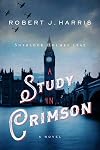
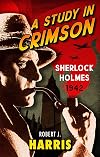
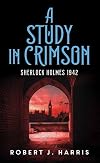
A Study in Crimson: Sherlock Holmes 1942 (Sherlock Holmes in WWII)
by Robert J. Harris
Sherlock Holmes in WWII (1)
On This Page
Description
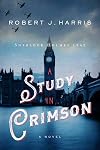
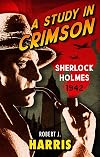
Bringing Sherlock Holmes from the Victorian Era into the dark days of World War II, this imaginative new thriller confronts the world's greatest detective with a killer emulating the murders of Jack the Ripper. London, 1942. A killer going by the name of "Crimson Jack" is stalking the wartime streets of London, murdering women on the exact dates of the infamous Jack the Ripper killings of 1888. Has the Ripper somehow returned from the grave? Is the self-styled Crimson Jack a descendant of show more the original Jack-or merely a madman obsessed with those notorious killings? In desperation Scotland Yard turn to Sherlock Holmes, the world's greatest detective. Surely he is the one man who can sift fact from legend to track down Crimson Jack before he completes his tally of death. As Holmes and the faithful Watson tread the blacked out streets of London, death waits just around the corner. Inspired by the classic film series from Universal Pictures starring Basil Rathbone and Nigel Bruce, which took Sherlock Holmes to the 1940s, this is a brand-new adventure from a talented author who brilliantly evokes one of mystery fiction's most popular characters. show lessTags
Recommendations









Member Reviews
Sherlock Holmes is the type of character who works well in any setting. The Victorian original will always be my favorite, but if you’re looking for a runner-up, you could do worse than World War II.
Robert J. Harris grew up on such adaptations. As he explains in the preface to his new book A Study in Crimson: Sherlock Holmes 1942, he’s following in the footsteps of a classic series of films that began by pitting “Holmes against Nazi saboteurs.” That premise is hard to resist on its own. But by setting his story in Blitz-era London, Harris also gets to show us the city on a wartime footing, with blackouts enforced at night to shroud the metropolis from German bombers, “tethered barrage balloons” floating in the air to show more intercept combustibles that were launched anyway, and buildings buttressed with sandbags while their “windows were taped over to secure them against the concussion of any nearby explosions.”
This period is also, as Inspector Lestrade—Holmes and Watson’s liaison to Scotland Yard—notes at one point, “booming times for crime.” “Yes,” Holmes agrees, “the shortages and deprivation lead to a thriving black market in all manner of goods … and with the blackout criminals can move virtually unseen.”
What a fabulous context for a new case. Yet instead of taking full advantage of the compelling circumstances he chose, Harris doubles back to the 1880s and resurrects the “bloodthirsty spectre of” Jack the Ripper, “returned to haunt” London in its “darkest hour.”
Not in the flesh. This isn’t the actual Whitechapel Murderer—just a copycat killing women in the same gruesome ways on the same calendar dates. But it’s still an odd contortion to fully transport Holmes and Watson (along with supporting characters like Lestrade and Mrs. Hudson) to the 1940s only to concern them with an echo of their primordial past. Yes, it’s a new spin on an old story; Sir Arthur Conan Doyle never had Holmes confront the Ripper. Matching the great detective against the great butcher—even if only by proxy—amidst the chaos of World War II also allows for some new wrinkles relating to espionage, technological advances, etc. That said, I think I would have preferred a story more grounded in the issues of the day.
I still enjoyed myself, though. The book moves at a brisk pace, and jumping forward a half-century updates Holmes and Watson’s backstories in interesting ways. (In this version, they both served during World War I, Watson as a doctor-soldier and Holmes as an intelligence agent, an experience that honed his abilities as a “master of disguise.”) And it’s difficult not to be drawn in by some theorizing about the Ripper’s identity, both that of the real villain and his imitator. The game, as Harris says in his preface, “is once more afoot”—and in fine fashion.
(For more reviews like this one, see www.nickwisseman.com) show less
Robert J. Harris grew up on such adaptations. As he explains in the preface to his new book A Study in Crimson: Sherlock Holmes 1942, he’s following in the footsteps of a classic series of films that began by pitting “Holmes against Nazi saboteurs.” That premise is hard to resist on its own. But by setting his story in Blitz-era London, Harris also gets to show us the city on a wartime footing, with blackouts enforced at night to shroud the metropolis from German bombers, “tethered barrage balloons” floating in the air to show more intercept combustibles that were launched anyway, and buildings buttressed with sandbags while their “windows were taped over to secure them against the concussion of any nearby explosions.”
This period is also, as Inspector Lestrade—Holmes and Watson’s liaison to Scotland Yard—notes at one point, “booming times for crime.” “Yes,” Holmes agrees, “the shortages and deprivation lead to a thriving black market in all manner of goods … and with the blackout criminals can move virtually unseen.”
What a fabulous context for a new case. Yet instead of taking full advantage of the compelling circumstances he chose, Harris doubles back to the 1880s and resurrects the “bloodthirsty spectre of” Jack the Ripper, “returned to haunt” London in its “darkest hour.”
Not in the flesh. This isn’t the actual Whitechapel Murderer—just a copycat killing women in the same gruesome ways on the same calendar dates. But it’s still an odd contortion to fully transport Holmes and Watson (along with supporting characters like Lestrade and Mrs. Hudson) to the 1940s only to concern them with an echo of their primordial past. Yes, it’s a new spin on an old story; Sir Arthur Conan Doyle never had Holmes confront the Ripper. Matching the great detective against the great butcher—even if only by proxy—amidst the chaos of World War II also allows for some new wrinkles relating to espionage, technological advances, etc. That said, I think I would have preferred a story more grounded in the issues of the day.
I still enjoyed myself, though. The book moves at a brisk pace, and jumping forward a half-century updates Holmes and Watson’s backstories in interesting ways. (In this version, they both served during World War I, Watson as a doctor-soldier and Holmes as an intelligence agent, an experience that honed his abilities as a “master of disguise.”) And it’s difficult not to be drawn in by some theorizing about the Ripper’s identity, both that of the real villain and his imitator. The game, as Harris says in his preface, “is once more afoot”—and in fine fashion.
(For more reviews like this one, see www.nickwisseman.com) show less
A fun book which puts Holmes and Watson in 1942 wartime London, hot on the trail of a Jack the Ripper style murderer. Not for the Sherlock Holmes purists.
Pleased with this “new” SH story, enjoyed and could’ve believed ACD wrote it but for the time change to WWII. Peter Noble does an excellent job with the content and characters.
Bringing Sherlock Holmes from the Victorian Era into the dark days of World War II, this imaginative new thriller confronts the world's greatest detective with a killer emulating the murders of Jack the Ripper.
London, 1942.
A killer going by the name of "Crimson Jack" is stalking the wartime streets of London, murdering women on the exact dates of the infamous Jack the Ripper killings of 1888. Has the Ripper somehow returned from the grave? Is the self-styled Crimson Jack a descendant of the original Jack—or merely a madman obsessed with those notorious killings?
In desperation Scotland Yard turn to Sherlock Holmes, the world's greatest detective. Surely he is the one man who can sift fact from legend to track down Crimson Jack before show more he completes his tally of death. As Holmes and the faithful Watson tread the blacked out streets of London, death waits just around the corner.
Inspired by the classic film series from Universal Pictures starring... show less
London, 1942.
A killer going by the name of "Crimson Jack" is stalking the wartime streets of London, murdering women on the exact dates of the infamous Jack the Ripper killings of 1888. Has the Ripper somehow returned from the grave? Is the self-styled Crimson Jack a descendant of the original Jack—or merely a madman obsessed with those notorious killings?
In desperation Scotland Yard turn to Sherlock Holmes, the world's greatest detective. Surely he is the one man who can sift fact from legend to track down Crimson Jack before show more he completes his tally of death. As Holmes and the faithful Watson tread the blacked out streets of London, death waits just around the corner.
Inspired by the classic film series from Universal Pictures starring... show less
Ratings
Members
- Recently Added By
Lists

Fiction: Crime, Detective, Mystery
350 works; 3 members
Author Information

26+ Works 2,542 Members
Some Editions
Series

Common Knowledge
- People/Characters
- Sherlock Holmes
Classifications
Statistics
- Members
- 78
- Popularity
- 406,294
- Reviews
- 4
- Rating
- (3.35)
- Languages
- English
- Media
- Paper, Audiobook, Ebook
- ISBNs
- 8
- ASINs
- 3