
Tim Major
Author of Snakeskins
Works by Tim Major
Sherlock Holmes and The Twelve Thefts of Christmas (the New Adventures of Sherlock Holmes) (2022) 44 copies, 1 review
The Singularity: Issue 2 — Editor — 1 copy
Associated Works
Elemental Forces: Horror Short Stories (The Flame Tree Book of Horror) (2024) — Contributor — 13 copies
Stories of Hope and Wonder: In Support of the UK's Healthcare Workers (2020) — Contributor — 11 copies, 1 review
Come October: An Anthology of Autumnal Horror (Themed Anthologies) — Contributor — 1 copy
Tagged
Common Knowledge
- Gender
- male
Members
Reviews
Review of eBook
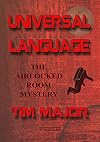
The murder of scientist Jerem Ferrer brings investigator Abbey Oma to Tharsis Caraway, a Martian crawler base. The colony, virtually abandoned by Earth, struggles on with no clear purpose. As Abbey investigates, she discovers there are more questions than answers in a case that is far more convoluted than she’d imagined. And the resentment of the few remaining colonists isn’t helping her investigation.
But a man was murdered. In his airlock-sealed laboratory. By a robot show more incapable of harming a human being . . . .
A strong sense of place anchors this compelling murder mystery that incorporates a respectful nod to Isaac Asimov’s Three Laws of Robotics. With well-defined characters and an intriguing premise, the unfolding story keeps the reader guessing as it takes several unexpected twists.
Abbey Oma, the Optic sent to investigate the scientist’s death, is an appealing, nuanced character who brings an emotional depth to the telling of the tale. She’s smart and observant, with a penchant for badinage; she also has a past with the Martian colony.
Martian crabs, silicon diamonds, aye-ayes, unsettling dreams, and sandscapes keep the story firmly anchored in the science fiction genre, but the heart of the story lies in the space tourist dream that brought the colonists to Mars only to be abandoned and left to their own devices with no support from Earth. There’s a heart-wrenching agony to their story as they doggedly work to keep the base nominally operational; it’s become clear that they don’t matter to Earth or to the company that once supported their colony. And yet, despite an underlying sense of futility, they’ve refused to surrender.
Readers who enjoy science fiction and / or a good mystery will find much to appreciate in this captivating novella.
Highly recommended.
I received a free copy of this book through the LibraryThing Early Readers program show less
The murder of scientist Jerem Ferrer brings investigator Abbey Oma to Tharsis Caraway, a Martian crawler base. The colony, virtually abandoned by Earth, struggles on with no clear purpose. As Abbey investigates, she discovers there are more questions than answers in a case that is far more convoluted than she’d imagined. And the resentment of the few remaining colonists isn’t helping her investigation.
But a man was murdered. In his airlock-sealed laboratory. By a robot show more incapable of harming a human being . . . .
A strong sense of place anchors this compelling murder mystery that incorporates a respectful nod to Isaac Asimov’s Three Laws of Robotics. With well-defined characters and an intriguing premise, the unfolding story keeps the reader guessing as it takes several unexpected twists.
Abbey Oma, the Optic sent to investigate the scientist’s death, is an appealing, nuanced character who brings an emotional depth to the telling of the tale. She’s smart and observant, with a penchant for badinage; she also has a past with the Martian colony.
Martian crabs, silicon diamonds, aye-ayes, unsettling dreams, and sandscapes keep the story firmly anchored in the science fiction genre, but the heart of the story lies in the space tourist dream that brought the colonists to Mars only to be abandoned and left to their own devices with no support from Earth. There’s a heart-wrenching agony to their story as they doggedly work to keep the base nominally operational; it’s become clear that they don’t matter to Earth or to the company that once supported their colony. And yet, despite an underlying sense of futility, they’ve refused to surrender.
Readers who enjoy science fiction and / or a good mystery will find much to appreciate in this captivating novella.
Highly recommended.
I received a free copy of this book through the LibraryThing Early Readers program show less
 This review was written for LibraryThing Early Reviewers.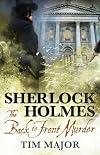
I'm a sucker for new riffs on the Holmes theme, so I knew I wanted to read Tim Major's The Back to Front Murders the moment I first heard about it. Major has a lot of the Conan Doyle moves down—easily embarrassed Watson, preoccupied with his own opinions regarding appropriate gender roles; irritatingly recalcitrant Holmes; shifts in time, location, and narrative method. Major also gives readers a mystery worthy of Holmes: complex with multiple threads spinning together then tearing apart show more repeatedly. A female mystery author writing under a male pseudonym realizes that the novel she's been planning features the same victim and method as a real-life murder. Is she actually a murderer, as well as a writer? Who was the murdered man and what motive would anyone have for killing him?
If, like me, you're always glad to discover a new Holmes variation, you'll want to read this title. I received a free electronic review copy of this title from the publisher; the opinions are my own. show less
If, like me, you're always glad to discover a new Holmes variation, you'll want to read this title. I received a free electronic review copy of this title from the publisher; the opinions are my own. show less
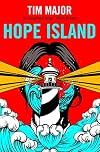
Nina Scaife and her fourteen-year old daughter Laurie have just arrived on the eponymous Hope Island, off the coast of Maine, the childhood home of Nina’s long-time partner (and Laurie’s father) Rob. Nina, a British TV news producer is a workaholic, and this is the first time that she has made time to accompany her daughter on a visit to Rob’s elderly parents in America. How ironic then that during this stay she will have to break the news that Rob is not really “away on a holiday” show more or on a work trip and that the reason for his absence is that he has recently abandoned a long-fraying relationship.
The novel opens with a literal jolt – Nina, just after her arrival in Hope Island, is driving towards her in-laws’ house when she slams on the brakes to avoid running over a mysterious girl ominously standing in the middle of the road. Laurie, Grandpa Abram and Grandma Tammie are in the car but do not notice the girl. Is Nina’s mind playing tricks? Soon, Nina discovers that all the children on the island seem to be acting strangely and starts fearing that Laurie will be the next to be infected with the strange malaise which seems to hold them in thrall. The “Siblings”, a sort of quasi-mystical commune who have settled on the island, and to whom Tammie and Abram belong, seem to have something to do with the creepy goings-on.
Tim Major is a writer of speculative fiction who cites John Wyndham, Ray Bradbury and H.G. Wells amongst his influences. Indeed, Hope Island is based a Wyndhamesque premise combining elements of sci-fi and supernatural fiction. The novel also has a strong folk-horror vibe to it. The contrast between Nina – the sceptical journalist and outsider – and the islanders is a typical trope of that genre, as are the frenzied rituals featured in some of the book’s chapters.
What is more surprising is how much of the novel does not deal with the uncanny at all, but is actually a psychological study of a woman – Nina – who is questioning her life choices after the traumatic event of the breakdown of her relationship. Indeed, as Nina’s sanity becomes increasingly fragile, one starts to suspect that at least some of the supernatural events in the novel might be the creations of her feverish mind.
Perhaps because of this conceptual approach, lovers of page-turning, action-packed horror novels might be disappointed. Hope Island requires some patience – it’s a slow-burning read with includes symbolic dreamlike sequences which are not always easy to follow. However, you should definitely check out this novel if your idea of horror is the psychological type, where the eeriness creeps upon you slowly but surely.
https://endsoftheword.blogspot.com/2020/05/hope-island-by-tim-major.html show less
The novel opens with a literal jolt – Nina, just after her arrival in Hope Island, is driving towards her in-laws’ house when she slams on the brakes to avoid running over a mysterious girl ominously standing in the middle of the road. Laurie, Grandpa Abram and Grandma Tammie are in the car but do not notice the girl. Is Nina’s mind playing tricks? Soon, Nina discovers that all the children on the island seem to be acting strangely and starts fearing that Laurie will be the next to be infected with the strange malaise which seems to hold them in thrall. The “Siblings”, a sort of quasi-mystical commune who have settled on the island, and to whom Tammie and Abram belong, seem to have something to do with the creepy goings-on.
Tim Major is a writer of speculative fiction who cites John Wyndham, Ray Bradbury and H.G. Wells amongst his influences. Indeed, Hope Island is based a Wyndhamesque premise combining elements of sci-fi and supernatural fiction. The novel also has a strong folk-horror vibe to it. The contrast between Nina – the sceptical journalist and outsider – and the islanders is a typical trope of that genre, as are the frenzied rituals featured in some of the book’s chapters.
What is more surprising is how much of the novel does not deal with the uncanny at all, but is actually a psychological study of a woman – Nina – who is questioning her life choices after the traumatic event of the breakdown of her relationship. Indeed, as Nina’s sanity becomes increasingly fragile, one starts to suspect that at least some of the supernatural events in the novel might be the creations of her feverish mind.
Perhaps because of this conceptual approach, lovers of page-turning, action-packed horror novels might be disappointed. Hope Island requires some patience – it’s a slow-burning read with includes symbolic dreamlike sequences which are not always easy to follow. However, you should definitely check out this novel if your idea of horror is the psychological type, where the eeriness creeps upon you slowly but surely.
https://endsoftheword.blogspot.com/2020/05/hope-island-by-tim-major.html show less
I nabbed this from the Horror After Dark review list because I like what's going on at Omnium Gatherum. I've read a few books from them now and a couple of them have knocked my socks off. I include this novella in that category.
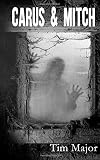
Carus and Mitch are the names of two girls living alone in a house. Their house is barricaded throughout and the girls only have access to a couple of the rooms. They have live chickens in the dining room. Their mother's locket hangs on the wall.
That's all I can tell show more you. Why, you ask? The fun that I had with this story was teasing out the truth of the narrative, and I don't want to spoil that for anyone else. I'm still not sure that I have all the answers, but I find as I'm thinking about the story now, a few more things have become clear. (Or have they? I'm not sure!) But I have always enjoyed ambiguous tales and this is definitely one.
I thought this story was well written and cleverly told. I expected answers that I wasn't given, and I liked that. I liked having to work a little bit to understand things. I enjoyed not having everything tied up in a pretty little package. In this way, Tim Major reminds me a lot of Greg F. Gifune and that's the highest compliment I can think of right now.
To summarize, I recommend this novella to lovers of ambiguous and sophisticated dark fiction. I call it sophisticated because this is more than just a straightforward story, it needs the reader's input to be complete. This reader loved it! show less
Carus and Mitch are the names of two girls living alone in a house. Their house is barricaded throughout and the girls only have access to a couple of the rooms. They have live chickens in the dining room. Their mother's locket hangs on the wall.
That's all I can tell show more you. Why, you ask? The fun that I had with this story was teasing out the truth of the narrative, and I don't want to spoil that for anyone else. I'm still not sure that I have all the answers, but I find as I'm thinking about the story now, a few more things have become clear. (Or have they? I'm not sure!) But I have always enjoyed ambiguous tales and this is definitely one.
I thought this story was well written and cleverly told. I expected answers that I wasn't given, and I liked that. I liked having to work a little bit to understand things. I enjoyed not having everything tied up in a pretty little package. In this way, Tim Major reminds me a lot of Greg F. Gifune and that's the highest compliment I can think of right now.
To summarize, I recommend this novella to lovers of ambiguous and sophisticated dark fiction. I call it sophisticated because this is more than just a straightforward story, it needs the reader's input to be complete. This reader loved it! show less
Lists
Awards

You May Also Like
Associated Authors
Statistics
- Works
- 22
- Also by
- 20
- Members
- 246
- Popularity
- #92,612
- Rating
- 3.8
- Reviews
- 19
- ISBNs
- 41
