On This Page
Description
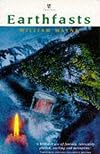
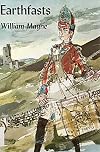
An 18th-century drummer boy emerges from the ground and transforms the lives of two friends, David and Keith. His appearance is the catalyst for a fantastic chain of events which culminates in David's disappearance from the face of the Earth. Keith is left to search through time for his friend.Tags
Recommendations







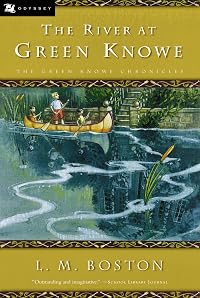


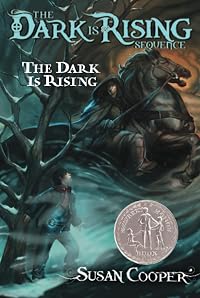
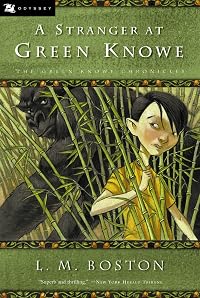


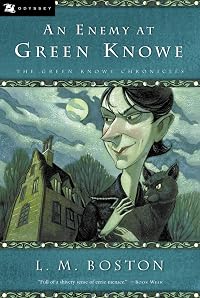








Member Recommendations
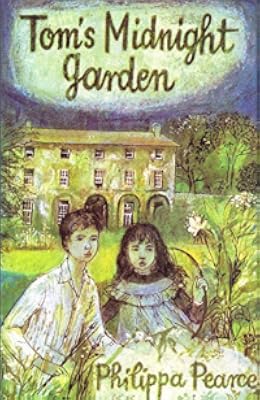
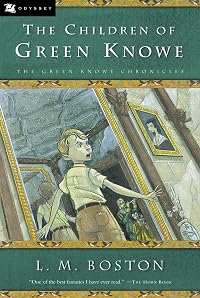
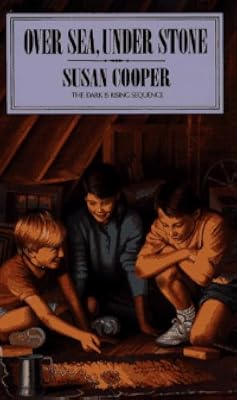
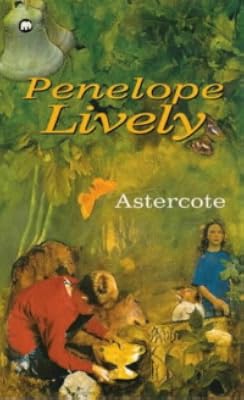
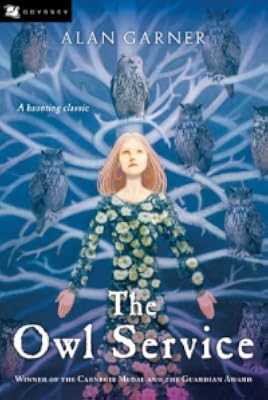
ed.pendragon Another classic children's book with an Arthurian theme, bringing the Matter of Britain into the 20th century.
Member Reviews
It’s the Yorkshire Dales in the 1960’s and two friends are investigating a strange noise that seems to be coming from underground, from a newly formed mound in a field. Keith thought that the noise was badgers underground and David though that it might be an underground stream, but neither of them expected that it was the sound of a drum being played underground, and getting closer and closer to the surface. And neither did they expect that that drum was being played by a drummer boy of the eighteenth century, who had entered the tunnel under the local castle over two hundred years before, looking for the legendary treasure of King Arthur that was supposed to be buried underneath, and had not been heard of since. But Nellie Jack show more John, as he introduces himself, will not believe the time that has passed while he was underground, as to him it seems he was walking for less than half an hour, and is certainly ill equipped to deal with the twentieth century.
This is a reread of a book I had as I child, and I was surprised to find that while I remembered certain elements of it very well, I had forgotten other equally vivid elements. But Nellie Jack John’s appearance isn’t the only strange thing that happens. Standing stones start to move, (if they are actually standing stones at all), candles burn cold, and time itself seems to becoming more fluid. This is a very well written children’s book, a lot more literary perhaps than most, and it holds up well rereading it as an adult. show less
This is a reread of a book I had as I child, and I was surprised to find that while I remembered certain elements of it very well, I had forgotten other equally vivid elements. But Nellie Jack John’s appearance isn’t the only strange thing that happens. Standing stones start to move, (if they are actually standing stones at all), candles burn cold, and time itself seems to becoming more fluid. This is a very well written children’s book, a lot more literary perhaps than most, and it holds up well rereading it as an adult. show less
enjoyed this story a lot, a time-slip tale between contemporary Scotland and the Jacobite rising. There is a particularly gruesome school assembly scene.
The book was an early introduction to dialect. In this case probably written as accurately as the places the story takes place in, and the names which have been changed but remain totally authentic and in keeping. Despite the name changes, these days it is easy to find more or less exactly where it is set - but it is so vividly written that there is no need to do a tour on the ordinance survey or google maps - I already feel I know the place. The solid reality of the real world allows the supernatural to build convincingly, tricking the mind to allow you to cross from the mundane to the fantastical, effortlessly.
50 years after first reading this I have only just discovered that William Mayne wrote two more books and called the trilogy show more the jingle stones. I have ordered the next books with trepidation as they cannot live up to this one. show less
50 years after first reading this I have only just discovered that William Mayne wrote two more books and called the trilogy show more the jingle stones. I have ordered the next books with trepidation as they cannot live up to this one. show less
Another that I wish I'd read as a child. It's magic up north, according to Mayne and Alan Garner....
Very convincing because of the prosaic mid-1960s reality of the Yorkshire market town the boys inhabit; fantasy always needs a "straight" background to set it off to its full advantage (even if the "straight" place is The Shire).
Reminiscent also of Catherine Fisher's fantasies,which were written somewhat later and are less good on plot (there is a reason for all the strange happenings in Earthfasts, and a satisfyingly logical "quest" ending.)
Very convincing because of the prosaic mid-1960s reality of the Yorkshire market town the boys inhabit; fantasy always needs a "straight" background to set it off to its full advantage (even if the "straight" place is The Shire).
Reminiscent also of Catherine Fisher's fantasies,which were written somewhat later and are less good on plot (there is a reason for all the strange happenings in Earthfasts, and a satisfyingly logical "quest" ending.)
One of my favourite books over more than 40 years. I still love the way it can take me into a place of menace and danger and cheer my heart as well as chilling it.
One of my favourite books over more than 40 years. I still love the way it can take me into a place of menace and danger and cheer my heart as well as chilling it.
I tried to read this book a long time ago but quit because it got boring. I must have been in an impatient mood because, given a chance, this book took off and went in directions I did not expect.
This is not a gimmicky time travel book—and although it is short, I would say it is more for high schoolers than wee children.
This is not a gimmicky time travel book—and although it is short, I would say it is more for high schoolers than wee children.
Members
- Recently Added By
Lists

Modern Arthurian Fiction
237 works; 16 members

Time travel -- children's/young adult fiction
231 works; 11 members
Author Information

123+ Works 2,253 Members
William Mayne was born on March 16, 1928. Before dropping out of school at 17, he was a chorister at Canterbury Cathedral from 1937 until 1942. He wrote more than 100 books during his lifetime and is best known for his Choir School quartet comprising of A Swarm in May, Choristers' Cake, Cathedral Wednesday and Words and Music, and his Earthfasts show more trilogy comprising of Earthfasts, Cradlefasts and Candlefasts. He won numerous awards including the Carnegie Medal in 1957 for A Grass Rope, the Guardian Award in 1993 for Low Tide, and the Kurt Maschler prize in 1997 for Lady Muck. He also wrote under the pseudonyms Martin Cobalt, Dynely James and Charles Molin. In 2004, he was convicted of 11 charges of sexual abuse with young girls and was sentenced to two and a half years in prison and placed on the sex offenders' register for life. His books were largely removed from shelves from 2004 onwards, but he continued to write. He died on March 24, 2010 at the age of 82. (Bowker Author Biography) show less
Awards and Honors
Series

Belongs to Publisher Series
Puffin Story Books (394)
Common Knowledge
- Original publication date
- 1966
- Related movies
- Earthfasts (1994 | IMDb)
- First words
- It was the half past eight dusk of a day at the end of summer, the time when the sun goes down full before man sleeps and is up again full before he wakes. It was a warm night. The setting sun pulled a coverlet of cloud over ... (show all)the dale as it went down behind Walker Fell.
- Last words
- (Click to show. Warning: May contain spoilers.)"It's just as well," said Frank. "It would wash the eggs, but it turned every one. I had to buy two dozen pot ones to keep it happy, and take them out and get them mucky for it. It was the only way. But we don't miss it so much now we have the lad."
Classifications
- Genres
- Fiction and Literature, Children's Books, Fantasy
- DDC/MDS
- 823.914 — Literature & rhetoric English & Old English literatures English fiction 1900- 1901-1999 1945-1999
- LCC
- PZ7 .M4736 .E — Language and Literature Fiction and juvenile belles lettres Fiction and juvenile belles lettres Juvenile belles lettres
Statistics
- Members
- 165
- Popularity
- 195,980
- Reviews
- 8
- Rating
- (4.14)
- Languages
- English
- Media
- Paper, Audiobook
- ISBNs
- 8
- ASINs
- 7