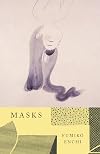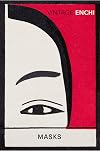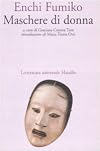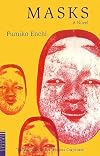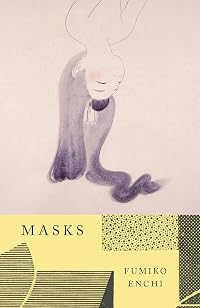
Masks
by Fumiko Enchi
On This Page
Description
Ibuki loves widow Yasuko who is young, charming and sparkling with intelligence as well as beauty. His friend, Mikamé, desires her too but that is not the difficulty. What troubles Ibuki is the curious bond that has grown between Yasuko and her mother-in-law, Mieko, a handsome, cultivated yet jealous woman in her fifties, who is manipulating the relationship between Yasuko and the two men who love her.Tags
Recommendations

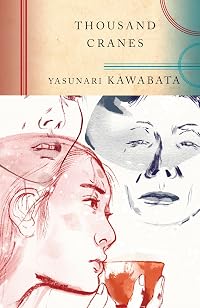
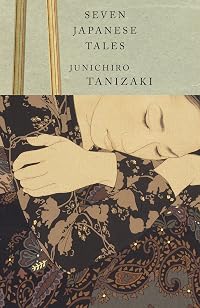
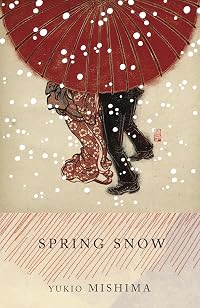
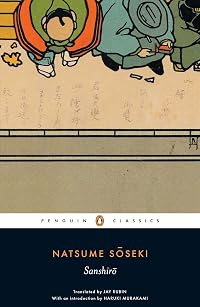
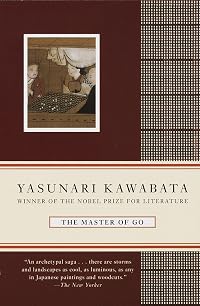
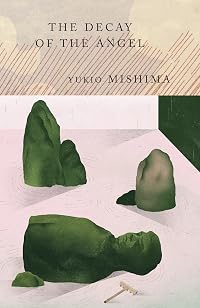
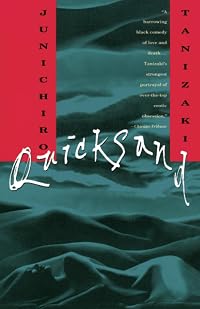
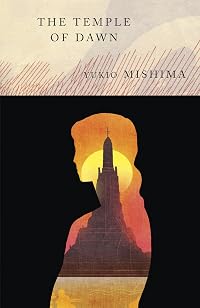
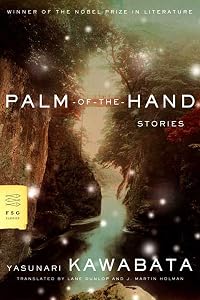
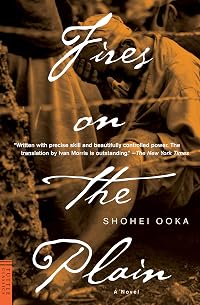

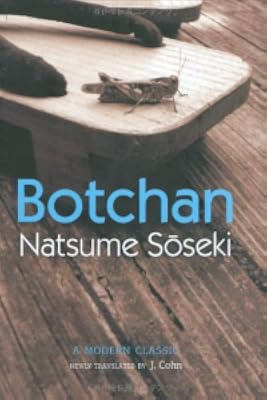
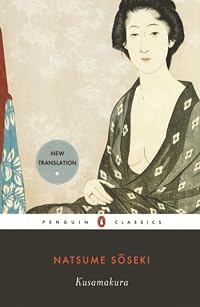




Member Recommendations
SqueakyChu It's so interesting to learn about very old Japanese customs while reading a novel.
Member Reviews
This is a strange little book, the second of Enchi’s books I’ve read–the first being [b:The Waiting Years|177404|The Waiting Years|Fumiko Enchi|https://i.gr-assets.com/images/S/compressed.photo.goodreads.com/books/1348939847l/177404._SX50_.jpg|535360] which was also remarkable. Mieko, a widowed wealthy woman, is the central character of this story. A poet, publisher and literary figure, she draws others to her because of the mystery and ambiguity that surrounds her and has a bizarre way of captivating and manipulating those she chooses to. The leitmotif of the story being power: that over self and others. Mieko, even during moments of personal tragedy, is always able to still turbulence that would throw anyone into despair and show more this apparent cool that always masks her true feelings both confounds those around her and brings her their admiration. From an evolutionary perspective this makes a lot of sense, where control, in the emotional sense of shielding oneself from vulnerability and reluctance to show weakness, is considered strength as well as that human, and animal (humans also being animal), need to follow those they feel to be strong. In this story, just as in most where human beings give themselves over to those deemed powerful, Mieko manipulates those around her towards whatever ends she wants, and in this case mostly her daughter-in-law, Yasuko, although aware of Mieko’s insidious influence, is still entrapped and used to entrap others, with Mieko knowing no boundaries, even her own disabled daughter, Harumé, being used.
With many references to Japanese folklore, nō plays and masks, and poetry and novels, including The Tales of Ise and The Tale of Genji (which looms throughout this book and is spoiled in ways, so caution to those who haven’t read it and don’t want anything from it divulged, although I personally don’t think much is spoiled or not enough to have angered me anyway), the writer explores power as expressed in ancient Japanese literature. It’s a disturbing little book in that it seems that the people here are either controlled or control others, and the most vulnerable being most exposed, and yet this is only a reflection of the way of the world since god-knows-when. It’s an incredible book, and a great achievement. I would like to thank Alex Teyie, who like this book’s protagonist, is a brilliant poet, publisher and literary figure (far more generous, kind and good than the book’s protagonist obviously) based in Nairobi, and their work with the Karara Library which is a radical platform for sharing books in Nairobi and other towns in Kenya through which this incredible book was made available to me. show less
With many references to Japanese folklore, nō plays and masks, and poetry and novels, including The Tales of Ise and The Tale of Genji (which looms throughout this book and is spoiled in ways, so caution to those who haven’t read it and don’t want anything from it divulged, although I personally don’t think much is spoiled or not enough to have angered me anyway), the writer explores power as expressed in ancient Japanese literature. It’s a disturbing little book in that it seems that the people here are either controlled or control others, and the most vulnerable being most exposed, and yet this is only a reflection of the way of the world since god-knows-when. It’s an incredible book, and a great achievement. I would like to thank Alex Teyie, who like this book’s protagonist, is a brilliant poet, publisher and literary figure (far more generous, kind and good than the book’s protagonist obviously) based in Nairobi, and their work with the Karara Library which is a radical platform for sharing books in Nairobi and other towns in Kenya through which this incredible book was made available to me. show less
I went from dislike and distaste (primarily based on my reaction to some of the characters) to becoming more and more impressed as time has passed since I finished this. The story is simple: two men, one married and one single, fall in love with a young widow. The focus, however, is on the relationship of the widow to her mother-in-law, a relationship that appears to be unusually close. Enchi is brilliant at depicting the puzzle of that relationship: is the young widow truly independent, are the two women lovers, is the mother-in-law a superb puppet master? There are other plotlines which cast oblique light on this question as well. What makes the novel so extraordinary are the Noh masks alluded to in the title. Each section of the book show more is named after a particular Noh character (and its mask), implicating an entire Japanese subtext that can’t possibly be conveyed in any translation. The masks not only are significant for their place in Japanese drama but are also clearly indicative of the different faces women choose (or are forced) to wear as well as the feelings beneath those masks. The symbolism is inescapable, impossible to convey in its entirety, and notwithstanding the (I suspect) impenetrable wall to complete appreciation by non-Japanese readers, the work nevertheless strikes me as an intricately constructed, dazzling portrait of two women. show less
‘A woman’s love is quick to turn into a passion for revenge - an obsession that becomes an endless river of blood, flowing from generation to generation.’’
Three women. Two men.
Hypnotic eroticism.
Witchy sensuality.
Bitter manipulation.
Three Noh masks that cannot cover the darkest iniquities of human nature. Nor the pain of loss or the ache of love or the cruelty of unfulfilled lives…
Ryo no Onna/ Fukai - Mieko. The academic, the mother who has experienced the greatest pain there is, the loss of a child. The investigator of spirit possession. The puppeteer. The frenzy.
Masugami - Harume. The child trapped in the body of a beautiful woman. The primal instinct. The disassociation. The rage.
And Yasuko? The Ko - omote. The alluring show more woman victim of her beauty. The manipulated. The instrument. Or is she the mystery? The illicit passion? The witch of sensuality and eroticism?
‘’Snow is falling,
snow is falling;
the lane is gone,
the bridge is gine,
buried in white…
alas, alas,
the way to my sweetheart’s house,
vanished from sight.’’
Set in Kyoto, this is the story of two men in love with the same woman. However, Yasuko is loyal to her mother-in-law, Mieko, even though her husband is dead. Mieko is a mysterious academic specialising in the occult and the possession of spirits. And Harume? An unfortunate daughter who is beautiful like the moon and volatile like Selene. And one of them is carrying out a scheme of revenge, an obsession that has been festering for years.
But this is just the surface. This is a fable, a tale of sexuality that veers from the hypnotic to the darkest, roughest encounter. A tale of possession not by spirits but by something far more threatening. The most primal human instincts. The gloom of the house at dusk, the snow falling silently in the nightly garden. The beautiful woman sitting still, her eyes fixed to her future. The world of the novel is still, silent, like Noh. Yet, it contains screams and sighs, and moans and echoes.
And while the reader is trying to decipher characters that are locked in beautiful jars, the Noh masks are watching. If they slip away? Well, who knows? We might see our faces staring back at us.
This is a masterpiece of sensuality, transgressive obsession, the bitterness of love and the futility of revenge.
A book I adored. A book that captured me in its nets. A book that possesses the reader with every page.
‘’A woman whose heart was as secretive as a garden of flowers at night.’
My reviews can also be found on https://theopinionatedreaderblog.wordpress.com/ show less
Three women. Two men.
Hypnotic eroticism.
Witchy sensuality.
Bitter manipulation.
Three Noh masks that cannot cover the darkest iniquities of human nature. Nor the pain of loss or the ache of love or the cruelty of unfulfilled lives…
Ryo no Onna/ Fukai - Mieko. The academic, the mother who has experienced the greatest pain there is, the loss of a child. The investigator of spirit possession. The puppeteer. The frenzy.
Masugami - Harume. The child trapped in the body of a beautiful woman. The primal instinct. The disassociation. The rage.
And Yasuko? The Ko - omote. The alluring show more woman victim of her beauty. The manipulated. The instrument. Or is she the mystery? The illicit passion? The witch of sensuality and eroticism?
‘’Snow is falling,
snow is falling;
the lane is gone,
the bridge is gine,
buried in white…
alas, alas,
the way to my sweetheart’s house,
vanished from sight.’’
Set in Kyoto, this is the story of two men in love with the same woman. However, Yasuko is loyal to her mother-in-law, Mieko, even though her husband is dead. Mieko is a mysterious academic specialising in the occult and the possession of spirits. And Harume? An unfortunate daughter who is beautiful like the moon and volatile like Selene. And one of them is carrying out a scheme of revenge, an obsession that has been festering for years.
But this is just the surface. This is a fable, a tale of sexuality that veers from the hypnotic to the darkest, roughest encounter. A tale of possession not by spirits but by something far more threatening. The most primal human instincts. The gloom of the house at dusk, the snow falling silently in the nightly garden. The beautiful woman sitting still, her eyes fixed to her future. The world of the novel is still, silent, like Noh. Yet, it contains screams and sighs, and moans and echoes.
And while the reader is trying to decipher characters that are locked in beautiful jars, the Noh masks are watching. If they slip away? Well, who knows? We might see our faces staring back at us.
This is a masterpiece of sensuality, transgressive obsession, the bitterness of love and the futility of revenge.
A book I adored. A book that captured me in its nets. A book that possesses the reader with every page.
‘’A woman whose heart was as secretive as a garden of flowers at night.’
My reviews can also be found on https://theopinionatedreaderblog.wordpress.com/ show less
Weirdly enough, I don't think I've ever read a book with an adultery plot, so this is a first for me I guess... I thought the setting and the historical and spiritual background of this book were fascinating, but I think some of the symbolism of the masks and the drama was definitely lost on me unfortunately. I'd probably have appreciated what Enchi was doing a lot more if I read it in the original Japanese rather than the translated version I picked up. Also I found myself side-eying pretty much every character by the end, but Mieko and Yasuko are both fascinating characters to me
Overall I think it was alright, but I'd both like this more and have more to say if I understood the cultural context tbh 😔
Overall I think it was alright, but I'd both like this more and have more to say if I understood the cultural context tbh 😔
Masks is a fitting name for this intriguing novel. Not only are they part of the story, but they are also a metaphor for the idea that one might not know people as well as one thinks.
In this story, there is a puzzling relationship between Yasuko Tokano and her mother-in-law, Mieko Tokano. After Akio, Yasuko's husband and Mieko's son, dies in an avalance, two men try to win the affection of the beautiful Yasuko. One of the men is a Tsuneo Ibuki, a married man with a three-year-old child, and the other is Toyoki Mikame, a single man who also happens to be Ibuki's very good friend.
This was a beautiful story. I love the way it flowed. It had a final twist, though, that I should have seen coming. I guess I was too caught up with the show more characters as they were interacting with one another to think that far ahead. Some stories do that to me.
This story had footnotes to explain some lesser known facts about Japanese historical figures mentioned in the narrative. It also described some Japanese customs with which I was not familiar. An example of this would be the description of some of the the masks as they related to Japanese No drama. Stunning imagery was provided by descriptions of women's clothing, the weather, and the scenery.
I'd never before read any books by this author, but I will glady look for more now as I found her style of writing quite enchanting. show less
In this story, there is a puzzling relationship between Yasuko Tokano and her mother-in-law, Mieko Tokano. After Akio, Yasuko's husband and Mieko's son, dies in an avalance, two men try to win the affection of the beautiful Yasuko. One of the men is a Tsuneo Ibuki, a married man with a three-year-old child, and the other is Toyoki Mikame, a single man who also happens to be Ibuki's very good friend.
This was a beautiful story. I love the way it flowed. It had a final twist, though, that I should have seen coming. I guess I was too caught up with the show more characters as they were interacting with one another to think that far ahead. Some stories do that to me.
This story had footnotes to explain some lesser known facts about Japanese historical figures mentioned in the narrative. It also described some Japanese customs with which I was not familiar. An example of this would be the description of some of the the masks as they related to Japanese No drama. Stunning imagery was provided by descriptions of women's clothing, the weather, and the scenery.
I'd never before read any books by this author, but I will glady look for more now as I found her style of writing quite enchanting. show less
Masks is a tricky book to get to grips with, and I'm not sure that I really did it justice reading it during a long train journey. The present-day (i.e. 1950s) foreground middle-class adultery plot seems to be a reworking of an episode from The tale of Genji (the story of the Rokujō lady), as carefully explained in a scholarly essay by one of the characters, and there are all kinds of undercurrents of spiritualism and of shamanism-as-matriarchal-power going on.
I found the language of the book, as translated by Carpenter, flat and unappealing (tone-deaf, even), rather in the idiom of a very forgettable modern American novel, without much sense that this was Japan in the 1950s, and this made it harder to take the leap into engaging with show more the supernatural side of the story, which takes away a lot of the point of the book. But there obviously is a lot of interesting stuff to dig out if you can get past the dull language, in particular the complex characters of the two women at the centre of the story. show less
I found the language of the book, as translated by Carpenter, flat and unappealing (tone-deaf, even), rather in the idiom of a very forgettable modern American novel, without much sense that this was Japan in the 1950s, and this made it harder to take the leap into engaging with show more the supernatural side of the story, which takes away a lot of the point of the book. But there obviously is a lot of interesting stuff to dig out if you can get past the dull language, in particular the complex characters of the two women at the centre of the story. show less
I think what I most enjoyed about this book was all the information about Japanese literature and culture. I keenly enjoy books written by foreign (to me) authors for the insights into different cultures I can gain from them - especially when the book is as entertaining as this one.
The story of Masks takes place in a post-WWII Japan and the characters though modern are rather strongly influenced by Japan's earlier dynastic culture. Elements of Japanese literature and Noh theater set the theme for this tale. In reading Masks I felt like a voyeur peering through a smudged window into that distant world and gaining a small, sometimes peculiarly shocking, insight into Japanese psychology.
I didn't understand the ending scene, and I wonder show more if it's from Japanese theater? Maybe someone could help me with that. show less
The story of Masks takes place in a post-WWII Japan and the characters though modern are rather strongly influenced by Japan's earlier dynastic culture. Elements of Japanese literature and Noh theater set the theme for this tale. In reading Masks I felt like a voyeur peering through a smudged window into that distant world and gaining a small, sometimes peculiarly shocking, insight into Japanese psychology.
I didn't understand the ending scene, and I wonder show more if it's from Japanese theater? Maybe someone could help me with that. show less
Members
- Recently Added By
Lists

Japanese Literature
230 works; 40 members

Female Author
1,235 works; 67 members
Author Information

37+ Works 1,266 Members
Educated in the classics, Enchi Fumiko began writing plays but turned to fiction. Her novels and short stories often focus on the emotional lives of middle-aged women struggling against the constraints of Japanese society. Enchi's translation into modern Japanese of the Heian Period novel, The Tale of Genji, was widely respected. Allusions to show more Genji and the device of imbedding classical elements within the modern story enrich her fiction. (Bowker Author Biography) show less
Some Editions
Common Knowledge
- Original title
- 女面
- Original publication date
- 1958 (original Japanese) (original Japanese); 1983 (English: Carpenter) (English: Carpenter)
- Important places
- Japan
- First words
- Tsueno Ibuki and Toyoki Miakame sat facing one another in a booth in a coffee shop on the second floor of Kyoto Station.
- Original language
- Japanese
Classifications
- Genres
- Fiction and Literature, General Fiction
- DDC/MDS
- 895.635 — Literature & rhetoric Literatures of other languages Literatures of East and Southeast Asia Japanese Japanese fiction 1945–2000
- LCC
- PL826 .N3 .O513 — Language and Literature Languages and literatures of Eastern Asia, Africa, Oceania Languages of Eastern Asia, Africa, Oceania Japanese language and literature Japanese literature Individual authors and works
- BISAC
Statistics
- Members
- 607
- Popularity
- 48,089
- Reviews
- 9
- Rating
- (3.70)
- Languages
- 10 — English, French, German, Italian, Japanese, Korean, Romanian, Russian, Spanish, Turkish
- Media
- Paper, Ebook
- ISBNs
- 19
- ASINs
- 6