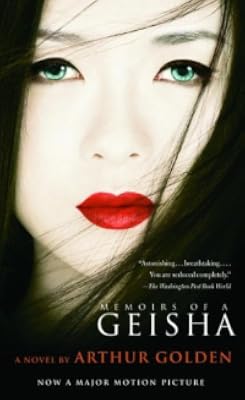
Memoirs of a Geisha
by Arthur Golden
On This Page
Description
A fisherman's daughter in 1930s Japan rises to become a famous geisha. After training, Sayuri's virginity is sold to the highest bidder, then the school finds her a general for a patron. When he dies, she is reunited with the only man she loved.Tags
Recommendations



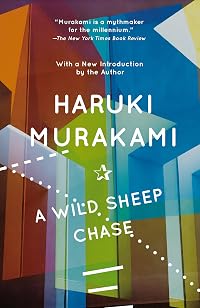
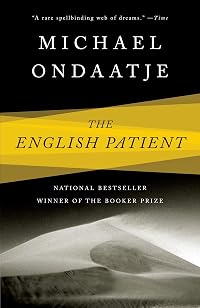
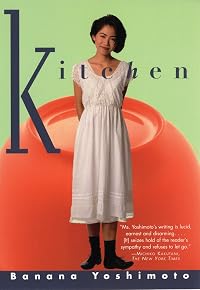
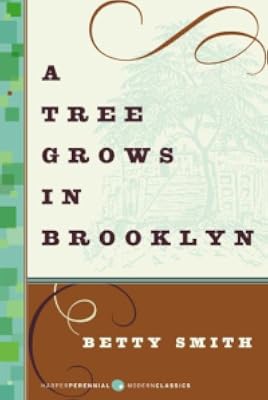

Member Recommendations
Leishai Arthur Golden schrieb einen Roman über Geishas. Mineko Iwasaki war die Geiko, die er dafür interviewte. Sie stellt in ihrem Buch alles richtig, was er sich zu dramatischen Zwecken zurechtgeschnitten hat.
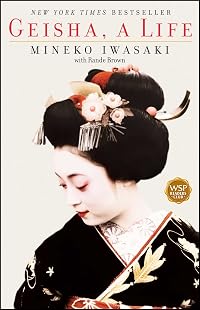
sbuehrle I would recommend reading these books back-to-back. Memoirs of a Geisha is the fictional account of Iwasaki's life, whereas Geisha: A Life is the autobiographical response.
200
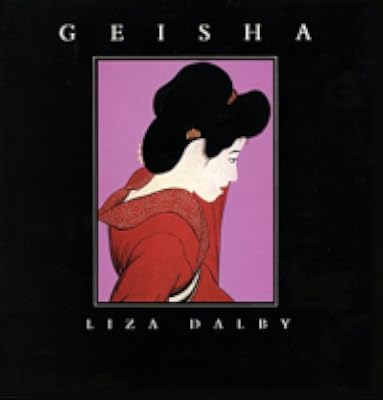
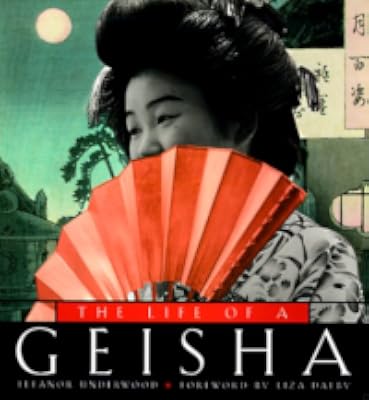
Geisha by Liza Dalby
Leishai Ein gutes Buch für Europäer oder Amerikaner zum Verständnis der japanischen Geisha-Kultur.
Also recommended by SqueakyChu, MartinRohrbach
51
whymaggiemay Beautifully written story of a geisha who fares better than Sayo Masuda.
40
normandie_m Set slightly earlier and in Tokyo, but also worth reading for exploring the relationship dynamics between geisha and their patrons, who come from a variety of different backgrounds. Also offers insight into the relationships/friendships between the different geisha.
20

Jia by Hye-Jin Kim
by meggyweg
Member Reviews
It's been many years since I read this book, but lately I've just been craving a re-read since I unpacked it along with the rest of my long-since boxed up collection. I'm so glad that I caved rather than insisting on reading more new material because this novel was a total palette cleanser - and I needed one. The last time that I read this book I remember being a bit disappointed that it didn't match the film, but honestly I don't see the problem anymore. I think that the narration threw me off a bit previously, since the story in the film is presented with a bit of distance between the reader and Sayuri, but this time around I felt like it actually drew me into the story more to see things from Sayuri's personal perspective. Golden show more could easily have told this story from a variety of perspectives, but having Sayuri narrate her own story made me feel like we were hearing the story while seated at an intimate teahouse engagement. Obviously this mode of storytelling (and its subsequent intimiacy with the audience) is meant to mirror the relationship between geisha and their clients - we are there to be entertained and made to feel welcome, but we must not forget that what we receive is not necesarily the truth between two true companions. Sayuri's story is told to us with many startling secrets (some of which I am sure would never be divulged by a true geisha), which breaks the reality of the story somewhat, but is the result of the author's artistic license. All that formatting stuff aside, this is definitely one of my favourite historical fiction novels. Golden may have taken some liberties with the facts of geisha culture, but the narrative he has written touches on many themes that ring true for humanity as a whole and for that specific period in time, and are sure to spark reader's interest in discovering more about Japan. It's been even more years since I seriously studied Japanese culture or language, but it is compelling stories like these which pique my interest in expanding my knowledge. show less
Memoirs of a Geisha is the story of Chiyo, a young girl who lives in a small fishing village called Yoroido in 1930’s Japan. There she lives with her older sister Satsu, her elderly father and her terminally ill mother. Her father is unable to care for both his girls and his wife, and so gives both daughters to Mr. Tanaka. Mr. Tanaka promptly takes the girls to Kyoto, where Chiyo is sold to an okiya (geisha house) in Gion, where she is to be trained as a geisha. At the okiya she meets Mrs. Nitta (”Mother”) and Granny, mistresses of the okiya, a fellow trainee whom Chiyo nicknames “Pumpkin”, and Hatsumomo, the resident geisha and sole source of income for the okiya.
At first Chiyo wishes for nothing more than to escape the show more okiya, find her sister Satsu (who was sold to a brothel), and return to her family in Yoroido. After a failed escape attempt results in a broken arm, she is met with more bad news; her sister escaped without her, and both of her parents have passed away. With no place for her but the Nitta okiya, her lot in life becomes a lifetime of servitude as a maid; Mother refuses to invest more money in Chiyo’s training, seeing her now as a bad investment.
A chance encounter with the wealthy and kind Chairman gives Chiyo hope; she sees the encounter as a sign that she wasn’t meant to become a geisha as a goal unto itself, but as a means toward the Chairman. The rest of the novel follows Chiyo through her eventual geisha training, her debut and early life as a geisha, the closing of the geisha districts due to World War II, her life during World War II, and the post-war re-opening of the geisha districts, with her ultimate goal always being the Chairman.
Despite being a work of fiction, Memoirs of a Geisha was a well researched and relatively detailed novel. In fact, the author, Arthur Golden, was sued in 2001 for breach of contract and defamation of character after publicly acknowledging Mineko Iwasaki, a retired geisha he interviewed for background information while writing the novel. Apparently Iwasaki had agreed to speak with Golden, and violate the geisha “code of silence”, only if the interview was kept confidential.
Of course, part of the reason he was sued also has to do with some artistic liberties he took. The most controversial liberty was with “mizuage”, the coming of age ceremony where the transition from maiko (apprentice geisha) to full fledged geisha is made. In Memoirs of a Geisha it is a portrayed as a financial arrangement, where the maiko’s virginity is auctioned off to the highest bidder. As Memoirs of a Geisha was based heavily on the life of Mineko Iwasaki, and parallels her career as a geisha, readers would incorrectly assume that Iwasaki had prostituted herself as a young woman.
I found some aspects of the novel lacking, however. For instance, Chiyo’s lifetime dream of being with the Chairman is a little creepy, if you think about it. She spends her entire life plotting to be with a man that she met for maybe 15 minutes, when she was 12? That goes a little beyond infatuation, if you ask me. About halfway through, the novel begins to lose some steam; from World War II on, the story seems a bit more bland and distant. I’m not sure if that was supposed to be an intentional reflection of life after World War II, or if the author started losing interest and was simply trying to wrap up the story.
Overall, I think Memoirs of a Geisha is a decent novel, despite some flaws. While it does take liberties with aspects of the life of geisha, it IS a novel; I would recommend Iwasaki’s autobiography, published as Geisha, A Life in the US and Geisha of Gion in the UK for those interested in a more accurate version. show less
At first Chiyo wishes for nothing more than to escape the show more okiya, find her sister Satsu (who was sold to a brothel), and return to her family in Yoroido. After a failed escape attempt results in a broken arm, she is met with more bad news; her sister escaped without her, and both of her parents have passed away. With no place for her but the Nitta okiya, her lot in life becomes a lifetime of servitude as a maid; Mother refuses to invest more money in Chiyo’s training, seeing her now as a bad investment.
A chance encounter with the wealthy and kind Chairman gives Chiyo hope; she sees the encounter as a sign that she wasn’t meant to become a geisha as a goal unto itself, but as a means toward the Chairman. The rest of the novel follows Chiyo through her eventual geisha training, her debut and early life as a geisha, the closing of the geisha districts due to World War II, her life during World War II, and the post-war re-opening of the geisha districts, with her ultimate goal always being the Chairman.
Despite being a work of fiction, Memoirs of a Geisha was a well researched and relatively detailed novel. In fact, the author, Arthur Golden, was sued in 2001 for breach of contract and defamation of character after publicly acknowledging Mineko Iwasaki, a retired geisha he interviewed for background information while writing the novel. Apparently Iwasaki had agreed to speak with Golden, and violate the geisha “code of silence”, only if the interview was kept confidential.
Of course, part of the reason he was sued also has to do with some artistic liberties he took. The most controversial liberty was with “mizuage”, the coming of age ceremony where the transition from maiko (apprentice geisha) to full fledged geisha is made. In Memoirs of a Geisha it is a portrayed as a financial arrangement, where the maiko’s virginity is auctioned off to the highest bidder. As Memoirs of a Geisha was based heavily on the life of Mineko Iwasaki, and parallels her career as a geisha, readers would incorrectly assume that Iwasaki had prostituted herself as a young woman.
I found some aspects of the novel lacking, however. For instance, Chiyo’s lifetime dream of being with the Chairman is a little creepy, if you think about it. She spends her entire life plotting to be with a man that she met for maybe 15 minutes, when she was 12? That goes a little beyond infatuation, if you ask me. About halfway through, the novel begins to lose some steam; from World War II on, the story seems a bit more bland and distant. I’m not sure if that was supposed to be an intentional reflection of life after World War II, or if the author started losing interest and was simply trying to wrap up the story.
Overall, I think Memoirs of a Geisha is a decent novel, despite some flaws. While it does take liberties with aspects of the life of geisha, it IS a novel; I would recommend Iwasaki’s autobiography, published as Geisha, A Life in the US and Geisha of Gion in the UK for those interested in a more accurate version. show less
This is a fictional memoir researched by a US author through talking to real geisha. Through the medium of the fictitious geisha Sayuri, he brings across the lifestyle and customs of this very culturally specific group of people, about whom there are many myths and mis-representations in the western world. There are many colourful characters as Sayuri, separated from her sister, her only surviving family member, grows up in the okiya (geisha house) from the age of 9 (in 1929) moving through her apprenticeship period and facing the bitter jealousies of real and potential rivals. I enjoyed this novel which covers a period of over 20 years through the closure of the geisha communities during the second world war and partial recovery show more thereafter, though the community shrinks considerably in the second half of the 20th century.
The novel was somewhat controversial when published, as Mineko Iwasaki, the main geisha source from whom the author derived his information, was upset about being acknowledged as such, and sued the author, though the case was settled out of court. There were apparently some differences of opinion and/or interpretation over what she told him about her experiences. I have no independent knowledge of where the truth lies in any such disputes, but this novel reveals a rich, colourful and (to the western eye) alien lifestyle and does not glamorise the difficulties and controversial aspects. A worthwhile read. show less
The novel was somewhat controversial when published, as Mineko Iwasaki, the main geisha source from whom the author derived his information, was upset about being acknowledged as such, and sued the author, though the case was settled out of court. There were apparently some differences of opinion and/or interpretation over what she told him about her experiences. I have no independent knowledge of where the truth lies in any such disputes, but this novel reveals a rich, colourful and (to the western eye) alien lifestyle and does not glamorise the difficulties and controversial aspects. A worthwhile read. show less
Years ago when this first came out I read a number of articles about it and decided I didn't need to read it. However, years later it came into my house (I actually have two copies) so eventually I did decide to go ahead and read it. I did not remember what the controversies were that surrounded it, so I looked them up.
There were complaints that this version skims the surface and does not truly represent what the life of a geisha is. Of course, how well can a western man understand such culture? Doing a lot of research may help but I'm not sure it can really help get one into the mind of a geisha. A related issue is that one of the acknowledged sources sued Golden. She was a former geisha who spoke to Golden about her life. She later show more said he misrepresented it badly and that he had "outed" her by listing her in his acknowledgements. Geishas value privacy, understandably.
I kept these issues in mind while reading. I was able to enjoy the book as a tale of a young woman in Japan in the 1930s on into the 1940s and beyond. I gather this was something of a heyday for the geisha operation, with many more in the geisha districts than there are now.
The tale is of a nine-year-old girl who is sold to a geisha house (okiya) when her mother is dying of cancer and her father can no longer care for his daughters. Initially rebellious, little Chiyo eventually came to recognize that a geisha's life might be good for her. Fortunately, she was aided by a recognized older geisha in getting on the right track and eventually she became a highly-sought-after geisha.
Not much of it was simple, but Chiyo - later called Sumaya - was determined and had enough intelligence and native ability to do well. Throughout her young geisha life and through the war, when she had to turn to other pursuits, she was haunted by memories of an encounter with "the Chairman" she'd had as a young girl. Though she willingly accepted a "danna" - a type of keeper - and continued to entertain men, her sights were always on the Chairman, whom she did get to know a little (but did not know if he remembered meeting her when she was little).
What I find interesting here are the details of everyday life for geishas. While many are able to come out from under an okiya and live independently and richly, nevertheless, there are rules for all geishas and they are all, ultimately, controlled by men. Yet, of course, in their own way they do exert a kind of control too.
I found it disturbing that so much of the entertaining that a geisha does is to engage men in drinking games. Different excuses but always the same results: drink more sake. I'd think this would get very old in a short while. But of course a geisha is a complex creature with many talents, and she can entertain in other ways - dance, sing, tell stories.
In a way it is state-sanctioned slavery, even though the slaves can live very well.
And of course I have only this book for my research. I am tempted now to look up the book by the geisha Golden cites as a source, for she later wrote her own actual autobiography. That should be revealing. show less
There were complaints that this version skims the surface and does not truly represent what the life of a geisha is. Of course, how well can a western man understand such culture? Doing a lot of research may help but I'm not sure it can really help get one into the mind of a geisha. A related issue is that one of the acknowledged sources sued Golden. She was a former geisha who spoke to Golden about her life. She later show more said he misrepresented it badly and that he had "outed" her by listing her in his acknowledgements. Geishas value privacy, understandably.
I kept these issues in mind while reading. I was able to enjoy the book as a tale of a young woman in Japan in the 1930s on into the 1940s and beyond. I gather this was something of a heyday for the geisha operation, with many more in the geisha districts than there are now.
The tale is of a nine-year-old girl who is sold to a geisha house (okiya) when her mother is dying of cancer and her father can no longer care for his daughters. Initially rebellious, little Chiyo eventually came to recognize that a geisha's life might be good for her. Fortunately, she was aided by a recognized older geisha in getting on the right track and eventually she became a highly-sought-after geisha.
Not much of it was simple, but Chiyo - later called Sumaya - was determined and had enough intelligence and native ability to do well. Throughout her young geisha life and through the war, when she had to turn to other pursuits, she was haunted by memories of an encounter with "the Chairman" she'd had as a young girl. Though she willingly accepted a "danna" - a type of keeper - and continued to entertain men, her sights were always on the Chairman, whom she did get to know a little (but did not know if he remembered meeting her when she was little).
What I find interesting here are the details of everyday life for geishas. While many are able to come out from under an okiya and live independently and richly, nevertheless, there are rules for all geishas and they are all, ultimately, controlled by men. Yet, of course, in their own way they do exert a kind of control too.
I found it disturbing that so much of the entertaining that a geisha does is to engage men in drinking games. Different excuses but always the same results: drink more sake. I'd think this would get very old in a short while. But of course a geisha is a complex creature with many talents, and she can entertain in other ways - dance, sing, tell stories.
In a way it is state-sanctioned slavery, even though the slaves can live very well.
And of course I have only this book for my research. I am tempted now to look up the book by the geisha Golden cites as a source, for she later wrote her own actual autobiography. That should be revealing. show less
Me "Kujtimet e një geishe" ne hyjmë në një botë ku pamja e jashtme ka vlera të jashtëzakonshme, ku virgjëria e një vajzë i jepet si mall ankandi atij që ofron më shumë, ku gratë sterviten të mashtrojnë burrat me të pushtetshëm dhe ku dashuria ndëshkohet si iluzion. Është një vepër letrare e papërsëritshme dhe shumë e suksesshme e stilit fiction - romantike, erotike dhe që të mban në ankth.
The first time I read this, about a year after it came out, I was not aware of the controversy that surrounded Mr. Golden's work due to the inaccuracies in this book. I'm sure that by now most people know of the controversies and what not, so I won't get into that. I didn't learn of the mistakes/inaccuracies until after I read the book a second time, and even then, Mr. Golden has a fantastic and smooth writing style, with good details and dialogue, so this book is still a highly enjoyable read, just don't use this book as a completely accurate factual source on the world of geisha.
*****WARNING: MAY CAUSE BOOK HANGOVER*****
This book was absolutely fantastic and I'm sorry I waited so long to read it. It was on my summer reading list in high school, but there were so many good ones on the list that summer that I opted for one of the others, though I can't remember which. After finally picking it up, I'm sorry I did.
The characters come right off the page and, before long, begin to feel like old friends. So much so, in fact that the closer you get to the end, the less you want to read because you know that your time with them has almost come to a close.
Golden did a beautiful job of combining historical elements with the little known background and day to day life of Geisha even if, by many accounts, there are show more inaccuracies. Sayuri (Chiyo) is a whirlwind of emotions and, despite the average person not actually having anything directly in common with her, she is painfully relatable in so many ways. You can't help but adore her. It definitely makes me feel worse that she and Pumpkin couldn't mend their friendship, but clearly cattiness is something that crosses cultures.
Without a doubt, I would strongly recommend this novel to anyone and everyone. It's got a little bit of everything: romance, deception, war, art, family, despair. There's a little something for everyone. show less
This book was absolutely fantastic and I'm sorry I waited so long to read it. It was on my summer reading list in high school, but there were so many good ones on the list that summer that I opted for one of the others, though I can't remember which. After finally picking it up, I'm sorry I did.
The characters come right off the page and, before long, begin to feel like old friends. So much so, in fact that the closer you get to the end, the less you want to read because you know that your time with them has almost come to a close.
Golden did a beautiful job of combining historical elements with the little known background and day to day life of Geisha even if, by many accounts, there are show more inaccuracies. Sayuri (Chiyo) is a whirlwind of emotions and, despite the average person not actually having anything directly in common with her, she is painfully relatable in so many ways. You can't help but adore her.
Without a doubt, I would strongly recommend this novel to anyone and everyone. It's got a little bit of everything: romance, deception, war, art, family, despair. There's a little something for everyone. show less
Members
- Recently Added By
Published Reviews
ThingScore 75
Golden fills the book with vivid images and subtle descriptions of the nuances of Japanese culture, and is absolutely brilliant in his description of the customs and rituals of the geisha. Through the meticulous detail the reader can fully understand the politics, rivalries, and traditions of the Japan geisha society.
added by mikeg2
Mr. Golden gives us not only a richly sympathetic portrait of a woman, but also a finely observed picture of an anomalous and largely vanished world. He has made an impressive and unusual debut.
added by jlelliott
Haarhuis's foreword and Golden's epilogue, the one appropriating the guise of a novel and the other taking it off, suggest an author who is of two minds when it comes to his work. It is not surprising, then, if his readers share this uncertainty. The decision to write an autobiographically styled novel rather than a nonfiction portrait is most obviously justified in terms of empathy, of show more allowing greater freedom to explore the geisha's inner life. Unfortunately, Sayuri's personality seems so familiar it is almost generic; she is not so much an individual as a faultless arrangement of feminine virtues. show less
added by jlelliott
Lists

1001 Books You Must Read Before You Die
1,448 works; 1,137 members

Best Historical Fiction
620 works; 257 members

Read the book and saw the movie
1,170 works; 195 members

Historical Fiction
889 works; 91 members

Best Contemporary Literary Fiction (Around the Last 30 Years)
400 works; 124 members
BBC Big Read
191 works; 46 members

20th Century Literature
1,161 works; 55 members

PBS The Great American Read
100 works; 21 members

Female Protagonist
1,056 works; 57 members

Top Five Books of 2013
1,562 works; 721 members

Japanese Literature
230 works; 40 members

Blue Pyramid 1,276 Best Books of All Time
1,248 works; 32 members
LibraryThingers' 1001 Books You Must Read Before You Die
442 works; 30 members
Favourite Books
1,820 works; 308 members

BBC Big Read
100 works; 10 members

Top 100 to Read before you Die
109 works; 7 members
Books tagged favorites
390 works; 30 members
Literature About Women and Girls
426 works; 40 members

Asia
178 works; 7 members

1990s
309 works; 17 members

Carole's List
445 works; 13 members

Allie's Favourite 150 Books
145 works; 3 members

Books Read in 2023
5,638 works; 147 members

Stories set on Island Country of Japan
18 works; 3 members
Five star books
1,767 works; 110 members

A Novel Cure
742 works; 23 members

Historical Fiction
3 works; 2 members

Retrospective of Historical Fiction
48 works; 7 members

Books Read in 2007
326 works; 8 members

What are your favourite books?
121 works; 11 members
American Lit for Eng 11 Research Project
368 works; 6 members

Reading Globally
136 works; 16 members

Florida
366 works; 3 members

Books Read in 2021
5,361 works; 114 members
Rebel Women Reading List
25 works; 2 members

Books Tagged Abuse
152 works; 4 members

Books About Girls
219 works; 17 members

Books Read in 2010
631 works; 11 members

Books Read in 2013
1,630 works; 51 members

Global Reads: Books Set in East Asia
139 works; 12 members
Read These Too
458 works; 9 members
First Novels
373 works; 17 members
Tagged 20th Century
33 works; 4 members

ban men from writing
8 works; 1 member
'Books You Can't Live Without: The Top 100', The Guardian, 2007
156 works; 7 members
Mind Expanding Books by hackerkid
581 works; 8 members
Women's Stories
88 works; 13 members

Unread books
1,063 works; 87 members
New England Books
101 works; 10 members
Author Information

3+ Works 39,087 Members
Some Editions
Awards and Honors
Awards
Distinctions
Notable Lists
BBC's Big Read (62)
Series
Belongs to Publisher Series
Work Relationships
Has the adaptation
Has as a commentary on the text
Has as a student's study guide
Common Knowledge
- Canonical title
- Memoirs of a Geisha
- Original title
- Memoirs of a Geisha
- Original publication date
- 1997-09-23
- People/Characters
- Sayuri; Hatsumomo; Mameha; Chairman Ken Iwamura; Toshikazu Nobu; Mrs. Nitta (show all 11); Pumpkin; Satsu Sakamoto; The Baron; Auntie; Granny
- Important places
- Japan; Kyoto, Japan
- Important events
- World War II
- Related movies
- Memoirs of a Geisha (2005 | IMDb)
- Dedication
- For my wife, Trudy,
and my children, Hays and Tess - First words
- Suppose that you and I were sitting in a quiet room overlooking a garden, chatting and sipping at our cups of green tea while we talked about something that had happened a long while ago, and I said to you, "That afternoon wh... (show all)en I met so-and-so . . . was the very best afternoon of my life, and also the very worst afternoon."
- Last words
- (Click to show. Warning: May contain spoilers.)Whatever our struggles and triumphs, however we may suffer them, all too soon they bleed into a wash, just like watery ink on paper.
- Publisher's editor*
- Tea
- Original language
- English
*Some information comes from Common Knowledge in other languages. Click "Edit" for more information.
Classifications
Statistics
- Members
- 39,284
- Popularity
- 76
- Reviews
- 599
- Rating
- (3.99)
- Languages
- 31 — Catalan, Caucasian (Other), Chinese, Czech, Danish, Dutch, English, Estonian, Finnish, French, German, Greek, Hebrew, Hungarian, Icelandic, Indonesian, Italian, Japanese, Korean, Lithuanian, Malayalam, Norwegian (Bokmål), Polish, Portuguese, Romanian, Russian, Serbian, Slovak, Spanish, Swedish, Turkish
- Media
- Paper, Audiobook, Ebook
- ISBNs
- 205
- ASINs
- 62