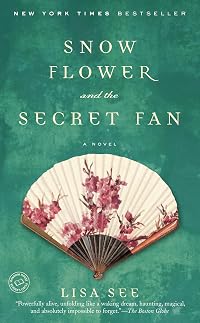
Snow Flower and the Secret Fan
by Lisa See
On This Page
Description
Lily is haunted by memories--of who she once was, and of a person, long gone, who defined her existence. She has nothing but time now, as she recounts the tale of Snow Flower, and asks the gods for forgiveness. In nineteenth-century China, when wives and daughters were foot-bound and lived in almost total seclusion, the women in one remote Hunan county developed their own secret code for communication: nu shu ("women's writing"). They painted letters on fans, embroidered messages on show more handkerchiefs, and composed stories, thereby reaching out of their isolation to share their hopes, dreams, and accomplishments. With the arrival of a silk fan on which Snow Flower has composed for Lily a poem of introduction in nu shu, their friendship is sealed and they become "old sames" at the tender age of seven. As the years pass, through famine and rebellion, they reflect upon their arranged marriages, loneliness, and the joys and tragedies of motherhood. The two find solace, developing a bond that keeps their spirits alive. But when a misunderstanding arises, their lifelong friendship suddenly threatens to tear apart. show lessTags
Recommendations


Member Recommendations
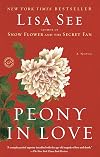
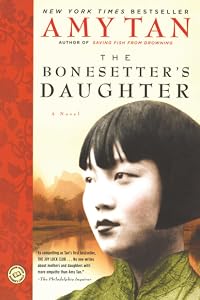
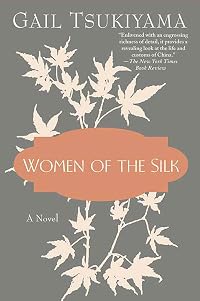
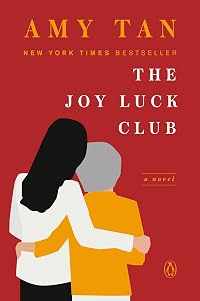
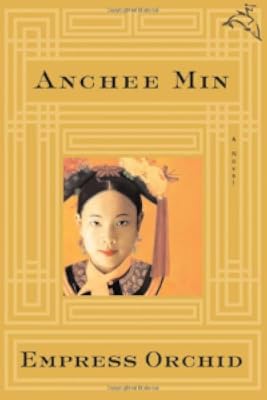
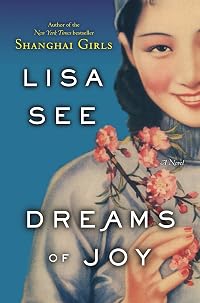
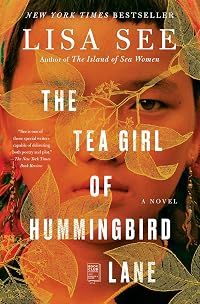
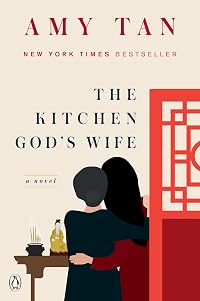
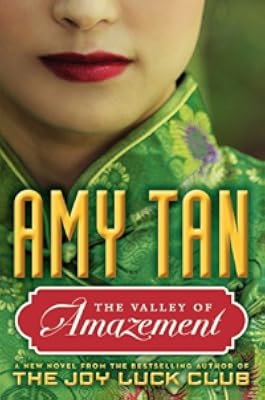
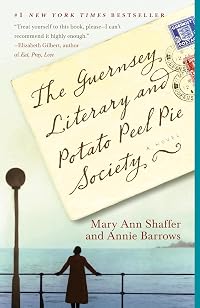
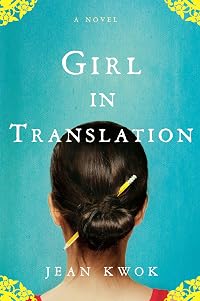
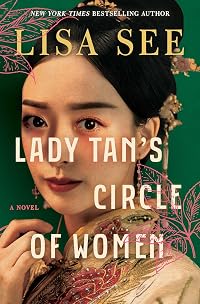
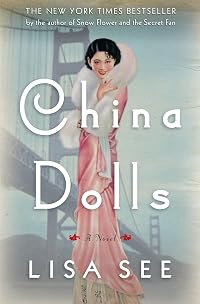
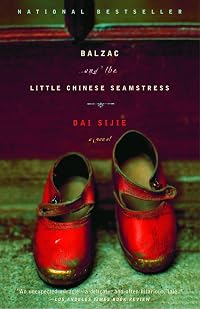
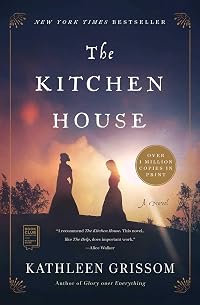
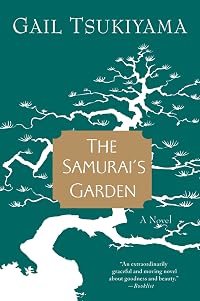
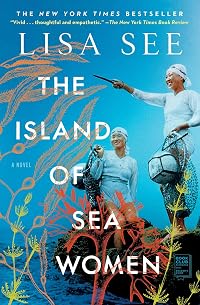
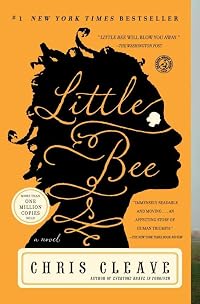
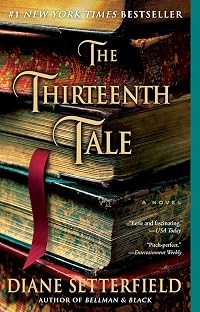
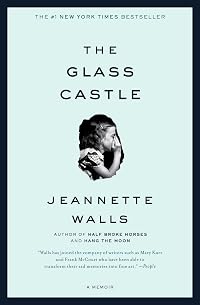
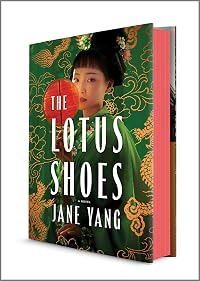
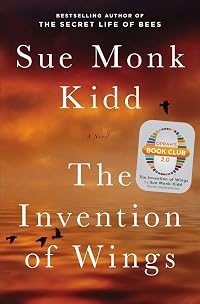
arielstjohn Another historical novel by the author focusing on women’s lives in China
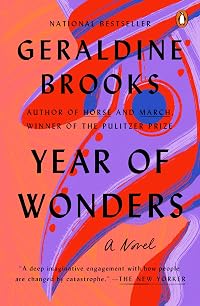
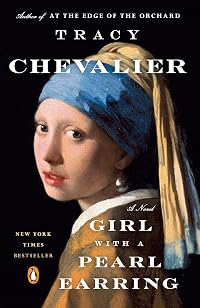
Also recommended by emib
20
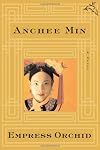
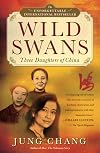
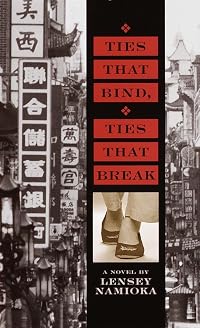
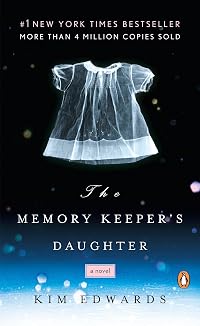
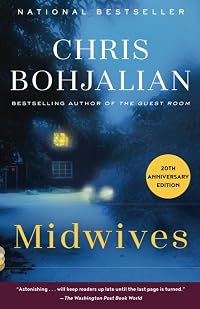
arielstjohn For intricate Chinese-American women’s stories.
MarieCTremblay mariectremblay
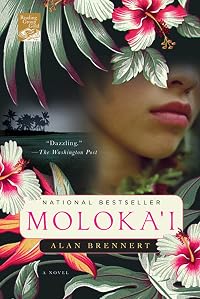
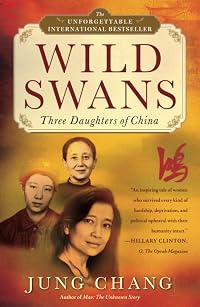
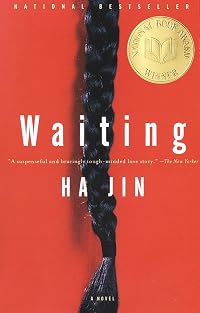
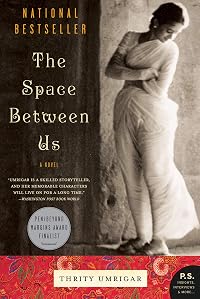
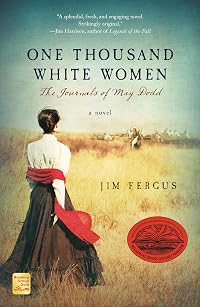
arielstjohn Explores ethnic minority culture and mother-daughter bonds.
Member Reviews
Well, she’s no Amy Tan.
In turn-of-the-20th-Century rural China, two young girls become bonded for life by the laotong contract. Whatever friends, spouses, blood sisters, or mothers-in-law may pass through their lives they are sworn to remain soulmates, communicating via messages in secret “women’s writing” carried between the two towns.
The blurb tries to make it sound like there’s more to the novel than this, but this is really it. The paltry frame upon which numerous history and sociology lessons are hung.
The thing that bums me out about this novel is that it could have been so good. The basic premise is one that has worked countless times: two very different people with an emotional bond desperately trying to hang onto each show more other in a world designed to keep them apart. If the factual information on footbinding and class systems had been artfully woven into a genuine story with fully-realized characters who could have had the reflections and realizations that were important for the author to convey. Instead, there are overlong passages that clinically describe facets of Chinese culture/practices. Certain scenes seem to occur only because the author had a real-world anecdote she wanted to include. There are thinly-veiled political statements that seem inauthentic to the characters and their circumstances. Lisa See had some drums to bang, and she beat them to bits.
The foreshadowing is obvious, the main character reads like a different woman from scene to scene (here sassy, here blindly obedient, here flinty), and the “lessons” are run into the ground.
As a female Chinese-American writer, I imagine Lisa See gets compared to Amy Tan a lot. She’s probably sick of it. Still, if I wrote a novel about boy wizards I’d just have to suck it up when J.K. Rowling came up, wouldn’t I? Tan is poetic where See is pedantic. Even the title: Snow Flower and the Secret Fan. That’s a dumb title. A title for a children’s book. The words are pretty and it might even sound mysterious at first, but upon reading the book one finds it is just a laundry list of the things inside. Her other titles are similarly unimaginative: Peony in Love, Shanghai Girls. Compare that to Tan’s titles that obliquely reference the contemporary subject matter through the lens of Chinese myth or legend: The Kitchen God’s Wife, Saving Fish from Drowning, The Hundred Secret Senses. I would recommend any of Tan’s books that I’ve read before this novel. I got Ready Player One-levels sick of the term “golden lilies” and reading about how people swayed about on them. Expand your capacity for imagery or GTFO.
What bothers me most of all is that nowhere on the long road to publication did anyone tell See that this novel wasn’t good. It could have been salvaged. show less
In turn-of-the-20th-Century rural China, two young girls become bonded for life by the laotong contract. Whatever friends, spouses, blood sisters, or mothers-in-law may pass through their lives they are sworn to remain soulmates, communicating via messages in secret “women’s writing” carried between the two towns.
The blurb tries to make it sound like there’s more to the novel than this, but this is really it. The paltry frame upon which numerous history and sociology lessons are hung.
The thing that bums me out about this novel is that it could have been so good. The basic premise is one that has worked countless times: two very different people with an emotional bond desperately trying to hang onto each show more other in a world designed to keep them apart. If the factual information on footbinding and class systems had been artfully woven into a genuine story with fully-realized characters who could have had the reflections and realizations that were important for the author to convey. Instead, there are overlong passages that clinically describe facets of Chinese culture/practices. Certain scenes seem to occur only because the author had a real-world anecdote she wanted to include. There are thinly-veiled political statements that seem inauthentic to the characters and their circumstances. Lisa See had some drums to bang, and she beat them to bits.
The foreshadowing is obvious, the main character reads like a different woman from scene to scene (here sassy, here blindly obedient, here flinty), and the “lessons” are run into the ground.
As a female Chinese-American writer, I imagine Lisa See gets compared to Amy Tan a lot. She’s probably sick of it. Still, if I wrote a novel about boy wizards I’d just have to suck it up when J.K. Rowling came up, wouldn’t I? Tan is poetic where See is pedantic. Even the title: Snow Flower and the Secret Fan. That’s a dumb title. A title for a children’s book. The words are pretty and it might even sound mysterious at first, but upon reading the book one finds it is just a laundry list of the things inside. Her other titles are similarly unimaginative: Peony in Love, Shanghai Girls. Compare that to Tan’s titles that obliquely reference the contemporary subject matter through the lens of Chinese myth or legend: The Kitchen God’s Wife, Saving Fish from Drowning, The Hundred Secret Senses. I would recommend any of Tan’s books that I’ve read before this novel. I got Ready Player One-levels sick of the term “golden lilies” and reading about how people swayed about on them. Expand your capacity for imagery or GTFO.
What bothers me most of all is that nowhere on the long road to publication did anyone tell See that this novel wasn’t good. It could have been salvaged. show less
I feel as though this is a hard book to review, as the story felt very linear and flat. There wasn't really anything major happening and even when one sort of major thing happened, it still didn't feel hugely problematic, especially as the characters just continued with their lives after that incident. But this isn't necessarily a negative comment; I still read the entire book, so it kept my interest throughout. And admittedly, how exciting can a tale be when women spent the majority of their lives in one room and were rarely permitted to leave the house...
You start the book with a prologue from the protagonist Lily, who is now 80 years old and is looking back over her life (and, from what I understood, also writing an autobiography). show more What follows is the linear story of her life, but most importantly, it focuses on her laotong, Snow Flower; an arrangement in Chinese culture that brings two girls together to form a life long bond.
Snow Flower is often thinking of flying and birds, metaphorically indicating her wish for more and to escape the confines of what is expected of her, whereas Lily is much more grounded to tradition. As you can guess, this causes a bit of contention between them when Lily discovers Snow Flower is being mistreated by her husband. Instead of being a true friend and support, she simply pushes for Snow Flower to keep producing sons, not knowing what else to say - Lily only has her limited life experience and knowledge to fall back on.
Just one misconstrued message by Lily from Snow Flower was enough for her to cut off all contact with Snow Flower for the majority of the remainder of their lives. It's only in hindsight, in her old age, that Lily realises she wasn't a good friend to Snow Flower and that she shouldn't have been so forthright with Snow Flower about keeping to tradition and being a good wife.
What the book does well is share the customs that were observed in the 1800s, most notably, foot binding. See goes into pretty graphic detail of the pain and horror of foot binding, and shares the fact that 1 in 4 girls died from sepsis from this practice, which I was unaware of. As a historical fiction book, it is truly fascinating to learn about the Chinese customs of the 1800s, most of which were disadvantageous to women of course. Women were seen more as a burden, only good for producing sons, and were often treated terribly.
It is quite a poignant tale, that may cause some people to reflect on themselves, their friendships and traditions, and how those traditions/beliefs/customs, in some ways, tie them down. All in all, I don't regret reading this book. show less
You start the book with a prologue from the protagonist Lily, who is now 80 years old and is looking back over her life (and, from what I understood, also writing an autobiography). show more What follows is the linear story of her life, but most importantly, it focuses on her laotong, Snow Flower; an arrangement in Chinese culture that brings two girls together to form a life long bond.
Snow Flower is often thinking of flying and birds, metaphorically indicating her wish for more and to escape the confines of what is expected of her, whereas Lily is much more grounded to tradition. As you can guess, this causes a bit of contention between them when Lily discovers Snow Flower is being mistreated by her husband. Instead of being a true friend and support, she simply pushes for Snow Flower to keep producing sons, not knowing what else to say - Lily only has her limited life experience and knowledge to fall back on.
Just one misconstrued message by Lily from Snow Flower was enough for her to cut off all contact with Snow Flower for the majority of the remainder of their lives. It's only in hindsight, in her old age, that Lily realises she wasn't a good friend to Snow Flower and that she shouldn't have been so forthright with Snow Flower about keeping to tradition and being a good wife.
What the book does well is share the customs that were observed in the 1800s, most notably, foot binding. See goes into pretty graphic detail of the pain and horror of foot binding, and shares the fact that 1 in 4 girls died from sepsis from this practice, which I was unaware of. As a historical fiction book, it is truly fascinating to learn about the Chinese customs of the 1800s, most of which were disadvantageous to women of course. Women were seen more as a burden, only good for producing sons, and were often treated terribly.
It is quite a poignant tale, that may cause some people to reflect on themselves, their friendships and traditions, and how those traditions/beliefs/customs, in some ways, tie them down. All in all, I don't regret reading this book. show less
In 1800s China, 80-year-old Lily reflects back on her life, specifically focusing on a lifelong friendship she shared, starting as young child, with another girl named Snow Flower.
This was a beautifully written book exploring gender roles, the patriarchy's long reach, and the power of female friendships. The text hooked me almost right away, and Lisa See created such interesting characters that I kept wanting to see what would happen to them next. At times, the plot points could be difficult and heart-wrenching, with many hardships and deaths of friends and family members across Lily's long life, but it was always engaging. The author also intersperses key facts about the culture of the time, without it ever seeming didactic.
For the show more audiophile, Janet Song was a gifted narrator who brought life to all the characters and appropriate emotion to the text. show less
This was a beautifully written book exploring gender roles, the patriarchy's long reach, and the power of female friendships. The text hooked me almost right away, and Lisa See created such interesting characters that I kept wanting to see what would happen to them next. At times, the plot points could be difficult and heart-wrenching, with many hardships and deaths of friends and family members across Lily's long life, but it was always engaging. The author also intersperses key facts about the culture of the time, without it ever seeming didactic.
For the show more audiophile, Janet Song was a gifted narrator who brought life to all the characters and appropriate emotion to the text. show less
What a beautiful book! I learned so much about the life of Chinese women during the 1800s but also I felt the story was very contemporary too.
Lily is the second daughter and third child of peasant farmers. As such she is considered a burden on her family and useless unless she can be married well. At a young age her parents contact the local matchmaker and he comes to see Lily. He is struck by her beauty and her small feet. He calls in a matchmaker from a neighbouring town, Madame Wang. Madame Wang suggests that Lily can go far if her parents do all the right things in bringing her up. This includes binding her feet carefully but also entering into a contract with a girl of the same age from her town. This is a laotong contract (also show more called old sames). The girl is Snow Flower from a highborn family. Lily and Snow Flower become best friends. Snow Flower teaches Lily how to write the women's language, nu shu. She learns about cooking and cleaning and other household chores that were never taught in her home. They grow up and become married at almost the same time. At this time Lily learns that although Snow Flower's family was highborn they have lost almost everything. Lily is angry that this was kept from her by Madame Wang and Snow Flower but she is most angry at her mother. She manages to forgive Snow Flower and they remain friends but then the babies start to come. Snow Flower has the first child, a boy, but then Lily has a boy as well. It seems as if life is going well. Between disease and rebellion Lily and Snow Flower are put to great challenges.
I think the friendship between LIly and Snow Flower is very special but we all need close friends. Having just lost a good friend to cancer I was very moved by this book. There is never enough time to cherish the friends we have. show less
Lily is the second daughter and third child of peasant farmers. As such she is considered a burden on her family and useless unless she can be married well. At a young age her parents contact the local matchmaker and he comes to see Lily. He is struck by her beauty and her small feet. He calls in a matchmaker from a neighbouring town, Madame Wang. Madame Wang suggests that Lily can go far if her parents do all the right things in bringing her up. This includes binding her feet carefully but also entering into a contract with a girl of the same age from her town. This is a laotong contract (also show more called old sames). The girl is Snow Flower from a highborn family. Lily and Snow Flower become best friends. Snow Flower teaches Lily how to write the women's language, nu shu. She learns about cooking and cleaning and other household chores that were never taught in her home. They grow up and become married at almost the same time. At this time Lily learns that although Snow Flower's family was highborn they have lost almost everything. Lily is angry that this was kept from her by Madame Wang and Snow Flower but she is most angry at her mother. She manages to forgive Snow Flower and they remain friends but then the babies start to come. Snow Flower has the first child, a boy, but then Lily has a boy as well. It seems as if life is going well. Between disease and rebellion Lily and Snow Flower are put to great challenges.
I think the friendship between LIly and Snow Flower is very special but we all need close friends. Having just lost a good friend to cancer I was very moved by this book. There is never enough time to cherish the friends we have. show less
My friend, Lori, sent me the novel, Snow Flower and the Secret Fan by Lisa See, quite a while ago. I put it in my to-be-read pile without even glancing at the book description. I already had so many books to read, I just didn't know when I'd have time for it. Every time I saw it in the pile, I felt an urge to read it. When I finally did, I knew exactly why Lori sent it to me... I soon found myself immersed in nineteenth-century Chinese culture as well as the friendship of Lily and Snow Flower. Their deep connection and even their misunderstandings reminded me of the deep friendships, including the one Lori and I share, I've had in my life. See's descriptions of the foot binding process had me rubbing my toes and arches. Knowing the pain show more of ill-fitting shoes, I couldn't even begin to imagine how these young girls survived the foot-binding process. I cringed as I read passage after passage of the treatment of women of those days juxtaposed against the strength the women exhibited in trying times to keep their families from totally disintegrating. The hardships of life lead to a heartbreaking misunderstanding between Lily and Snow Flower that causes painful betrayal and a complete break in communication. Snow Flower and the Secret Fan pushed me to open communication in my own friendships and to search for ways to make the lives of the women of my day better. show less
Set in China in the early to mid -19th century, this book tells of a deep friendship between two women, Lily and Snow Flower. Their relationship, known as a laotong, is intended to last a lifetime. It begins when they are children and is arranged by a matchmaker. The girls learn and communicate in a secret women’s-only written language, nu shu, which differs significantly from men’s writing. Snow Flower and Lily inscribe messages on a fan and send it by courier to each other, similar to a pen pal, at major milestones in their lives. At age eighty, Lily is looking back on her life and recording their stories for a specific reason, which will eventually be revealed.
The book is a deep examination of Chinese culture of the era through show more the eyes of its women at a time when women were expected to be subservient to men and to produce sons. This story includes the horrors of foot-binding, which was seen as a sign of beauty – the ideal was seven centimeters. I had heard of foot-binding but had no idea of what it entailed. Other cultural aspects include social classes, official ceremonies, traditions, and storytelling.
This book is beautifully written and provides a sense of a real relationship between these women, filled with love, conflict, and heartbreak. As with the best historical fiction, it transports the reader to a time and place and feels authentic. I was able to picture the region in my mind’s eye through Lisa See’s detailed descriptions of the food, weather, clothing, and landscapes. I gained an appreciation for the arduous lives of the women of the time and what they endured. This one will stay in my memory for a long while. show less
The book is a deep examination of Chinese culture of the era through show more the eyes of its women at a time when women were expected to be subservient to men and to produce sons. This story includes the horrors of foot-binding, which was seen as a sign of beauty – the ideal was seven centimeters. I had heard of foot-binding but had no idea of what it entailed. Other cultural aspects include social classes, official ceremonies, traditions, and storytelling.
This book is beautifully written and provides a sense of a real relationship between these women, filled with love, conflict, and heartbreak. As with the best historical fiction, it transports the reader to a time and place and feels authentic. I was able to picture the region in my mind’s eye through Lisa See’s detailed descriptions of the food, weather, clothing, and landscapes. I gained an appreciation for the arduous lives of the women of the time and what they endured. This one will stay in my memory for a long while. show less
Summary: This book lets us in to the inner world of women's lives and affairs in nineteenth century China, when having perfectly bound, tiny feet was the highest status symbol a woman could have, and where her only duties were to obey her parents, husband, and in-laws, and to produce healthy sons. In this world where men and women are kept largely separate, women must rely on each other for love and true emotional support. Lily and Snow Flower are contracted to become laotongs, "old sames" when they are seven years old, and so begins a relationship with a deeper impact than any marriage could have. Although their lives take them in different directions, they remain in contact via nu shu, the secret writing of women, until a terrible show more misunderstanding threatens to tear them apart for good.
Review: This book does an excellent job of bringing the daily lives of Chinese women of that period to life, of explaining both the practice and rationale behind a variety of traditional practices (foot-binding is the major one that gets noted, although the book touches on customs surrounding birth, marriage, death, festivals, family, folklore, food, religious observances, etc., almost as deeply). These rich historical details are spun together in service of the story, and create a vivid impression of daily life in rural pre-Western-contact China. The prose is clean, and the voice of Lily as narrator is strong and consistent. However, the story itself fell a little short of what I'd hoped... by the time the major conflict came around, I didn't particularly like either of the two main characters - they both annoyed me, Lily for being too cold, and Snow Flower for being too passive and whiny. I realize that part of the point was to demonstrate the limited world through which these women moved, but that constriction also seemed to make the story seem small and somewhat petty, even though it stretched over the span of a life. Overall, while I found this book to be interesting and compelling listening, and while it absolutely presented a brightly vivid historical snapshot, I guess I prefer my novels to have a slightly broader scope. This was a worthwhile read, but not something that's destined to become a favorite.
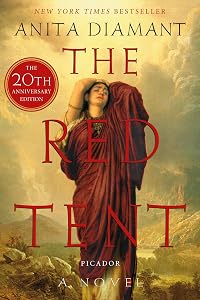
Recommendation: Definitely would be worth reading by people who enjoy "women in history" books like The Red Tent, and historical fiction that focuses on daily life instead of big events. show less
Review: This book does an excellent job of bringing the daily lives of Chinese women of that period to life, of explaining both the practice and rationale behind a variety of traditional practices (foot-binding is the major one that gets noted, although the book touches on customs surrounding birth, marriage, death, festivals, family, folklore, food, religious observances, etc., almost as deeply). These rich historical details are spun together in service of the story, and create a vivid impression of daily life in rural pre-Western-contact China. The prose is clean, and the voice of Lily as narrator is strong and consistent. However, the story itself fell a little short of what I'd hoped... by the time the major conflict came around, I didn't particularly like either of the two main characters - they both annoyed me, Lily for being too cold, and Snow Flower for being too passive and whiny. I realize that part of the point was to demonstrate the limited world through which these women moved, but that constriction also seemed to make the story seem small and somewhat petty, even though it stretched over the span of a life. Overall, while I found this book to be interesting and compelling listening, and while it absolutely presented a brightly vivid historical snapshot, I guess I prefer my novels to have a slightly broader scope. This was a worthwhile read, but not something that's destined to become a favorite.
Recommendation: Definitely would be worth reading by people who enjoy "women in history" books like The Red Tent, and historical fiction that focuses on daily life instead of big events. show less
Members
- Recently Added By
Lists

1001 Books You Must Read Before You Die
1,448 works; 1,136 members

Best Historical Fiction
620 works; 258 members

Best Contemporary Literary Fiction (Around the Last 30 Years)
400 works; 124 members

Recommend the 20 best books you've read in the last five years
2,168 works; 608 members

Best Fiction Set in China
43 works; 27 members

Historical Fiction
889 works; 91 members

Best 21st Century Books (So Far)
679 works; 86 members

Female Friendship
54 works; 12 members

Female Author
1,234 works; 66 members

Best Book Club Selections
26 works; 8 members

Read the Book, Hated the Movie
30 works; 25 members
Female Protagonist
1,056 works; 57 members
Literature About Women and Girls
426 works; 41 members

Asia
178 works; 7 members

Best books read in 2011
200 works; 50 members

Favorite Audiobooks Listened to in 2011
33 works; 11 members

A Novel Cure
742 works; 23 members

My E-Book Collection - Opinions Welcome
92 works; 10 members

Fiction with Women's Names in the Title
378 works; 15 members

Books Read in 2016
4,666 works; 199 members

Great Audiobooks
96 works; 10 members

Most Depressing Books
69 works; 16 members

Llibres que he llegit el 2022
32 works; 1 member

Good LGBT fiction for LGBT folk and friends
553 works; 52 members

Books Read in 2006
424 works; 8 members

Reading Globally
136 works; 16 members
AP Lit
363 works; 6 members

The China Project Book List
100 works; 2 members

Books With Winter Words in the Title
42 works; 6 members
Books That Made Us Cry
278 works; 145 members

Retrospective of 20th- and 21st-century literature
154 works; 1 member
KayStJ's to-read list
1,616 works; 11 members

Books With Trees and Plants in the Title
27 works; 2 members

to get
244 works; 2 members

Allie's Wishlist
217 works; 2 members

Global Reads: Books Set in East Asia
139 works; 12 members

Books Read in 2010
631 works; 10 members

Women's Stories
88 works; 13 members

Biggest Disappointments
606 works; 165 members

.
184 works; 1 member

Unread books
1,063 works; 83 members
Author Information

21+ Works 33,342 Members
Lisa See was born in Paris but grew up in Los Angeles, spending much of her time in Chinatown. She is of Chinese decent. Her first book, On Gold Mountain: The One Hundred Year Odyssey of My Chinese-American Family (1995), was a national bestseller and a New York Times Notable Book. The book traces the journey of Lisa's great-grandfather, Fong See. show more Her first fiction novel, Flower Net (1997) was a national bestseller, a New York Times Notable Book, and on the Los Angeles Times Best Books List for 1997. Flower Net was also nominated for an Edgar award for best first novel. In addition to writing books, Ms. See was the Publishers Weekly West Coast Correspondent for 13 years. Her bestselling novels, all inspired by her Chinese heritage, include Snow Flower and the Secret Fan, A Peony in Love, Shanghi Girls, Dreams of Joy and China Dolls. Among her awards and recognitions are the Organization of Chinese Americans Women's 2001 award as National Woman of the Year and the 2003 History Makers Award presented by the Chinese American Museum. See serves as a Los Angeles City Commissioner. (Bowker Author Biography) show less
Some Editions
Awards and Honors
Awards
Distinctions
Series
Belongs to Publisher Series
Work Relationships
Is contained in
Has the adaptation
Common Knowledge
- Canonical title
- Snow Flower and the Secret Fan
- Original title
- Snow Flower and the secret fan
- Original publication date
- 2005
- People/Characters
- Lily; Snow Flower; Beautiful Moon; Madame Wang; Elder Sister; Elder Brother (show all 9); Younger Brother; Spring Moon; Dalang
- Important places
- China; Hunan, China
- Important events
- Taiping Rebellion (1850 | 1864)
- Related movies
- Snow Flower and the Secret Fan (2011 | IMDb)
- First words
- I am what they call in our village "one who has not yet died" -- a widow, eighty years old.
- Quotations
- No matter how scared I was of her words, I wanted to cling to those wings and fly away
- Last words
- (Click to show. Warning: May contain spoilers.)"Please forgive me."
- Blurbers
- Tan, Amy; Golden, Arthur
- Original language*
- Engels
- Canonical DDC/MDS
- 813.54
- Canonical LCC
- PS3569.E3334
*Some information comes from Common Knowledge in other languages. Click "Edit" for more information.
Classifications
Statistics
- Members
- 12,069
- Popularity
- 725
- Reviews
- 464
- Rating
- (4.00)
- Languages
- 19 — Arabic, Catalan, Chinese, Czech, Danish, Dutch, English, Finnish, French, German, Hungarian, Italian, Lithuanian, Norwegian (Bokmål), Polish, Portuguese, Croatian, Spanish, Swedish
- Media
- Paper, Audiobook, Ebook
- ISBNs
- 97
- UPCs
- 1
- ASINs
- 39