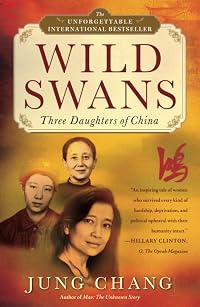
Wild Swans: Three Daughters of China
by Jung Chang
On This Page
Description
The story of three generations in twentieth-century China that blends the intimacy of memoir and the panoramic sweep of eyewitness history-a bestselling classic in thirty languages with more than ten million copies sold around the world, now with a new introduction from the author. An engrossing record of Mao's impact on China, an unusual window on the female experience in the modern world, and an inspiring tale of courage and love, Jung Chang describes the extraordinary lives and show more experiences of her family members: her grandmother, a warlord's concubine; her mother's struggles as a young idealistic Communist; and her parents' experience as members of the Communist elite and their ordeal during the Cultural Revolution. Chang was a Red Guard briefly at the age of fourteen, then worked as a peasant, a 'barefoot doctor,' a steelworker, and an electrician. As the story of each generation unfolds, Chang captures in gripping, moving-and ultimately uplifting-detail the cycles of violent drama visited on her own family and millions of others caught in the whirlwind of history. show lessTags
Recommendations
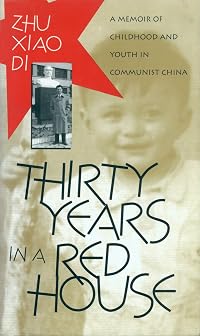
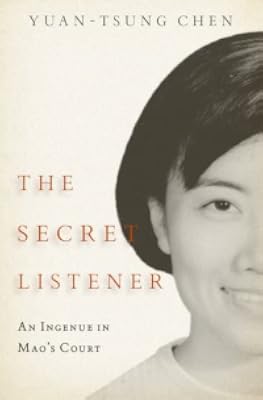
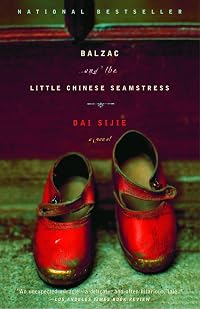
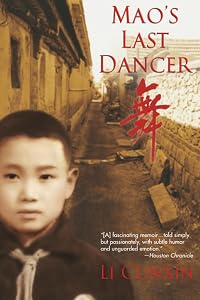
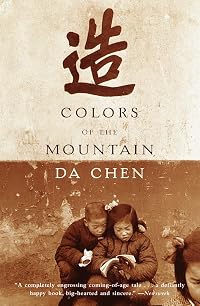

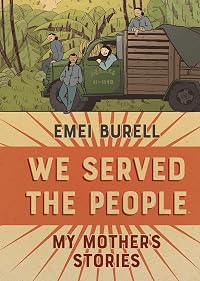
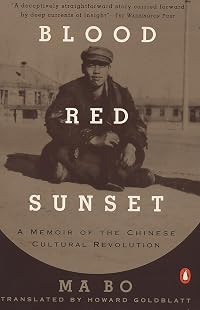
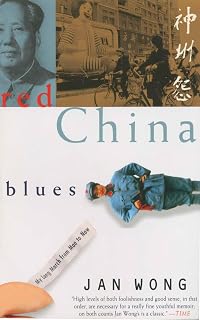
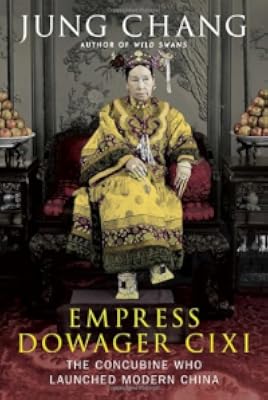

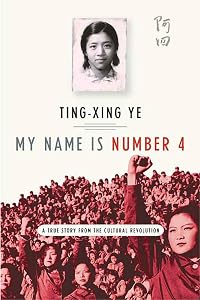
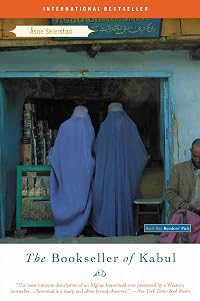
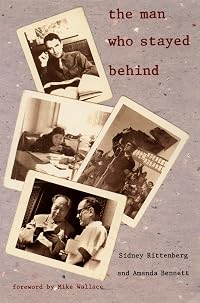


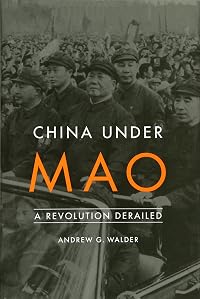
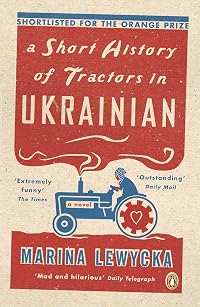

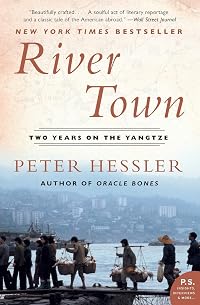

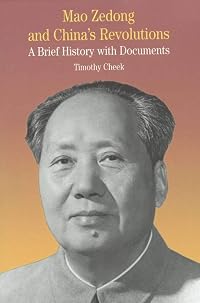
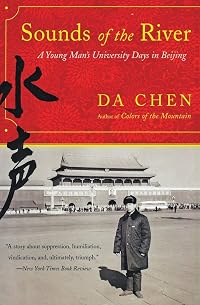
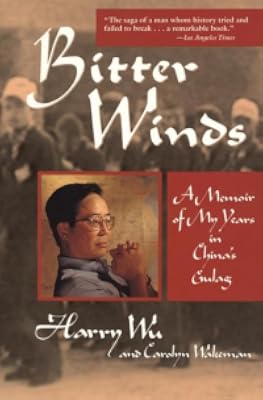

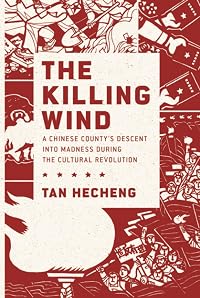





Member Recommendations


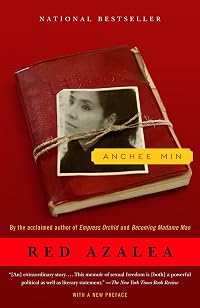
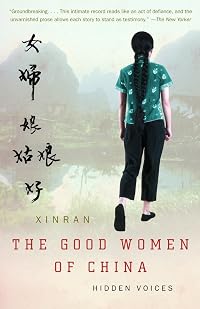
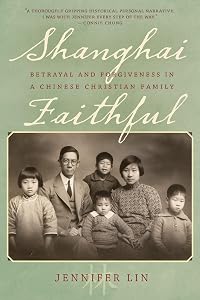
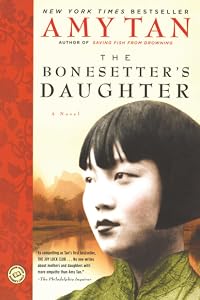
anonymous user A fictional story of three generations of Chinese American women who travel back to China together.
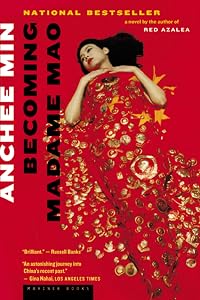
Nickelini Another interesting memoir about a young woman's excitement and then disillusionment at Mao's China.

Member Reviews
Communism is supposed to get rid of social classes and inequality. The book starts with China ruled by warlords. Strapped for cash, the author's great grandfather sells his daughter, the author's grandmother to one of them as a concubine. These were the kind of abuses that communism was designed to end but ended up perpetuating while still giving lip service to the ideals.
Just because I gave it 5 stars it doesn't mean I don't have to also add what people today are calling a trigger warning. You have to be able to tolerate reading about a lot of people suffering for a long time; unnecessary suffering primarily caused by the cruelty of other human beings.
It's a long book, covering events taking place through 3 generations and China has a show more large population. That makes for a great deal of suffering.
I somehow made it through most of my life knowing next to nothing about China. There is a long list of countries I know nothing about and that probably makes me a typical American. Also, typically, I didn't miss this knowledge. I, rather than a repressive leader, stood in the way of this knowledge.
It's easy to point out the failings of America, especially under a Trump presidency, but reading this book makes the failings of the current political situation here seem almost trivial in comparison. Trump has a personality like Mao. A need to be worshiped, an imperiousness while claiming values he doesn't actually hold, an anti-intellectualism, a talent for bringing out the worst in others. He stirs up the "peasants" but makes their life worse, yet they don't seem to notice. He's not really interested in the fate of the country--only his own. However he lacks Mao's power. The American government isn't a dictatorship yet.
As the Chinese people are forced to make hard choices in impossible situations, Jung Chang's insight is that which side someone is on, or to which category they are said to belong is a poor guide to evaluating them. Instead look for who is compassionate and who is not. show less
Just because I gave it 5 stars it doesn't mean I don't have to also add what people today are calling a trigger warning. You have to be able to tolerate reading about a lot of people suffering for a long time; unnecessary suffering primarily caused by the cruelty of other human beings.
It's a long book, covering events taking place through 3 generations and China has a show more large population. That makes for a great deal of suffering.
I somehow made it through most of my life knowing next to nothing about China. There is a long list of countries I know nothing about and that probably makes me a typical American. Also, typically, I didn't miss this knowledge. I, rather than a repressive leader, stood in the way of this knowledge.
It's easy to point out the failings of America, especially under a Trump presidency, but reading this book makes the failings of the current political situation here seem almost trivial in comparison. Trump has a personality like Mao. A need to be worshiped, an imperiousness while claiming values he doesn't actually hold, an anti-intellectualism, a talent for bringing out the worst in others. He stirs up the "peasants" but makes their life worse, yet they don't seem to notice. He's not really interested in the fate of the country--only his own. However he lacks Mao's power. The American government isn't a dictatorship yet.
As the Chinese people are forced to make hard choices in impossible situations, Jung Chang's insight is that which side someone is on, or to which category they are said to belong is a poor guide to evaluating them. Instead look for who is compassionate and who is not. show less
Stunning autobiography / biography / and accessible history of twentieth-century China.
I knew next-to-nothing about life in China, & this was a marvellous, personal history, as Jung relates the moving stories of her concubine grandmother, communist mother, and herself as a follower of Mao.
The various tyrannies and brain-washings so shocking, tragic & unfair. Where politics are given more importance than the well-being of the populace. Has made me grateful that I was born in a country where free speech & thought - so far, is permissible. This book is so thought-provoking, I would encourage everyone to read it, especially those who support cancel-culture; to demonstrate what happens when blinkered, dogmatic self-righteousness becomes show more ascendant. show less
I knew next-to-nothing about life in China, & this was a marvellous, personal history, as Jung relates the moving stories of her concubine grandmother, communist mother, and herself as a follower of Mao.
The various tyrannies and brain-washings so shocking, tragic & unfair. Where politics are given more importance than the well-being of the populace. Has made me grateful that I was born in a country where free speech & thought - so far, is permissible. This book is so thought-provoking, I would encourage everyone to read it, especially those who support cancel-culture; to demonstrate what happens when blinkered, dogmatic self-righteousness becomes show more ascendant. show less
This is a fascinating history of 20th century China through the lives of three women, Jung Chang, her mother, and her grandmother. Of course it only tells their perspectives, but all are glimpses of China I have never seen so clearly. If I had picked up a history book of this era, I would have probably put it down, too frustrated by the Communist regime to continue. Through this narration, I cared about what happened to Jung Chang's family and the country and couldn't put it down (I listened to the audible version and read when sitting down.).
Briefly, Chang's grandmother, sold as a concubine, lives through the Japanese occupation of Manchuria, the Kuomintang, Mao's takeover of Manchuria, and follows the lives of her daughter and show more grandchildren. Her mother is raised on Mao's schools and propaganda and rises through the ranks of the Communist system with her husband, later to be renounced in the Cultural Revolution. Chang and her siblings struggle to learn and thrive during the Cultural Revolution, always challenging.
Jung Chang's writing is very straightforward (as is the narration), which is absolutely appropriate for this epic story already so full of extreme events and emotions. Lyricism is not needed and extra description would have made this book too long. Despite the length of this book (562 pages), there was never a sense of it being slow or too long. The narration by Joy Osmanski also generally moved swiftly and clearly (at 1.25 speed). show less
Briefly, Chang's grandmother, sold as a concubine, lives through the Japanese occupation of Manchuria, the Kuomintang, Mao's takeover of Manchuria, and follows the lives of her daughter and show more grandchildren. Her mother is raised on Mao's schools and propaganda and rises through the ranks of the Communist system with her husband, later to be renounced in the Cultural Revolution. Chang and her siblings struggle to learn and thrive during the Cultural Revolution, always challenging.
Jung Chang's writing is very straightforward (as is the narration), which is absolutely appropriate for this epic story already so full of extreme events and emotions. Lyricism is not needed and extra description would have made this book too long. Despite the length of this book (562 pages), there was never a sense of it being slow or too long. The narration by Joy Osmanski also generally moved swiftly and clearly (at 1.25 speed). show less
A grueling, heartbreaking, horrifying read, though not without hope or moments of relief. The story of the lives of three women in 20th century China. The first is daughter to a warlord and made into a concubine. In an astonishing act, this woman who has been oppressed, repressed, isolated, miseducated and who had her feet bound in a brutal and ugly tradition, flees with her daughter and this pretty much sets the tone of the human spirit surviving through appalling adversity. Through the fall of Kuomintang and the rise of Communism, the family survives and even thrives. The daughter becomes a Communist official and marries another, but the insane reign of Mao Tse Tung that will cost millions their lives through arrant, horrifying show more stupidity and evil is just beginning. as a portrait of a family in the time of Mao Wild Swans is riveting, if at times difficult reading. A whole nation dragged back to ignorance and fear by one man's monstrous ego - all too common in the history of the 20th century, but rarely in such an effective fashion, where there was no secret police -the people were made to police themselves. Utterly chilling, but brilliantly written. It's the sheer epic scale of the waste that makes the blood boil, though. show less
This is an epic personal story of life in China over much of the 20th century, told through the stories of three generations of women in one family. The author has lived in Britain since becoming one of the first Chinese students to get a doctorate at a British university since before the communist takeover in 1949. Her grandmother's family came from Manchuria in the extreme north of China, and at the age of 15 in 1924 she was given away as a concubine to one of the warlords vying for control in this part of China in the vacuum created by the overthrow of the last Chinese emperor in 1912. Her mother, the daughter of this union, was one of the early idealistic communists in the years leading up to the 1949 revolution and for the first show more few heady years of the new regime when there seemed to be a genuine attempt to create a better society and reduce the oppressive and miserable life of the majority of the population, especially in rural areas. The book covers in depth the dramatic and horrific events that followed: the initially promising but quickly aborted attempt at liberalisation that was the Hundred Flowers campaign; the "Great Leap Forward", where much of the country was forced to produce steel to boost industry, to such an extent that agriculture collapsed and famine ensued, in which some 30 million people died, including the author's uncle and great-aunt; then, after a brief period of reform, the appalling "Cultural Revolution", Mao's attempt to create a personal rule, overthrowing much of his own communist apparatus, which dislocated society and economy, destroying much of the country's cultural and historical infrastructure, effectively abolishing education, burning nearly all books, banning films, theatre and sport, seriously blighting the author's teenage years and adult adulthood; and which, despite some relaxation after 1972, didn't fully end until after Mao's death and the overthrow of the Gang of Four, led by his wife, in autumn 1976.
Despite this litany of catastrophe, there is hope in the love and closeness of the family, centred here around the three eponymous amazing and strong-minded women. After the death of her warlord "husband", who treated her fairly decently by the standards of the time, the grandmother found happiness married to a much older man; the mother found love with a fellow communist and, despite strains caused by her husband's principled but rigid puritanism, their marriage survived their vicious denunciations by Red Guards and others at the appalling mass meetings, and their imprisonment in labour camps until the early 1970s. The physical and mental strains of years of humiliation and subjection to forced labour and psychological pressures, killed the author's father at the age of only 54 in 1975. In the relatively more relaxed atmosphere of the later 1970s, especially after the restoration to power of Deng Xiaoping, the future paramount leader in the 80s and 90s, the author was able to study abroad and the lives of her mother and other family members, as well as that of hundreds of millions of other Chinese, improved dramatically, albeit within the framework of what remains of course a one party communist state. The afterword recounts in brief the author's life in Britain and the original publication of this book in 1991 (what I have read is the 25th anniversary edition). One thing I would like to have heard a bit more about, though, was how she was able to defect to Britain after gaining her doctorate in 1982. This is a magnificent and absorbing book, with much to say about human nature at its best and worse, and the horrors that blind adherence to an ideology can bring about. 5/5 show less
Despite this litany of catastrophe, there is hope in the love and closeness of the family, centred here around the three eponymous amazing and strong-minded women. After the death of her warlord "husband", who treated her fairly decently by the standards of the time, the grandmother found happiness married to a much older man; the mother found love with a fellow communist and, despite strains caused by her husband's principled but rigid puritanism, their marriage survived their vicious denunciations by Red Guards and others at the appalling mass meetings, and their imprisonment in labour camps until the early 1970s. The physical and mental strains of years of humiliation and subjection to forced labour and psychological pressures, killed the author's father at the age of only 54 in 1975. In the relatively more relaxed atmosphere of the later 1970s, especially after the restoration to power of Deng Xiaoping, the future paramount leader in the 80s and 90s, the author was able to study abroad and the lives of her mother and other family members, as well as that of hundreds of millions of other Chinese, improved dramatically, albeit within the framework of what remains of course a one party communist state. The afterword recounts in brief the author's life in Britain and the original publication of this book in 1991 (what I have read is the 25th anniversary edition). One thing I would like to have heard a bit more about, though, was how she was able to defect to Britain after gaining her doctorate in 1982. This is a magnificent and absorbing book, with much to say about human nature at its best and worse, and the horrors that blind adherence to an ideology can bring about. 5/5 show less
“Father is close, Mother is close, but neither is as close as Chairman Mao.”
A fascinating description of one family's experiences of China's political upheavals across the 20th century, focusing on Jung Chang’s grandmother, mother, and then herself.
Although the family are fairly privileged much of the time, they still experience great hardships: being a Party member, or even Party official, was no guarantee of immunity from persecution and sometimes torture.
Hard to categorise - but don’t be daunted
It's part biography/autobiography and part a historical/ political/ psychological exposition of how Communist China came into being and how it maintained its hold on its citizens, even during extreme hardship, such as famine. However, show more it has the readability of a novel, eschewing sheer horror and dry history - quite an achievement.
This book can seem daunting because of its size, subject matter and fame, but it's actually a riveting read and although some of the content is harrowing, the writing style is very easy going. It is a complex story, but it is not confusing.
It's subtitled "Three daughters of China", but it’s a story for everyone. Strong women are in the foreground, but one of the most powerfully drawn characters is Jung Chang's father: born poor, largely self-educated, who loved literature, was a passionate and principled Communist (putting Party before family), rising to power as an official, but who couldn't cope when he saw his beliefs being violated in the name of the Party.
Contradictions inherent in the system
“They verbally attacked each other with Mao's quotations, making cynical use of his guru-like elusiveness - it was easy to select a quotation of Mao's to suit any situation, or even both sides of the same argument.”
Although I have read quite a few books about China, this one gets to the heart of the contradictions of The Party and how to brainwash a vast nation far better than many others. When Jung Chang subsequently wrote a biography of Mao, she'd already done much of the groundwork in Wild Swans.
Brutality and hypocrisy of various kinds are described, but it's some of the subtler hardships that were especially vivid. I find it extraordinary that strong family ties could coexist with couples not allowed to live together and an apparent casualness/resignation of children left to live with wet nurses, relatives or in boarding nurseries for years.
Image: Scene from The Red Detachment of Women, one of the Eight Model Operas of the Cultural Revolution (Source.)
During the Cultural Revolution, which began when Jung Chan was a teenager, ignorance was glorified (even in universities) and beautiful artefacts destroyed; the family were expelled from the official compound and sent to live in rooms in an old mansion:
"Beauty was so despised that my family was sent to this lovely house as a punishment."
Unexpected levity
There is humour too: sending those studying English to a southern port to practise by talking to foreign sailors; not being able to rename a street whose sign was too high, and traffic chaos when it was decided that red was a positive colour so oughtn't to mean "stop"!
The extraordinary degree of organisation in some aspects of life and none in others aligned with my expectations, but also highlighted contradictions, such as being sent to "learn" from the peasants, with no guidance as to what was to be learnt, nor account of the peasants not wanting extra mouths attached to not very useful hands.
Flaws
The main problems are minor, but nonetheless irritating.
* Although the political history is explained very well, because it is also autobiographical, important events that didn't affect the family (such as the Long March) are barely mentioned and this is where its confused identity between biography and political text book are a weakness.
* People refer to others by relationship ("my mother", "my father's mother in law" etc), which is confusing when different characters talk about their relatives, without using names.
* Some passages sound clichéd; that is partly because I have read many other books on similar subjects, but it is also because at times the writing style actually is somewhat banal.
Nevertheless, this is an insightful, accessible, and enjoyable book.
Horror and hope
There are many horrors in this book (though generally not graphically described), but I didn't find it depressing: the indomitable spirit of many of the people, coupled with the fact I know Jung Chang is now happy and successful, give an air of hope.
Freedom?
China's people are still far from free, but having read this book and travelled round China in '92 and '08, the transformation is remarkable - and ongoing. It’s a crowded country, but also one of tranquil beauty.
Image: The calm of Shennong Stream (a tributary of the Yangtze), April 2008 show less
A fascinating description of one family's experiences of China's political upheavals across the 20th century, focusing on Jung Chang’s grandmother, mother, and then herself.
Although the family are fairly privileged much of the time, they still experience great hardships: being a Party member, or even Party official, was no guarantee of immunity from persecution and sometimes torture.
Hard to categorise - but don’t be daunted
It's part biography/autobiography and part a historical/ political/ psychological exposition of how Communist China came into being and how it maintained its hold on its citizens, even during extreme hardship, such as famine. However, show more it has the readability of a novel, eschewing sheer horror and dry history - quite an achievement.
This book can seem daunting because of its size, subject matter and fame, but it's actually a riveting read and although some of the content is harrowing, the writing style is very easy going. It is a complex story, but it is not confusing.
It's subtitled "Three daughters of China", but it’s a story for everyone. Strong women are in the foreground, but one of the most powerfully drawn characters is Jung Chang's father: born poor, largely self-educated, who loved literature, was a passionate and principled Communist (putting Party before family), rising to power as an official, but who couldn't cope when he saw his beliefs being violated in the name of the Party.
Contradictions inherent in the system
“They verbally attacked each other with Mao's quotations, making cynical use of his guru-like elusiveness - it was easy to select a quotation of Mao's to suit any situation, or even both sides of the same argument.”
Although I have read quite a few books about China, this one gets to the heart of the contradictions of The Party and how to brainwash a vast nation far better than many others. When Jung Chang subsequently wrote a biography of Mao, she'd already done much of the groundwork in Wild Swans.
Brutality and hypocrisy of various kinds are described, but it's some of the subtler hardships that were especially vivid. I find it extraordinary that strong family ties could coexist with couples not allowed to live together and an apparent casualness/resignation of children left to live with wet nurses, relatives or in boarding nurseries for years.
Image: Scene from The Red Detachment of Women, one of the Eight Model Operas of the Cultural Revolution (Source.)
During the Cultural Revolution, which began when Jung Chan was a teenager, ignorance was glorified (even in universities) and beautiful artefacts destroyed; the family were expelled from the official compound and sent to live in rooms in an old mansion:
"Beauty was so despised that my family was sent to this lovely house as a punishment."
Unexpected levity
There is humour too: sending those studying English to a southern port to practise by talking to foreign sailors; not being able to rename a street whose sign was too high, and traffic chaos when it was decided that red was a positive colour so oughtn't to mean "stop"!
The extraordinary degree of organisation in some aspects of life and none in others aligned with my expectations, but also highlighted contradictions, such as being sent to "learn" from the peasants, with no guidance as to what was to be learnt, nor account of the peasants not wanting extra mouths attached to not very useful hands.
Flaws
The main problems are minor, but nonetheless irritating.
* Although the political history is explained very well, because it is also autobiographical, important events that didn't affect the family (such as the Long March) are barely mentioned and this is where its confused identity between biography and political text book are a weakness.
* People refer to others by relationship ("my mother", "my father's mother in law" etc), which is confusing when different characters talk about their relatives, without using names.
* Some passages sound clichéd; that is partly because I have read many other books on similar subjects, but it is also because at times the writing style actually is somewhat banal.
Nevertheless, this is an insightful, accessible, and enjoyable book.
Horror and hope
There are many horrors in this book (though generally not graphically described), but I didn't find it depressing: the indomitable spirit of many of the people, coupled with the fact I know Jung Chang is now happy and successful, give an air of hope.
Freedom?
China's people are still far from free, but having read this book and travelled round China in '92 and '08, the transformation is remarkable - and ongoing. It’s a crowded country, but also one of tranquil beauty.
Image: The calm of Shennong Stream (a tributary of the Yangtze), April 2008 show less
This memoir of the author's grandmother, mother, and herself is a stunning overview of Chinese history in the twentieth century. It begins "At the age of fifteen my grandmother became the concubine of a warlord general..." The author's mother would become an ardent Communist, and the author, a teenager during the Cultural Revolution, would go from being a member of the Red Guard to leaving China altogether for a life in the West. From the occupation of Manchuria by the Japanese to the Chinese Civil War, the rise of the Communist Party to the Cultural Revolution, and finally the death of Mao, these three women lived through huge historical transitions that are related in personal terms within historical context. It's a remarkable memoir show more depicting strong women surviving in a chaotic and violent time. Highly recommended. show less
Members
- Recently Added By
Lists

1001 Books You Must Read Before You Die
1,448 works; 1,137 members

Best Autobiographies and Memoirs
370 works; 67 members

Best Biographies, Autobiographies and Memoirs
465 works; 160 members

Non-Fiction Worth Reading
1,025 works; 258 members

Unread books
1,063 works; 87 members

Top Five Books of 2017
757 works; 231 members

Entender el mundo
46 works; 1 member

Best Fiction Set in China
43 works; 27 members
Club Read's Recommended Nonfiction Written by Women
618 works; 30 members

2023 Update: The Best Twenty Books You've Read in the Past Five Years
40 works; 3 members

Top Five Books of 2023
767 works; 317 members

The China Project Book List
100 works; 2 members

BBC World Book Club
267 works; 5 members

Best Biographies of Notable Women
424 works; 102 members

Mothers and Daughters
114 works; 11 members

Top Five Books of 2024
795 works; 264 members

Biographies: Women
112 works; 1 member

el
1,139 works; 1 member

Books Read in 2023
5,638 works; 147 members

Books Read in 2018
4,360 works; 110 members

All Things China
205 works; 3 members

1,001 BYMRBYD Concensus
723 works; 27 members

Asia
178 works; 7 members
100 Biographies and Memoirs to Read in a (Single) Lifetime
98 works; 12 members

Blue Pyramid 1,276 Best Books of All Time
1,248 works; 32 members

Five star books
1,767 works; 110 members

KayStJ's to-read list
1,616 works; 11 members

BBC Radio 4 Bookclub
341 works; 13 members

500 Great Books by Women
507 works; 60 members

Read This Next
120 works; 3 members

Best family sagas
244 works; 34 members

Books You Bought in 2013
35 works; 3 members

Women's Stories
88 works; 13 members

World Book Club (BBC World Service)
212 works; 1 member
Talk Discussions
Past Discussions
Wild Swans Group Read in 2014 Category Challenge (June 2014)
Author Information

19+ Works 14,046 Members
Jung Chang was born in Yibin, Sichuan Province, China, in 1952. She left China for Britain in 1978 and obtained a Ph.D. in linguistics from the University of York in 1982. She is the first person from the People¿s Republic of China to receive a doctorate from a British university. She lives in London with her husband, Jon Halliday, with whom she show more wrote Mao: The Unknown Story. Her non-fiction book, Wild Swans: Three Daughters of China, was a New York Times bestseller in 2014. (Bowker Author Biography) show less
Some Editions
Awards and Honors
Awards
Notable Lists
Whitcoulls Top 100 Books (51 – 2008)
Whitcoulls Top 100 Books (58 – 2010)
Torchlight List (#180)
Series
Belongs to Publisher Series
Knaur Taschenbuch (77078)
Work Relationships
Is abridged in
Has as a student's study guide
Common Knowledge
- Canonical title*
- Wilde Zwanen
- Original title
- Wild Swans: Three Daughters of China
- Original publication date
- 1991 (English) (English); 1991 (German) (German)
- People/Characters
- Chang Jung (Chang Er-hong); Yang Yu-fang; Chang Jin Ming; Chang Xiao-hei; Chang Xiao-hong; Dr. Xia (show all 9); Xia De-hong (Bao Qin); Aunt Jun-ying; Xiao-fang
- Important places
- China
- Important events
- Cultural Revolution; Great Leap Forward
- Dedication*
- Voor mijn grootmoeder en mijn vader,
die de verschijning van dit boek niet hebben mogen meemaken.
To my grandmother and my father who did not live to see this book - First words
- At the age of fifteen my grandmother became a concubine of a warlord general, the police chief of a tenuous national government of China. The year was 1924 and China was in chaos. Much of it, including Manchuria, where my gra... (show all)ndmother lived, was ruled by warlords. The liaison was arranged by her father, a police official in the provincial town of Yixian in southwest Manchuria, about a hundred miles north of the Great Wall and 250 miles northeast of Peking. -Chapter 1 - "Three-Inch Golden Lilies" - Concubine to a Warlord General (1909-1933)
- Quotations
- With luck, one could fall in love after getting married.
They had been brought up in the fanatical personality cult of Mao and the militant doctrine of "class struggle". They were endowed with the qualities of youth - they were rebellious, fearless, eager to fight for a "just cau... (show all)se", thirsty for adventure and action. They were also irresponsible, ignorant and easy to manipulate - and prone to violence.
When I came home that afternoon, I found my father in the kitchen. He had lit a fire in the big cement sink, and was hurling his books into the flames.
This was the first time in my life I had seen him weeping. It was ago... (show all)nized, broken, and wild, the weeping of a man who was not used to shedding tears. Every now and then, in fits of violent sobs, he stamped his feet on the floor and banged his head against the wall.
... My father had spent every spare penny on his books. They were his life. After the bonfire, I could tell that something had happened to his mind. - Last words*
- (Click to show. Warning: May contain spoilers.)Ik was klaar om de wereld te omarmen.
- Original language
- English
- Canonical DDC/MDS
- 920.051
- Canonical LCC
- CT1828.C478 A3
*Some information comes from Common Knowledge in other languages. Click "Edit" for more information.
Classifications
Statistics
- Members
- 9,288
- Popularity
- 1,142
- Reviews
- 174
- Rating
- (4.15)
- Languages
- 25 — Arabic, Catalan, Czech, Danish, Dutch, English, Estonian, Finnish, French, German, Greek, Hungarian, Icelandic, Italian, Japanese, Norwegian (Bokmål), Norwegian, Polish, Romanian, Russian, Croatian, Spanish, Swedish, Portuguese (Portugal), Chinese, traditional
- Media
- Paper, Audiobook, Ebook
- ISBNs
- 154
- UPCs
- 1
- ASINs
- 43