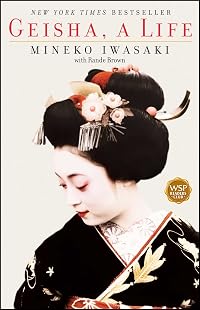
Geisha: A Life
by Mineko Iwasaki
On This Page
Description
Celebrated as the most successful geisha of her generation, Mineko Iwasaki was only five years old when she left her parents' home for the world of the geisha. For the next twenty-five years, she would live a life filled with extraordinary professional demands and rich rewards. Through great pride and determination, she would be hailed as one of the most prized geishas in Japan's history, and one of the last great practitioners of this now fading art form. In Geisha, a Life, Mineko Iwasaki show more tells her story, from her warm early childhood, to her intense yet privileged upbringing in the Iwasaki okiya (household), to her years as a renowned geisha, and finally, to her decision at the age of twenty-nine to retire and marry, a move that would mirror the demise of geisha culture. Mineko brings to life the beauty and wonder of Gion Kobu, a place that 'existed in a world apart, a special realm whose mission and identity depended on preserving the time-honored traditions of the past.' Geisha, a Life is the first of its kind, as it delicately unfolds the fabric of a geisha's development. Told with great wisdom and sensitivity, it is a true story of beauty and heroism, and of a time and culture rarely revealed to the Western world. show lessTags
Recommendations
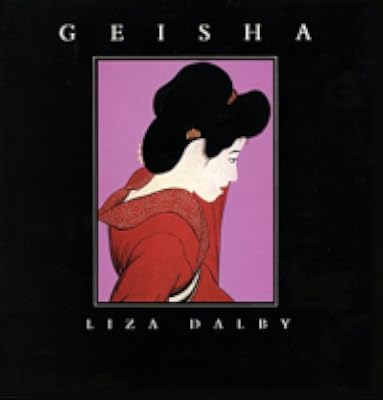
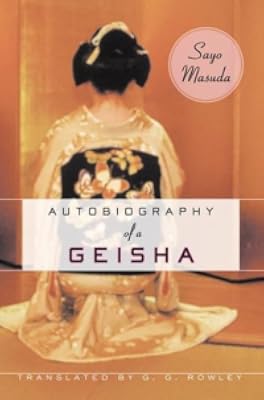
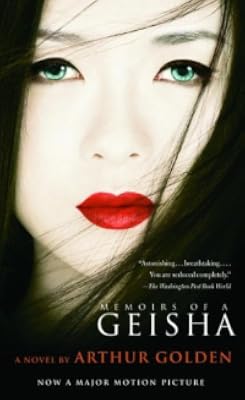
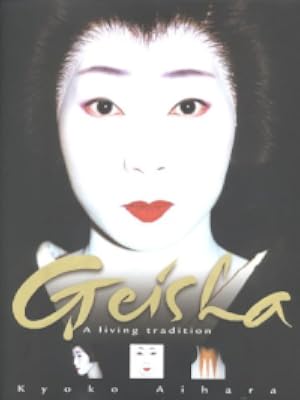



Member Recommendations
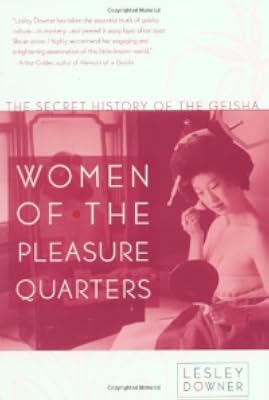
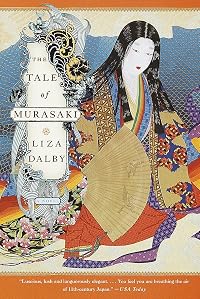
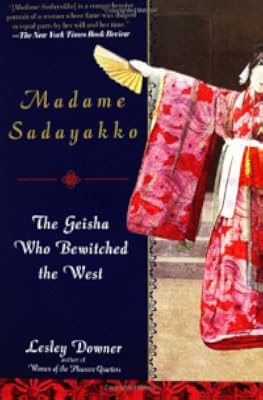
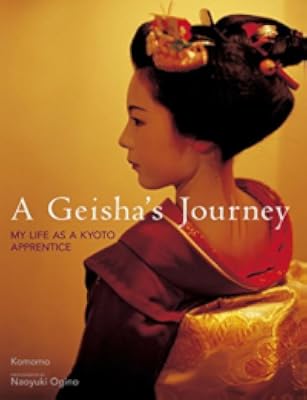
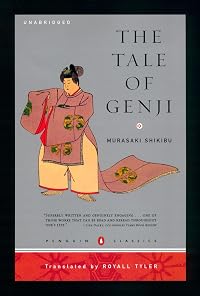
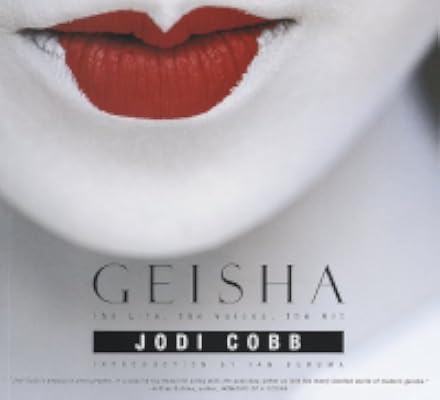
sbuehrle I would recommend reading these books back-to-back. Memoirs of a Geisha is the fictional account of Iwasaki's life, whereas Geisha: A Life is the autobiographical response.
33

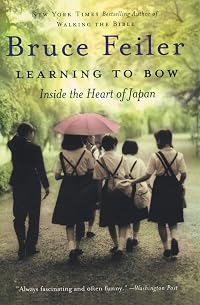
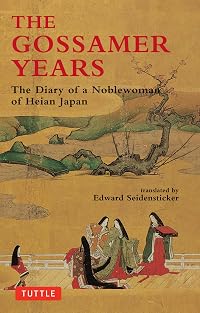
Leishai Eine weitere Geiko, die ihre Geschichte aufgeschrieben hat.
12
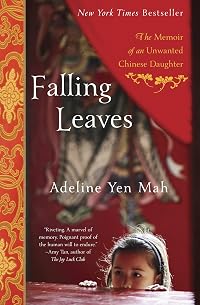
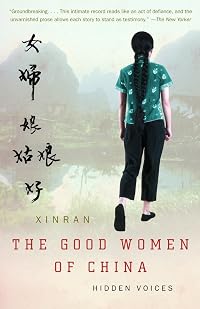
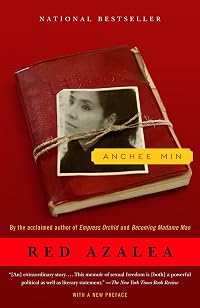
SparrowByTheRailStar The story of a Japanese comfort woman, sent to work in the colonies as a prostitute for Japanese men.
Member Reviews
I’m still not a big fan of biographies or memoirs, but when I found out that a rebuttal had been published by one of the geisha who had been interviewed for Arthur Golden’s novel Memoirs of a Geisha (one of my favs, even for its faults) I HAD to go and read it. Memoirs may take readers behind the (heavily fictionalised and romanticised) veil of the world of the geisha of Gion, but Mineko Iwasaki’s story gets to the heart of the matter. Adopted at a very young age to become the heir to the Iwasaki okiya, Mineko enters the rarified world of the geisha as a means of pursuing her passion for dancing and to help her family. Her story may not have the same narrative resonance as Golden’s novel, but her honest examination of the world show more she grew up in is captivating nonetheless. Iwasaki paints the world of Gion in vivid detail, describing the colourful personalities of the other geiko, dance instructors and mentors, and patrons while also balancing the inherent drama with a pared down exploration of the business and practical aspects of growing up in the okiya that rings true. Golden may have captured the magic of the world of the geisha (albeit through an Orientalist lens), but Iwasaki carefully sets the word straight with no less interesting a story. show less
First off, unlike most of the other reviewers, I've actually never read Memoirs of a Geisha. I picked this up because I've always been curious about geishas and I have a love of memoirs.
I found Mineko's writing immediately engaging -- I think her skill as a geisha really comes out in the way she writes. Her words are precise, but captivating and she really captures the emotional tone of a scene.
Mineko's life is fascinating and otherworldly. She presents snippets of her life, leaving the reader to fill in details: a scene from her infancy, a scene from her toddlerhood, vignettes along the way to her being whisked into the secluded world of geisha-hood.
The book toes the line between a description of specifically Mineko's life and show more exposition of the life of a geisha. Unfortunately, by compromising in to the middle ground, it does an adequate job to both sides, but is stellar on neither. I learned a lot of the terminology, economy and practical matters that go into being a geisha; however, while Mineko states several times that she has a passion about the lack of education that geishas get, this passion is not demonstrated at all in the book and the emotions that the geishas have are obscured. Similarly, Mineko's decision to retire as a geisha and become an art dealer happens over the course of a mere handful of pages and seems to have no basis in the rest of the book.
Mineko also is very clearly a spoiled girl and woman, who is very used to being catered to. While she occasionally shows insight to that, there are also huge portions of the novel where she seems to have no insight, which left me wondering whether the injustices that she complains of were true, or figments of her unrealistic expectations. show less
I found Mineko's writing immediately engaging -- I think her skill as a geisha really comes out in the way she writes. Her words are precise, but captivating and she really captures the emotional tone of a scene.
Mineko's life is fascinating and otherworldly. She presents snippets of her life, leaving the reader to fill in details: a scene from her infancy, a scene from her toddlerhood, vignettes along the way to her being whisked into the secluded world of geisha-hood.
The book toes the line between a description of specifically Mineko's life and show more exposition of the life of a geisha. Unfortunately, by compromising in to the middle ground, it does an adequate job to both sides, but is stellar on neither. I learned a lot of the terminology, economy and practical matters that go into being a geisha; however, while Mineko states several times that she has a passion about the lack of education that geishas get, this passion is not demonstrated at all in the book and the emotions that the geishas have are obscured. Similarly, Mineko's decision to retire as a geisha and become an art dealer happens over the course of a mere handful of pages and seems to have no basis in the rest of the book.
Mineko also is very clearly a spoiled girl and woman, who is very used to being catered to. While she occasionally shows insight to that, there are also huge portions of the novel where she seems to have no insight, which left me wondering whether the injustices that she complains of were true, or figments of her unrealistic expectations. show less
I was not expecting to enjoy this book as much as I did--figured it would be a bubblegum one-off capitalising on the popularity of "Memoirs Of A Geisha" (one of the few books I can't bring myself to continue reading). Instead I found the engaging autobiography of a famous geisha in postwar Kyoto. I use "engaging" here in the sense that it's hard to stop reading, and not to describe the author. In fact, one is left with the impression that she's a rather unpleasant person--a spoiled, catty, nasty bitch, to be exact. Conscious or not (my intuition points to the latter), this honesty is one of the book's greatest strengths, as it humanises Iwasaki, making her more than a fairytale princess in an exotic world, and I found myself identifying show more with her even as her behavior galled me. The world is still plenty exotic though; the powers that be have made the smart choice to leave much of the Japanese vocabulary intact, with appropriate descriptions in English included as necessary. This goes a long way toward grounding readers in "Geisha's" setting, and is to be commended. However, I can't unconditionally recommend this book for one reason: its co-author/translator/editor Rande Brown, whom I would not let within ten feet of anything I've written based on her performance in this book. For although her translation/edit/whatever is fluid, she consistently mistakes "it's" and "its" and "then" and "than." Not once or twice, in error. Consistently. Throughout the book. It's shocking for any writer to be ignorant of these simple grammatical distinctions, to say nothing of a professional translator. My final verdict is to read this book for its wonderful window into Japan, Kyoto, and genteel Gion culture, but to be prepared to grit your teeth as you do. show less
Geisha of Gion is a prettily drawn insight into the Karyukai of Kyoto and life within the Iwasaki Okiya, where Mineko, born Tanaka Masako, began training at the age of five. Her memory and descriptions of kimono and the details of her arts are exquisite. I particularly appreciated that she does not shy away from using the proper Japanese terms and then interpreting them for us, rather than simply using English substitutes as one often finds in books edited by Americans for Americans. If you are looking for a book filled with Japanese culture then it certainly meets that criteria and I certainly appreciated that element of the book. However that was not, in the end, the element which I found most intriguing.
One of the reasons show more autobiography is it’s own category rather than being lumped in with non-fiction is not only to classify it as written by the subject of the book but also because classifying autobiography as non-fiction is problematic. No matter how well researched, the content will always be from the point of view of that one, intrinsically biased, person (indeed there is no real research requirement unless the author wishes to impose one upon themselves, legal clearance that is doesn’t defame anyone is all that is really required.) Sometimes the author’s bias or desire to impress a particular belief upon the reader is so glaring that it adds an element of fascination in itself. While neither “Memoirs of a Geisha” nor its author are never mentioned by name, Geisha of Gion is nevertheless heavily influenced by Golden’s work. It is clear that Iwasaki wishes to correct some of the impressions left by Golden particularly in two respects: the suggestion that a geisha is a high class sex worker and that Iwasaki’s father simply sold her to the okiya against her will.
The first issue is simply stated and backed up by, amongst other cultural experts, my Japanese teacher :) Prostitutes exist, Iwasaki informs us, but they are oiran (courtesan), not geisha(entertainer or artist.) The mizuage (or coming of age ceremony) for the two types of women is different, for both it occurs when the geisha first menstruates and at both her best clients receive small pink cakes with a tiny red nipple on top, representing a breast. The difference lies in that for the geisha it is simply a celebration of her coming into womanhood and parties are held and gifts received, only for the oiran is the girl’s virginity sold to the highest bidder. Geisha do not give sexual favours for their fees. Geisha often have boyfriends (who sometimes become husbands) but sexual liasons are carefully managed and outside of the professional requirements of a geisha. How much of Iwasaki’s story is sanitized in this respect is of little consequence.
The second impression Iwasaki is at pains to make is that of her father’s character as a loving father, sadly misunderstood by her four older sisters who were also sold to the okiya and to this day are still angry and or bitter to varying degrees. I found it heartbreaking to read as this woman now in her thirties and a mother herself insisted that at the age of five she and she alone made the decision to go to the okiya to become a geisha like her sisters. Again and again she describes how her father resisted the okiya ‘mother’ when she requested their youngest daughter come into her service. She describes how when she first agreed to go to the okiya it was simply some kind of trial which she could have ended at any time - a special arrangement because the okiya mother was so desperate to have this child as her heir because she was so very beautiful. I have no doubt that Iwasaki believes everything she has written in this book but I simply don’t believe that her father had not entered into a similar contract as he did with his other four girls, nor do I believe her protestations that he was so concerned for her welfare. She describes how, at eight years of age, she went to court to be adopted by the the okiya mother (as she had to be to become the heir to the okiya) and took the Iwasaki name. The judge asked her to say which family she chose to belong to - after choosing the okiya, she promptly threw up. Clearly she was desperately torn by the decision and yet she wants desperately for us believe that her father was a loving man, or at least that her father loved her if not her sisters.
Of course if his situation was such that he needed to sell his daughters into service then that is sad but understandable and perhaps he was a loving man - unfortunately Iwasaki presents an enormous paradox regarding this. She explains fairly well the reason that he was forced to sell his first daughters (very much against their will to this day) and yet she is also keen to impress upon us how successful her parents were as artists, particularly her father - revered and also … making very good money, certainly at least by the time the third fourth and fifth daughters are sent. Nor does it explain why the couple went on to have so many more children - eleven in all (her mother is described as having a weak constitution) five of girls sent to the okiya. But Iwasaki does not present her father as an angel - she reveals man prone to sudden violence when angered but who treated her as special and mostly she was spared the violence. In fact she seems disturbingly proud when describing violence or raging committed by her father in defence of her after her brothers and sisters had teased her in some way or, in one shocking case, when a chicken has pecked at her and has its neck wrung in front of her when she is three years old. Clearly she cannot deny the violence and neglect her father displayed towards his children but she is determined to believe that she had a special place in his heart.
The overwhelming sense that she is special was no doubt encouraged by her father and by her being given the place of atotori - or heir to the okiya - at such a young age (she was wanted by the okiya because she was so breathtakingly beautiful even as a three year old doncha-know?) and narcissism permeates every line of this book. One is left with the impression of an extremely sad little girl who, desperate for attention, love and a place in the world, latched on to her place in the okiya and became, quite simply, a spoiled brat. This manifested in what was no doubt an extraordinary dedication to her arts but a failure to mature socially and emotionally. Iwasaki displays the same sudden explosive temper as her father and his mother before him had, sometimes in legitimate defence of herself but sometimes far too violent for the situation or sheer tantrums (such as the violent destruction of the fur coat of the wife of a man with whom she had an affair for many many years) and she describes each one with the same utter conviction that she was justified. When she describes the cattiness and cruelty of the other geisha, first within the okiya and later, seemingly, across the karyukai of the entire country, she puts every incidence down to pure jealousy and protests that she siply didn’t understand it. I’m sure jealousy was a large part of it and any woman knows how bitchy and cruel women can be to each other but the character displayed by the author is certainly one which would not endear itself to other girls and I have no doubt she did not help the situation.
Geisha of Gion is definitely worth the read, not only for the insight into this area of japanese culture but as a fascinating study of the effect this odd situation in which she suffers being abandoned by her birth parents but is sold into a life in which she is paid deference at an age when she has no abiility to understand it as anything other than that she is superior to all around her. There are many stories of being sold into service and being treated poorly (as were her sisters) but this is a different psychological story and a new one for me. It would be fascinating to read the accounts of other sisters - particularly Kuniko who lived in the okiya with Mineko. Kuniko did not have the potential (read beauty) as a geisha and so was essentially a maid but she had intelligence and so became an integral part of the behind the scenes in the okiya and, it seems, a much more grounded personality than her sister and would have quite the tale to tell. show less
One of the reasons show more autobiography is it’s own category rather than being lumped in with non-fiction is not only to classify it as written by the subject of the book but also because classifying autobiography as non-fiction is problematic. No matter how well researched, the content will always be from the point of view of that one, intrinsically biased, person (indeed there is no real research requirement unless the author wishes to impose one upon themselves, legal clearance that is doesn’t defame anyone is all that is really required.) Sometimes the author’s bias or desire to impress a particular belief upon the reader is so glaring that it adds an element of fascination in itself. While neither “Memoirs of a Geisha” nor its author are never mentioned by name, Geisha of Gion is nevertheless heavily influenced by Golden’s work. It is clear that Iwasaki wishes to correct some of the impressions left by Golden particularly in two respects: the suggestion that a geisha is a high class sex worker and that Iwasaki’s father simply sold her to the okiya against her will.
The first issue is simply stated and backed up by, amongst other cultural experts, my Japanese teacher :) Prostitutes exist, Iwasaki informs us, but they are oiran (courtesan), not geisha(entertainer or artist.) The mizuage (or coming of age ceremony) for the two types of women is different, for both it occurs when the geisha first menstruates and at both her best clients receive small pink cakes with a tiny red nipple on top, representing a breast. The difference lies in that for the geisha it is simply a celebration of her coming into womanhood and parties are held and gifts received, only for the oiran is the girl’s virginity sold to the highest bidder. Geisha do not give sexual favours for their fees. Geisha often have boyfriends (who sometimes become husbands) but sexual liasons are carefully managed and outside of the professional requirements of a geisha. How much of Iwasaki’s story is sanitized in this respect is of little consequence.
The second impression Iwasaki is at pains to make is that of her father’s character as a loving father, sadly misunderstood by her four older sisters who were also sold to the okiya and to this day are still angry and or bitter to varying degrees. I found it heartbreaking to read as this woman now in her thirties and a mother herself insisted that at the age of five she and she alone made the decision to go to the okiya to become a geisha like her sisters. Again and again she describes how her father resisted the okiya ‘mother’ when she requested their youngest daughter come into her service. She describes how when she first agreed to go to the okiya it was simply some kind of trial which she could have ended at any time - a special arrangement because the okiya mother was so desperate to have this child as her heir because she was so very beautiful. I have no doubt that Iwasaki believes everything she has written in this book but I simply don’t believe that her father had not entered into a similar contract as he did with his other four girls, nor do I believe her protestations that he was so concerned for her welfare. She describes how, at eight years of age, she went to court to be adopted by the the okiya mother (as she had to be to become the heir to the okiya) and took the Iwasaki name. The judge asked her to say which family she chose to belong to - after choosing the okiya, she promptly threw up. Clearly she was desperately torn by the decision and yet she wants desperately for us believe that her father was a loving man, or at least that her father loved her if not her sisters.
Of course if his situation was such that he needed to sell his daughters into service then that is sad but understandable and perhaps he was a loving man - unfortunately Iwasaki presents an enormous paradox regarding this. She explains fairly well the reason that he was forced to sell his first daughters (very much against their will to this day) and yet she is also keen to impress upon us how successful her parents were as artists, particularly her father - revered and also … making very good money, certainly at least by the time the third fourth and fifth daughters are sent. Nor does it explain why the couple went on to have so many more children - eleven in all (her mother is described as having a weak constitution) five of girls sent to the okiya. But Iwasaki does not present her father as an angel - she reveals man prone to sudden violence when angered but who treated her as special and mostly she was spared the violence. In fact she seems disturbingly proud when describing violence or raging committed by her father in defence of her after her brothers and sisters had teased her in some way or, in one shocking case, when a chicken has pecked at her and has its neck wrung in front of her when she is three years old. Clearly she cannot deny the violence and neglect her father displayed towards his children but she is determined to believe that she had a special place in his heart.
The overwhelming sense that she is special was no doubt encouraged by her father and by her being given the place of atotori - or heir to the okiya - at such a young age (she was wanted by the okiya because she was so breathtakingly beautiful even as a three year old doncha-know?) and narcissism permeates every line of this book. One is left with the impression of an extremely sad little girl who, desperate for attention, love and a place in the world, latched on to her place in the okiya and became, quite simply, a spoiled brat. This manifested in what was no doubt an extraordinary dedication to her arts but a failure to mature socially and emotionally. Iwasaki displays the same sudden explosive temper as her father and his mother before him had, sometimes in legitimate defence of herself but sometimes far too violent for the situation or sheer tantrums (such as the violent destruction of the fur coat of the wife of a man with whom she had an affair for many many years) and she describes each one with the same utter conviction that she was justified. When she describes the cattiness and cruelty of the other geisha, first within the okiya and later, seemingly, across the karyukai of the entire country, she puts every incidence down to pure jealousy and protests that she siply didn’t understand it. I’m sure jealousy was a large part of it and any woman knows how bitchy and cruel women can be to each other but the character displayed by the author is certainly one which would not endear itself to other girls and I have no doubt she did not help the situation.
Geisha of Gion is definitely worth the read, not only for the insight into this area of japanese culture but as a fascinating study of the effect this odd situation in which she suffers being abandoned by her birth parents but is sold into a life in which she is paid deference at an age when she has no abiility to understand it as anything other than that she is superior to all around her. There are many stories of being sold into service and being treated poorly (as were her sisters) but this is a different psychological story and a new one for me. It would be fascinating to read the accounts of other sisters - particularly Kuniko who lived in the okiya with Mineko. Kuniko did not have the potential (read beauty) as a geisha and so was essentially a maid but she had intelligence and so became an integral part of the behind the scenes in the okiya and, it seems, a much more grounded personality than her sister and would have quite the tale to tell. show less
Mineko's memoir undoes much of the damage Memoirs of a Geisha did. I loved Arthur Golden's book when it came out, but some of the stereotypes he sought to undo were reinforced in his work. Such as the mizuage, which Mineko explains means something different for a geiko than a courtesan. Western readers may be conflicted by the duality of the piece, but when you note the way Japanese culture abhors speaking badly of anyone, it isn't too hard to see why she backtracked on ratting out her friends and clients.
I recommend this book for those who like memoirs, and want to know more about the Willow World. I do not advise this book for those who want Memoirs of a Geisha, part 2. Life does not follow a literary arc.
I recommend this book for those who like memoirs, and want to know more about the Willow World. I do not advise this book for those who want Memoirs of a Geisha, part 2. Life does not follow a literary arc.
Mineko is refreshingly honest in this book, telling us about times that she had been embarrassed or doing anything wrong along with her joys and tribulations. She was very lucky to have parents such as her mom and dad who clearly cared very much for her, though I wonder if the attention she got was more because she was the youngest child in the family, as her parents were old when they had her, since several of her older sisters were sent to become geishas.
The photos in this book make for a nice touch, though I wish there could have been a couple more (there was a diagram of the geisha hairdo, but not one of the geisha outfit), this story is splendid and informative with some wonderful trivia of the geisha world. I am surprised that show more Arthur Golden - the author of Memoirs of a Geisha - changed some of the information on the geisha world in his book of fiction. Why would he get things purposefully wrong? I am glad that Ms. Iwasaki wrote this book. Not only is it educational, but it's a great look in the life of a highly successful #1 geisha.
Hopefully with more knowledge of the geisha world available, the changes that Ms. Iwasaki wants to see established in the system might be finally enacted. 5 out of 5 stars for an amazing autobiography! show less
The photos in this book make for a nice touch, though I wish there could have been a couple more (there was a diagram of the geisha hairdo, but not one of the geisha outfit), this story is splendid and informative with some wonderful trivia of the geisha world. I am surprised that show more Arthur Golden - the author of Memoirs of a Geisha - changed some of the information on the geisha world in his book of fiction. Why would he get things purposefully wrong? I am glad that Ms. Iwasaki wrote this book. Not only is it educational, but it's a great look in the life of a highly successful #1 geisha.
Hopefully with more knowledge of the geisha world available, the changes that Ms. Iwasaki wants to see established in the system might be finally enacted. 5 out of 5 stars for an amazing autobiography! show less
Interesting in more ways than the author intended. Pathology on a plate. I don't know if she is the world's worst liar, or she really believed what she wrote and didn't spot herself saying the exact opposite a few pages later.
1. Her mother was rich, but her parents sold their girl children to fund themselves.
2. Her mother was sickly and weak at the start, but went on to have 11 children.
3. Mineko worked night and day, never took time off, and wanted time for herself, but then she hated not working every minute and added extra events to her schedule each day.
4. She worked non-stop for years without time off, but then had several vacations she took every year.
5. She had no friends, and the other Geisha of her age hated her, and show more played nasty tricks on her but she would always say she did this and that with her friends (never identified). She was not allowed out of the quarter or to socialize with servants or untouchables - so who were these friends ?
6. She didn't care about her customers, she only cared about dancing, yet she had customers who were special lifelong friends, and said it was unprofessional not to take care of all the customers.
6. She earned money for her house with her engagements, but she never paid any attention to the amounts (only to the rank based on amount earned), She gave away the envelopes full of cash without looking in them, yet she frets that there was not enough money coming into the house.
7. Keeping the house running was important to those who lived and worked there, and to all the craftspeople who depended on it, but she had no qualms about the craftspeople, and history when she shuts hers down (passed on from her adopted mother - the house owner).
The whole book was like that.
Her family and personal stories also didn't ring true. She supposedly was from an aristocratic family. Her father's family had no money, but her mother was rich. It strikes me the same as those who always say they have kings and queens as their ancestors. No one ever claims porters or ditch diggers as their forbearers, though they are by far more numerous than aristocrats and royalty.
She claimed that she decided and conducted her life at 3 as though she were an adult. She made the decision to go to the Geisha house, not that her father sold her. Though her other sisters were sold, and very bitter their whole lives. She tells all these stories with exact details of who said what and what happened when she is very young (under 10).
Some of her Geisha lore contradicts other sources. I have seen 2 other documentaries and they talk about Maiko as being apprentice Geisha in training, not just 'Dancing' Geisha as Mineko contends. She says Gion is different than other pleasure quarters in the country, perhaps that explains it, but it should be clearer.
She presents so much information about sex and de-flowering virgins of various workers who aren't Geisha, often with the same word for something else that Geisha do, that it really isn't clear what is accurate and what isn't.
Certainly before prostitution was outlawed (1957-59), the teahouses were also often associated with brothels and the Geisha was used as a come on to bring customers into the houses. They were all in the same area and competed against each other for customers. Girls were sold to houses and had no choice in what they did or didn't do.
Many think that one time Geisha were like the high class courtesans that would be kept by one rich man after another. They would never be prolific with men, because that would drive their cachet and value down. How long ago that died out, is not clear.
Still it was a strangely compelling read, despite the above problems and Mineko's selfishness and self-absorption. show less
1. Her mother was rich, but her parents sold their girl children to fund themselves.
2. Her mother was sickly and weak at the start, but went on to have 11 children.
3. Mineko worked night and day, never took time off, and wanted time for herself, but then she hated not working every minute and added extra events to her schedule each day.
4. She worked non-stop for years without time off, but then had several vacations she took every year.
5. She had no friends, and the other Geisha of her age hated her, and show more played nasty tricks on her but she would always say she did this and that with her friends (never identified). She was not allowed out of the quarter or to socialize with servants or untouchables - so who were these friends ?
6. She didn't care about her customers, she only cared about dancing, yet she had customers who were special lifelong friends, and said it was unprofessional not to take care of all the customers.
6. She earned money for her house with her engagements, but she never paid any attention to the amounts (only to the rank based on amount earned), She gave away the envelopes full of cash without looking in them, yet she frets that there was not enough money coming into the house.
7. Keeping the house running was important to those who lived and worked there, and to all the craftspeople who depended on it, but she had no qualms about the craftspeople, and history when she shuts hers down (passed on from her adopted mother - the house owner).
The whole book was like that.
Her family and personal stories also didn't ring true. She supposedly was from an aristocratic family. Her father's family had no money, but her mother was rich. It strikes me the same as those who always say they have kings and queens as their ancestors. No one ever claims porters or ditch diggers as their forbearers, though they are by far more numerous than aristocrats and royalty.
She claimed that she decided and conducted her life at 3 as though she were an adult. She made the decision to go to the Geisha house, not that her father sold her. Though her other sisters were sold, and very bitter their whole lives. She tells all these stories with exact details of who said what and what happened when she is very young (under 10).
Some of her Geisha lore contradicts other sources. I have seen 2 other documentaries and they talk about Maiko as being apprentice Geisha in training, not just 'Dancing' Geisha as Mineko contends. She says Gion is different than other pleasure quarters in the country, perhaps that explains it, but it should be clearer.
She presents so much information about sex and de-flowering virgins of various workers who aren't Geisha, often with the same word for something else that Geisha do, that it really isn't clear what is accurate and what isn't.
Certainly before prostitution was outlawed (1957-59), the teahouses were also often associated with brothels and the Geisha was used as a come on to bring customers into the houses. They were all in the same area and competed against each other for customers. Girls were sold to houses and had no choice in what they did or didn't do.
Many think that one time Geisha were like the high class courtesans that would be kept by one rich man after another. They would never be prolific with men, because that would drive their cachet and value down. How long ago that died out, is not clear.
Still it was a strangely compelling read, despite the above problems and Mineko's selfishness and self-absorption. show less
Members
- Recently Added By
Lists

Top Five Books of 2013
1,562 works; 721 members

To Read - Non Fiction
46 works; 4 members

KayStJ's to-read list
1,616 works; 11 members
Author Information

5 Works 2,554 Members
Mineko Iwasaki, now fifty-two years old, is the mother of two daughters. She lives with her husband in a suburb of Kyoto, Japan.
All Editions
Some Editions
Awards and Honors
Distinctions
Common Knowledge
- Canonical title
- Geisha: A Life
- Original publication date
- 2002
- People/Characters
- Mineko Iwasaki
- Important places
- Gion Kobu, Kyoto, Japan
- First words
- I find great irony in my choice of profession.
- Last words
- (Click to show. Warning: May contain spoilers.)We got married on December 2, twenty-three days after we met.
Classifications
- Genres
- Biography & Memoir, Nonfiction, General Nonfiction
- DDC/MDS
- 920 — History & geography Biographies, Genealogy, Heraldry Biographies
- LCC
- GT3412.7 .I93 .A3 — Geography, Anthropology and Recreation Manners and customs (General) Manners and customs (General) Customs relative to public and social life
- BISAC
Statistics
- Members
- 2,526
- Popularity
- 7,627
- Reviews
- 51
- Rating
- (3.74)
- Languages
- 11 — Dutch, English, Estonian, French, German, Japanese, Polish, Portuguese, Slovenian, Spanish, Swedish
- Media
- Paper, Audiobook, Ebook
- ISBNs
- 40
- ASINs
- 9