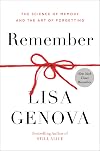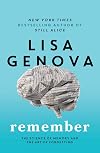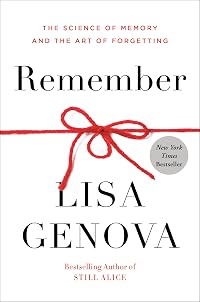
Remember: The Science of Memory and the Art of Forgetting
by Lisa Genova
On This Page
Description
NEW YORK TIMES BESTSELLER • A fascinating exploration of the intricacies of how we remember, why we forget, and what we can do to protect our memories, from the Harvard-trained neuroscientist and bestselling author of Still Alice.“Using her expertise as a neuroscientist and her gifts as a storyteller, Lisa Genova explains the nuances of human memory”—Steven Pinker, Johnstone Professor of Psychology, Harvard University, author of How the Mind Works
Have you ever felt a crushing wave show more of panic when you can't for the life of you remember the name of that actor in the movie you saw last week, or you walk into a room only to forget why you went there in the first place? If you're over forty, you're probably not laughing. You might even be worried that these lapses in memory could be an early sign of Alzheimer's or dementia. In reality, for the vast majority of us, these examples of forgetting are completely normal. Why? Because while memory is amazing, it is far from perfect. Our brains aren't designed to remember every name we hear, plan we make, or day we experience. Just because your memory sometimes fails doesn't mean it's broken or succumbing to disease. Forgetting is actually part of being human.
In Remember, neuroscientist and acclaimed novelist Lisa Genova delves into how memories are made and how we retrieve them. You'll learn whether forgotten memories are temporarily inaccessible or erased forever and why some memories are built to exist for only a few seconds (like a passcode) while others can last a lifetime (your wedding day). You'll come to appreciate the clear distinction between normal forgetting (where you parked your car) and forgetting due to Alzheimer's (that you own a car). And you'll see how memory is profoundly impacted by meaning, emotion, sleep, stress, and context. Once you understand the language of memory and how it functions, its incredible strengths and maddening weaknesses, its natural vulnerabilities and potential superpowers, you can both vastly improve your ability to remember and feel less rattled when you inevitably forget. You can set educated expectations for your memory, and in doing so, create a better relationship with it. You don't have to fear it anymore. And that can be life-changing. show less
Tags
Recommendations
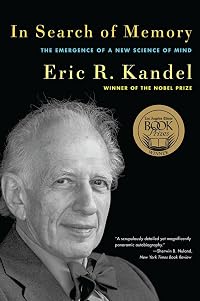

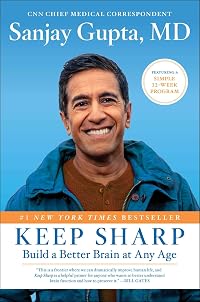
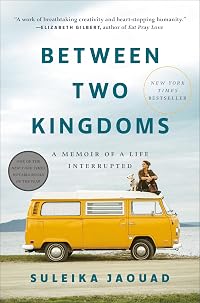
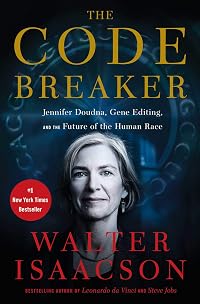





Member Recommendations

Member Reviews
Do not consider this just a book for seniors worried about losing their memory. It is not. Neuroscientist, Lisa Genova presents a very accessible overview of how our memory works. She addresses how memories are formed, why we forget, and how we can improve. I found it informative, validating and enlightening. Yes, she does address Alzheimer’s and offers lifestyle changes to ward off the monster, but that is exactly why this book should be in the hands of early middle agers as well as seniors. She writes with clarity, humor, and compassion offering shared experiences from her own life. I’d recommend this book for almost anyone curious about how the brain forms a memory, what to expect as the brain ages and also for those dealing with show more a loved one’s memory loss. show less
I have written and re-written this review about a dozen times and still don’t know what I want to write, other than I loved this book. It is so “user friendly” and the author’s style is almost haimish, it’s so accessible and cozy. But if you’re looking for the scientific terminology, it’s all there too. There’s an explanation for almost every type of memory or loss of memory, how we remember, how we alter our memories, even how we remember things that we never even experienced, merely by hearing someone else’s description of a memory. How it is possible that our most vivid memories can be completely wrong. Do I want to remember everything? No! keeping a diary or other exercises will work, I know, but why would I want show more to remember the banal or unimportant. There are things that you do want to remember forever – or at least fondly and for a very long time. But not every happy moment in your life can be remembered (alas). Dramatic episodic memories may last a lifetime – whether happy or sad. So, now I understand a little better, what makes my brain tick and how different parts of the brain are responsible for different types of memory - for short-term memories of just a few numbers or words, how and where longer memories are stored, in what way I remember how to walk and talk, ski, drive or ride a bike, memorize telephone numbers or methods for remembering long lists of things (anyone who has ever studied for a Bar Exam, probably learned to employ similar techniques for memorizing procedure, jurisdiction, elements of a section of law, etc.). I don’t think there is anyone who hasn’t (on numerous occasions) parked their car and then walked back a block to two to make sure they remembered to lock it, or later on remember where they parked it, or fell into a hypnotic trance while driving only to suddenly become disoriented and not remember passing familiar landmarks. This book answers many questions this layman has often pondered – and many more I never knew to ask. And, I read it like a layman – for pleasure and not for study – so fun!
Thank you NetGalley and Rodale Inc./Harmony for and ARC of this amazing book. I LOVED IT! show less
Thank you NetGalley and Rodale Inc./Harmony for and ARC of this amazing book. I LOVED IT! show less
Remember by Lisa Genova is a non-fiction book that explores how we do, and don’t, remember. Genova is a neuroscientist who’s also the author of five fiction books, all of which I’ve read. They feature characters with neurological conditions like Alzheimer’s (Still Alice) and Huntingdon’s (Inside the O’Briens).
The book begins by describing how memories are formed, and the amazing process by which creating memories creates structural and connective changes in the brain. Genova points out that popular understanding of how memory works can miss the mark. For example, memories aren’t stored in the hippocampus, and muscle memory isn’t stored in the muscles.
The book explains different types of memory, including semantic show more (described as the Wikipedia of the brain), episodic (for things that have happened to us), and prospective (things we have to remember to do in the future). You’ll learn why you go into a room and forget what on earth you’re there for, and Genova reassures readers that using a to-do list isn’t somehow cheating.
As much as you might like to think that your episodic memory is quite accurate, Genova bursts that bubble. When the original memory was encoded, it didn’t capture everything that was going on at the time, just what stood out to you. What I found really fascinating was that each time we recall a memory, it changes a bit, and this overwrites the original memory, so it’s like an old-school game of telephone where the original message gets more and more garbled as it gets passed along.
Genova also explains that, when faced with leading questions, people will fabricate memories, and eyewitness accounts are highly unreliable. That certainly doesn’t bode well for our legal system. Do you feel confident that certain memories are accurate? Turns out that confidence has no bearing on their level of accuracy.
There’s a chapter devoted to tip of the tongue experiences. These occur when we know a word but can’t immediately bring it to mind until it jumps out at you two hours later while you happen to be sitting on the toilet. Doing this (and doing it quite regularly) is not, in fact, a sign that you’re losing your mind. In my case, sometimes I feel like my mind is permanently lost, but that’s a whole other issue.
The book is full of surprising tidbits and explanations, like the Baker/baker paradox, whereby you’re more likely to remember someone is a baker than you are to remember their name is Baker. Putting people in boxes can be bad in terms of discrimination, but apparently, it helps us to remember.
You’ll learn the difference between normal age-related memory changes and the changes caused by dementia. There are also tips to improve your memory (chronic stress bad, sleep very, very good). Finally, there’s an appendix that pulls it all together, including the specific things you can do to improve your memory.
While the book is very informative, it’s presented in a conversational rather than academic tone. The examples used are realistic and help to make the concepts relatable. Genova seems very authentically present in the writing, and isn’t afraid to make fun of herself, such as when she’s describing her fussy coffee order that the baristas at Starbucks manage to remember.
This book made my inner geek very happy, but I think it will be much more widely appealing than simply my inner geek. Memory is obviously very important to all of us, and this is a great opportunity to learn more about it.
I received a reviewer copy from the publisher through Netgalley.
This review first appeared on https://mentalhealthathome.org/2021/03/24/book-review-remember/ show less
The book begins by describing how memories are formed, and the amazing process by which creating memories creates structural and connective changes in the brain. Genova points out that popular understanding of how memory works can miss the mark. For example, memories aren’t stored in the hippocampus, and muscle memory isn’t stored in the muscles.
The book explains different types of memory, including semantic show more (described as the Wikipedia of the brain), episodic (for things that have happened to us), and prospective (things we have to remember to do in the future). You’ll learn why you go into a room and forget what on earth you’re there for, and Genova reassures readers that using a to-do list isn’t somehow cheating.
As much as you might like to think that your episodic memory is quite accurate, Genova bursts that bubble. When the original memory was encoded, it didn’t capture everything that was going on at the time, just what stood out to you. What I found really fascinating was that each time we recall a memory, it changes a bit, and this overwrites the original memory, so it’s like an old-school game of telephone where the original message gets more and more garbled as it gets passed along.
Genova also explains that, when faced with leading questions, people will fabricate memories, and eyewitness accounts are highly unreliable. That certainly doesn’t bode well for our legal system. Do you feel confident that certain memories are accurate? Turns out that confidence has no bearing on their level of accuracy.
There’s a chapter devoted to tip of the tongue experiences. These occur when we know a word but can’t immediately bring it to mind until it jumps out at you two hours later while you happen to be sitting on the toilet. Doing this (and doing it quite regularly) is not, in fact, a sign that you’re losing your mind. In my case, sometimes I feel like my mind is permanently lost, but that’s a whole other issue.
The book is full of surprising tidbits and explanations, like the Baker/baker paradox, whereby you’re more likely to remember someone is a baker than you are to remember their name is Baker. Putting people in boxes can be bad in terms of discrimination, but apparently, it helps us to remember.
You’ll learn the difference between normal age-related memory changes and the changes caused by dementia. There are also tips to improve your memory (chronic stress bad, sleep very, very good). Finally, there’s an appendix that pulls it all together, including the specific things you can do to improve your memory.
While the book is very informative, it’s presented in a conversational rather than academic tone. The examples used are realistic and help to make the concepts relatable. Genova seems very authentically present in the writing, and isn’t afraid to make fun of herself, such as when she’s describing her fussy coffee order that the baristas at Starbucks manage to remember.
This book made my inner geek very happy, but I think it will be much more widely appealing than simply my inner geek. Memory is obviously very important to all of us, and this is a great opportunity to learn more about it.
I received a reviewer copy from the publisher through Netgalley.
This review first appeared on https://mentalhealthathome.org/2021/03/24/book-review-remember/ show less
Lisa Genova is one of my favorite authors, and I was delighted to be able to read an advance copy of her latest book, Remember. Although this book is nonfiction, it was a fast and easy read. It is written in layman's language, but it wasn't over-simplified. I found the research she presented very interesting, and as someone in her 60s, I found it very reassuring. I also appreciated her advice on what one can do to sharpen your mind/improve your memory. Very effortlessly, I learned a lot about how the brain processes memories. I highly recommend this book.
Written by a neuroscientist (who’s also written novels about characters with neurological conditions), this is a compulsively readable, broad overview of learning/memory and forgetting.
What has stayed with me most is the importance of attention in memory: 1) you don’t “forget” something you never paid proper attention to -- it was never a memory in the first place; 2) you’ll better remember things that really catch your attention via emotion, surprise or meaning; 3) additional attention via repeated exposure and retrieval (re-reading notes, quizzing) develops a more durable memory; 4) leaving negative memories alone lets them fade, while paying attention to positive memories can develop optimism.
And this:
Deep sleep is like a show more power cleanse for your brain. show less
What has stayed with me most is the importance of attention in memory: 1) you don’t “forget” something you never paid proper attention to -- it was never a memory in the first place; 2) you’ll better remember things that really catch your attention via emotion, surprise or meaning; 3) additional attention via repeated exposure and retrieval (re-reading notes, quizzing) develops a more durable memory; 4) leaving negative memories alone lets them fade, while paying attention to positive memories can develop optimism.
And this:
Deep sleep is like a show more power cleanse for your brain. show less
This is a blend of health science and self help that’s so well written it reads like a novel. Lisa Genova, a neuroscientist and the author of Still Alice, explains how memory works, where forgetting fits into the picture, and ways to maintain and even improve on memory function. It’s a great resource for anyone of any age but it’s especially relevant for those of us who are getting up there in years. She details the differences between the typical mental decline that come with aging and the symptoms of Alzheimer’s disease, including examples her friend Greg O’Brien has shared with her about how the disease has affected him. His own book On Pluto is a powerful first person account of living with Alzheimer’s and one I highly show more recommend. show less
The author of this book is a neuroscientist I know best for her novel Still Alice. This is the first time I’ve read a book by her of nonfiction, and it was fascinating! I felt great relief to learn that I constantly lose my cell phone, not because I am getting senile, but because I simply am not paying attention to where I put it. That might be key information for me to stop forgetting things while I move through my house daily.
The author has a very easy-to-read writing style in nonfiction so I highly recommend this book for anyone who has enjoyed Geneva’s novels in the past. Her expertise in science is a plus. She holds an undergraduate degree in biopsychology from Bates College and a PhD in neuroscience from Harvard University.
show more I learned why steady learning for exams with good rest each night is more effective at permanent memory rather than cramming for an exam. I was fascinated by the chapters near the end which explained the difference between forgetting as part of the normal again process and what is scientifically known about forgetting as part of sleep deprivation and as part of the onset of Alzheimer’s.
In addition, I learned why, during the pandemic when everyone had ample opportunity to read, our reading rate actually went down. The brain is a fascinating organ, and this book will help you understand the role of different parts of your brain in forming memories as well as losing them. This is an excellent book which I highly recommend. show less
The author has a very easy-to-read writing style in nonfiction so I highly recommend this book for anyone who has enjoyed Geneva’s novels in the past. Her expertise in science is a plus. She holds an undergraduate degree in biopsychology from Bates College and a PhD in neuroscience from Harvard University.
show more I learned why steady learning for exams with good rest each night is more effective at permanent memory rather than cramming for an exam. I was fascinated by the chapters near the end which explained the difference between forgetting as part of the normal again process and what is scientifically known about forgetting as part of sleep deprivation and as part of the onset of Alzheimer’s.
In addition, I learned why, during the pandemic when everyone had ample opportunity to read, our reading rate actually went down. The brain is a fascinating organ, and this book will help you understand the role of different parts of your brain in forming memories as well as losing them. This is an excellent book which I highly recommend. show less
Members
- Recently Added By
Lists

Psychology: Abuse, Grief, Self-Help
189 works; 1 member
Author Information

12+ Works 13,202 Members
Lisa Genova (born November 11, 1970) has a degree in Biopsychology, from Bates College, and a Ph.D. in Neuroscience from Harvard University. Genova is the author of the New York Times Bestselling novel STILL ALICE, which is now a major feature film with Julianne Moore. She is also the author of the novel LEFT NEGLECTED and LOVE ANTHONY. She also show more made the New York Times Best Seller List with her title's: Inside the O'Briens and Every Note Played. She will be at the Adelaide Writers' Week for the 2016 festival. (Bowker Author Biography) show less
Awards and Honors
Distinctions
Common Knowledge
- Original title
- Remember: The Science of Memory and the Art of Forgetting
- Original publication date
- 2021
- Epigraph
- People do not consist of memory alone. They have feelings, will, sensibility, moral being. It is here you may touch them and see profound change.
--Alexander Luria - Dedication
- For Alena, Ethan, Stella, and Peanut
- First words
- Picture a penny in your mind's eye.
- Quotations
- Memory retrieval is far easier, faster, and more likely to be summoned when the context of recall matches the context that was present when the memory was formed. We see this phenomenon with prospective (what you plan to do),... (show all) episodic (what happened), semantic (information you know), and muscle ( hoe to do things) memories.
It is through the erosion of memory that time heals all wounds.
Building an Alzheimer’s-resistant brain through cognitive stimulation means learning to play piano, meeting new friends, traveling to a new city, or reading this book. You’re welcome. - Last words
- (Click to show. Warning: May contain spoilers.)Take it seriously. Hold it lightly. Memory isn't everything.
- Blurbers
- Pinker, Steven; Gilbert, Daniel; Tanzi, Dr. Rudolph E.; Eagleman, David
Classifications
Statistics
- Members
- 578
- Popularity
- 50,951
- Reviews
- 23
- Rating
- (4.01)
- Languages
- 5 — English, German, Korean, Polish, Romanian
- Media
- Paper, Audiobook, Ebook
- ISBNs
- 18
- ASINs
- 6