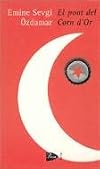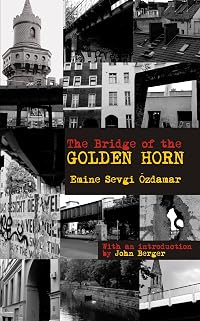
The Bridge of the Golden Horn
by Emine Sevgi Özdamar
On This Page
Description
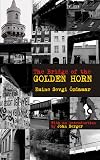
"There is something about the way she tells a story that would make her words sparkle under any circumstances, and in any tongue."--Financial Times "Ermine Sevgi Ozdamar writes with wisdom and humor...(The Bridge of the Golden Horn) is an appealing tale about a young immigrant who discovers herself through politics, sex and the arts."--Foreword Magazine In 1966, a sixteen-year-old girl leaves Istanbul and signs up as a migrant worker in Germany. The Bridge of the Golden Horn is a witty, show more picaresque account of a precocious teenager refusing to become wise and the story of a young woman who is obsessed with theater, poetry, and left-wing politics. Emine Sevgi #65533;zdamar was born in Turkey and now lives in Berlin, where she has directed in the theater and written plays. Her other books include the novel Life is a Caravanserei. show lessTags
Recommendations











Member Reviews
While this book was interesting, I’m not sure it was my cup of tea. I think “hectic” is a fantastic way to start off describing it. We breeze through quite a bit of the narrator’s life and it’s hard to be sure what it meant. Despite the quick pace of events, the book felt very, very slow. Since it was a memoir (or a semi-autobiographical novel, as I see elsewhere), I expected to feel some sort of attachment for the main character, but it was surprisingly difficult. I certainly thought her journey was interesting. How many stories take place within a Cold War-era Berlin factory? Or in Istanbul? Not very many, at least not many that I read.
Sevgi’s goal in life is to become an actress. She’s willing to do more or less show more anything to get there. Saving money for theatre school is the purpose of her time in Berlin, but she also does plenty of other things in order to fit the image of actress. This includes many attempts at giving up her virginity, which she calls her “diamond”. Several men tell her that she is too young for sex, but she persists in thinking that her diamond is holding her back. This is just one of the occurrences which made me struggle to relate to her. When she does give up that diamond, she sleeps with men indiscriminately, often practicing her acting skills by faking her pleasure.
Something I did enjoy here was the book’s focus on literature, although not necessarily the political outcome of Sevgi’s learning. Sevgi is determined to educate herself, beginning with a book received from the communist hostel warden and continuing throughout her life. Books are treasures. By the end of the novel, however, it seemed that all of Sevgi’s learning, in fact her whole journey, was centered on teaching her to become a communist. While communism at its core is an interesting ideology, I found it hard to sympathize with someone who ignored the fact that communist countries regularly turn into dictatorships and continued following an idealized belief which has little to no real world value.
I suspect that were I older, I would have found more to enjoy in this book. If I’d lived through the events referenced in the USA, I would perhaps have been better able to draw connections and enjoy the allusions sprinkled throughout. As it stands, though, I found this book difficult to get through and at times, very much over my head. I can’t recommend it.
http://chikune.com/blog/?p=1050 show less
Sevgi’s goal in life is to become an actress. She’s willing to do more or less show more anything to get there. Saving money for theatre school is the purpose of her time in Berlin, but she also does plenty of other things in order to fit the image of actress. This includes many attempts at giving up her virginity, which she calls her “diamond”. Several men tell her that she is too young for sex, but she persists in thinking that her diamond is holding her back. This is just one of the occurrences which made me struggle to relate to her. When she does give up that diamond, she sleeps with men indiscriminately, often practicing her acting skills by faking her pleasure.
Something I did enjoy here was the book’s focus on literature, although not necessarily the political outcome of Sevgi’s learning. Sevgi is determined to educate herself, beginning with a book received from the communist hostel warden and continuing throughout her life. Books are treasures. By the end of the novel, however, it seemed that all of Sevgi’s learning, in fact her whole journey, was centered on teaching her to become a communist. While communism at its core is an interesting ideology, I found it hard to sympathize with someone who ignored the fact that communist countries regularly turn into dictatorships and continued following an idealized belief which has little to no real world value.
I suspect that were I older, I would have found more to enjoy in this book. If I’d lived through the events referenced in the USA, I would perhaps have been better able to draw connections and enjoy the allusions sprinkled throughout. As it stands, though, I found this book difficult to get through and at times, very much over my head. I can’t recommend it.
http://chikune.com/blog/?p=1050 show less
There's no plot, so it's a slice-of-life novel, but it's too surface-level for this - there's nothing there for readers to connect with or respond to on an emotional level. I lost interest in this pretty quickly.
Een jonge vrouw verlaat Turkije om in de Duitse fabrieken te werken, waar ze zich via contacten met intellectuelen en kunstenaars ontwikkelt tot een zelfstandige vrouw en geëngageerd toneelspeelster.
Nov 21, 2008Dutch
Ratings
Members
- Recently Added By
Lists

Translingualism
191 works; 4 members
Author Information

12+ Works 434 Members
Some Editions
Awards and Honors
Awards
Work Relationships
Is contained in
Common Knowledge
- Canonical title*
- El Puente del Cuerno de Oro
- Original title
- Die Brücke vom Goldenen Horn
- Original publication date
- 1998
- Important places*
- Berlín, Alemania; Estambul, Turquía
- First words*
- En la Stresemannstrasse había en aquella época, era eel año 1966, una panadería; en ella una anciana vendía pan.
- Last words*
- (Click to show. Warning: May contain spoilers.)"Sí".
- Original language*
- Alemán
*Some information comes from Common Knowledge in other languages. Click "Edit" for more information.
Classifications
- Genres
- Fiction and Literature, General Fiction
- DDC/MDS
- 833.914 — Literature & rhetoric German & related literatures German fiction 1900- 1900-1990 1945-1990
- LCC
- PT2675 .Z33 .B78 — Language and Literature German, Dutch and Scandinavian literatures German literature Individual authors or works 1961-2000
- BISAC
Statistics
- Members
- 109
- Popularity
- 298,961
- Reviews
- 3
- Rating
- (3.58)
- Languages
- 8 — Catalan, Dutch, English, French, German, Russian, Spanish, Turkish
- Media
- Paper, Ebook
- ISBNs
- 12
- ASINs
- 1