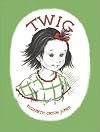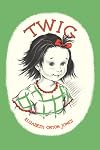
Twig
by Elizabeth Orton Jones
On This Page
Description
After she is made tiny by magic, Twig finds friendship and adventure with Elf, the Fairy Queen, and the Sparrow family.Tags
Recommendations








Member Reviews
Twig is a little girl who lives with her Mama and Papa in an apartment on the fourth floor of a "high sort of house" in the city. She doesn't have other children around to play with, and her world is the back yard, "bounded by houses on three of its sides and by a high fence on its other. Outside the fence was an alley. Inside, was a garbage can."
In the midst of this rather bleak little world, where no grass grows, Twig has discovered a dandelion plant with long leaves "that were bent over like the branches of a tiny tree." And when she finds a discarded tomato can with a rip in its side that resembles a doorway, she washes it out and places it next to the dandelion plant, delighted to see that it looks just like a little house – show more "just the right size for a fairy."
And eventually a fairy does come along – not just any fairy, but the Queen of Fairyland. But before she shows up, we're introduced to a lot of other wonderful characters, along with Twig. There's the Sparrow family – Sparrow and Mrs. Sparrow and their four children (who are just eggs at the beginning of the story). And there's Old Boy, the ice-wagon horse. And Old Girl, the cat who gives concerts every night.
And then there's Elf, a tiny little fellow dressed in a potato-skin suit, who shows up with a magic book and manages to shrink Twig down to his size – tiny enough to set up housekeeping in the upside-down tomato can. They use one of Twig's Mama's thimbles for a cook pot, and toothpaste tube caps for plates. And Twig sweeps the floor with an old feather from Mrs. Sparrow. And at one point Elf comes home with a cockroach called "Chummie," but Twig shoos it away very quickly.
When they're not tidying up their tomato-can abode, Twig and Elf visit Mrs. Sparrow in her nest, and sit on her eggs while she goes in search of food and her wandering spouse. The two tiny playmates climb up Old Boy's tail and take a ride inside his ears. And Elf brings Twig a pair of butterfly wings that she attaches to her back and uses to take a little flight around the backyard – before the wings fly off on their own again.
Twig is a very appealing and resourceful little girl. And, of course, when she gets the chance to go live in Fairyland with Elf and the Fairy Queen, she decides she really would rather stay with her Mama and Papa. But during her adventures with Elf and all the other characters, she's learned that she doesn't need a magic book to perform magic – she can make magical things happen anytime she wants, just by using her imagination.
Twig would be a perfect book for reading aloud to preschoolers – most likely over a period of a few days. Since it's aimed at the 4-8 age group, it would probably also work for kids who've learned to read on their own, although I'm not sure how well such an old-fashioned tale would hold their attention. It was first published in 1942, and definitely has a pre-war feel to it. But it's a very cute story (in spite of the brief appearance of the cockroach).
Elizabeth Orton Jones, in addition to winning the Caldecott medal for Prayer for a Child, also did the illustrations for the 1948 Little Golden Book edition of Little Red Riding Hood, which is one of the best-loved versions of that tale (and one of my childhood favorites). In Twig, the illustrations are a delight: small drawings throughout the book, as well as a number of full-page color pictures. show less
In the midst of this rather bleak little world, where no grass grows, Twig has discovered a dandelion plant with long leaves "that were bent over like the branches of a tiny tree." And when she finds a discarded tomato can with a rip in its side that resembles a doorway, she washes it out and places it next to the dandelion plant, delighted to see that it looks just like a little house – show more "just the right size for a fairy."
And eventually a fairy does come along – not just any fairy, but the Queen of Fairyland. But before she shows up, we're introduced to a lot of other wonderful characters, along with Twig. There's the Sparrow family – Sparrow and Mrs. Sparrow and their four children (who are just eggs at the beginning of the story). And there's Old Boy, the ice-wagon horse. And Old Girl, the cat who gives concerts every night.
And then there's Elf, a tiny little fellow dressed in a potato-skin suit, who shows up with a magic book and manages to shrink Twig down to his size – tiny enough to set up housekeeping in the upside-down tomato can. They use one of Twig's Mama's thimbles for a cook pot, and toothpaste tube caps for plates. And Twig sweeps the floor with an old feather from Mrs. Sparrow. And at one point Elf comes home with a cockroach called "Chummie," but Twig shoos it away very quickly.
When they're not tidying up their tomato-can abode, Twig and Elf visit Mrs. Sparrow in her nest, and sit on her eggs while she goes in search of food and her wandering spouse. The two tiny playmates climb up Old Boy's tail and take a ride inside his ears. And Elf brings Twig a pair of butterfly wings that she attaches to her back and uses to take a little flight around the backyard – before the wings fly off on their own again.
Twig is a very appealing and resourceful little girl. And, of course, when she gets the chance to go live in Fairyland with Elf and the Fairy Queen, she decides she really would rather stay with her Mama and Papa. But during her adventures with Elf and all the other characters, she's learned that she doesn't need a magic book to perform magic – she can make magical things happen anytime she wants, just by using her imagination.
Twig would be a perfect book for reading aloud to preschoolers – most likely over a period of a few days. Since it's aimed at the 4-8 age group, it would probably also work for kids who've learned to read on their own, although I'm not sure how well such an old-fashioned tale would hold their attention. It was first published in 1942, and definitely has a pre-war feel to it. But it's a very cute story (in spite of the brief appearance of the cockroach).
Elizabeth Orton Jones, in addition to winning the Caldecott medal for Prayer for a Child, also did the illustrations for the 1948 Little Golden Book edition of Little Red Riding Hood, which is one of the best-loved versions of that tale (and one of my childhood favorites). In Twig, the illustrations are a delight: small drawings throughout the book, as well as a number of full-page color pictures. show less
Hm. A little twee and old-fashioned, but that's not necessarily a bad thing. I know I would have loved this as a girl. So, I probably should rate it higher, but I just wasn't all that charmed at this time. It is cool that it takes place in an urban setting, helping us realize that our i-ma-gi-na-tion" [sic] can help us find magic anywhere, not just in bower-bedecked meadows. But it was just too babyish for me, despite being a full-length chapter book."
Twig is a perfectly charming book originally published in 1942 that was written and illustrated by the talented Elizabeth Orton Jones whose nickname is Twig. It is the story of a little girl named Twig who lives with her parents on the fourth floor of a tenement building. Her family is poor and she wears patched shoes and a worn-out dress. Her world consists of the backyard of her building, a bleak little place where nothing but a single dandelion grows. The only "scenery" is a tiny stream created by a leaky drain-pipe. Twig is lonely even though she has made friends with Sparrow and Mrs. Sparrow, two birds who nest in the alley adjacent to Twig's building as well as Old Boy, the ice-wagon horse and Old Girl, a stray cat. One day Twig show more finds a discarded tomato can and she thinks that when it is turned on end it looks just like a perfect house for a fairy.
The rest of the book tells the story that ensues when Mrs. Sparrow finds a small elf named Elf at the public library and flies him home to meet Twig. Elf, as it turns out, has in his possession a mysterious book of magic spells and he is able to shrink Twig down to his size. They take up residence in the tomato can and experience adventures that culminate in meeting the beautiful Queen of the Fairies and also a funny wise old character called Lord Buzzle Cobb-Webb, a leading magician among the fairies.
The book's publishers say that it is intended for 9-12 year old age group but I think it is actually more fitting for the 5-9 year old group. Older children could read it for themselves but the story line is too purposely "precious" for modern 10-12 year olds in my opinion. I think the book is best when read aloud to children and will delight young children. The author frequently uses onomatopoeia in the telling of this story which makes this an engaging book to experience aloud and a fun experience to share with little listeners.
The story has a couple of clever alternate story lines and a cute plot twist at the end that will tickle the older child and any adult readers but may go over the heads of the younger listeners. This will not effect their enjoyment of the book in any way. The story cleverly entertains with its fairy plot but also offers food for thought and a helpful message for children about the imagination and about the value of a person. The book is a short chapter novel and as such will need three or four readings aloud to complete. A grade school student who reads it on their own will polish it off in about the same time.
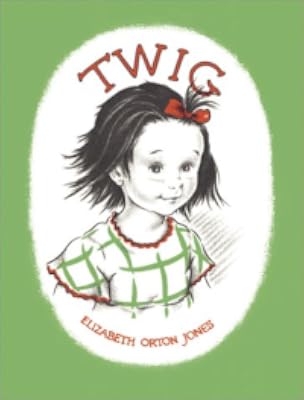
The book's illustrations are my favorite part. They are detailed, whimsical and imaginative, bringing the characters to life. Elizabeth Orton Jones won the Caldecott Medal for her illustrations of Rachel Field's Prayer for a Child in 1945 and is the illustrator of probably the best loved and well known version of Little Red Riding Hood, the one published by Western Publishing as a Little Golden Book. The illustrations are water color and ink and are printed here in four colors, red, green, yellow and black. Red and green combinations also provide a shade of brown to some of the illustrations. The result while not overly colorful is charming in its simplicity and has the effect of drawing the viewer's attention more to the detail of the artwork. The illustrations appear on at least every fourth page. Some are full page illustrations appearing alone on a page with no text and some are found within the text. The full pages of text that are found are not boring for children if read aloud because of the lively way in which the story is related and because of the swiftness of the turning of events.
I also like the fact that even though the subject of fairies is a very common one in children's literature the fairies from the pen of Elizabeth Orton Jones have lots of personality and some wonderful unique little details. When Mrs. Sparrow meets Elf for the first time she sees that he is wearing a little suit that seems to be made of leather. It turns out that his clothes are made from a potato skin. The Queen of the Fairies wears a "smart little fur collar." One day when the queen has left the collar behind and has gone off with Twig, Elf is astonished when it walks away! When he tries to explain to a scolding Twig, he learns from the understanding Fairy Queen that it is completely alright...after all the "collar" was a caterpillar.
All in all, I think this is a darling book for children and I think it has held up well to time's changes. show less
The rest of the book tells the story that ensues when Mrs. Sparrow finds a small elf named Elf at the public library and flies him home to meet Twig. Elf, as it turns out, has in his possession a mysterious book of magic spells and he is able to shrink Twig down to his size. They take up residence in the tomato can and experience adventures that culminate in meeting the beautiful Queen of the Fairies and also a funny wise old character called Lord Buzzle Cobb-Webb, a leading magician among the fairies.
The book's publishers say that it is intended for 9-12 year old age group but I think it is actually more fitting for the 5-9 year old group. Older children could read it for themselves but the story line is too purposely "precious" for modern 10-12 year olds in my opinion. I think the book is best when read aloud to children and will delight young children. The author frequently uses onomatopoeia in the telling of this story which makes this an engaging book to experience aloud and a fun experience to share with little listeners.
The story has a couple of clever alternate story lines and a cute plot twist at the end that will tickle the older child and any adult readers but may go over the heads of the younger listeners. This will not effect their enjoyment of the book in any way. The story cleverly entertains with its fairy plot but also offers food for thought and a helpful message for children about the imagination and about the value of a person. The book is a short chapter novel and as such will need three or four readings aloud to complete. A grade school student who reads it on their own will polish it off in about the same time.
The book's illustrations are my favorite part. They are detailed, whimsical and imaginative, bringing the characters to life. Elizabeth Orton Jones won the Caldecott Medal for her illustrations of Rachel Field's Prayer for a Child in 1945 and is the illustrator of probably the best loved and well known version of Little Red Riding Hood, the one published by Western Publishing as a Little Golden Book. The illustrations are water color and ink and are printed here in four colors, red, green, yellow and black. Red and green combinations also provide a shade of brown to some of the illustrations. The result while not overly colorful is charming in its simplicity and has the effect of drawing the viewer's attention more to the detail of the artwork. The illustrations appear on at least every fourth page. Some are full page illustrations appearing alone on a page with no text and some are found within the text. The full pages of text that are found are not boring for children if read aloud because of the lively way in which the story is related and because of the swiftness of the turning of events.
I also like the fact that even though the subject of fairies is a very common one in children's literature the fairies from the pen of Elizabeth Orton Jones have lots of personality and some wonderful unique little details. When Mrs. Sparrow meets Elf for the first time she sees that he is wearing a little suit that seems to be made of leather. It turns out that his clothes are made from a potato skin. The Queen of the Fairies wears a "smart little fur collar." One day when the queen has left the collar behind and has gone off with Twig, Elf is astonished when it walks away! When he tries to explain to a scolding Twig, he learns from the understanding Fairy Queen that it is completely alright...after all the "collar" was a caterpillar.
All in all, I think this is a darling book for children and I think it has held up well to time's changes. show less
This is a sweet story, originally published in 1942, about a little girl who uses her imagination to create a magical world in her tiny urban backyard. It would work well as a read-aloud with young children. The language is repetitive, but in imitation of a child excitedly speaking and grasping for words in their limited vocabulary. I could picture my own kids telling me this story about playing house with fairies and elves. Certain details date the tale, like the ice-wagon horse, but this does not detract from the charm of this simple story and its magical illustrations.
This was one of my daughter's favorite books. For along time she would want her hair done "like Twig's." In fact we still call her Twig since she wanted a fairy to come live us. And One Did! A very sweet book.
This was one of my daughter's favorite books. For along time she would want her hair done "like Twig's." In fact we still call her Twig since she wanted a fairy to come live us. And One Did! A very sweet book.
This was one of my daughter's favorite books. For along time she would want her hair done "like Twig's." In fact we still call her Twig since she wanted a fairy to come live us. And One Did! A very sweet book.
Members
- Recently Added By
Lists

Children's Chapter Books from 1940s, ...
77 works; 4 members
Author Information
15+ Works 2,050 Members
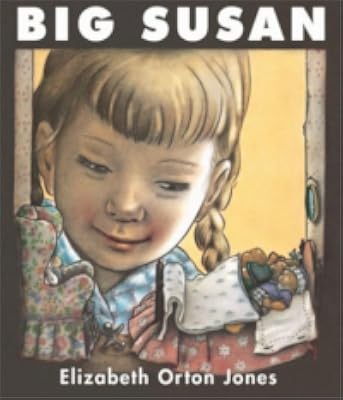
When Elizabeth Orton Jones was a child living in Highland Park, Illinois, her mother bought her a big second-hand dollhouse. Her grandmother made some of the rugs and furniture for it. Elizabeth grew up to be a famous artist and children's book author. She won the Caldecott Medal in 1945, at age 35, for her book Prayer for a Child. Two years show more later, she wrote Big Susan, featuring her dollhouse and dolls that inhabited it. The dolls, their furnishings and a replica dollhouse can be seen at the Highland Park Historical Society. For the last fifty years, Elizabeth's friends have called her by her nickname "Twig", after her book of the same name. She has written more than twenty books for children, and now lives in New Hampshire show less
Common Knowledge
- Original publication date
- 1942
Classifications
Statistics
- Members
- 431
- Popularity
- 71,866
- Reviews
- 10
- Rating
- (4.49)
- Languages
- English
- Media
- Paper
- ISBNs
- 2
- ASINs
- 7