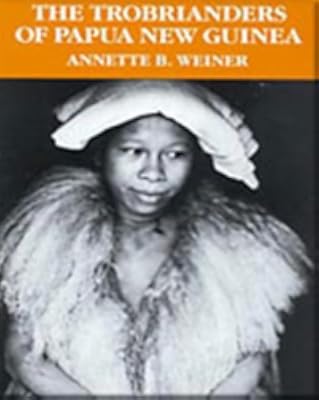
The Trobrianders of Papua New Guinea
by Annette B. Weiner
On This Page
Description
This re-examination of the Trobrianders of Papua New Guinea, the people described in Malinowski's classic ethnographic work of the early 20th century, provides a balanced view of the society from a male and female perspective, including coverage of new discoveries about the importance of woman's work and wealth in the society.Tags
Recommendations



































Member Reviews
The Trobriand Islands are a small archipelago just north east of the mainland coast of Papua New Guinea. This is where my wife and I hope to be from next August for a couple of years – PNG that is, not the Trobriands. But if we did have an opportunity to visit them, we’d jump at it and Weiner’s book has wetted our appetite even further.
Her ethnography is vibrant right from the start with descriptions of the unique culture and customs of the few thousand inhabitants. She does well also to ground this historically against the backdrop of the seminal anthropological studies of Malinowski done a number of decades before.
Because of this backdrop, her work can build on his studies and this gives them a rich perspective. However, she’s show more not rested on his laurels but has taken our understanding of Trobriand culture even deeper than he did. In fact, she sheds new light on some of his findings, even clarifying that they weren’t as accurate as he’d believed.
There are some great cultural insights that she provides us with, and, with all the best ethnographies, you get some very richly entertaining ones. Take this quote about taboo language:
"It is deeply shameful for anyone to refer to the couple’s sexual life together. For example, children and young people often tease each other by shouting, “F- your mother” or “F- your father.” But to say, “F- your wife” (or husband) to anyone is among the most dangerous verbal assaults.
And to illustrate just how bad doing this can be she cites an example of a guy who said this and then was forced initially into fleeing from the village for a week away in another village. After this, his house was literally carried away so that he could live elsewhere and escape the inevitable death that remaining in the community would have brought him.
Weiner very much has grasped what the culture of these people is both on an intimate family level, at community level and also on the regional scale with her excellent descriptions of the intricacies of the exchange partnerships that link island to island. But don’t take my word for how much of a good job she has done in getting under the skin of the people. Listen instead to the words of an elderly woman in the community who said, “make her stay in Kwaibwaga.”
“That was the best compliment I ever had,” says Weiner, and I think she was right. show less
Her ethnography is vibrant right from the start with descriptions of the unique culture and customs of the few thousand inhabitants. She does well also to ground this historically against the backdrop of the seminal anthropological studies of Malinowski done a number of decades before.
Because of this backdrop, her work can build on his studies and this gives them a rich perspective. However, she’s show more not rested on his laurels but has taken our understanding of Trobriand culture even deeper than he did. In fact, she sheds new light on some of his findings, even clarifying that they weren’t as accurate as he’d believed.
There are some great cultural insights that she provides us with, and, with all the best ethnographies, you get some very richly entertaining ones. Take this quote about taboo language:
"It is deeply shameful for anyone to refer to the couple’s sexual life together. For example, children and young people often tease each other by shouting, “F- your mother” or “F- your father.” But to say, “F- your wife” (or husband) to anyone is among the most dangerous verbal assaults.
And to illustrate just how bad doing this can be she cites an example of a guy who said this and then was forced initially into fleeing from the village for a week away in another village. After this, his house was literally carried away so that he could live elsewhere and escape the inevitable death that remaining in the community would have brought him.
Weiner very much has grasped what the culture of these people is both on an intimate family level, at community level and also on the regional scale with her excellent descriptions of the intricacies of the exchange partnerships that link island to island. But don’t take my word for how much of a good job she has done in getting under the skin of the people. Listen instead to the words of an elderly woman in the community who said, “make her stay in Kwaibwaga.”
“That was the best compliment I ever had,” says Weiner, and I think she was right. show less
Ratings
Members
- Recently Added By
Author Information
8+ Works 419 Members
Annette B. Weiner is Kriser Distinguished Professor of Anthropology and Dean of the Graduate School of Arts and Science at New York University. She currently serves as President of the American Anthropological Association
Series
Belongs to Publisher Series
Common Knowledge
- Canonical title
- The Trobrianders of Papua New Guinea
- Important places*
- Papoea-Nieuw-Guinea
*Some information comes from Common Knowledge in other languages. Click "Edit" for more information.
Classifications
- Genres
- Anthropology, Nonfiction, General Nonfiction
- DDC/MDS
- 306.09953 — Society, government, & culture Social sciences, sociology & anthropology Social Behavior - Dating, Marriage, Divorce Social history Pacific New Guinea
- LCC
- GN671 .N5 .W43 — Geography, Anthropology and Recreation Anthropology Anthropology Ethnology. Social and cultural anthropology Ethnic groups and races By region or country
- BISAC
Statistics
- Members
- 183
- Popularity
- 179,623
- Reviews
- 1
- Rating
- (3.71)
- Languages
- English
- Media
- Paper
- ISBNs
- 1