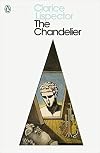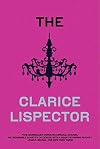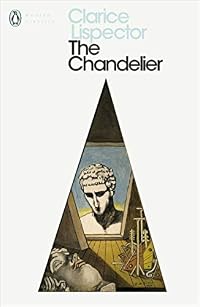
The Chandelier
by Clarice Lispector
On This Page
Description
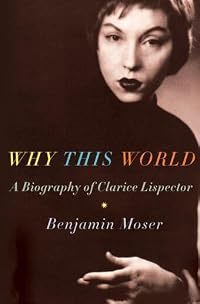
"Fresh from the enormous success of her debut novel Near to the Wild Heart, Hurricane Clarice let loose something stormier in 1946 with her second novel, The Chandelier. In a body of work renowned for its potent idiosyncratic genius, The Chandelier in many ways has pride of place. "It stands out," her biographer Benjamin Moser noted, "in a strange and difficult body of work, as perhaps her strangest and most difficult book." Of glacial intensity, consisting almost entirely of interior show more monologues--interrupted by odd and jarring fragments of dialogue and action--the novel moves in slow waves that crest in moments of revelation. As she seeks freedom via creation, the drama of Virginia's isolated life is almost entirely internal: from childhood, she sculpts clay figurines with "the best clay one could desire: white, supple, sticky, cold. She got a clear and tender material from which she could shape a world. How, how to explain the miracle..." While on one level simply the story of a woman's life, The Chandelier's real drama lies in Lispector's attempt "to find the nucleus made of a single instant ...the tenuous triumph and the defeat, perhaps nothing more than breathing." The Chandelier pushes Lispector's lifelong quest for that nucleus into deeper territories than any of her amazing works" -- show lessTags
Recommendations

































Member Reviews
This book works like a wave in the ocean, one that maintains the same size indefinitely in an endless plateau. Episodes are pieced together by a psychological narrative, told from the uttermost introspective point of view. This book borders on solipsism, where everything that exists is a character and their sensations and reactions to an unknown world that plays tricks on them.
This is typical Lispector, with an awkward protagonist and a fugue in a vertiginous crescendo as an ending, and what sets The Chandelier apart is the pacing: a continuous narrative with almost no clear distinctions between episodes and an unclear timeline. In particular, such a pacing feels like how days go on and on in depression.
It's also the same sickly show more introversion that leads to an overthinking of the self, a theme very dear to the author. This book is also transitional because it has the first appearances of most of Lispector's main themes. The questioning of the self (in the age-old dilemma: what does it mean to be oneself?), the nature of femininity and sensuality and the nature of the sensation itself. After all, the innermost sensations are what's behind every Lispector book, presented like a newborn morality in The Chandelier. show less
This is typical Lispector, with an awkward protagonist and a fugue in a vertiginous crescendo as an ending, and what sets The Chandelier apart is the pacing: a continuous narrative with almost no clear distinctions between episodes and an unclear timeline. In particular, such a pacing feels like how days go on and on in depression.
It's also the same sickly show more introversion that leads to an overthinking of the self, a theme very dear to the author. This book is also transitional because it has the first appearances of most of Lispector's main themes. The questioning of the self (in the age-old dilemma: what does it mean to be oneself?), the nature of femininity and sensuality and the nature of the sensation itself. After all, the innermost sensations are what's behind every Lispector book, presented like a newborn morality in The Chandelier. show less
The Chadelier
By Clarice Lispector
1946
New Directions Book
This was not an easy read. It takes a certain focus to get through....it takes the reader not just into the lives of the characters, but into their psyche and thinking processes, and their daily mental escape, exhausted from living. Do many amazing and profound paragraphs. I'm sure many will give up on this because of the focus it takes, but for those that do read and finish it, this book will knock you over and leave you breathless. The ending will blow your mind.
This is the first time the book has been translated to English and published in th USA.
By Clarice Lispector
1946
New Directions Book
This was not an easy read. It takes a certain focus to get through....it takes the reader not just into the lives of the characters, but into their psyche and thinking processes, and their daily mental escape, exhausted from living. Do many amazing and profound paragraphs. I'm sure many will give up on this because of the focus it takes, but for those that do read and finish it, this book will knock you over and leave you breathless. The ending will blow your mind.
This is the first time the book has been translated to English and published in th USA.
Al principio pensé que sería complejo de leer, pero me resultó muy ameno una vez que empecé a seguir de cerca el caudal de las percepciones por las que te lleva la protagonista de este libro. Leerlo fue como hacer rafting en un río caudaloso.
> Babelio : https://www.babelio.com/livres/Lispector-Le-Lustre/520900
> BAnQ (Guay H., Le devoir, 1 sept. 1990) : https://collections.banq.qc.ca/ark:/52327/2760169
> Éditions des femmes : https://www.desfemmes.fr/litterature/le-lustre/
> Bibliographie : https://id.erudit.org/iderudit/035774ar
> BAnQ (Guay H., Le devoir, 1 sept. 1990) : https://collections.banq.qc.ca/ark:/52327/2760169
> Éditions des femmes : https://www.desfemmes.fr/litterature/le-lustre/
> Bibliographie : https://id.erudit.org/iderudit/035774ar
Aug 2, 2021French
Ratings
Members
- Recently Added By
Lists

Kirkus Starred Fiction Reviews of Books Published in 2018
330 works; 3 members

Reading LIst
648 works; 1 member
Author Information

150+ Works 12,767 Members
Clarice Lispector was born in the Ukraine and was taken to Brazil as a young child. She was a law student, editor, translator, and newswriter, who traveled widely, spending eight years in the United States. "Family Ties" (1960) is a collection of short stories revealing Lispector's existentialist view of life and demonstrating that even family show more ties and social relationships are temporary. Although tied to each other and to the outside world, the characters are finally totally alone and separate. Lispector received praise from American critics for "The Apple in the Dark" (1967), a novel about a guilt-ridden man's search for the ultimate knowledge (Eve's apple), which he believes will bring him hope. Lispector's books are being translated into various languages in Europe, especially in France, where the critic Helene Cixous is one of her great admirers and a promoter of her works. (Bowker Author Biography) show less
Some Editions
Awards and Honors
Series
Belongs to Publisher Series
Common Knowledge
- Canonical title*
- O Lustre
- Original title
- O Lustre
- Original publication date
- 1946
- Original language
- Portuguese
*Some information comes from Common Knowledge in other languages. Click "Edit" for more information.
Classifications
- Genres
- Fiction and Literature, General Fiction
- DDC/MDS
- 869.3 — Literature & rhetoric Spanish Literature Literatures of Portuguese and Galician languages Portuguese fiction
- LCC
- PQ9697 .L585 .L813 — Language and Literature French, Italian, Spanish and Portuguese literatures Portuguese literature Provincial, local, colonial, etc. Brazil
- BISAC
Statistics
- Members
- 283
- Popularity
- 113,476
- Reviews
- 4
- Rating
- (4.09)
- Languages
- 6 — English, French, German, Italian, Portuguese (Portugal), Spanish
- Media
- Paper, Ebook
- ISBNs
- 21
- ASINs
- 5