
Benjamin Moser
Author of Sontag: Her Life and Work
About the Author
Image credit: Larry D. Moore
Works by Benjamin Moser
Antizionisme 1 copy
Associated Works
Tagged
Common Knowledge
- Canonical name
- Moser, Benjamin
- Birthdate
- 1976-09-14
- Gender
- male
- Education
- Brown University (BA|1998)
Utrecht University (MA|Ph.D) - Occupations
- writer
critic
columnist
biographer - Organizations
- Harper's Magazine
New York Times Book Review
The Nation - Awards and honors
- Pulitzer Prize for Biography (2020)
Prêmio Itamaraty de Diplomacia Cultural (2016)
Sócio Correspondente, Brazilian Academy of Letters (2021) - Relationships
- Moser, Laura (sister)
Japin, Arthur (partner) - Nationality
- USA
- Birthplace
- Houston, Texas, USA
- Places of residence
- Houston, Texas, USA
New York, New York, USA
London, England, UK
Utrecht, Netherlands - Associated Place (for map)
- USA
Members
Reviews
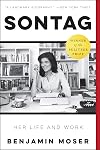
I am a fan of biographies that are well-written and this is one of the best. Moser weaves the details of Sontag's life in with the ideas that moved her to write in a way that reads like a beautiful novel. The result leaves the reader with the feeling that one knows her from the inside out and shares in her successes, her hesitations, and her ability to embrace the world of ideas as well as the visceral world of human relations.
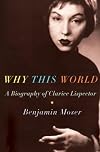
I feel like everything I've ever read has been priming me for Clarice Lispector; not that she's my new favorite writer, but I'm able to read her books entirely without suspicion. She writes about emotion, not melodrama, writes about experience as though it were the first time ever felt. Reminds me of music. Attempts to elucidate her mystique show how transparent she really is, vulnerable even, vulnerability being such a rare and precious thing in writers. "Still alive because it was only 9 show more in the morning," from a short story. And something, I can't find the quote, about sorrow without anger, like looking for the seafloor from a boat and not finding it, from "Near to the Wild Heart." Love it, can't get enough. show less
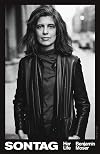
A fine, intense and detailed biography of US intellectual, essayist and novelist Susan Sontag.
Moser dug deep to show the complexity and contradictions of this woman. I can't remember who said that holding two contradictory concepts in the mind suggests adulthood. I am not sure that is the case, as with many, and Sontag, those contradictions are 'the child' and 'the adult'. Far more vulnerable than perceived from the outside, and this vulnerability leading, in later life especially, to show more bullying behaviour to those around her she was meant to love.
Unquestionably a fine if occasionally flawed mind. Time to revisit some of her essays. show less
Moser dug deep to show the complexity and contradictions of this woman. I can't remember who said that holding two contradictory concepts in the mind suggests adulthood. I am not sure that is the case, as with many, and Sontag, those contradictions are 'the child' and 'the adult'. Far more vulnerable than perceived from the outside, and this vulnerability leading, in later life especially, to show more bullying behaviour to those around her she was meant to love.
Unquestionably a fine if occasionally flawed mind. Time to revisit some of her essays. show less

Sontag: Her Life and Work from Benjamin Moser is both a disappointment and a book I would still recommend. Such is the nature of an authorized biography by a mediocre writer whose reputation was built off of a biography that was largely borrowed, all the way down to chapter titles and narrative structure.
As he did with Lispector, Moser tries to inject himself into the biography through questionable interpretations (of both the psychological nature toward Sontag and the literary nature toward show more her work). Moser prefers hyperbole and less than verifiable conjecture to writing facts, but at least he didn't claim a rape as fact with no definitive proof as he did in his biography of Lispector. If you read this for the wealth of facts and ideas (from others) he presents, which is quite a lot, and just discount his poor attempts at interpreting and trying to create a frame when one is not necessary, this book offers a lot for any fan of Sontag. I do look forward to a biography by a trustworthy biographer at some point, though since this was essentially commissioned by the family there won't be as much new information but perhaps some genuine insight from the writer, which is why we like good biographers.
Because Moser had to do the research here rather than crib a previous biography, he presents a lot of new information. I think the best parts are when we get a perspective from someone about a work or period in Sontag's life that had not been public knowledge previously. The sections based on what people willing (encouraged by the family?) to speak with Moser had to say are by far the most interesting ones.
Sontag was a notoriously difficult person, probably more so than most, but she also offered and gave of herself as well. To those closest to her? Not always. But to those of us who read her and had our own little ongoing debates with her published persona she gave quite a bit. She is one of those writers who you don't have to agree with entirely in order to get something from her work. She insists that you actively engage with her thoughts, that you defend your own if you're going to disagree with hers. That was not common then and is downright rare now. She likely influenced as many people who disagreed with her as those who agreed with her.
I recommend this book to anyone who wants to start filling in gaps in what you know about Sontag. If you aren't very familiar with her work or her life, I still recommend it but not as strongly because of the way Moser wrote it. Susan Sontag deserved much better than him, and I'm sure at some point she will get it. Until then, this is the most comprehensive we have.
Reviewed from a copy made available by the publisher via NetGalley. show less
As he did with Lispector, Moser tries to inject himself into the biography through questionable interpretations (of both the psychological nature toward Sontag and the literary nature toward show more her work). Moser prefers hyperbole and less than verifiable conjecture to writing facts, but at least he didn't claim a rape as fact with no definitive proof as he did in his biography of Lispector. If you read this for the wealth of facts and ideas (from others) he presents, which is quite a lot, and just discount his poor attempts at interpreting and trying to create a frame when one is not necessary, this book offers a lot for any fan of Sontag. I do look forward to a biography by a trustworthy biographer at some point, though since this was essentially commissioned by the family there won't be as much new information but perhaps some genuine insight from the writer, which is why we like good biographers.
Because Moser had to do the research here rather than crib a previous biography, he presents a lot of new information. I think the best parts are when we get a perspective from someone about a work or period in Sontag's life that had not been public knowledge previously. The sections based on what people willing (encouraged by the family?) to speak with Moser had to say are by far the most interesting ones.
Sontag was a notoriously difficult person, probably more so than most, but she also offered and gave of herself as well. To those closest to her? Not always. But to those of us who read her and had our own little ongoing debates with her published persona she gave quite a bit. She is one of those writers who you don't have to agree with entirely in order to get something from her work. She insists that you actively engage with her thoughts, that you defend your own if you're going to disagree with hers. That was not common then and is downright rare now. She likely influenced as many people who disagreed with her as those who agreed with her.
I recommend this book to anyone who wants to start filling in gaps in what you know about Sontag. If you aren't very familiar with her work or her life, I still recommend it but not as strongly because of the way Moser wrote it. Susan Sontag deserved much better than him, and I'm sure at some point she will get it. Until then, this is the most comprehensive we have.
Reviewed from a copy made available by the publisher via NetGalley. show less
Lists
Awards


You May Also Like


Associated Authors
Statistics
- Works
- 7
- Also by
- 7
- Members
- 1,005
- Popularity
- #25,666
- Rating
- 3.9
- Reviews
- 26
- ISBNs
- 52
- Languages
- 9
- Favorited
- 1