
Heather Clark (1) (1974–)
Author of Red Comet: The Short Life and Blazing Art of Sylvia Plath
For other authors named Heather Clark, see the disambiguation page.
About the Author
Heather Clark is Professor of Literature at Marlboro College in Vermont and Adjunct instructor of Irish Studies at New York University.
Works by Heather Clark
Tagged
Common Knowledge
- Birthdate
- 1974-05-30
- Gender
- female
- Organizations
- University of Huddersfield
- Nationality
- USA
- Associated Place (for map)
- USA
Members
Reviews
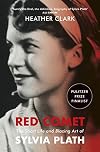
I feel like I’ve been dragging this biography around like a millstone for three weeks, and I’m not even talking about the hardback, which I was gifted for Christmas a few years ago! I’m all for ‘definitive’ accounts but research is supposed to support the text, not suffocate the subject. Sylvia Plath was thirty when she died but Heather Clark’s biography runs to 1000+ pages (and I’m not even counting the notes) – that’s nearly a page per week of Plath's life, and I felt show more every passing hour, believe me!
Even though I’m not a fan of poetry, I am still sort of drawn to Sylvia Plath, possibly because she is buried in nearby Heptonstall but also because of her incredible talent and relatable personality. I have read previous biographies and The Bell Jar, of course, although only recently, but a ‘six degrees’ personal connection to the author inspired me to pick up Clark’s recent tome – in hardback – and then put the heaviest book in the world back down and wait for the Kindle edition to drop in price instead! Even then, getting through Plath’s brief life took up most of March. Clark certainly packs in every last poem, journal, letter and interview, including new sources, but honestly, shorter biographies say exactly the same thing (apart from the book co-authored by Ted’s hateful sister, don’t read that one). Fewer statements from people who knew Sylvia from five minutes and then wrote a book about her, and a general cull of inserting [sic] into quotes (just say that Sylvia wasn’t a fan of capital letters and move on, woman) would have tightened the text no end. And for all that Clark dots her i’s and crosses her t’s, some of her claims are still suspect, from apparently attributing the First World War song ‘Pack Up Your Troubles’ to Sylvia (‘Her accompanying illustration of a wounded man with a bloody, bandaged head stands as a sobering counterpoint to her original ditty that instructed soldiers to “pack up” their troubles in their kit bag and “smile, smile, smile”’) to claiming that ‘President John F. Kennedy sent his wife, Jackie, for electroshock treatment after a particularly brutal fight about his infidelity’ (REALLY? Where’s the footnote for that one? I’ve read countless books about the Kennedys and never picked up on that spurious rumour!)
Sylvia shines through the verbiage, however. She really was an incredible woman, fighting the multiple ists and isms of 1950s America (hateful place and time) to write in her own way, including considerable poetry and prose, which surprised me. I agree with Heather Clark on that note – ‘She ought to be remembered for her transcendent, trailblazing poems, not for gassing herself in her kitchen.’ I love Sylvia’s passion and pride in her writing, her self-deprecating honesty, her bitchiness (calling Assia Wevill ‘Weavy Asshole’ made me snort), and her thwarted desire to have it all, just like the men in her life. I’m surprised that Clark didn’t speculate on Plath’s mental health, however, especially after this quote: ‘It is as if my life were magically run by two electric currents: joyous positive and despairing negative—whichever is running at the moment dominates my life’. Depression or bipolar/borderline personality disorder? Perhaps as we’ll never know, it’s wiser not to attach labels, but I couldn’t help thinking about how she would be diagnosed – and treated – today.
There should be an award for getting through this biography, but Clark hasn’t put me off – I’m going to visit Heptonstall again this year, and read Sylvia’s poems in the meantime. show less
Even though I’m not a fan of poetry, I am still sort of drawn to Sylvia Plath, possibly because she is buried in nearby Heptonstall but also because of her incredible talent and relatable personality. I have read previous biographies and The Bell Jar, of course, although only recently, but a ‘six degrees’ personal connection to the author inspired me to pick up Clark’s recent tome – in hardback – and then put the heaviest book in the world back down and wait for the Kindle edition to drop in price instead! Even then, getting through Plath’s brief life took up most of March. Clark certainly packs in every last poem, journal, letter and interview, including new sources, but honestly, shorter biographies say exactly the same thing (apart from the book co-authored by Ted’s hateful sister, don’t read that one). Fewer statements from people who knew Sylvia from five minutes and then wrote a book about her, and a general cull of inserting [sic] into quotes (just say that Sylvia wasn’t a fan of capital letters and move on, woman) would have tightened the text no end. And for all that Clark dots her i’s and crosses her t’s, some of her claims are still suspect, from apparently attributing the First World War song ‘Pack Up Your Troubles’ to Sylvia (‘Her accompanying illustration of a wounded man with a bloody, bandaged head stands as a sobering counterpoint to her original ditty that instructed soldiers to “pack up” their troubles in their kit bag and “smile, smile, smile”’) to claiming that ‘President John F. Kennedy sent his wife, Jackie, for electroshock treatment after a particularly brutal fight about his infidelity’ (REALLY? Where’s the footnote for that one? I’ve read countless books about the Kennedys and never picked up on that spurious rumour!)
Sylvia shines through the verbiage, however. She really was an incredible woman, fighting the multiple ists and isms of 1950s America (hateful place and time) to write in her own way, including considerable poetry and prose, which surprised me. I agree with Heather Clark on that note – ‘She ought to be remembered for her transcendent, trailblazing poems, not for gassing herself in her kitchen.’ I love Sylvia’s passion and pride in her writing, her self-deprecating honesty, her bitchiness (calling Assia Wevill ‘Weavy Asshole’ made me snort), and her thwarted desire to have it all, just like the men in her life. I’m surprised that Clark didn’t speculate on Plath’s mental health, however, especially after this quote: ‘It is as if my life were magically run by two electric currents: joyous positive and despairing negative—whichever is running at the moment dominates my life’. Depression or bipolar/borderline personality disorder? Perhaps as we’ll never know, it’s wiser not to attach labels, but I couldn’t help thinking about how she would be diagnosed – and treated – today.
There should be an award for getting through this biography, but Clark hasn’t put me off – I’m going to visit Heptonstall again this year, and read Sylvia’s poems in the meantime. show less
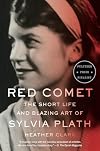
Truly stunning. Clark's pacing is incredible, I couldn't put it down (and it's a heavy book). Red Comet is such a comprehensive biography, as Clark had access to materials that previous biographers have not. Sylvia Plath has had a mythology around her since her death, and Clark dispels the reductive or romanticized narratives around her, painting a balanced portrait of an ambitious, prescient, and at times contradictory artist. She challenges the label "confessional," highlighting Plath's show more exploration of political and cultural themes through a focus on personal and domestic experiences. I was struck by Clark's ability to thread literary analysis of Plath's works (as well as larger literary movements, through her account of Plath's life) while avoiding the narrative that Plath could only write autobiographically. I highly recommend this book. It is illuminating and never dull. show less
Plath was quite a complex person, full of opposites. As a feminist icon, she much preferred the company of men seeing women as rivals. She fully committed to the idea that a true woman bore children, disparaging the childless women she knew, yet had she not had two children to care for perhaps she would have been better able to face life. One thinks of a poet as a person with deep, even spiritual recesses yet all her relationships seemed transactional. Her mother was her biggest supporter show more yet she gladly accepted the "permission" her psychiatrist gave her to hate her mother. Psychiatry in general seems to have failed both her and most women of her time. The misogyny in America was bad but seemed to be worse in England, yet she vowed not to return to America (and planned frequently to do so). She used holocaust imagery in her poetry and tried to claim a bit of Jewishness for herself yet used antisemitic slurs against her inlaws. Maybe all those contradictions gave her the fuel her comet used to blaze her through 30 years of accomplishments. show less
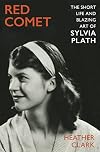
Sylvia Plath once said something to the effect of "It will take a whole row of books to understand me." (And she often had prophesying moments like that. Indeed, her husband, Ted Hughes considered her to be clairvoyant.)
I first read Plath when I was eighteen and the timing felt perfect because Syvia was at the same age at the beginning of her journal. I could close my eyes and see the world she was describing perfectly. I could even feel what the evening sky smelled like.
I ended up reading show more everything I could about her. And what really struck me was how unkind her biographers were. Clark's biography is the first that is comprehensive and fair. She writes in a way that respects her subject, recognizes her, feels empathy towards everyone involved and yet remains objective. I like when an author respects my intelligence and allows me to pick apart the puzzle pieces myself-and this is very necessary with a subject like Sylvia Plath.
I think what was so painful in considering her life story- and the way she ended it-is that there could have been a different story. In considering when something tragic happens in life the hardest part is acceptance. You can't consider the life of Sylvia Plath without taking in her death. And Clark has finally given me closure on this. Somehow I understand how it became so inevitable for her. And her final poems leave us with -not just the torrent of energy and the sheer dazzling nature of these poems-but she left clues of the things she couldn't say. Ariel was published two years after her death. But Hughes edited it. He claimed he chose the better poems but many of the ones he took out point directly at him. Even Daddy is more about him. Plath would be shocked by the literal interpretations of that poem.
Writing was Sylvia's lifeblood. And she lived during an extremely sexist era in recent history. She couldn't even get a mortgage without her husband. And yet just a few months after her death was the publication of The Feminine Mystique (which would be everything she could relate to). How much the world was just starting to change for women.
She lived thru WWII-but remained a pacifist and a humanitarian. She lived thru McCarthyism but held very liberal views -particularly for being in a conservative and white neighborhood. She was very antiracist for her time-she spoke out against racial strife in her teenage years-despite being surrounded by racism. She embraced the Jewish culture which she most likely had on her mother's side but she was raised as a Unitarian by two intellectuals. She would remain an atheist.
Her death remains to us a mysterious tragedy. Who could have known if she would have wanted to take it back.
But we have the poems, her legacy. show less
I first read Plath when I was eighteen and the timing felt perfect because Syvia was at the same age at the beginning of her journal. I could close my eyes and see the world she was describing perfectly. I could even feel what the evening sky smelled like.
I ended up reading show more everything I could about her. And what really struck me was how unkind her biographers were. Clark's biography is the first that is comprehensive and fair. She writes in a way that respects her subject, recognizes her, feels empathy towards everyone involved and yet remains objective. I like when an author respects my intelligence and allows me to pick apart the puzzle pieces myself-and this is very necessary with a subject like Sylvia Plath.
I think what was so painful in considering her life story- and the way she ended it-is that there could have been a different story. In considering when something tragic happens in life the hardest part is acceptance. You can't consider the life of Sylvia Plath without taking in her death. And Clark has finally given me closure on this. Somehow I understand how it became so inevitable for her. And her final poems leave us with -not just the torrent of energy and the sheer dazzling nature of these poems-but she left clues of the things she couldn't say. Ariel was published two years after her death. But Hughes edited it. He claimed he chose the better poems but many of the ones he took out point directly at him. Even Daddy is more about him. Plath would be shocked by the literal interpretations of that poem.
Writing was Sylvia's lifeblood. And she lived during an extremely sexist era in recent history. She couldn't even get a mortgage without her husband. And yet just a few months after her death was the publication of The Feminine Mystique (which would be everything she could relate to). How much the world was just starting to change for women.
She lived thru WWII-but remained a pacifist and a humanitarian. She lived thru McCarthyism but held very liberal views -particularly for being in a conservative and white neighborhood. She was very antiracist for her time-she spoke out against racial strife in her teenage years-despite being surrounded by racism. She embraced the Jewish culture which she most likely had on her mother's side but she was raised as a Unitarian by two intellectuals. She would remain an atheist.
Her death remains to us a mysterious tragedy. Who could have known if she would have wanted to take it back.
But we have the poems, her legacy. show less
Lists
Awards


You May Also Like


Statistics
- Works
- 5
- Members
- 596
- Popularity
- #42,150
- Rating
- 4.4
- Reviews
- 15
- ISBNs
- 34
- Languages
- 4