
Ruth Franklin
Author of Shirley Jackson: A Rather Haunted Life
About the Author
Ruth Franklin is a book critic and frequent contributor to The New Yorker, Harper's, and many other publications. A recipient of a New York Public Library Cullman Fellowship and a Guggenheim Fellowship, she lives in Brooklyn, New York.
Works by Ruth Franklin
Associated Works
Tagged
Common Knowledge
Members
Reviews
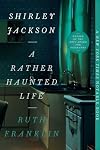
It’s been a long time (years) since I’ve read such an exceptional, polished biography. Ruth Franklin’s book is a finely edited, smooth-flowing, easy to follow story of the author of one of my all-time favorite novels, [b:We Have Always Lived in the Castle|89724|We Have Always Lived in the Castle|Shirley Jackson|https://i.gr-assets.com/images/S/compressed.photo.goodreads.com/books/1415357189l/89724._SX50_.jpg|847007]
At just over 500 pages, it provides a quality view of Shirley show more Jackson’s life, paying especial attention to her development as a writer. Franklin seldom repeats herself, and offers critique and meaning on the writer’s work, interlaced with the views of Jackson’s contemporaries. The novels and short stories are illuminated, and that, to me, is what makes this biography so good.
The chronology of chapters are laid out perfectly, without the switching back and forth in time that seems to be the practice of a lot of modern biographers. We get an easy-to-read chronicle of Jackson’s life that is both thorough and concise. Each chapter is titled with a reference to its main theme, also noting the years encompassed. She goes in depth discussing the metamorphosis of each novel, and in particular Jackson’s famous short-story, [b:The Lottery|6219656|The Lottery|Shirley Jackson|https://i.gr-assets.com/images/S/compressed.photo.goodreads.com/books/1348757577l/6219656._SY75_.jpg|15161007].
We also learn a great deal about the times in which Jackson lived--through McCarthy’s Red Scare, and into the Cold War. Literary criticism and the publishing industry of the era are given ample explanation as well.
Although Jackson’s husband, Stanley Hyman is discussed a bit much for my taste, he was so instrumental in Jackson’s life, for better or worse, it would be impossible to tell her story without going into that detail. If Jackson’s life was “haunted”, the goblins were Hyman and her mother, Geraldine. Those two certainly put a depressing, aggravating mojo on her. There was no pleasing her condescending mother. She belittled Jackson her entire life. Stanley had more faults than a human has a right to have, and he was also weird as hell. While Shirley was in college, Stanley carried around her pessary, and showed it to anyone who would look. ‘Nuff said.
The photos scattered throughout are a bonus, except I found a lot of them printed too small. I had to pull out a magnifying glass on a few of them to even read the captions.
If you’re a fan of Jackson’s work, you should definitely read this biography. I love her novels, and after reading this, I’m certain I would have liked Shirley herself. I was pleasantly surprised to learn that she was a big fan of baseball. For no other reason, this could have made us friends. show less
At just over 500 pages, it provides a quality view of Shirley show more Jackson’s life, paying especial attention to her development as a writer. Franklin seldom repeats herself, and offers critique and meaning on the writer’s work, interlaced with the views of Jackson’s contemporaries. The novels and short stories are illuminated, and that, to me, is what makes this biography so good.
The chronology of chapters are laid out perfectly, without the switching back and forth in time that seems to be the practice of a lot of modern biographers. We get an easy-to-read chronicle of Jackson’s life that is both thorough and concise. Each chapter is titled with a reference to its main theme, also noting the years encompassed. She goes in depth discussing the metamorphosis of each novel, and in particular Jackson’s famous short-story, [b:The Lottery|6219656|The Lottery|Shirley Jackson|https://i.gr-assets.com/images/S/compressed.photo.goodreads.com/books/1348757577l/6219656._SY75_.jpg|15161007].
We also learn a great deal about the times in which Jackson lived--through McCarthy’s Red Scare, and into the Cold War. Literary criticism and the publishing industry of the era are given ample explanation as well.
Although Jackson’s husband, Stanley Hyman is discussed a bit much for my taste, he was so instrumental in Jackson’s life, for better or worse, it would be impossible to tell her story without going into that detail. If Jackson’s life was “haunted”, the goblins were Hyman and her mother, Geraldine. Those two certainly put a depressing, aggravating mojo on her. There was no pleasing her condescending mother. She belittled Jackson her entire life. Stanley had more faults than a human has a right to have, and he was also weird as hell. While Shirley was in college, Stanley carried around her pessary, and showed it to anyone who would look. ‘Nuff said.
The photos scattered throughout are a bonus, except I found a lot of them printed too small. I had to pull out a magnifying glass on a few of them to even read the captions.
If you’re a fan of Jackson’s work, you should definitely read this biography. I love her novels, and after reading this, I’m certain I would have liked Shirley herself. I was pleasantly surprised to learn that she was a big fan of baseball. For no other reason, this could have made us friends. show less
Finally finished this, after a couple of library holds expired while I was in the middle. It was good but not gripping—she was an interesting character, and I'm always game for reading about that mid-century literary milieu, because I think of it as my parents' (at least in terms of cultural influences), even though they were 10 years younger than Jackson and her husband, Stanley Edgar Hyman. Jackson and Hyman also wrote for The New Leader, where I worked for a few years in its last days show more in the early 2000s. Hyman's intellectual mansplaininess was grating, and I'm not sure I ever got the chemistry between them, but I don't doubt it existed. I sympathized with Jackson's balancing act between the expectations of being a 1950s/'60s mother and housewife and a novelist, but I didn't quite feel it... then again Ruth Franklin's documenting Jackson's story from her correspondence and journals—to which Jackson added her own spin—and other people's accounts, so that takes away a bit of the immediacy. So: interesting but not a must-read, unless you're a Jackson fanatic (I'm not). show less
One of the best biographies ever, about a writer of massive talent who died without even being near the peak of her powers. The author is achingly familiar with Jackson's handicaps and hardships - horribly judgmental parents to which she was tied tightly, emotionally and financially; husband Stanley Hyman, the acclaimed academic, critic, and hound; constant financial struggles; agoraphobia. None of those prevented her from writing her chilling masterpieces - The Haunting of Hill House, We show more Have Always Lived in the Castle, and of course, the forever famous short story The Lottery. But Jackson was also a chronicler of family life with four children and a husband who could also be counted in their number - Demon in the House and Life Among the Savages. Her short stories, published in every major magazine of the 1950s - 1960s, including The New Yorker, were eagerly devoured by many fans who still couldn't quite get how she could write beautifully of both the macabre and the mundane. Access to Jackson's plentiful correspondence and the author's obvious sympathy and admiration give the reader an unforgettable opportunity to really KNOW a fascinating stranger.
Quotes: "I would not drop dead from the lack of you/my cat has more brains than the pack of you." show less
Quotes: "I would not drop dead from the lack of you/my cat has more brains than the pack of you." show less
This detailed biography of the author of “The Lottery”, “The Haunting of Hill House”, and other classics of horror and suspense reveals a woman who struggled throughout her life to gain the approval of those she loved, and to function within the strictures imposed on American women in the mid 20th century.
Franklin paints with a broad brush here, covering American society, the world of academia, the publishing business, and the first stirrings of the feminist movement, returning show more frequently to Jackson’s fiction as reflective of all those influences. Jackson’s heroines, almost always cut off from society or repressed by their own insecurities, struggle to break free to genuine lives, and presage in many ways the concepts introduced by Betty Friedan in “The Feminine Mystique”.
Jackson herself was torn between wanting to write and gaining the approval of a difficult and demanding husband, and providing the support and love to her children that she had always sought, but never received, from her own mother. Her life was almost emblematic of the struggles Friedan discussed in her writings.
An ungainly young woman, Jackson never approached the ideals of beauty her own mother held dear. As she matured, she paid less and less attention to her appearance – a failing her mother never learned to accept. Instead, she turned her energies and her imagination to the characters and situations she created, peeling back facades to reveal the evil and darkness lurking beneath the surface. Her characters are frequently mad, or clinging to sanity by the merest thread. Yet, surprisingly, two of her best selling books chronicled her family life. “Life Among the Savages” and “Raising Demons” were light-hearted looks at rearing children, predating Jean Kerr’s “Please Don’t Eat the Daisies” and Erma Bombeck’s many domestic comedies by several years.
Casual fans familiar only with Jackson’s best-known works will discover the breadth of her collected works; scholars may learn much about the enigmatic and troubled author. show less
Franklin paints with a broad brush here, covering American society, the world of academia, the publishing business, and the first stirrings of the feminist movement, returning show more frequently to Jackson’s fiction as reflective of all those influences. Jackson’s heroines, almost always cut off from society or repressed by their own insecurities, struggle to break free to genuine lives, and presage in many ways the concepts introduced by Betty Friedan in “The Feminine Mystique”.
Jackson herself was torn between wanting to write and gaining the approval of a difficult and demanding husband, and providing the support and love to her children that she had always sought, but never received, from her own mother. Her life was almost emblematic of the struggles Friedan discussed in her writings.
An ungainly young woman, Jackson never approached the ideals of beauty her own mother held dear. As she matured, she paid less and less attention to her appearance – a failing her mother never learned to accept. Instead, she turned her energies and her imagination to the characters and situations she created, peeling back facades to reveal the evil and darkness lurking beneath the surface. Her characters are frequently mad, or clinging to sanity by the merest thread. Yet, surprisingly, two of her best selling books chronicled her family life. “Life Among the Savages” and “Raising Demons” were light-hearted looks at rearing children, predating Jean Kerr’s “Please Don’t Eat the Daisies” and Erma Bombeck’s many domestic comedies by several years.
Casual fans familiar only with Jackson’s best-known works will discover the breadth of her collected works; scholars may learn much about the enigmatic and troubled author. show less
Lists
Awards


You May Also Like


Associated Authors
Statistics
- Works
- 4
- Also by
- 3
- Members
- 681
- Popularity
- #37,120
- Rating
- 4.0
- Reviews
- 26
- ISBNs
- 21
- Favorited
- 1