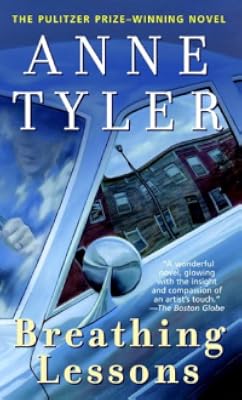
Breathing Lessons
by Anne Tyler
On This Page
Description
WINNER OF THE PULITZER PRIZE • NEW YORK TIMES BESTSELLER • Evoking Jane Austen, Emma Straub, and other masters of the literary marriage, Breathing Lessons celebrates the small miracles and magic of truly knowing someone. Unfolding over the course of a single emotionally fraught day, this stunning novel encompasses a lifetime of dreams, regrets and reckonings—and is oftern regarded as Tyler's seminal work. Maggie and Ira Moran are on a road trip from Baltimore, Maryland to show more Deer Lick, Pennsylvania to attend the funeral of a friend. Along the way, they reflect on the state of their marriage, its trials and its triumphs—through their quarrels, their routines, and their ability to tolerate each other’s faults with patience and affection. Where Maggie is quirky, lovable and mischievous, Ira is practical, methodical and mired in reason. What begins as a day trip becomes a revelatory and unexpected journey, as Ira and Maggie rediscover the strength of their bond and the joy of having somebody with whom to share the ride, bumps and all. “More powerful and moving than anything [Tyler] has done.” — Los Angeles Times show lessTags
Recommendations





Member Reviews
Maggie and Ira, a middle-aged couple, plan to attend the funeral of an old school friend in a small Pennsylvania town not far from their home in Baltimore. It’s a trip they should easily be able to do in one day, but for various reasons becomes more drawn out and more emotionally fraught. Maggie is unable to accept their son’s divorce and the resulting estrangement from their granddaughter, and insists she can reunite the family if only they will stop to visit the granddaughter and her mother as part of the journey.
During each stage of the trip, Maggie’s inner thoughts reveal details of her life with Ira and their family dynamics. The memorial service (a really funny set piece) provides the stage for reliving their high school show more years, while the time spent in the car becomes time spent retelling their family's history. Maggie is a well-intentioned meddler, completely oblivious to the ways in which she contributes to family dysfunction. Ira has been worn down by her behavior and no longer resists even when he knows Maggie’s schemes won’t work out. Their adult children are, not surprisingly, struggling to find their footing independent of their parents. The road trip reveals all, but there are no quick fixes here. Maggie and Ira will continue to be Maggie and Ira, doing their best but unconsciously playing their respective roles in a family drama that is sure to continue. show less
During each stage of the trip, Maggie’s inner thoughts reveal details of her life with Ira and their family dynamics. The memorial service (a really funny set piece) provides the stage for reliving their high school show more years, while the time spent in the car becomes time spent retelling their family's history. Maggie is a well-intentioned meddler, completely oblivious to the ways in which she contributes to family dysfunction. Ira has been worn down by her behavior and no longer resists even when he knows Maggie’s schemes won’t work out. Their adult children are, not surprisingly, struggling to find their footing independent of their parents. The road trip reveals all, but there are no quick fixes here. Maggie and Ira will continue to be Maggie and Ira, doing their best but unconsciously playing their respective roles in a family drama that is sure to continue. show less
A veritable celebration of traditional gender roles and cliched femininity. The nagging wife, the shrewish mother, the "free spirited" friend, the tomboy, the waif; they're all there. This book was a total embarrassment.
To be clear: I did not hate this book because Maggie is "annoying." She is annoying, but she is so precisely drawn you cannot help but give kudos to the author. It takes quite a bit of skill to find such nuance in a character.
I hated this book because no one grew. No one changed. No one looked inward, saw something lacking, and strove to do better (or worse). It was entropy defined. To the end Maggie cannot help but meddle in others' affairs. Fiona is still sullen and easily bruised. There was absolutely no emotional show more growth anywhere. Only Ira seemed to take anything away from the machinations of the day. You'd think after all the times her meddling blew up in her (and everyone else's) face, Maggie'd learn something. Nope. She just keeps blundering on, clueless to the end. show less
To be clear: I did not hate this book because Maggie is "annoying." She is annoying, but she is so precisely drawn you cannot help but give kudos to the author. It takes quite a bit of skill to find such nuance in a character.
I hated this book because no one grew. No one changed. No one looked inward, saw something lacking, and strove to do better (or worse). It was entropy defined. To the end Maggie cannot help but meddle in others' affairs. Fiona is still sullen and easily bruised. There was absolutely no emotional show more growth anywhere. Only Ira seemed to take anything away from the machinations of the day. You'd think after all the times her meddling blew up in her (and everyone else's) face, Maggie'd learn something. Nope. She just keeps blundering on, clueless to the end. show less
This was an uneven read for me. I had a hard time engaging with it from the get-go but eventually settled into the story and the writing (and the very dry humor throughout). What was frustrating was the experience of feeling simultaneously sorry for and infuriated by the two main characters, Maggie and Ira Moran. They are a middle-aged couple driving to a funeral, with a few detours along the way. It’s a portrait of a marriage and of a woman - Maggie - who struggles to reconcile her idealistic views with the realities of her life. She tries to engineer and manipulate situations into what she thinks they should be but always with the best of intentions. In this way, with this tension of a good person acting in frustrating ways, Tyler show more creates a very real character, one you want to take by the shoulders and shake and then give a big hug. It’s a worthy and ultimately satisfying read, though not a flashy one. show less
This starts off almost exactly like The Accidental Tourist, with a middle-aged married couple having a row in a car. Which is probably Tyler having a little joke at the expense of the critics who complain that all her books are exactly alike, because it turns out to be a kind of mirror image of the earlier book. Maggie and Ira are resilient and tolerant enough to deal with each other's unreasonable behaviour when confronted with the problem of the empty nest. And of course Maggie is unreasonable in quite a different way from Macon in The Accidental Tourist — she's basically that stock figure of comedy, the person who habitually gets into worse and worse complications trying to cover up what was originally no more than a minor gaffe or show more a trivial accident. (Even her marriage to Ira turns out to have been the result of an awkward misunderstanding.) But Tyler draws her with such sympathy that we can't write her off as a stock figure: like the rest of Tyler's well-meaning eccentrics, we can't help feeling that she's got a strong resemblance to someone we know rather well... show less
Maggie Moran, a late-40s mother of two, is often the bain of her family and friends—and even herself—in Anne Tyler's Pulitzer Prize-winning novel [Breathing Lessons]. Maggie is also the bain of many would-be readers of the book; witness the number of LTers who ditched or panned the book because they can't stand Maggie. I won't say I liked her, but I followed her path of misconception, misguidance, mischief, and mayhem all the way to the end, and I am glad I did. A very fine accomplishment, Ms. Tyler. Ordinary people doing their ordinary things are worth a few hours of your time. If you invest some time, you may discover that neither the people nor the things are all that ordinary.
Here's the setup: Maggie is married to Ira, a man who show more had dreams of doing medical research but now runs a small picture-framing shop. Maggie wanted nothing more than to assist in a nursing home, and that's what she does. Daughter Daisy is intense, capable, but curiously estranged from family; she practically lives with a friend whose mother Maggie calls Mrs. Perfect. Son Jesse is a talent-free loser, a high-school dropout half-heartedly pursuing fame and fortune as a rock performer. He got a girl named Fiona pregnant, married her, and, less than a year after the birth of their daughter, was divorced by her.
Nothing special about the Morans (though Tyler does seem to be signaling us by giving them that name). The shop Ira runs was started by his father Sam who lives in the apartment above it with his two damaged and dependent daughters (Ira's sisters). Upon Ira's high school graduation, Sam announced that he had a heart ailment; Ira would have to take over the shop to support his father and sisters. Partly as a consequence, the author tells us, Ira was "fifty years old and had never accomplished one single act of consequence.''
For her part, Maggie's been belittled by her own mother as well as her daughter. ''How have you let things get so common?'' her mother had once demanded, oblivous to the fact that, though her father was a lawyer, her husband was a garage-door installer. Then not long ago, Daisy asked, "Mom? Was there a certain conscious point in your life when you decided to settle for being ordinary?''
The story recounts a single day in Maggie and Ira's life, devoted to a round trip from Baltimore to a small town in southeastern Pennsylvania, just off Route 1. Maggie's best friend from high school is holding a memorial service for her husband, now dead from cancer. As she starts her car, the radio comes on, tuned to an AM call-in show, and she hears a familiar voice, a caller, telling the host that she first had "married for love" but would now—next weekend—be marrying "for security." Maggie "hears" Fiona admitting she still loves Jesse but that she's marrying someone else in a week. Not much time for Maggie to act!
All her life, what Maggie has wanted to do is help people, to ease friction, smooth the bumps, bring people together, help them to be just as good as she "sees" them being. ''It's Maggie's weakness," Ira explains. "She believes it's all right to alter people's lives. She thinks the people she loves are better than they really are, and so then she starts changing things around to suit her point of view of them.'' show less
Here's the setup: Maggie is married to Ira, a man who show more had dreams of doing medical research but now runs a small picture-framing shop. Maggie wanted nothing more than to assist in a nursing home, and that's what she does. Daughter Daisy is intense, capable, but curiously estranged from family; she practically lives with a friend whose mother Maggie calls Mrs. Perfect. Son Jesse is a talent-free loser, a high-school dropout half-heartedly pursuing fame and fortune as a rock performer. He got a girl named Fiona pregnant, married her, and, less than a year after the birth of their daughter, was divorced by her.
Nothing special about the Morans (though Tyler does seem to be signaling us by giving them that name). The shop Ira runs was started by his father Sam who lives in the apartment above it with his two damaged and dependent daughters (Ira's sisters). Upon Ira's high school graduation, Sam announced that he had a heart ailment; Ira would have to take over the shop to support his father and sisters. Partly as a consequence, the author tells us, Ira was "fifty years old and had never accomplished one single act of consequence.''
For her part, Maggie's been belittled by her own mother as well as her daughter. ''How have you let things get so common?'' her mother had once demanded, oblivous to the fact that, though her father was a lawyer, her husband was a garage-door installer. Then not long ago, Daisy asked, "Mom? Was there a certain conscious point in your life when you decided to settle for being ordinary?''
The story recounts a single day in Maggie and Ira's life, devoted to a round trip from Baltimore to a small town in southeastern Pennsylvania, just off Route 1. Maggie's best friend from high school is holding a memorial service for her husband, now dead from cancer. As she starts her car, the radio comes on, tuned to an AM call-in show, and she hears a familiar voice, a caller, telling the host that she first had "married for love" but would now—next weekend—be marrying "for security." Maggie "hears" Fiona admitting she still loves Jesse but that she's marrying someone else in a week. Not much time for Maggie to act!
All her life, what Maggie has wanted to do is help people, to ease friction, smooth the bumps, bring people together, help them to be just as good as she "sees" them being. ''It's Maggie's weakness," Ira explains. "She believes it's all right to alter people's lives. She thinks the people she loves are better than they really are, and so then she starts changing things around to suit her point of view of them.'' show less
Right up front, I feel the need to say I love Anne Tyler. I will read anything she publishes. But, having said that... I find my love for her novels really goes back and forth. I haven't ever strongly disliked anything she's written, but I certainly find some of her books amazing, while others settle around being just fine. And that's okay with me. Tyler does the nuance and undercurrents of marriage and family really well, and there are always moments of humour I appreciate in each of her stories.
In an interview, Tyler once said “I start every book thinking ‘This one will be different’ and it’s not. I have my limitations. I am fascinated by how families work, endurance, how do we get through life." I find these things show more fascinating too. When I pick up a book by Anne Tyler, I guess it's a bit like picking up a John Irving novel - you may not know the exact story going into the read, but you certainly know what to expect.
So, Breathing Lessons was a good read, but not a great read for me. I liked the concept of 'one day in the life', with flashbacks, as Maggie and Ira Moran navigate their emotional day.
The characters were very well done (save for Jesse and Daisy, to me) and I felt a bit sad for them all. Ira deferred his own dreams of medical school because of a difficult family that put him in charge of their lives, and his dad's picture framing business, when he was only 18yo. Maggie seems to have had a lot of potential in high school, but never really got or felt, I suppose, supported or encouraged - like nothing was ever good enough. Maggie, by the time we meet her, is a bit of a flustering confusion of a woman.
For both Maggie and Ira, life has been a series of disappointments and stifled goals. There are a couple of themes at work here. One is the idea of wastefulness - wasted talent, wasted energies, etc... The other concept revolves around 'ordinary life', which is somehow not okay and should be avoided. (For example: why be a nurse's aide, when you could become a nurse? A nurse's aide is not much better than a waitress, which is not much good at all.)
I think that where I am just a bit stuck is on the idea of 'to what end?' Because we are only spending one day with the Morans, I really didn't expect this to be answered as it really is only one slice of their lives. But I guess I would have enjoyed a bit more exploration - particularly of Maggie's character. Maggie was so hard on herself, critical. And she assumed things about others and how they thought of her, whether accurate or not. And she really exaggerated a lot. It's a bit like putting a puzzle together... but I am not sure all of the pieces are here. Anyway... it's interesting to contemplate this novel and the characters, imagining what becomes of them all.
This book is one being read in one of my groups as a monthly read for February, 2016. I am hoping that the discussions will be active, and I am looking forward to hearing the different perspectives and ideas others take from the read.
edited to add:
just an aside, which i forgot to note earlier. so, this book is set in the mid-80s. ira and maggie are about 50yo. in the early stages of the book, i thought this was set at an earlier time, maybe the 50s, and that ira and maggie were much older. it was a bit peculiar. everything felt slightly out of step with the actual time of the story. (the clothing, the language, the mannerisms...) show less
In an interview, Tyler once said “I start every book thinking ‘This one will be different’ and it’s not. I have my limitations. I am fascinated by how families work, endurance, how do we get through life." I find these things show more fascinating too. When I pick up a book by Anne Tyler, I guess it's a bit like picking up a John Irving novel - you may not know the exact story going into the read, but you certainly know what to expect.
So, Breathing Lessons was a good read, but not a great read for me. I liked the concept of 'one day in the life', with flashbacks, as Maggie and Ira Moran navigate their emotional day.
The characters were very well done (save for Jesse and Daisy, to me) and I felt a bit sad for them all. Ira deferred his own dreams of medical school because of a difficult family that put him in charge of their lives, and his dad's picture framing business, when he was only 18yo. Maggie seems to have had a lot of potential in high school, but never really got or felt, I suppose, supported or encouraged - like nothing was ever good enough. Maggie, by the time we meet her, is a bit of a flustering confusion of a woman.
For both Maggie and Ira, life has been a series of disappointments and stifled goals. There are a couple of themes at work here. One is the idea of wastefulness - wasted talent, wasted energies, etc... The other concept revolves around 'ordinary life', which is somehow not okay and should be avoided. (For example: why be a nurse's aide, when you could become a nurse? A nurse's aide is not much better than a waitress, which is not much good at all.)
I think that where I am just a bit stuck is on the idea of 'to what end?' Because we are only spending one day with the Morans, I really didn't expect this to be answered as it really is only one slice of their lives. But I guess I would have enjoyed a bit more exploration - particularly of Maggie's character. Maggie was so hard on herself, critical. And she assumed things about others and how they thought of her, whether accurate or not. And she really exaggerated a lot. It's a bit like putting a puzzle together... but I am not sure all of the pieces are here. Anyway... it's interesting to contemplate this novel and the characters, imagining what becomes of them all.
This book is one being read in one of my groups as a monthly read for February, 2016. I am hoping that the discussions will be active, and I am looking forward to hearing the different perspectives and ideas others take from the read.
edited to add:
just an aside, which i forgot to note earlier. so, this book is set in the mid-80s. ira and maggie are about 50yo. in the early stages of the book, i thought this was set at an earlier time, maybe the 50s, and that ira and maggie were much older. it was a bit peculiar. everything felt slightly out of step with the actual time of the story. (the clothing, the language, the mannerisms...) show less
From the book jacket: Everyone knows a couple like the Morans. Maggie, with her scatterbrained ways and her just slightly irritating – but good-hearted – attempts to make everything right for everyone.... And Ira, infinitely patient, who is addicted to solitaire and who whistles out popular tunes, the only barometer of his moods. They’ve learned all there is to know about each other ... two ordinary lives in a comfortably routine marriage. But on the road to a friend’s funeral, they make some unexpected detours – and discover how extraordinary their ordinary lives really are. ..
My reactions
I’ve had this on my TBR for ages, and just never got to it. I wish I hadn’t waited so long, but then again, maybe my own years of show more marriage help me better understand Maggie and Ira’s relationship – with each other, with their children, parents, co-workers, neighbors and friends.
I love the way Tyler reveals her characters to the reader. Their actions – small and large – and statements show the reader who these people are. Their hopes, dreams, frustrations, and regrets become evident over the course of the novel. I am irritated by Maggie, and yet I love her. Who doesn’t want things to work out, to see his child happy, or her spouse succeed? Who doesn’t appreciate those small tokens of affection, or get irritated by another person’s unconscious habit? I want to shake Ira, and yet I love his patient forebearance, and that he still tries to please Maggie.
Some years ago a young teen who had just read Shakespeare’s Romeo and Juliet asked me, “Do you think you can fall in love at fourteen?” My answer: “Falling in love is easy. Loving someone is more challenging … especially when he can’t find the dishwasher though it’s right there under the counter where he leaves the dirty dishes.” Ira and Maggie have learned to look past “the dishes” and love one another anyway. And I love them.
Their lives may be ordinary; the novel is anything but. show less
My reactions
I’ve had this on my TBR for ages, and just never got to it. I wish I hadn’t waited so long, but then again, maybe my own years of show more marriage help me better understand Maggie and Ira’s relationship – with each other, with their children, parents, co-workers, neighbors and friends.
I love the way Tyler reveals her characters to the reader. Their actions – small and large – and statements show the reader who these people are. Their hopes, dreams, frustrations, and regrets become evident over the course of the novel. I am irritated by Maggie, and yet I love her. Who doesn’t want things to work out, to see his child happy, or her spouse succeed? Who doesn’t appreciate those small tokens of affection, or get irritated by another person’s unconscious habit? I want to shake Ira, and yet I love his patient forebearance, and that he still tries to please Maggie.
Some years ago a young teen who had just read Shakespeare’s Romeo and Juliet asked me, “Do you think you can fall in love at fourteen?” My answer: “Falling in love is easy. Loving someone is more challenging … especially when he can’t find the dishwasher though it’s right there under the counter where he leaves the dirty dishes.” Ira and Maggie have learned to look past “the dishes” and love one another anyway. And I love them.
Their lives may be ordinary; the novel is anything but. show less
Members
- Recently Added By
Lists

The Guardian's 1000 Novels Everyone Must Read
1,005 works; 547 members

Pulitzer Prize Winners for Fiction
102 works; 54 members

Best Contemporary Literary Fiction (Around the Last 30 Years)
388 works; 123 members

Pulitzer Prize-Winning Books
42 works; 10 members
National Book Award Finalists - Fiction
377 works; 12 members
TML 200 Best Books 1950-1999
202 works; 10 members

Contemporary Fiction
109 works; 7 members

The Guardian's 100 Best Novels Written in English
105 works; 13 members

Novels set over the course of a single day (or less)
72 works; 8 members

A Good Read (Radio 4)
221 works; 1 member

Books Read in 2016
4,666 works; 197 members

Books Set in Maryland
14 works; 4 members

Allie's Wishlist
217 works; 2 members

Books I Own But Haven't Read
144 works; 2 members

Flashbacks
11 works; 1 member

The Modern Library (The Two Hundred Best Novels....
202 works; 1 member

Library List - Pulitzer
18 works; 1 member
Author Information

64+ Works 56,067 Members
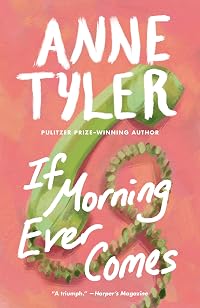
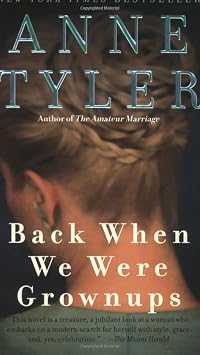
Anne Tyler was born in Minneapolis, Minnesota on October 25, 1941. She graduated from Duke University at the age of 19 and completed graduate work in Russian studies at Columbia University. Before becoming a full-time author, she worked as a librarian and bibliographer. Her first novel, If Morning Ever Comes, was published in 1964. Her other works show more include Saint Maybe, Back When We Were Grownups, Digging to America, Noah's Compass, The Beginner's Goodbye, A Spool of Blue Thread, and Vinegar Girl. She has won several awards including the PEN Faulkner Award in 1983 for Dinner at the Homesick Restaurant, the 1985 National Book Critics Circle Award for The Accidental Tourist, and the 1988 Pulitzer Prize for Breathing Lessons. The Accidental Tourist was adapted into a 1988 movie starring William Hurt and Geena Davis. In 2018 her title, Clock Dance, made the bestsellers list. (Bowker Author Biography) Anne Tyler was born in Minneapolis, Minnesota, and grew up in Raleigh, North Carolina. "Back When We Were Grownups" is her 15th novel; her 11th, "Breathing Lessons", won the Pulitzer Prize in 1988. She is a member of the American Academy of Arts & Letters. She lives in Baltimore, Maryland. (Publisher Provided) show less
Some Editions
Awards and Honors
Awards
Distinctions
Series
Belongs to Publisher Series
Otavan kirjasto (83)
Fischer Taschenbuch (10924)
Work Relationships
Is contained in
Anne Tyler Omnibus: Breathing Lessons, Dinner at the Homesick Restaurant, The Accidental Tourist by Anne Tyler
Anne Tyler Omnibus: The Accidental Tourist, Back When We Were Grownups, Breathing Lessons, A Ptchwork Planet by Anne Tyler
Has the adaptation
Has as a student's study guide
Common Knowledge
- Canonical title
- Breathing Lessons
- Original title
- Breathing Lessons
- Original publication date
- 1988
- People/Characters
- Maggie Moran; Ira Moran; Jesse Moran
- Important places
- Baltimore, Maryland, USA; Maryland, USA; Pennsylvania, USA
- Related movies
- Hallmark Hall of Fame: Breathing Lessons (1994 | IMDb)
- First words
- Maggie and Ira Moran had to go to a funeral in Deer Lick, Pennsylvania.
- Quotations
- She would have made a better mother, perhaps, if she hadn't remembered so well how it felt to be a child.
- Last words
- (Click to show. Warning: May contain spoilers.)Then she slipped free and moved to her side of the bed, because tomorrow they had a long car trip to make and she knew she would need a good night's sleep before they started.
- Publisher's editor
- Jones, Judith
Classifications
Statistics
- Members
- 4,536
- Popularity
- 3,231
- Reviews
- 78
- Rating
- (3.60)
- Languages
- 25 — Danish, Dutch, English, Finnish, French, German, Greek, Hebrew, Italian, Japanese, Korean, Lithuanian, Norwegian (Bokmål), Norwegian, Polish, Romanian, Russian, Serbian, Croatian, Slovak, Spanish, Swedish, Turkish, Portuguese (Portugal), Chinese, traditional
- Media
- Paper, Audiobook, Ebook
- ISBNs
- 89
- UPCs
- 4
- ASINs
- 32