
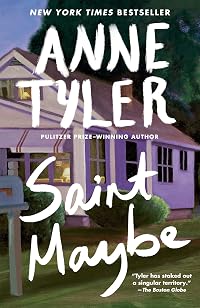
Saint Maybe
by Anne Tyler
On This Page
Description
Ian Bedloe is the ideal teenage son, leading a cheery, apple-pie life with his family in Baltimore. That is, until a careless and vicious rumor leads to a devastating tragedy. Imploding from guilt, Ian believes he is the one responsible for the tragedy. No longer a star athlete with a bright future, and desperately searching for salvation, he stumbles across a storefront with a neon sign that simply reads: CHURCH OF THE SECOND CHANCE. Ian has always viewed his penance as a burden. But show more through the power of faith and the love of family, he begins to view it as a gift. After years spent trying to atone for his foolish mistakes, Ian finds forgiveness and peace in the life he builds for himself. show lessTags
Recommendations













Member Recommendations
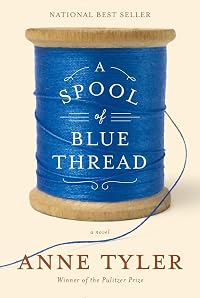
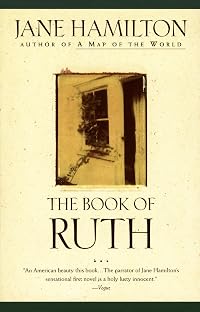
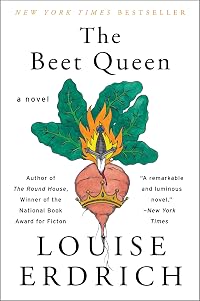
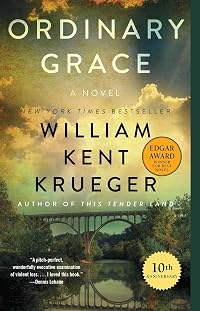
BookshelfMonstrosity In both books, men put their own lives aside to help with events surrounding their brothers' deaths. Struggling with heavy emotional and practical burdens as well as grief, they find peace through reconciliation.
Member Reviews
The Bedloes seemed to be a perfect family. When oldest son Danny married a divorcee with two children, they found a way to accommodate his less-than-perfect choice into the family image. The baby born less than nine months after the marriage was just premature, wasn't she? Youngest son Ian has a growing awareness of the difference between the facade the family presents to the world and the reality of their lives. One fatal night Ian can't hold his tongue any longer, and life changes forever for the Bedloes. Ian will spend the rest of his life trying to atone for his thoughtless words and their consequence for his family, with the help of the Church of the Second Chance.
In a Harlequin novel, a young, handsome, single man raising his show more brother's children would meet a beautiful woman who bonds instantly with the children. After a few ups and downs, they would fall madly in love, marry, and live happily ever after. Anne Tyler didn't write a Harlequin novel. She takes a pivotal event in the life of an average family and traces its effect over succeeding decades. Years lapse between chapters. While the characters age, they're still living out the consequences of a single choice. Or maybe two choices. When Ian stumbles upon the Church of the Second Chance, it becomes his lifeline. However, it's a non-traditional church with unorthodox doctrine, and instead of providing solace and healing, Reverend Emmett's faulty teaching sentences Ian to a lifetime of penance.
”...Don't you think I'm forgiven?”
“Goodness, no,” Reverend Emmett said briskly.
Ian's mouth fell open. He wondered if he'd misunderstood. He said, “I'm not forgiven?”
“Oh, no.”
“But . . . I thought that was kind of the point,” Ian said. “I thought God forgives everything.”
“He does,” Reverend Emmett said. “But you can't just say, 'I'm sorry, God.' Why, anyone could do that much! You have to offer reparation—concrete, practical reparation, according to the rules of our church.”
“But what if there isn't any reparation? What if it's something nothing will fix?”
“Well, that's where Jesus comes in, of course.”
Another itchy word: Jesus. Ian averted his eyes.
“Jesus remembers how difficult life on earth can be,” Reverend Emmett told him. “He helps with what you can't undo. But only after you've tried to undo it.” show less
In a Harlequin novel, a young, handsome, single man raising his show more brother's children would meet a beautiful woman who bonds instantly with the children. After a few ups and downs, they would fall madly in love, marry, and live happily ever after. Anne Tyler didn't write a Harlequin novel. She takes a pivotal event in the life of an average family and traces its effect over succeeding decades. Years lapse between chapters. While the characters age, they're still living out the consequences of a single choice. Or maybe two choices. When Ian stumbles upon the Church of the Second Chance, it becomes his lifeline. However, it's a non-traditional church with unorthodox doctrine, and instead of providing solace and healing, Reverend Emmett's faulty teaching sentences Ian to a lifetime of penance.
”...Don't you think I'm forgiven?”
“Goodness, no,” Reverend Emmett said briskly.
Ian's mouth fell open. He wondered if he'd misunderstood. He said, “I'm not forgiven?”
“Oh, no.”
“But . . . I thought that was kind of the point,” Ian said. “I thought God forgives everything.”
“He does,” Reverend Emmett said. “But you can't just say, 'I'm sorry, God.' Why, anyone could do that much! You have to offer reparation—concrete, practical reparation, according to the rules of our church.”
“But what if there isn't any reparation? What if it's something nothing will fix?”
“Well, that's where Jesus comes in, of course.”
Another itchy word: Jesus. Ian averted his eyes.
“Jesus remembers how difficult life on earth can be,” Reverend Emmett told him. “He helps with what you can't undo. But only after you've tried to undo it.” show less
There is a special category of movie in India, called "Family Film": these deal entirely with matters inside a big "joint" family (where all the siblings live together with their parents in their ancestral home, either matrilineal or patrilineal). In the first quarter of the movie, something will happen to disturb the tranqulity of its existence, and the whole of the remaining is spent in resolving the issue. The movie typically has a tragicomic ending, and leaves the audience with a gooey sentimental feeling inside (precisely for which they have come, anyway). It is something the grandparents can watch with grandchildren, passing the popcorn and soft drinks across the seats.
Saint Maybe by Anne Tyler is such a "Family Film". The novel show more chronicles the life and times of the Bedloe family, after unexpected tragedy strikes them in the late sixties in the form of the "accidental" death of one of the sons, Danny. However, the tragedy is even more serious for Ian, his younger brother, because he knows that he has unwittingly caused his brother's death through some harsh words uttered in the heat of the moment.
The Bedloes are a picture-perfect family right out of a sitcom: they are always a "family" (as if the individual members didn't matter) and nothing "wrong" ever happens for them. Even when Danny marries Lucy Dean, a divorcee with two children, it is accepted after the initial shock. However, Ian begins to have serious doubts about his sister-in-law's character: he comes to the conclusion that she is sleeping around, her gentlemen friends are keeping her in riches and that his brother is nothing but a fall guy: worse, he is pretty sure that Lucy’s third child, Daphne, is not his brother’s. Things come to a head when Ian is kept away from a date with his girlfriend by being forced to babysit the kids while his brother is attending a stag party, and Lucy is ostensibly having dinner with a girlfriend (but Ian is sure she’s elsewhere). As Danny comes back late, Ian blurts out the unwelcome truth: Danny retaliates by driving his car into a wall and killing himself. Soon, Lucy dies from an overdose of sleeping pills.
Two deaths on his conscience, Ian’s world starts to fall apart. Plagued by guilt, he finds succour in an unlikely place: “The Church of Second Chance”, run by the maverick Reverend Bennett. He gives Ian a way out of his guilt: atonement, the hard way. He has committed a wrong, so he must do whatever it takes to set it right: which in Ian’s case means foregoing a college education, forgetting his sweetheart, and taking charge of his sister-in-law’s three children. Ian spends the rest of the atoning, even when the people around him lose conviction and faith, including the beneficiaries of his penance; but he does not find peace. Until one day, the truth is brought home to him by Daphne, Danny’s daughter:
”You think I don’t know what I am up to, don’t you,” Daphne said.
“Pardon?”
“You think I’m some ninny who wants do right but keeps goofing. But what you don’t see is, I goof on purpose. I’m not like you: King Careful. Mr. Look-Both-Ways. Saint Maybe.”
………
“Mess up, I say!” Daphne crowed. “Fall flat on your face! Make every mistake you can think of! Use all the life you’ve got!”
Ironically, Ian finds peace when he stops looking for it.
Novels about people trying to atone for that one mistake is common in literature: Lord Jim is perhaps the most famous example: Atonement is a recent one. What makes Ian’s story different from these is that it is not a tragedy. There is nothing grandiose about it: it’s just a piece of life. We get a feeling that, even if Ian had not done his penance, nothing much would have changed: life would have gone on, just the same. It is this realisation (“People changed other people’s lives every day of the year. There was no call to make such a fuss about it.”) that is Ian’s true salvation.
Anne Tyler writes well. There is a carefree, no-nonsense quality to her prose, even while describing tragic events, that get to you - there is no heavy-handedness. The structure of the novel, with almost each chapter shifting in POV, prevents it from being too focussed on Ian and helps highlight the fact that it is the story of a family which is being narrated, rather than that of a person. And the constantly changing Middle-Eastern students in the house next door (“the foreigners”) and their perennial craze with electronic gadgetry provides an effective counterpoint to the Bedloe’s unchanging stolidity. The novel literally flows.
However, after reading Dinner at the Homesick Restaurant and this novel, I am starting to get a sneaking suspicion that Ms. Tyler’s subject and style can stale very fast. What is aimed at seems to be a “feel-good” story with some family values (like the films I mentioned at the beginning) rather any exploration in depth of the characters’ motives. There is nothing wrong in that: this is a well-written novel and a fast read. But I doubt whether it will stay in the mind for any length of time. show less
Saint Maybe by Anne Tyler is such a "Family Film". The novel show more chronicles the life and times of the Bedloe family, after unexpected tragedy strikes them in the late sixties in the form of the "accidental" death of one of the sons, Danny. However, the tragedy is even more serious for Ian, his younger brother, because he knows that he has unwittingly caused his brother's death through some harsh words uttered in the heat of the moment.
The Bedloes are a picture-perfect family right out of a sitcom: they are always a "family" (as if the individual members didn't matter) and nothing "wrong" ever happens for them. Even when Danny marries Lucy Dean, a divorcee with two children, it is accepted after the initial shock. However, Ian begins to have serious doubts about his sister-in-law's character: he comes to the conclusion that she is sleeping around, her gentlemen friends are keeping her in riches and that his brother is nothing but a fall guy: worse, he is pretty sure that Lucy’s third child, Daphne, is not his brother’s. Things come to a head when Ian is kept away from a date with his girlfriend by being forced to babysit the kids while his brother is attending a stag party, and Lucy is ostensibly having dinner with a girlfriend (but Ian is sure she’s elsewhere). As Danny comes back late, Ian blurts out the unwelcome truth: Danny retaliates by driving his car into a wall and killing himself. Soon, Lucy dies from an overdose of sleeping pills.
Two deaths on his conscience, Ian’s world starts to fall apart. Plagued by guilt, he finds succour in an unlikely place: “The Church of Second Chance”, run by the maverick Reverend Bennett. He gives Ian a way out of his guilt: atonement, the hard way. He has committed a wrong, so he must do whatever it takes to set it right: which in Ian’s case means foregoing a college education, forgetting his sweetheart, and taking charge of his sister-in-law’s three children. Ian spends the rest of the atoning, even when the people around him lose conviction and faith, including the beneficiaries of his penance; but he does not find peace. Until one day, the truth is brought home to him by Daphne, Danny’s daughter:
”You think I don’t know what I am up to, don’t you,” Daphne said.
“Pardon?”
“You think I’m some ninny who wants do right but keeps goofing. But what you don’t see is, I goof on purpose. I’m not like you: King Careful. Mr. Look-Both-Ways. Saint Maybe.”
………
“Mess up, I say!” Daphne crowed. “Fall flat on your face! Make every mistake you can think of! Use all the life you’ve got!”
Ironically, Ian finds peace when he stops looking for it.
Novels about people trying to atone for that one mistake is common in literature: Lord Jim is perhaps the most famous example: Atonement is a recent one. What makes Ian’s story different from these is that it is not a tragedy. There is nothing grandiose about it: it’s just a piece of life. We get a feeling that, even if Ian had not done his penance, nothing much would have changed: life would have gone on, just the same. It is this realisation (“People changed other people’s lives every day of the year. There was no call to make such a fuss about it.”) that is Ian’s true salvation.
Anne Tyler writes well. There is a carefree, no-nonsense quality to her prose, even while describing tragic events, that get to you - there is no heavy-handedness. The structure of the novel, with almost each chapter shifting in POV, prevents it from being too focussed on Ian and helps highlight the fact that it is the story of a family which is being narrated, rather than that of a person. And the constantly changing Middle-Eastern students in the house next door (“the foreigners”) and their perennial craze with electronic gadgetry provides an effective counterpoint to the Bedloe’s unchanging stolidity. The novel literally flows.
However, after reading Dinner at the Homesick Restaurant and this novel, I am starting to get a sneaking suspicion that Ms. Tyler’s subject and style can stale very fast. What is aimed at seems to be a “feel-good” story with some family values (like the films I mentioned at the beginning) rather any exploration in depth of the characters’ motives. There is nothing wrong in that: this is a well-written novel and a fast read. But I doubt whether it will stay in the mind for any length of time. show less
“You think I’m some ninny who wants to do right but keeps goofing. But what you don’t see is, I goof on purpose. I’m not like you: King Careful. Mr. Look-Both-Ways. Saint Maybe.”
When the book opens in 1965, the Bedloes are a happy family: teacher father, always optimistic mother, two adult children and one teen at home, all reasonably successful and happy. Then older son Danny meets a divorcée with two young children. They marry quickly and have a child of their own, but younger brother Ian begins to suspect that his sister-in-law Lucy isn't exactly what she seems. And when he voices his doubts to Danny, the results are disastrous.
As Tolstoy posited, "Happy families are all alike; every unhappy family is unhappy in its own show more way." The Bedloes quickly find their own ways to be unhappy, especially Ian who finds a religious sect that fits his desire to punish himself for his actions.
I've dabbled in Anne Tyler in the past, mostly enjoying her dissections of family dynamics, but her latest, [b:French Braid|58417763|French Braid|Anne Tyler|https://i.gr-assets.com/images/S/compressed.photo.goodreads.com/books/1642874522l/58417763._SY75_.jpg|89719467], really blew me away. Maybe she's getting better, or (more likely) maybe I'm growing into her style as I age. I've already started [b:Digging to America|26037419|Digging to America|Anne Tyler|https://i.gr-assets.com/images/S/compressed.photo.goodreads.com/books/1438683842l/26037419._SY75_.jpg|3140490] and plan to work my way through more of her books in the near future. show less
When the book opens in 1965, the Bedloes are a happy family: teacher father, always optimistic mother, two adult children and one teen at home, all reasonably successful and happy. Then older son Danny meets a divorcée with two young children. They marry quickly and have a child of their own, but younger brother Ian begins to suspect that his sister-in-law Lucy isn't exactly what she seems. And when he voices his doubts to Danny, the results are disastrous.
As Tolstoy posited, "Happy families are all alike; every unhappy family is unhappy in its own show more way." The Bedloes quickly find their own ways to be unhappy, especially Ian who finds a religious sect that fits his desire to punish himself for his actions.
I've dabbled in Anne Tyler in the past, mostly enjoying her dissections of family dynamics, but her latest, [b:French Braid|58417763|French Braid|Anne Tyler|https://i.gr-assets.com/images/S/compressed.photo.goodreads.com/books/1642874522l/58417763._SY75_.jpg|89719467], really blew me away. Maybe she's getting better, or (more likely) maybe I'm growing into her style as I age. I've already started [b:Digging to America|26037419|Digging to America|Anne Tyler|https://i.gr-assets.com/images/S/compressed.photo.goodreads.com/books/1438683842l/26037419._SY75_.jpg|3140490] and plan to work my way through more of her books in the near future. show less
It’s interesting that I read this right after Ladder of Years (unintentional). Whereas Delia ran away from her life, Ian Bedloe leaned into his…desperately…sacrificially…to atone…to be forgiven. In the process of learning to live with himself, he created a life and established a family for children who needed one. It’s a story about family, love, tragedy, sacrifice, strength and so far, my second favorite of Tyler’s (after Accidental Tourist).
I’m short on time, so this will have to suffice for my usually lengthy reviews, but brevity is definitely not an indication of how much I liked this book.
I read someone’s 2 star review, stating the characters were “flat” – One of the reasons I’m afraid of recommending show more books is because reading is so subjective and situational, that it’s hard to know what anyone would or wouldn’t like based on what I like. Heck…I’ve liked books now that I would have hated younger and vice-versa. However, to me, Tyler’s characters are far from “flat” - to me they’re so well fleshed out that I can’t stop thinking about them and want to know more about them the longer I read. I love how she makes no judgments…it leaves me pondering…was it wrong of Delia (In Ladder of Years) to do what she did? Can it be justified? Is it wrong of Ian (Saint Maybe) to have sacrificed so much? Can it be justified? I like that.
Off topic…maybe…I was a little befuddled by the star ratings in Goodreads, so had to actually look it up. See…people gave Anna Karenina and The Awakening ONE star ratings because they didn’t like the character, and I’m over here all judgey thinking “that’s not a good enough reason,” but it turns out that yes, it is a good enough reason (subjectivity here again!LOL) because the one star just means “did not like it,” and who am I to judge you for not liking Anna Karenina….except I’m low-key judging….I’m working on this!LOL show less
I’m short on time, so this will have to suffice for my usually lengthy reviews, but brevity is definitely not an indication of how much I liked this book.
I read someone’s 2 star review, stating the characters were “flat” – One of the reasons I’m afraid of recommending show more books is because reading is so subjective and situational, that it’s hard to know what anyone would or wouldn’t like based on what I like. Heck…I’ve liked books now that I would have hated younger and vice-versa. However, to me, Tyler’s characters are far from “flat” - to me they’re so well fleshed out that I can’t stop thinking about them and want to know more about them the longer I read. I love how she makes no judgments…it leaves me pondering…was it wrong of Delia (In Ladder of Years) to do what she did? Can it be justified? Is it wrong of Ian (Saint Maybe) to have sacrificed so much? Can it be justified? I like that.
Off topic…maybe…I was a little befuddled by the star ratings in Goodreads, so had to actually look it up. See…people gave Anna Karenina and The Awakening ONE star ratings because they didn’t like the character, and I’m over here all judgey thinking “that’s not a good enough reason,” but it turns out that yes, it is a good enough reason (subjectivity here again!LOL) because the one star just means “did not like it,” and who am I to judge you for not liking Anna Karenina….except I’m low-key judging….I’m working on this!LOL show less
All of us have done it - tossed a particularly cruel barb at somebody we profess to love in a moment of frustration and anger - yet few have paid as dearly for such fleeting indiscretions as Ian Bedloe. The aftermath of that moment has a profound effect on Ian, prompting him to swap college life for surrogate parenthood and a rather cult-like brand of religion. Once again, Anne Tyler skillfully intertwines humour and pathos to bring this unpredictable tale of regret and forgiveness to life.
Read during Fall 2004
I tend to think Tyler's books are either the funny and eccentric ones or the depressing ones. I began to think this was a depressing one but it veered away and was thoughtful and introspective in the best sort of way.
I tend to think Tyler's books are either the funny and eccentric ones or the depressing ones. I began to think this was a depressing one but it veered away and was thoughtful and introspective in the best sort of way.
Reading an Anne Tyler novel is like being cuddled. The structure of this novel will be familiar to her readers; a family saga, following the life of one or two characters over a couple of generations. There are ups and downs, but it is the well drawn characters that marks her novels out as fantastic; she gets under the skin in subtle ways. She doesn't do this by being obviously in the head of her characters, she keeps some distance and gives the reader little glimpses into how they are thinking and acting and lets you try and figure it out.
In this case, we follow the life of Ian, starting from Ian as a 17 year old, with a normal middle America sort of life. His life changes when his brother and then sister in law die and Ian becomes the show more main carer for their three children.
Ian is a reticent hero of a novel and seems to bumble along. The joy of Ian is that he is a good person, making the best of what life throws at him. show less
In this case, we follow the life of Ian, starting from Ian as a 17 year old, with a normal middle America sort of life. His life changes when his brother and then sister in law die and Ian becomes the show more main carer for their three children.
Ian is a reticent hero of a novel and seems to bumble along. The joy of Ian is that he is a good person, making the best of what life throws at him. show less
Members
- Recently Added By
Lists

Books Read in 2016
4,666 works; 199 members

Books Set in Maryland
14 works; 4 members
Author Information

64+ Works 56,151 Members
Anne Tyler was born in Minneapolis, Minnesota on October 25, 1941. She graduated from Duke University at the age of 19 and completed graduate work in Russian studies at Columbia University. Before becoming a full-time author, she worked as a librarian and bibliographer. Her first novel, If Morning Ever Comes, was published in 1964. Her other works show more include Saint Maybe, Back When We Were Grownups, Digging to America, Noah's Compass, The Beginner's Goodbye, A Spool of Blue Thread, and Vinegar Girl. She has won several awards including the PEN Faulkner Award in 1983 for Dinner at the Homesick Restaurant, the 1985 National Book Critics Circle Award for The Accidental Tourist, and the 1988 Pulitzer Prize for Breathing Lessons. The Accidental Tourist was adapted into a 1988 movie starring William Hurt and Geena Davis. In 2018 her title, Clock Dance, made the bestsellers list. (Bowker Author Biography) Anne Tyler was born in Minneapolis, Minnesota, and grew up in Raleigh, North Carolina. "Back When We Were Grownups" is her 15th novel; her 11th, "Breathing Lessons", won the Pulitzer Prize in 1988. She is a member of the American Academy of Arts & Letters. She lives in Baltimore, Maryland. (Publisher Provided) show less
Some Editions
Awards and Honors
Distinctions
Notable Lists
Series
Belongs to Publisher Series
Otavan kirjasto (101)
Work Relationships
Is contained in
Has the adaptation
Common Knowledge
- Original publication date
- 1991
- People/Characters
- Ian Bedloe; Danny Bedloe; Bee Bedloe; Doug Bedloe; Lucy Dean; Agatha Dean (show all 8); Tommy Dean; Daphne Bedloe
- Important places
- Baltimore, Maryland, USA; Maryland, USA
- Related movies
- Hallmark Hall of Fame: Saint Maybe (1998 | IMDb)
- First words
- On Waverly Street, everybody knew everybody else.
- Last words
- (Click to show. Warning: May contain spoilers.)There was no call to make such a fuss about it.
- Publisher's editor
- Jones, Judith
- Blurbers
- Hoagland, Edward; Kakutani, Michiko; Lesaze, Lee; Prescott, Peter S.
Classifications
Statistics
- Members
- 2,990
- Popularity
- 5,956
- Reviews
- 49
- Rating
- (3.88)
- Languages
- 12 — Chinese, Danish, Dutch, English, Finnish, French, German, Italian, Norwegian (Bokmål), Portuguese, Spanish, Swedish
- Media
- Paper, Audiobook, Ebook
- ISBNs
- 49
- UPCs
- 1
- ASINs
- 27