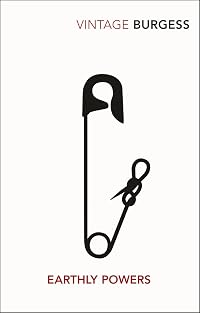
Earthly Powers
by Anthony Burgess 
On This Page
Description
Burgess's ambitious study of 20th-century history centers on the stormy relationship between an effete, popular novelist and a Faustian priest.Tags
Recommendations




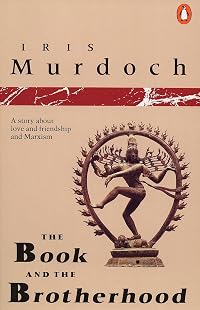
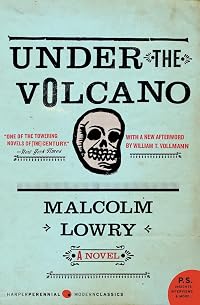
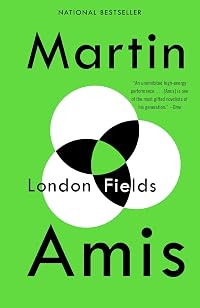

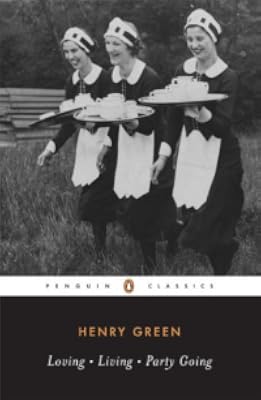









Member Recommendations
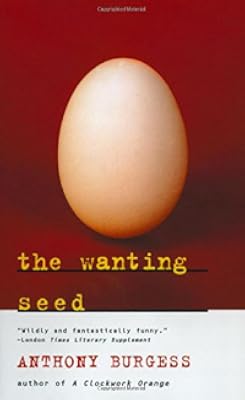
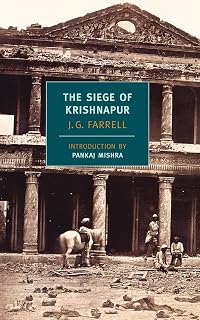
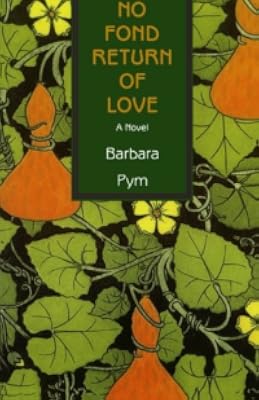
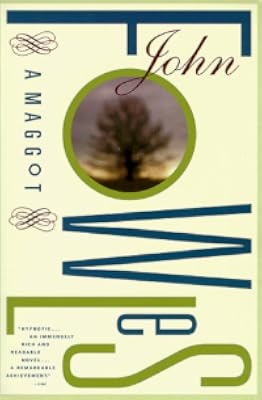
ZenonRobledo I have the feeling Earthly Powers by Anthony Burgess inspired David Mitchell when writing Cloud Atlas. Anyone else have thoughts on the matter?
Member Reviews
One of my nearest and dearest sent me her old mass-market copy years ago in one of her purging moods. And, in a deeply unusual act, I've read it twice!
I see lots of breakdowns of this story's alleged core, the Problem of Evil that besets monotheistic religions. In my own opinion, Burgess's point was less simple, as the Problem of Evil is easily resolved (you're wrong, there is no gawd so there is no problem): How, when a man is inextricably linked to another, "superior" or "better" man in the public's awareness, does one contextualize the richness of either's soul in simple material terms?
...you know, come to think of it, I can't figure out a non-spoilery way to review the book...one can't explain the power dynamic that undergirds every show more single decision and shapes every attitude in the men's long, untangential involvement without being either coy or obscurantist. So what can one do to discuss it? I believe my enduring puzzlement at the impossibility of writing a satisfying review has been puzzled out. show less
I see lots of breakdowns of this story's alleged core, the Problem of Evil that besets monotheistic religions. In my own opinion, Burgess's point was less simple, as the Problem of Evil is easily resolved (you're wrong, there is no gawd so there is no problem): How, when a man is inextricably linked to another, "superior" or "better" man in the public's awareness, does one contextualize the richness of either's soul in simple material terms?
...you know, come to think of it, I can't figure out a non-spoilery way to review the book...one can't explain the power dynamic that undergirds every show more single decision and shapes every attitude in the men's long, untangential involvement without being either coy or obscurantist. So what can one do to discuss it? I believe my enduring puzzlement at the impossibility of writing a satisfying review has been puzzled out. show less
"It was the afternoon of my eighty-first birthday, and I was in bed with my catamite when Ali announced that the archbishop had come to see me."
Earthly Powers is the linchpin of Anthony Burgess' novel-writing career. It is a massive work that compares favorably with similar tomes of twentieth century literature. What sets Burgess apart from other authors is his linguistic playfulness combined with an exceptional narrative style. Although this style is here somewhat less obviously experimental than that of Burgess’s other novels of this period, his use of a professional story teller as a first-person narrator allows him to call into the question the nature of authority in fictional texts. The narrative becomes a retrospective account show more of a life spent as an outsider. Within that account, Burgess locates his protagonist,Toomey, at some key moments of twentieth century history in order, it seems, to comment on those issues which consistently surface in all of Burgess’s fiction, particularly the nature of evil and its presence in the physical world. The novel attempts to address issues of belief, and the role of religion in late twentieth century culture, using a broad cast of characters, fictional and real; it is not, however, a roman à clef. Though often mentioned in reviews of this novel, the identification of Toomey with Somerset Maugham fails to recognise that Toomey is a portmanteau of many characters. He contains hints of Maugham, certainly, but there are suggestions of, to name a few, Alec Waugh in the precocious young novelist; of P. G. Wodehouse in the broadcaster from Berlin; of W. H. Auden in the rescuer of a Nobel laureate’s offspring; and of Burgess himself, the author of a real Blooms of Dublin. Burgess ability to meld this amalgam of characters into his protagonist reminds me of another favorite novel, The New Confessions by William Boyd, in which the author uses a similar technique to create a tremendously exciting and interesting protagonist. Throughout the novel, the emphasis is on the debate about the nature of evil rather than on the accuracy or otherwise of the references to twentieth century figures. The novel examines at length the nature of belief, the way in which people cope with an imperfect world, and the operation of evil and suffering. In doing so it succeeds in presenting a distinctive and compelling view of the twentieth century through the life of Toomey. It is both a challenging and rewarding read that I would recommend to all. show less
Earthly Powers is the linchpin of Anthony Burgess' novel-writing career. It is a massive work that compares favorably with similar tomes of twentieth century literature. What sets Burgess apart from other authors is his linguistic playfulness combined with an exceptional narrative style. Although this style is here somewhat less obviously experimental than that of Burgess’s other novels of this period, his use of a professional story teller as a first-person narrator allows him to call into the question the nature of authority in fictional texts. The narrative becomes a retrospective account show more of a life spent as an outsider. Within that account, Burgess locates his protagonist,Toomey, at some key moments of twentieth century history in order, it seems, to comment on those issues which consistently surface in all of Burgess’s fiction, particularly the nature of evil and its presence in the physical world. The novel attempts to address issues of belief, and the role of religion in late twentieth century culture, using a broad cast of characters, fictional and real; it is not, however, a roman à clef. Though often mentioned in reviews of this novel, the identification of Toomey with Somerset Maugham fails to recognise that Toomey is a portmanteau of many characters. He contains hints of Maugham, certainly, but there are suggestions of, to name a few, Alec Waugh in the precocious young novelist; of P. G. Wodehouse in the broadcaster from Berlin; of W. H. Auden in the rescuer of a Nobel laureate’s offspring; and of Burgess himself, the author of a real Blooms of Dublin. Burgess ability to meld this amalgam of characters into his protagonist reminds me of another favorite novel, The New Confessions by William Boyd, in which the author uses a similar technique to create a tremendously exciting and interesting protagonist. Throughout the novel, the emphasis is on the debate about the nature of evil rather than on the accuracy or otherwise of the references to twentieth century figures. The novel examines at length the nature of belief, the way in which people cope with an imperfect world, and the operation of evil and suffering. In doing so it succeeds in presenting a distinctive and compelling view of the twentieth century through the life of Toomey. It is both a challenging and rewarding read that I would recommend to all. show less
I'm unsure if I'll remember this as fondly in a few years as I do now. The second quarter of the book was extremely dull, and the narrative 'technique' is silly (bad novelist travels to a dozen or so countries in order to pick up royalties cheques through the twentieth century--necessary because there were such restrictions on currency movement). These two problems almost, almost destroy the book's excellent qualities. But then it more or less comes together.
The narrator's friend, Carlo Campanati, is the intellectual center of the novel. He will be elected after Pius XII, as Pope Gregory, in place of the real world's John XXIII and Paul VI. He is, more or less, semi-Pelagian, obsessed with ecumenism, and insists on dragging the church show more into modernity; he's also charmingly human, stands against fascism and is an orphan. In the middle of the book, he asks the narrator to publish a book of ecumenism and semi-Pelagian theology under the narrator's name, and 'Earthly Powers' then becomes an extended meditation on freedom, predestination, grace and how much or how little human beings can contribute to their own salvation.
All of which is enough for me, but those of you who don't revel in obscure theological controversies (or even fairly well known ones) might prefer to think about this through the narrator, Kenneth Toomey, and his sexuality: he insists that he didn't 'choose' to be gay. If he didn't choose his sexuality, however, that's ipso facto evidence against the freedom that his friend the Pope insists (against the traditional doctrines of the church) we possess. Toomey wanders through the twentieth century, generally doing things despite himself. So whereas Carlo/Gregory shows what's possible for a human being who (acts as if he) was entirely free, Toomey shows how life can equally well be understood as nothing more than one contingent event after another (e.g., he 'accidentally' saves Goebbels' life). At the center of all this is a miracle performed by Carlo/Gregory, and the question arises there, too: how much credit does he deserve?
In addition to all this kind of thing Burgess piles on the laughs with groan-worthy puns, literary in-jokes (Toomey meets many of modernism's most important figures, despite being decidedly unmodernist), and occasional thoughts on the unreliability of memory and therefore of first person narrations... like that of Earthly Powers, which of course twists history in important ways to show something like the truth of the twentieth century.
Burgess's prose is clever, sometimes excessively so, and sometimes pointlessly. But I'd far rather read that than yet more sub-Hemingwayan blandishments for the undemanding reader.
For some reason, this stays with me: "He had a compassionate face: he would be compassionate while supervising human liquidation: this liquidates me more than it does you." show less
The narrator's friend, Carlo Campanati, is the intellectual center of the novel. He will be elected after Pius XII, as Pope Gregory, in place of the real world's John XXIII and Paul VI. He is, more or less, semi-Pelagian, obsessed with ecumenism, and insists on dragging the church show more into modernity; he's also charmingly human, stands against fascism and is an orphan. In the middle of the book, he asks the narrator to publish a book of ecumenism and semi-Pelagian theology under the narrator's name, and 'Earthly Powers' then becomes an extended meditation on freedom, predestination, grace and how much or how little human beings can contribute to their own salvation.
All of which is enough for me, but those of you who don't revel in obscure theological controversies (or even fairly well known ones) might prefer to think about this through the narrator, Kenneth Toomey, and his sexuality: he insists that he didn't 'choose' to be gay. If he didn't choose his sexuality, however, that's ipso facto evidence against the freedom that his friend the Pope insists (against the traditional doctrines of the church) we possess. Toomey wanders through the twentieth century, generally doing things despite himself. So whereas Carlo/Gregory shows what's possible for a human being who (acts as if he) was entirely free, Toomey shows how life can equally well be understood as nothing more than one contingent event after another (e.g., he 'accidentally' saves Goebbels' life). At the center of all this is a miracle performed by Carlo/Gregory, and the question arises there, too: how much credit does he deserve?
In addition to all this kind of thing Burgess piles on the laughs with groan-worthy puns, literary in-jokes (Toomey meets many of modernism's most important figures, despite being decidedly unmodernist), and occasional thoughts on the unreliability of memory and therefore of first person narrations... like that of Earthly Powers, which of course twists history in important ways to show something like the truth of the twentieth century.
Burgess's prose is clever, sometimes excessively so, and sometimes pointlessly. But I'd far rather read that than yet more sub-Hemingwayan blandishments for the undemanding reader.
For some reason, this stays with me: "He had a compassionate face: he would be compassionate while supervising human liquidation: this liquidates me more than it does you." show less
In a way this book serves as an indictment of the last thirty years of gay literature. If a story could be published in 1980 featuring a man who was openly gay from World War One right through the rest of his life, why are we still subjected to so many narratives in which characters spend most or all of their time in the closet? Although not all writers can be expected to have the courage of Burgess, I look forward to the day when gay writers move on from regarding coming out as the peak gay experience.
As well as courage, this book is full of wit, style, insightful characterisation and intellectual challenge. It's something of a shame that a portion of this intellectual challenge failed to really engage me as it focuses on questions show more regarding the role of the Catholic church, Christianity and religion in the modern world. As an atheist born and raised, I am comfortable with my answers to these questions (none, none and none), but I did find stimulation in many other ideas relating to family, sexuality, art and purpose.
The reader is effortlessly and repeatedly charmed and then pushed back to arms length using all of the tools of the postmodern first person narrator. This is a finely balanced and dangerous trick, of course, and while passages of this book are absolutely wonderful - simultaneously playful and affecting - there are also some passages that I found flat, unnecessary or irrelevant, particularly in the latter half of the book. It is definitely at its best in the first third when the story is at its most preposterous and the narrator is at his most combative and frank.
This will go on the list of my favourite four star books - not quite sublime, but dearly loved.
Oh, and without wanting to sound pedantic, the Amazon Kindle edition of this book is a bit of a dog's breakfast. It has clearly been scanned from the text and many of the mistakes of the software remain (joining "ci" and "cl" into d, so that I'm not sure you ever see "clothes", only "dothes"; extraneous commas that the author could never have intended; etc). The consequence of this is that a reader is never quite sure whether an irregularity (eg. two words joined together) is for stylistic reasons or just as a result of technology failure. show less
As well as courage, this book is full of wit, style, insightful characterisation and intellectual challenge. It's something of a shame that a portion of this intellectual challenge failed to really engage me as it focuses on questions show more regarding the role of the Catholic church, Christianity and religion in the modern world. As an atheist born and raised, I am comfortable with my answers to these questions (none, none and none), but I did find stimulation in many other ideas relating to family, sexuality, art and purpose.
The reader is effortlessly and repeatedly charmed and then pushed back to arms length using all of the tools of the postmodern first person narrator. This is a finely balanced and dangerous trick, of course, and while passages of this book are absolutely wonderful - simultaneously playful and affecting - there are also some passages that I found flat, unnecessary or irrelevant, particularly in the latter half of the book. It is definitely at its best in the first third when the story is at its most preposterous and the narrator is at his most combative and frank.
This will go on the list of my favourite four star books - not quite sublime, but dearly loved.
Oh, and without wanting to sound pedantic, the Amazon Kindle edition of this book is a bit of a dog's breakfast. It has clearly been scanned from the text and many of the mistakes of the software remain (joining "ci" and "cl" into d, so that I'm not sure you ever see "clothes", only "dothes"; extraneous commas that the author could never have intended; etc). The consequence of this is that a reader is never quite sure whether an irregularity (eg. two words joined together) is for stylistic reasons or just as a result of technology failure. show less
This is one of Burgess's most accessible fictions, and obviously his Big Effort. I consider it a great, fun romp through the 20th century and Anthony Burgess's own personal and philosophical obsessions. In this book the lapsed Catholic takes on the modernization of the Church, stacking the deck against Catholicism in an amazing way, implying that one of his chief characters, a liberal pope, is, well, of the devil.
Once again, Burgess finds a way to attack trendy goody-two-shoeisms as a form of the Pelagian Heresy.
And hey: the book has a boffo first sentence, and never really lets up until the end. My favorite Burgess novel.
Once again, Burgess finds a way to attack trendy goody-two-shoeisms as a form of the Pelagian Heresy.
And hey: the book has a boffo first sentence, and never really lets up until the end. My favorite Burgess novel.
An astonishing tour de force that starts off as a kind of reworked biography of Somerset Maugham but soon morphs into the most incredible criticism of belief and the workings of miracle. Everything ties together superbly, and as a guide to an alternative-but-real 20th century this cannot be easily bettered.
A monumental novel, currently out of print, that has stuck in my mind for thirty years as an all-time favorite but needed to be reread to remind me why. An octogenarian British writer, asked to attest to a miracle that will support canonization of a Pope writes his memoirs, giving us a personal tour of the 20th-century through his life as a homosexual, lapsed Catholic, successful but mediocre writer, and exile. Examines morality, the nature of evil, the role of religious belief and more. Linguistically playful, the novel features one of the best opening lines in literature, and is funny, painful, thought-provoking, entertaining, challenging and rewarding. Thoroughly magnificent.
Members
- Recently Added By
Published Reviews
ThingScore 100
Burgess sees artistic creation as man’s only god-like act, which is appropriate in a book whose twin themes are art and evil. Toomey, of course, is the most sterile kind of artist – pretentious and pitifully transparent – and Burgess has great parodic fun with his efforts: lush period epics, doomed libretti, catchy doggerel for stage musicals, a sentimental homosexual rewrite of the show more creation myth, even a theological work on the nature of evil (written in collusion with his relative Carlo Campanati, a Vatican high-up who later ‘makes Pope’). As Toomey begins the act of creation, he experiences a divine confidence; as the work takes shape, he feels himself already falling short, as earthly compromise and contingency closes in on the pristine dream. What is intended as radical and pure becomes tainted and familiar.
In a sense, though, Earthly Powers belongs to Toomey as well as to Burgess, It is a considerable achievement, spacious and intricate in design, wonderfully sustained in its execution, and full of a weary generosity for the errant world it recreates. As a form, the long novel is inevitably flawed and approximate; and this book contains plenty of hollow places beneath its busy verbal surface. But whatever its human limits it shows an author who has reached the height of his earthly powers. show less
In a sense, though, Earthly Powers belongs to Toomey as well as to Burgess, It is a considerable achievement, spacious and intricate in design, wonderfully sustained in its execution, and full of a weary generosity for the errant world it recreates. As a form, the long novel is inevitably flawed and approximate; and this book contains plenty of hollow places beneath its busy verbal surface. But whatever its human limits it shows an author who has reached the height of his earthly powers. show less
added by SnootyBaronet
Lists

The Guardian's 1000 Novels Everyone Must Read
1,005 works; 551 members

Best Historical Fiction
620 works; 257 members

Best of British Literature
226 works; 41 members

Favorite Long Books
330 works; 42 members

Historical Fiction
889 works; 90 members

David Bowie's Top 100
97 works; 23 members
20th Century Literature
1,161 works; 54 members
Favourite Books
1,819 works; 316 members

Booker Prize
491 works; 62 members

Top Five Books of 2014
1,064 works; 397 members
TML 200 Best Books 1950-1999
202 works; 10 members

Man Booker Prize Longlist 1980
7 works; 2 members
My list of 100 books to read next
100 works; 4 members

A Good Read (Radio 4)
287 works; 1 member

Booker Prize Shortlist: Titles Not Yet Read
161 works; 4 members

1980 great books
63 works; 1 member

living room bookshelf
150 works; 1 member
David Bowie’s Top 100 Favourite Reads
100 works; 3 members
Books I Read Before The Invention Of The Internet.
144 works; 1 member

Blue Pyramid 1,276 Best Books of All Time
1,248 works; 32 members

Books With Our Favorite First Lines
168 works; 104 members

My Favourite Books
86 works; 5 members
David Bowie's List of Top 100 Books
94 works; 6 members

Works concerning W. Somerset Maugham
62 works; 2 members

The Modern Library (The Two Hundred Best Novels....
202 works; 1 member
Talk Discussions
Past Discussions
Earthly Powers Group Read: first 42 chapters in Literary Snobs (September 2012)
Earthly Powers Group Read: whole book in Literary Snobs (August 2012)
Earthly Powers Group Read: first 10 chapters in Literary Snobs (August 2012)
Author Information

120+ Works 48,185 Members
Anthony Burgess was born in 1917 in Manchester, England. He studied language at Xaverian College and Manchester University. He had originally applied for a degree in music, but was unable to pass the entrance exams. Burgess considered himself a composer first, one who later turned to literature. Burgess' first novel, A Vision of Battlements show more (1964), was based on his experiences serving in the British Army. He is perhaps best known for his novel A Clockwork Orange, which was later made into a movie by Stanley Kubrick. In addition to publishing several works of fiction, Burgess also published literary criticism and a linguistics primer. Some of his other titles include The Pianoplayers, This Man and Music, Enderby, The Kingdom of the Wicked, and Little Wilson and Big God. Burgess was living in Monaco when he died in 1993. (Bowker Author Biography) show less
Anthony Burgess has a Legacy Library. Legacy libraries are the personal libraries of famous readers, entered by LibraryThing members from the Legacy Libraries group.
Some Editions
Awards and Honors
Awards
Notable Lists
Series
Belongs to Publisher Series
Work Relationships
Has as a study
Common Knowledge
- Canonical title*
- Machten der duisternis
- Original title
- Earthly Powers
- Original publication date
- 1980
- People/Characters
- Kenneth "Ken" Toomey; Hortense Toomey; Carlo Campanati; Domenico "Nick" Campanati; Geoffrey Enright; Mahmud Abulbakar (show all 31); Jack Kittredge; Richard Curry; Havelock Ellis; Ford Madox Ford; Adam; Yedid; Philip Shawcross; John Lim; Gaetano Salvemini; Peter Warlock; Benito Mussolini; Joseph Goebbels; Heinrich Himmler; Pope Pius XI; Pope Pius XII; Heinz Strehler; Dorothy Alethea Pembroke; Ralph Pembroke; Godfrey Manning; Ovid F. Pargeter; Randolph Foulds; Abubakar Mansanga; William Sawyer Abernethy; Dawson Wignall; Jakob Strehler
- Important places
- Vatican City; Malta; Cagliari, Sardinia, Italy; Paris, France; Battle, East Sussex, England, UK
- Dedication
- To Liana
- First words
- It was the afternoon of my eighty-first birthday, and I was in bed with my catamite when Ali announced that the archbishop had come to see me.
- Quotations
- "These young people," said His Grace. And then, prodding my ribs very familiarly: "No hurry, I say. But still please regard the matter as urgent." One of those contradictions that come easily to the religious mind, God being... (show all) quite as large as Walt Whitman.
- Last words
- (Click to show. Warning: May contain spoilers.)I hoped there would be no dreams.
- Blurbers
- Amis, Martin; Steiner, George; Theroux, Paul
- Original language
- English
*Some information comes from Common Knowledge in other languages. Click "Edit" for more information.
Classifications
Statistics
- Members
- 1,944
- Popularity
- 10,955
- Reviews
- 39
- Rating
- (4.20)
- Languages
- 8 — Dutch, English, French, German, Hungarian, Italian, Spanish, Swedish
- Media
- Paper, Audiobook, Ebook
- ISBNs
- 38
- ASINs
- 16