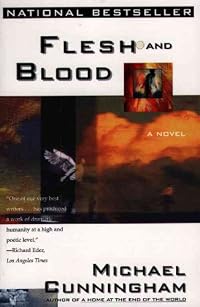
Flesh and Blood
by Michael Cunningham
On This Page
Description
The story of Constantine Stassos, a Greek immigrant. He marries an Italian girl, they have three children and he becomes a rich construction boss. After which it's downhill all the way: drugs, sex and the generation gap. The parents divorce, a son becomes a homosexual, the daughter has an illegitimate black baby. By the author of A Home at the End of the World.Tags
Recommendations







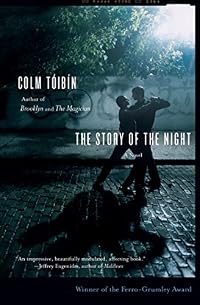


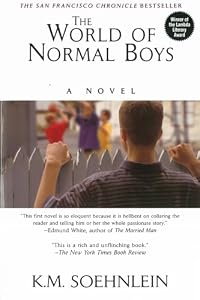
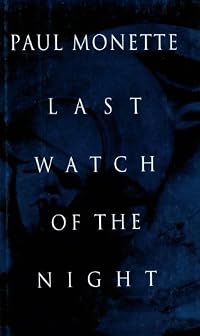

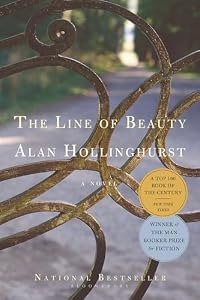
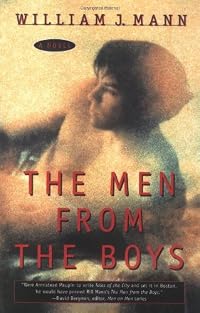

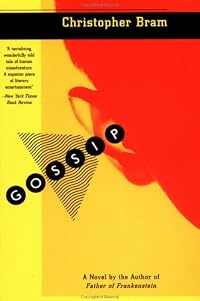
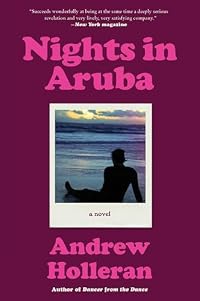

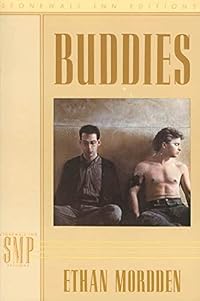


Member Recommendations
Member Reviews
If I'm counting correctly, this is the tenth one-star rating I've made recently. Others have been one-star or star-and-a-half. It would appear I hate reading. I do not! I've just picked books I wound up not liking.
Trigger warnings: domestic violence, incest, homophobia, transphobia, misogyny, cheating, incest between first cousins framed as sexual experimentation, death of a parent, racism, suicide by drowning, a dozen pointless explicit sex scenes
SPOILERS. This was required reading in one of my college English classes. I was sixteen, and the professor said, "If you're in my class, I view you as an adult. I will treat you as an adult. We will be reading books with adult content in them." Every single book we read had graphic sex scenes show more and violence within families, or in one case discord within a marriage and the accidental death of a child as a result of roughhousing with older children. My professor was a conceited, arrogant weirdo. He picked these books out. I suspect things about him, now, as an adult. It's been half my life ago as of this writing, but I'm wondering. He liked to be listened to, but not have discussions. Unless it was to steer someone to his POV. The class sat in a circle and analyzed this book the closest out of all the books he'd assigned. If someone seemed uncomfortable with the repetitive, gratuitous sex scenes, he'd shame them in class at length. I found the scenes exciting at the time. I didn't have a lot of life experience. Now, as an adult, I wondered how I'd interpret the book.
The story being told in this book does not really begin until page 270 (yes, two hundred and seventy) or so. Zoe, a woman dying of AIDS, is co-parenting her son with Cassandra, a woman the author refers to as a drag queen but I interpreted as a trans woman. The author mentions House of Xtraveganza in his dedication, which is a ball house and is examined at length in the documentary "Paris is Burning," which is a fantastic film. Cassandra could be either. I'm still going back and forth on it. Cassandra was my favorite character. Zoe is close to her brother Will, who has been secure in his homosexuality for years and fallen in love at thirty-five. I mention his homosexuality because the book makes such a goddamn big deal about it. The previous 270 pages could have been used as filler paragraphs, chapter transitions, and a few sentences here and there: references to their violent, tyrannical dad, their klepto, high-status mother, their dissatisfied sister who is cheating on her husband, who she literally married right out of high school. But this is written as a family saga, so it's gonna drag...on and on...I'm realizing I don't like family sagas.
"Behind Closed Doors" by Susan Sloan had its first hundred pages as backstory, too, and did a better job of it. It also had family violence as a major theme, and a few sex scenes, and cheating, and the characters were also Catholic, and it was a family saga. So, on the surface they had several things in common. Back to this book. The sex scenes in this book are repetitive, explicit for no real reason, a huge turn-off, and add nothing to the story. Nor do the repeated domestic violence scenes. The incest doesn't add anything, either. Cunningham spends pages and pages on these three themes, when a paragraph here and there would be much more effective. The prose is incredibly flowery and purple. There's tons of useless narrative passages that increase as the book goes on. It's like the author didn't know what to do, so he padded out his word count.
Years after I read this book for the first time, one passage in particular continued to stay with me. I had associated it with this book even after I'd largely forgotten the book itself. There is a...sad beauty, I'd describe it, to the sentence, "When the time came to start hating them...Andrew would be the last." (Cunningham 339). I'd looked forward to that passage for that one sentence, and was utterly dismayed to not find it in the book for awhile. I'd begun to think it was in another book altogether when wham, I turned a page and there it was! What delight, at realizing this was the book that had it. I kept reading because I wanted to finish the book. For some reason, Ben dies by drowning, with the implication that it's better to be dead than not heterosexual? WOW. A Bury Your Gays, Teenager Edition, written by a gay man who's won awards for his writing. I know of several out gay men who have this trope in their writing, but it's so harmful and stupid. And Ben was in an incestuous relationship with his cousin Jamal? Seriously WHY. I was so glad when the book ended. show less
Trigger warnings: domestic violence, incest, homophobia, transphobia, misogyny, cheating, incest between first cousins framed as sexual experimentation, death of a parent, racism, suicide by drowning, a dozen pointless explicit sex scenes
SPOILERS. This was required reading in one of my college English classes. I was sixteen, and the professor said, "If you're in my class, I view you as an adult. I will treat you as an adult. We will be reading books with adult content in them." Every single book we read had graphic sex scenes show more and violence within families, or in one case discord within a marriage and the accidental death of a child as a result of roughhousing with older children. My professor was a conceited, arrogant weirdo. He picked these books out. I suspect things about him, now, as an adult. It's been half my life ago as of this writing, but I'm wondering. He liked to be listened to, but not have discussions. Unless it was to steer someone to his POV. The class sat in a circle and analyzed this book the closest out of all the books he'd assigned. If someone seemed uncomfortable with the repetitive, gratuitous sex scenes, he'd shame them in class at length. I found the scenes exciting at the time. I didn't have a lot of life experience. Now, as an adult, I wondered how I'd interpret the book.
The story being told in this book does not really begin until page 270 (yes, two hundred and seventy) or so. Zoe, a woman dying of AIDS, is co-parenting her son with Cassandra, a woman the author refers to as a drag queen but I interpreted as a trans woman. The author mentions House of Xtraveganza in his dedication, which is a ball house and is examined at length in the documentary "Paris is Burning," which is a fantastic film. Cassandra could be either. I'm still going back and forth on it. Cassandra was my favorite character. Zoe is close to her brother Will, who has been secure in his homosexuality for years and fallen in love at thirty-five. I mention his homosexuality because the book makes such a goddamn big deal about it. The previous 270 pages could have been used as filler paragraphs, chapter transitions, and a few sentences here and there: references to their violent, tyrannical dad, their klepto, high-status mother, their dissatisfied sister who is cheating on her husband, who she literally married right out of high school. But this is written as a family saga, so it's gonna drag...on and on...I'm realizing I don't like family sagas.
"Behind Closed Doors" by Susan Sloan had its first hundred pages as backstory, too, and did a better job of it. It also had family violence as a major theme, and a few sex scenes, and cheating, and the characters were also Catholic, and it was a family saga. So, on the surface they had several things in common. Back to this book. The sex scenes in this book are repetitive, explicit for no real reason, a huge turn-off, and add nothing to the story. Nor do the repeated domestic violence scenes. The incest doesn't add anything, either. Cunningham spends pages and pages on these three themes, when a paragraph here and there would be much more effective. The prose is incredibly flowery and purple. There's tons of useless narrative passages that increase as the book goes on. It's like the author didn't know what to do, so he padded out his word count.
Years after I read this book for the first time, one passage in particular continued to stay with me. I had associated it with this book even after I'd largely forgotten the book itself. There is a...sad beauty, I'd describe it, to the sentence, "When the time came to start hating them...Andrew would be the last." (Cunningham 339). I'd looked forward to that passage for that one sentence, and was utterly dismayed to not find it in the book for awhile. I'd begun to think it was in another book altogether when wham, I turned a page and there it was! What delight, at realizing this was the book that had it. I kept reading because I wanted to finish the book. For some reason, Ben dies by drowning, with the implication that it's better to be dead than not heterosexual? WOW. A Bury Your Gays, Teenager Edition, written by a gay man who's won awards for his writing. I know of several out gay men who have this trope in their writing, but it's so harmful and stupid. And Ben was in an incestuous relationship with his cousin Jamal? Seriously WHY. I was so glad when the book ended. show less
Flesh and Blood is the story of a complicated family that started with the marriage at a very early age of Greek immigrant, Constantine, and Italian immigrant, Mary. They eventually have three children, Susan, Billy and Zoe, while Constantine struggles to make a living in construction on Long Island. Susan is the golden child over whom Constantine obsesses and whose presence makes her increasingly uncomfortable; Billy is academically brilliant, an outlier and the object of his father's frequent physical and verbal assaults; Zoe is the quiet child who observes her family from a quiet distance.
Cunningham deftly captures the dynamics of this group of individuals, all of whom are alienated from each other at some time for some reason with show more the mother wringing her hands in the background. The father's disappointment in and disapproval of his son's gay lifestyle is irreparable at an early age. His subsequent violent rages create a distance that can never be bridged. The most sympathetic character for me was the drag queen, Cassandra, with her unwavering loyalty and love at a time when it was most needed. The ending is especially poignant. show less
Cunningham deftly captures the dynamics of this group of individuals, all of whom are alienated from each other at some time for some reason with show more the mother wringing her hands in the background. The father's disappointment in and disapproval of his son's gay lifestyle is irreparable at an early age. His subsequent violent rages create a distance that can never be bridged. The most sympathetic character for me was the drag queen, Cassandra, with her unwavering loyalty and love at a time when it was most needed. The ending is especially poignant. show less
Cunningham is a master with words. His prose is beautiful, his descriptions can be startling, his characters are full. "Flesh and Blood" had the unusual combination of being a book I didn't want to put down, and being a book I wanted to savor slowly. I read several segments two or three times, just for fun. I'll probably go back and re-read more.
It's not perfect. Cunningham's attempt to pull in every character's point of view left me wanting more of certain characters and less of others. I liked knowing Constantine's point of view as it related to his children and grandchildren, for example, but the details of his construction business and other relationships late in life could have been left out to make room for more details of the show more up-and-coming generations.
Certain pivotal events feel glossed over--it's hard to elaborate without giving away plot details. In one case, we know Event A is going to happen, then Event B completely overshadows A, and then we skip ahead to where A has already happened. The reactions of most of the characters to both events could be elaborated on more and yet, at that point Cunningham seems to be pretty much done with the book and ready to tie up loose ends.
And, OK, I didn't like the ending that much. The last chapter had the potential to be a nice moment, but it fell short. I didn't need a summary of the next 40 years in everyone's lives, I needed to maintain my connection to the character Cunningham chose to end with in order to care about that nice moment.
Or maybe I just needed him to stop sooner, and write the next 40 years into another gorgeous novel. show less
It's not perfect. Cunningham's attempt to pull in every character's point of view left me wanting more of certain characters and less of others. I liked knowing Constantine's point of view as it related to his children and grandchildren, for example, but the details of his construction business and other relationships late in life could have been left out to make room for more details of the show more up-and-coming generations.
Certain pivotal events feel glossed over--it's hard to elaborate without giving away plot details. In one case, we know Event A is going to happen, then Event B completely overshadows A, and then we skip ahead to where A has already happened. The reactions of most of the characters to both events could be elaborated on more and yet, at that point Cunningham seems to be pretty much done with the book and ready to tie up loose ends.
And, OK, I didn't like the ending that much. The last chapter had the potential to be a nice moment, but it fell short. I didn't need a summary of the next 40 years in everyone's lives, I needed to maintain my connection to the character Cunningham chose to end with in order to care about that nice moment.
Or maybe I just needed him to stop sooner, and write the next 40 years into another gorgeous novel. show less
As usual, Cunningham's writing is beautiful, the characters richly developed, and the story engrossing. Cunningham writes family dramas like no one else (Franzen's The Corrections comes close, though). This one finally scrubs out the bad taste left in my mouth by the travesty that was Specimen Days.
I really enjoy Michael Cunningham's writing, quite poetic and flowing and I could not put this book down. However I am not sure I liked any of the characters, even at the end. Also, almost every male character in the novel had conflicted feelings about his sexuality, which in my limited experience did not seem realistic.
This might be my favorite Cunningham book. Devastating. Some parts are written from a child's perspective, very real, very intense. A lovely drag queen in this book too.
Covering many years and concluding well in the future, this family saga centres on the lives of three children, including the son who is gay, and their parents a Greek immigrant and his Italian wife.
Of the children, Susan readily marries to escape he father; Billy goes to Harvard; and Zoë takes up a free lifestyle in New York. Each finds love in his or her own way, and of course the problems that go with such. As the children in turn have children their lives become part of the saga. Each member of the family is a distinct and very individual character, from the down to earth, physical, abusive and self made patriarch Constantine, his sensitive wife Mary, the rather prim Susan, level headed Billy who is gay and perhaps the most show more endearing member of the family, and Zoë who is into free love and drugs. The one outsider to the family who figures strongly in the story is Cassandra, Zoë’s flamboyant transvestite and very caring friend, and an appealing individual.
Between them they face innumerable troubles including divorce, abuse, illness, discrimination, drugs, AIDS, adultery, suicide, death, and family rejection. But these troubles are tempered with the more positive, essentially the love that binds a family, and the love that some find beyond the family, including gay love. As the saga draws to its conclusion way in the future it is the less conventional family members, those at times rejected, who come through with credit and prove to be the true survivors.
Flesh and Blood is an engrossing family drama with vividly drawn and diverse characters, a very moving and ultimately heart warming story. show less
Of the children, Susan readily marries to escape he father; Billy goes to Harvard; and Zoë takes up a free lifestyle in New York. Each finds love in his or her own way, and of course the problems that go with such. As the children in turn have children their lives become part of the saga. Each member of the family is a distinct and very individual character, from the down to earth, physical, abusive and self made patriarch Constantine, his sensitive wife Mary, the rather prim Susan, level headed Billy who is gay and perhaps the most show more endearing member of the family, and Zoë who is into free love and drugs. The one outsider to the family who figures strongly in the story is Cassandra, Zoë’s flamboyant transvestite and very caring friend, and an appealing individual.
Between them they face innumerable troubles including divorce, abuse, illness, discrimination, drugs, AIDS, adultery, suicide, death, and family rejection. But these troubles are tempered with the more positive, essentially the love that binds a family, and the love that some find beyond the family, including gay love. As the saga draws to its conclusion way in the future it is the less conventional family members, those at times rejected, who come through with credit and prove to be the true survivors.
Flesh and Blood is an engrossing family drama with vividly drawn and diverse characters, a very moving and ultimately heart warming story. show less
Members
- Recently Added By
Lists

Good LGBT fiction for LGBT folk and friends
537 works; 54 members

TBR - Older Books
92 works; 1 member
Author Information

38+ Works 23,426 Members
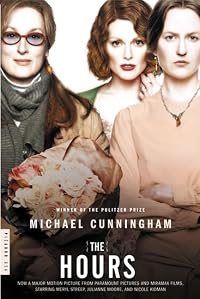
Michael Cunningham was born November 6, 1952 in Cincinnati, Ohio and grew up in Pasadena, California. He received a B.A. in English literature from Stanford University and an M.F.A. in creative writing from the University of Iowa. Cunningham is the recipient of a Guggenheim Fellowship in 1993 and a Whiting Writers' Award in 1995. In 1999, he show more received the Pulitzer Prize for Fiction and the PEN/Faulkner Award for his novel, The Hours, which was later made into an Oscar-winning 2002 movie of the same name starring Nicole Kidman, Meryl Streep and Julianne Moore. Cunningham taught at the Fine Arts Work Center in Provincetown, Massachusetts and in the creative writing M.F.A. program at Brooklyn College. He is a senior lecturer of creative writing at Yale University. show less
Awards and Honors
Work Relationships
Is contained in
Common Knowledge
- Canonical title
- Flesh and Blood
- Original title
- Flesh and Blood
- Original publication date
- 1995
- People/Characters*
- Constantine Stassos (Griekse immigrant); Mary (zijn vrouw van Italiaanse origine); Magda; Susan (de oudste dochter, Todd en Ben); Billy-Will (de zoon en Harry); Zoë (de jongste dochter en Jamal) (show all 7); Cassandra (de travestiet)
- Epigraph*
- Once an angry man dragged his father along the ground through his own orchard. 'Stop!" cried the groaning old man at last. "Stop! I did not drag my father beyond this tree."
- GERTRUDE STEIN, The Making of Americans - Dedication*
- This book is for Donna Lee & Cristina Thorson
- First words*
- 1935. Constantine, eight years old, was working in his father's garden and thinking about his own garden, a square of powdered granite he had staked out and combed into rows at the top of his family's land. Eerst wiedde hij a... (show all)ltijd de bonestaakrijen van zijn vader, daarna kroop hij langs de knoestige taaie ranken van zijn vaders wijngaard om eigenzinnige uitlopers weer langs de stokken te leiden met bruin touw - voor hem precies de juiste kleur en structuur van vrome, tot mislukking gedoemde inspanningen... Steeds als zijn vader dingen zei als:'We werken ons dood om in leven te blijven', zag Constantine dit touw voor zich, ruig, sterk en saai, met een weerbarstig soort beharing, je kon er de hele wereld mee samenbinden tot een log pak dat niet onderworpen en gebonden wilde blijven, net zoals wijnranden zich los bleven werken en uitbundige, zich naar de hemel uitstrekkende uitlopers vormden. Het tot orde roepen van de wijnranken behoorde tot zijn taken en hij had zowel respect als minachting voor hun koppige vrijheidsdrang ontwikkeld. De wijnranken leidden een verborgen chaotisch leven en bezaten een sluimerende wil, maar hij, Constantine, moest het ontgelden als ze niet netjes in de gewenste richting waren opgebonden.
- Quotations*
- Ze liep de eetkamer in en verschikte een tulp in het bloemstuk op tafel. Terwijl Mary het resultaat van haar inspanningen monsterde - de servietten strak opgerold in zilveren servetringen, de kaarsen loodrecht in hun zilveren... (show all) kandelabers - steeds haar gevoel van bevrediging op en viel toen weg in een complexere, maar even vertrouwde mengeling van blijdschap en vrees. Hier, te midden van het wachtende serviesgoed en kristal, huisde een schoonheid die vanwege haar onbestendigheid des te aangrijpender en angstaanjagender was. Die schoonheid zou nooit tot leven zijn gekomen als ze niet de spoedige komst van gasten had verwacht, maar toch zouden de gasten haar met hun komst tenietdoen.
- Last words*
- (Click to show. Warning: May contain spoilers.)"I can hear them."
*Some information comes from Common Knowledge in other languages. Click "Edit" for more information.
Classifications
Statistics
- Members
- 1,395
- Popularity
- 16,889
- Reviews
- 22
- Rating
- (3.89)
- Languages
- 16 — Czech, Danish, Dutch, English, Finnish, French, German, Italian, Japanese, Norwegian (Bokmål), Polish, Portuguese, Russian, Croatian, Spanish, Swedish
- Media
- Paper, Audiobook, Ebook
- ISBNs
- 44
- ASINs
- 10