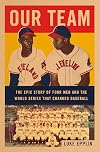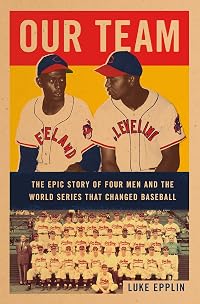
Our Team: The Epic Story of Four Men and the World Series That Changed Baseball
by Luke Epplin
On This Page
Description
"The riveting story of four men-Larry Doby, Bill Veeck, Bob Feller, and Satchel Paige-whose improbable union on the Cleveland Indians in the late 1940s would shape the immediate postwar era of Major League Baseball and beyond. In July 1947, not even three months after Jackie Robinson debuted on the Brooklyn Dodgers, snapping the color line that had segregated Major League Baseball, Larry Doby would follow in his footsteps on the Cleveland Indians. Though Doby, as the second Black player in show more the majors, would struggle during his first summer in Cleveland, his subsequent turnaround in 1948 from benchwarmer to superstar sparked one of the wildest and most meaningful seasons in baseball history. In intimate, absorbing detail, Our Team traces the story of the integration of the Cleveland Indians and their quest for a World Series title through four key participants: Bill Veeck, an eccentric and visionary owner adept at exploding fireworks on and off the field; Larry Doby, a soft-spoken, hard-hitting pioneer whose major-league breakthrough shattered stereotypes that so much of white America held about Black ballplayers; Bob Feller, a pitching prodigy from the Iowa cornfields who set the template for the athlete as businessman; and Satchel Paige, a legendary pitcher from the Negro Leagues whose belated entry into the majors whipped baseball fans across the country into a frenzy. Together, as the backbone of a team that epitomized the postwar American spirit in all its hopes and contradictions, these four men would captivate the nation by storming to the World Series--all the while rewriting the rules of what was possible in sports"-- show lessTags
Recommendations






Member Reviews
Summary: The story of four men who propelled the 1948 Cleveland Indians to a World Series Championship and how they changed baseball.
I read this book while the Cleveland Guardians were in the playoffs for the American League Championship. I fantasized about some of the glory of the 1948 World Series Champion Indians rubbing off on this team. Alas, the Yankees (Cleveland nemesis #1) put an end to those hopes in a five-game series. As a lifelong Cleveland fan, once again I find myself saying, “There is always next year….”
Our Team tells the story of the last championship baseball team in Cleveland by focusing on four key men who helped propel them to a championship. Bill Veeck. Bob Feller. Larry Doby. Satchel Paige. Two Whites. Two show more Blacks. They not only brought a championship to Cleveland. They helped change baseball.
Bill Veeck. The baseball entrepreneur who lost his lower leg to a war wound that he did not give a chance to heal. Instead, he relentlessly worked to fill Cleveland’s lakefront stadium through crazy promotions and fireworks, while cobbling together a team that included the second Black player as well as a veteran pitcher in the Negro Leagues.
Bob Feller. The aging Cleveland pitching ace from the Iowa cornfields, determined to make up for four lost seasons while in the military. In post-season exhibitions, he found another way to make money. Often, he matched up with Satchel Paige and other Black teams, but offered tepid reviews of Black players. In 1948, he struggles through the first part of the season, recovering something of his form late in the season, only for it to desert him in the tie-breaking playoff and World Series.
Larry Doby. The young war veteran playing for Newark in the Negro Leagues, spotted by Veeck and recruited for his power and speed. He was the second Black player in the majors after Jackie Robinson. Enduring separation because of race and riding the bench in 1947, he transitions to center field, propelling the Indians into contention with his bat, speed, and arm in 1948.
Satchel Paige. As much an entrepreneur as Feller or Veeck, he’d made a comfortable living pitching for over two decades in the Negro Leagues, wondering if he’d ever get a shot. In mid-season in 1948, Veeck finally recruits him to lift the struggling Cleveland pitching. His six wins and seven saves make a crucial difference in their pennant run
Luke Epplin skillfully interweaves their four stories into an account of the incredible season of 1948. As he does so, he shows how Veeck changed the character of the fan experience. Through supporting Doby and Paige, he made the Indians “our team” for the whole city, Black and White. In Bob Feller, we see a player trying to establish his own agency when there was no free agency. Then, with Larry Doby, we see the loneliness of separate lodgings and meals, the isolation from other teammates, and the efforts of Veeck to support him. Finally, with Paige, we witness a form of vindication of his greatness, as well as his incredible durability.
Of course it took more than the efforts of these four to win a championship. Epplin also chronicles the performances of Bob Lemon and Gene Bearden, bolstering the pitching when Feller faltered. And he describes the incredible season of player manager Lou Boudreau.
Epplin also gives us a sense of the evanescence of these moments of greatness. Veeck sacrificed his marriage and family for his baseball dreams. And sadly, aside from a pennant in 1954, the Indians would spend decades in mediocrity. Only with a new ballpark and contending teams would they again exceed the attendance figures of the Veeck era.
Personally, I especially appreciate the treatment of Larry Doby, whose great accomplishments have often been overlooked. And it was a gift to remember that great team and incredible season…and hope we will not have to wait too long for another one. show less
I read this book while the Cleveland Guardians were in the playoffs for the American League Championship. I fantasized about some of the glory of the 1948 World Series Champion Indians rubbing off on this team. Alas, the Yankees (Cleveland nemesis #1) put an end to those hopes in a five-game series. As a lifelong Cleveland fan, once again I find myself saying, “There is always next year….”
Our Team tells the story of the last championship baseball team in Cleveland by focusing on four key men who helped propel them to a championship. Bill Veeck. Bob Feller. Larry Doby. Satchel Paige. Two Whites. Two show more Blacks. They not only brought a championship to Cleveland. They helped change baseball.
Bill Veeck. The baseball entrepreneur who lost his lower leg to a war wound that he did not give a chance to heal. Instead, he relentlessly worked to fill Cleveland’s lakefront stadium through crazy promotions and fireworks, while cobbling together a team that included the second Black player as well as a veteran pitcher in the Negro Leagues.
Bob Feller. The aging Cleveland pitching ace from the Iowa cornfields, determined to make up for four lost seasons while in the military. In post-season exhibitions, he found another way to make money. Often, he matched up with Satchel Paige and other Black teams, but offered tepid reviews of Black players. In 1948, he struggles through the first part of the season, recovering something of his form late in the season, only for it to desert him in the tie-breaking playoff and World Series.
Larry Doby. The young war veteran playing for Newark in the Negro Leagues, spotted by Veeck and recruited for his power and speed. He was the second Black player in the majors after Jackie Robinson. Enduring separation because of race and riding the bench in 1947, he transitions to center field, propelling the Indians into contention with his bat, speed, and arm in 1948.
Satchel Paige. As much an entrepreneur as Feller or Veeck, he’d made a comfortable living pitching for over two decades in the Negro Leagues, wondering if he’d ever get a shot. In mid-season in 1948, Veeck finally recruits him to lift the struggling Cleveland pitching. His six wins and seven saves make a crucial difference in their pennant run
Luke Epplin skillfully interweaves their four stories into an account of the incredible season of 1948. As he does so, he shows how Veeck changed the character of the fan experience. Through supporting Doby and Paige, he made the Indians “our team” for the whole city, Black and White. In Bob Feller, we see a player trying to establish his own agency when there was no free agency. Then, with Larry Doby, we see the loneliness of separate lodgings and meals, the isolation from other teammates, and the efforts of Veeck to support him. Finally, with Paige, we witness a form of vindication of his greatness, as well as his incredible durability.
Of course it took more than the efforts of these four to win a championship. Epplin also chronicles the performances of Bob Lemon and Gene Bearden, bolstering the pitching when Feller faltered. And he describes the incredible season of player manager Lou Boudreau.
Epplin also gives us a sense of the evanescence of these moments of greatness. Veeck sacrificed his marriage and family for his baseball dreams. And sadly, aside from a pennant in 1954, the Indians would spend decades in mediocrity. Only with a new ballpark and contending teams would they again exceed the attendance figures of the Veeck era.
Personally, I especially appreciate the treatment of Larry Doby, whose great accomplishments have often been overlooked. And it was a gift to remember that great team and incredible season…and hope we will not have to wait too long for another one. show less
Readers who enjoy baseball history, or history of life in America immediately after WW II should enjoy Luke Epplin's book " Our Team: The Epic Story of Four Men and the World Series That Changed Baseball". Eplin weaves together the story of four important men in baseball (Bill Veeck, pitchers Bob Feller and Satchel Paige, and outfielder Lary Doby) in a way that both baseball fans and non-fans can enjoy. The story culminates with the Cleveland Indians chase for the American League pennant in 1948. It's a great baseball story, but the book also looks at what life was like in the old Negro baseball leagues, and how segregation and Jim Crow laws impacted the black ball players in mid-20th century America.
Baseball fans across the country show more are frequently reminded about Jackie Robinson's historic impact on the game when on April 15th each year, players throughout the league don uniforms with Robinson's number 42 to mark the anniversary of the day the Brooklyn Dodgers Hall of Famer broke baseball's color barrier. There are also books and movies about Robinson being the first black player in the Major Leagues.
But much less is known about Lary Doby, the second player from the old Negro baseball league to integrate Major League Baseball. Like Robinson, Doby had to endure racial taunts and indignities, and struggled to be accepted, especially early in his career. But he never seemed to receive the accolades for what he achieved and endured. "Our Team" helps offset those slights, and addresses these issues. The book shows that there were some that did accept him and try to help him, especially team owner Bill Veeck. And Epplin points out that depsite the hardship Doby endured, Doby did ultimately achieve success and on-field acceptance by the fans of the Cleveland ball team.
Satchel Paige is another star from the Negro Baseball Leagues who was denied the opportunity to play in the major leagues until he was in his late 40s and well past his prime. Nonetheless, Paige also was signed by Bill Veeck to play for the Cleveland Indians, and did play a part in helping the Indians win a World Series. It's interesting to compare how different major league pitchers are treated today compared to the pitchers of the mid-20th century. Modern pitchers are on strict pitch count and rarely pitch a full nine innings. But as Epplin reminds readers, pitchers in early baseball were expected to pitch complete games, often on only two days (or less) of rest.
I also found it interesting to see that the recent cheating scandal of the 2017 & 2018 Houston Astros, stealing signs to aid their batters, isn't brand new. Teams had been stealing the catcher's signs off and on for years, as Epplin notes, with little or nothing being said.
Bob Feller was also a key player for the Cleveland Indians, but surprisingly wasn't the key pitcher in the World Series year of 1948. He did have a remarkable career, and was likely the first baseball player to be popular enough to incorporate himself and become a true visionary and star. There were many interesting anecdotes like that about people, places, baseball games, barnstorming, and life in the era - I found surprises and enjoyment in every chapter. show less
Baseball fans across the country show more are frequently reminded about Jackie Robinson's historic impact on the game when on April 15th each year, players throughout the league don uniforms with Robinson's number 42 to mark the anniversary of the day the Brooklyn Dodgers Hall of Famer broke baseball's color barrier. There are also books and movies about Robinson being the first black player in the Major Leagues.
But much less is known about Lary Doby, the second player from the old Negro baseball league to integrate Major League Baseball. Like Robinson, Doby had to endure racial taunts and indignities, and struggled to be accepted, especially early in his career. But he never seemed to receive the accolades for what he achieved and endured. "Our Team" helps offset those slights, and addresses these issues. The book shows that there were some that did accept him and try to help him, especially team owner Bill Veeck. And Epplin points out that depsite the hardship Doby endured, Doby did ultimately achieve success and on-field acceptance by the fans of the Cleveland ball team.
Satchel Paige is another star from the Negro Baseball Leagues who was denied the opportunity to play in the major leagues until he was in his late 40s and well past his prime. Nonetheless, Paige also was signed by Bill Veeck to play for the Cleveland Indians, and did play a part in helping the Indians win a World Series. It's interesting to compare how different major league pitchers are treated today compared to the pitchers of the mid-20th century. Modern pitchers are on strict pitch count and rarely pitch a full nine innings. But as Epplin reminds readers, pitchers in early baseball were expected to pitch complete games, often on only two days (or less) of rest.
I also found it interesting to see that the recent cheating scandal of the 2017 & 2018 Houston Astros, stealing signs to aid their batters, isn't brand new. Teams had been stealing the catcher's signs off and on for years, as Epplin notes, with little or nothing being said.
Bob Feller was also a key player for the Cleveland Indians, but surprisingly wasn't the key pitcher in the World Series year of 1948. He did have a remarkable career, and was likely the first baseball player to be popular enough to incorporate himself and become a true visionary and star. There were many interesting anecdotes like that about people, places, baseball games, barnstorming, and life in the era - I found surprises and enjoyment in every chapter. show less
Exciting, well paced and well researched story of the fall of the color barrier in the late Forties in major league baseball, and what it cost a few brave individuals in the short run. Led me to many other books about the history of the Negro baseball leagues.
I don't remember where I got this book 🤔. My partner and I listened to it while on longer drives to and from the Ocean. Very satisfying. We both learned something about baseball and discrimination we had not thought about. I will remember this book.
Ratings
Members
- Recently Added By
Lists

42 Books Every Clevelander Should Read
42 works; 3 members
Author Information
2 Works 114 Members
Luke Epplin's writing has appeared online in The Atlantic, The New Yorker, GQ, Slate, Salon, The Daily Beast, and The Paris Review. Born and raised in rural Illinois, Luke now lives in New York City.
Awards and Honors
Awards
Classifications
- Genres
- Sports and Leisure, Nonfiction, General Nonfiction, History, Biography & Memoir
- DDC/MDS
- 796.357 — Arts & recreation Recreation, sports, and performing arts Athletic and outdoor sports and games Ball sports Ball and stick sports Baseball
- LCC
- GV875 .C7 .E77 — Geography, Anthropology and Recreation Recreation. Leisure Recreation. Leisure Sports Ball games: Baseball, football, golf, etc.
- BISAC
Statistics
- Members
- 101
- Popularity
- 320,028
- Reviews
- 4
- Rating
- (4.42)
- Languages
- English
- Media
- Paper, Audiobook, Ebook
- ISBNs
- 4
- ASINs
- 2