
John W. Miller
Author of Meet the Prophets: A Beginner's Guide to the Books of the Biblical Prophets
About the Author
John W. Miller has taught at the Mennonite seminaries in Goshen and Elkhart, Indiana, and at North Park and Garrett Theological Seminaries in the Chicago area
Works by John W. Miller
The Last Manager: How Earl Weaver Tricked, Tormented, and Reinvented Baseball (2025) 80 copies, 4 reviews
The Christian way;: A guide to the Christian life based on the Sermon on the Mount, (1969) 35 copies
Judgment and hope : eight plays from the lives of Jeremiah, Ezekiel, Haggai, and Zechariah (1972) 5 copies
Associated Works
Does Christianity Teach Male Headship? The Equal-Regard Marriage and Its Critics (2004) — Contributor — 57 copies
Tagged
Common Knowledge
Members
Reviews
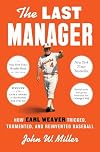
Summary: A biography of manager Earl Weaver, his baseball career, his strategic innovations, and his feisty character.
I try to review a baseball book or two every summer. But I don’t recall that I’ve ever reviewed a biography of a manager. Earl Weaver is a fitting subject, having managed four pennant-winning teams between 1968 and 1982, each time winning over 100 games. One of those won the World Series. He brought strategic innovations to managing that changed the game. Of course, he is show more remembered for his feisty run-ins with umpires, tirades that mixed vulgarities and Shakespeare and lots of dirt kicking. John W. Miller’s new biography, The Last Manager, paints a full-color picture of a most colorful figure in baseball history.
But Earl Weaver never set out to be a manager. Growing up in St. Louis, which had two baseball teams (the Browns and the Orioles), he was a star high school player and made it to the minor leagues, despite his small size. He even made it to spring training on the Cardinals in 1951, only to be sent back to the minors because the manager, Eddie Stankey was still playing, and his position was second base. That was the zenith of his playing career. Miller traces his decline over the next years as a player.
But Earl always was an analyst of the game. Watching games with his uncle, who engaged in sports betting, he developed the instincts of an analyst, figuring out statistics, like on base percentage, that mattered. He analyzed managers decisions, the good and bad. At Knoxville, in the mid-1950’s, he got his chance when the team manager did abysmally and everyone recognized Weaver might be better, including the owners. About then, Paul Richards was building the Orioles farm system, and recognized in Weaver the kind of baseball man he was looking for.
Miller traces his rise from 1957 to 1968 in the Orioles farm system, working his way up the ladder and helping develop the Oriole Way, eventually managing their Rochester team. Then mid-season in 1968, the call came to replace poorly performing Hank Bauer. The team played 48-34 after Weaver took over. He insisted on the Oriole Way, which detailed excellence, both on and off the field. Weaver didn’t allow his pitchers to waste pitches but put a priority on throwing strikes. He didn’t waste outs either. He was opposed generally to the hit and run and bunting. And he was the one to introduce the radar gun and figure out the optimum difference between the speed of fastballs and off-speed pitches (about 20 mph).
Weaver not only fought with umpires but also with players. His fights with Jim Palmer were legendary, but Palmer kept turning in 20-game seasons. It was never personal and part of Weaver’s genius was to push players to their best, sometimes by uniting the team against him. In the midst of his time with the Orioles, he figured out the transition to free agency. He recognized in Cal Ripken, Jr. the potential for the big shortstop.
He coached through 1982, and then a brief return in 1985-86. It didn’t seem his heart was in it when he came back. Sports broadcasting didn’t fit. He was elected to the Hall of Fame in 1996, only the thirteenth manager admitted..
Miller shows how the analytics Weaver developed have expanded in today’s much more highly computerized world. While managers are much more player-oriented as a rule, Weaver’s qualities of “leadership, passion, and motivation” are still key. Weaver’s approach to spring training and practice also continues to influence the game.
We also catch glimpses of Weaver off the field. He loved to garden and had a rivalry with his groundskeeper over who grew the best tomatoes. In retirement, he was a pioneer in developing sports videogaming.
I loved this biography for both bringing out Weaver’s character and its glimpse of “inside baseball.” Miller helps us appreciate how Weaver’s on-the-field antics revealed his fierce passion for his players. And for the baseball buff, it recalls those great Oriole baseball teams of the seventies, not built with big money but a good farm system and attention to the fundamentals. This has all the elements of a great baseball book! show less
I try to review a baseball book or two every summer. But I don’t recall that I’ve ever reviewed a biography of a manager. Earl Weaver is a fitting subject, having managed four pennant-winning teams between 1968 and 1982, each time winning over 100 games. One of those won the World Series. He brought strategic innovations to managing that changed the game. Of course, he is show more remembered for his feisty run-ins with umpires, tirades that mixed vulgarities and Shakespeare and lots of dirt kicking. John W. Miller’s new biography, The Last Manager, paints a full-color picture of a most colorful figure in baseball history.
But Earl Weaver never set out to be a manager. Growing up in St. Louis, which had two baseball teams (the Browns and the Orioles), he was a star high school player and made it to the minor leagues, despite his small size. He even made it to spring training on the Cardinals in 1951, only to be sent back to the minors because the manager, Eddie Stankey was still playing, and his position was second base. That was the zenith of his playing career. Miller traces his decline over the next years as a player.
But Earl always was an analyst of the game. Watching games with his uncle, who engaged in sports betting, he developed the instincts of an analyst, figuring out statistics, like on base percentage, that mattered. He analyzed managers decisions, the good and bad. At Knoxville, in the mid-1950’s, he got his chance when the team manager did abysmally and everyone recognized Weaver might be better, including the owners. About then, Paul Richards was building the Orioles farm system, and recognized in Weaver the kind of baseball man he was looking for.
Miller traces his rise from 1957 to 1968 in the Orioles farm system, working his way up the ladder and helping develop the Oriole Way, eventually managing their Rochester team. Then mid-season in 1968, the call came to replace poorly performing Hank Bauer. The team played 48-34 after Weaver took over. He insisted on the Oriole Way, which detailed excellence, both on and off the field. Weaver didn’t allow his pitchers to waste pitches but put a priority on throwing strikes. He didn’t waste outs either. He was opposed generally to the hit and run and bunting. And he was the one to introduce the radar gun and figure out the optimum difference between the speed of fastballs and off-speed pitches (about 20 mph).
Weaver not only fought with umpires but also with players. His fights with Jim Palmer were legendary, but Palmer kept turning in 20-game seasons. It was never personal and part of Weaver’s genius was to push players to their best, sometimes by uniting the team against him. In the midst of his time with the Orioles, he figured out the transition to free agency. He recognized in Cal Ripken, Jr. the potential for the big shortstop.
He coached through 1982, and then a brief return in 1985-86. It didn’t seem his heart was in it when he came back. Sports broadcasting didn’t fit. He was elected to the Hall of Fame in 1996, only the thirteenth manager admitted..
Miller shows how the analytics Weaver developed have expanded in today’s much more highly computerized world. While managers are much more player-oriented as a rule, Weaver’s qualities of “leadership, passion, and motivation” are still key. Weaver’s approach to spring training and practice also continues to influence the game.
We also catch glimpses of Weaver off the field. He loved to garden and had a rivalry with his groundskeeper over who grew the best tomatoes. In retirement, he was a pioneer in developing sports videogaming.
I loved this biography for both bringing out Weaver’s character and its glimpse of “inside baseball.” Miller helps us appreciate how Weaver’s on-the-field antics revealed his fierce passion for his players. And for the baseball buff, it recalls those great Oriole baseball teams of the seventies, not built with big money but a good farm system and attention to the fundamentals. This has all the elements of a great baseball book! show less
Earl Weaver drank too much, smoked too much, cursed too much, argued and yelled too much. It’s hard to think of anything he did that he didn’t do too much. He also won, though, and it’s hard to do too much of that.
Weaver was a Hall of Fame manager. He took over the Orioles during the 1968 season, then took them to the World Series three straight years. All together, over 17 years as a manager, he won over 58% of his games. He also got tossed out of 96 games by umpires.
Miller’s bio show more tries to convey the blend that made up Weaver — the high drama personality and the shrewd “narrow intelligence” that made him a great strategist, motivator, and entertainer.
He knew he was on stage. He put on a show, kicking dirt over home plate, poking his finger into (much taller) umpires’ chests, punctuating every argument with wild gestures and top-of-the-lungs cursing.
But he was also a great strategist. Miller emphasizes how far ahead of its time Weaver’s analytical decision-making was. Weaver wanted players with high on-base-percentage even if they hit for a low average and little power (e.g., Glenn Gulliver), he wanted starting pitchers who threw strikes instead of picking at corners (e.g., Dave McNally), and he preached defensive excellence (e.g., Mark Belanger). “Pitching, defense, and three run homers” was the legacy of Weaver strategy.
He played matchups. He platooned. Just ask John Lowenstein. Weaver made a 300 hitter out of Lownestein by picking his spots and platooning him as a left-handed batter with right-handed Gary Roenicke. He could take what most people regarded as average players and combine them into an all star aggregate player at their position.
Miller attributes much of Weaver’s analytical approach to his relationship with his Uncle Bud. Uncle Bud was a mobster. A bookie. He played the percentages, the odds. Weaver grew up going to Cardinals games in St. Louis with Uncle Bud, letting his odds-and-percentages view of the game rub off on him. It stuck.
Miller calls Weaver baseball’s “last manager,” as the last of the generations of managers who really controlled their teams, whose strategy came out of their direct experience and thinking, and who imprinted the game with their personalities.
Weaver was not a great player, himself. He never made it to the Major Leagues, although he came closer than I thought. He appeared to have made the St. Louis Cardinals roster out of spring training in 1952, as a backup second baseman to Red Schoendienst. But Eddie Stankey was hired as the Cardinals’ manager and wanted to extend his playing career as a player-manager. Stankey was a second baseman. There went Weaver’s roster spot.
But he made it another way, not with the Cardinals, but with the other St. Louis team when the Browns had moved to Baltimore. He came up through their system as a manager (first as a player-manager himself) and made it to the top at a still-young 37.
Reading Miller’s book was nostalgic. I remember those years. I’ve been an Orioles fan for about 60 years, and I remember Weaver being made first base coach in 1968, hovering next to then-manager Hank Bauer, who had taken the team to a championship just a couple of years earlier. Bauer knew the hand-writing on the wall when he saw it. Weaver was already a phenom. show less
Weaver was a Hall of Fame manager. He took over the Orioles during the 1968 season, then took them to the World Series three straight years. All together, over 17 years as a manager, he won over 58% of his games. He also got tossed out of 96 games by umpires.
Miller’s bio show more tries to convey the blend that made up Weaver — the high drama personality and the shrewd “narrow intelligence” that made him a great strategist, motivator, and entertainer.
He knew he was on stage. He put on a show, kicking dirt over home plate, poking his finger into (much taller) umpires’ chests, punctuating every argument with wild gestures and top-of-the-lungs cursing.
But he was also a great strategist. Miller emphasizes how far ahead of its time Weaver’s analytical decision-making was. Weaver wanted players with high on-base-percentage even if they hit for a low average and little power (e.g., Glenn Gulliver), he wanted starting pitchers who threw strikes instead of picking at corners (e.g., Dave McNally), and he preached defensive excellence (e.g., Mark Belanger). “Pitching, defense, and three run homers” was the legacy of Weaver strategy.
He played matchups. He platooned. Just ask John Lowenstein. Weaver made a 300 hitter out of Lownestein by picking his spots and platooning him as a left-handed batter with right-handed Gary Roenicke. He could take what most people regarded as average players and combine them into an all star aggregate player at their position.
Miller attributes much of Weaver’s analytical approach to his relationship with his Uncle Bud. Uncle Bud was a mobster. A bookie. He played the percentages, the odds. Weaver grew up going to Cardinals games in St. Louis with Uncle Bud, letting his odds-and-percentages view of the game rub off on him. It stuck.
Miller calls Weaver baseball’s “last manager,” as the last of the generations of managers who really controlled their teams, whose strategy came out of their direct experience and thinking, and who imprinted the game with their personalities.
Weaver was not a great player, himself. He never made it to the Major Leagues, although he came closer than I thought. He appeared to have made the St. Louis Cardinals roster out of spring training in 1952, as a backup second baseman to Red Schoendienst. But Eddie Stankey was hired as the Cardinals’ manager and wanted to extend his playing career as a player-manager. Stankey was a second baseman. There went Weaver’s roster spot.
But he made it another way, not with the Cardinals, but with the other St. Louis team when the Browns had moved to Baltimore. He came up through their system as a manager (first as a player-manager himself) and made it to the top at a still-young 37.
Reading Miller’s book was nostalgic. I remember those years. I’ve been an Orioles fan for about 60 years, and I remember Weaver being made first base coach in 1968, hovering next to then-manager Hank Bauer, who had taken the team to a championship just a couple of years earlier. Bauer knew the hand-writing on the wall when he saw it. Weaver was already a phenom. show less
The wonderful nuances of baseball and how the game has evolved, through the lens of one of its best all-time managers. I enjoyed watching the game more when it was less predictable, more chaotic and error prone, and just more fun. At least that's what I think. Good story. Some funny repetition in the beginning third of the book, explanations and overviews repeated again within a few pages. Almost as if the editor was asleep - I can imagine a situation where parts of the story were rewritten show more but not well integrated into the final draft. Sorta...at least that's how it felt to me show less
Returned me for a time to the baseball fandom of my childhood. Enjoyed getting to know the O's scrappy manager.
Awards

You May Also Like


Associated Authors
Statistics
- Works
- 24
- Also by
- 1
- Members
- 544
- Popularity
- #45,826
- Rating
- 4.1
- Reviews
- 5
- ISBNs
- 41
- Languages
- 1