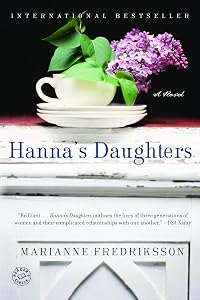
Hanna's Daughters
by Marianne Fredriksson
On This Page
Description
Anna has returned from visiting her mother. Restless and unable to sleep, she wanders through her parents' house, revisiting the scenes of her childhood. In a cupboard drawer, folded and pushed away from sight, she finds a sepia photograph of her grandmother, Hanna, who she remembers as old and forbidding, a silent stranger enveloped in a huge pleated black dress. Now, looking at the features Anna recognises as her own, she realises she is looking at a different woman from the one of her show more memory. Set against the majestic isolation of the Scandinavian lakes and mountains, this is more than a story of three Swedish women. It is a moving testament of a time forgotten and an epic romance in every sense of the word. show lessTags
Recommendations


























Member Recommendations

Member Reviews
Das Thema des Romans ist schnell erzählt: Die Lebensgeschichte dreier Frauen einer Familie in Schweden aus aufeinanderfolgenden Generationen, Großmutter, Mutter, Tochter. Daneben wird der Leserin und dem Leser in beeindruckender Art und Weise die Entwicklung der schwedischen Gesellschaft über zwei Jahrhunderte vor Augen geführt.
Beeindruckend finde ich wie es der Autorin gelingt, jeder ihrer Protagonistinnen eine eigene Sprache zu geben, die nicht nur die Zeit, sondern ebenso die Lebensverhältnisse widerspiegelt. Am Auffälligsten tritt dies gewiss bei Hanna zutage.
Hanna, die Großmutter, geb. 1871, ist sicherlich die Ungebildetste der drei. Sie, mit 12 vergewaltigt, schwanger und dadurch mit dem Makel als Hure gekennzeichnet, war show more von klein auf gezwungen, hart zu arbeiten um die Existenz ihrer Familie zu sichern. Nicht sie als Mensch war wichtig, sondern nur ihr Bemühen, ihre Arbeit, um ihren Kindern und ihrem Mann ein möglichst gesichertes Dasein zu bieten. Genauso stellt sich auch ihre Sprache dar: Keine Ich-Erzählung (statt dessen ein(e) allmächtige(r) Erzähler(in), schlichte, kurze Sätze, teilweise werden Wort- oder Satzteile einfach verschluckt. Nichts Überflüssiges, nur das Notwendigste. Alles was nicht unmittelbar dem Überleben dient, wird argwöhnisch betrachtet (lesen, musizieren, Zärtlichkeiten...). Es ist erschütternd zu erfahren, unter welch harten und zum Teil brutalen Bedingungen die Menschen zu dieser Zeit (und vermutlich nicht nur in Schweden) um ihre Existenz kämpften.
Ganz anders bei Johanna, geb. 1902 und Anna, geb. 1937. Beide konnten sich weiter bilden und entsprechend ändert sich auch die Sprache: längere Sätze, reflektierter, bei Johannas Lebensbeschreibung ist sie zudem selbst die Erzählerin. Was vielleicht daran liegt, dass sie mit sich selbst am meisten eins war.
Durch diese Wahl der unterschiedlichen Sprach-/Schriftweisen kommt man den Hauptfiguren dieses Romans trotz ihrer Unterschiedlichkeit und der Zeitabstände sehr nah. Und erkennt immer wieder, wieviel die einzelnen Personen mit ihren Vorfahren gemeinsam haben, auch wenn sie es nicht immer wahrhaben wollen.
Ein wunderbares Buch: eine warmherzige, liebevolle Familiengeschichte durch die man nebenbei noch viel über die Entwicklung der schwedischen Gesellschaft erfährt. show less
Beeindruckend finde ich wie es der Autorin gelingt, jeder ihrer Protagonistinnen eine eigene Sprache zu geben, die nicht nur die Zeit, sondern ebenso die Lebensverhältnisse widerspiegelt. Am Auffälligsten tritt dies gewiss bei Hanna zutage.
Hanna, die Großmutter, geb. 1871, ist sicherlich die Ungebildetste der drei. Sie, mit 12 vergewaltigt, schwanger und dadurch mit dem Makel als Hure gekennzeichnet, war show more von klein auf gezwungen, hart zu arbeiten um die Existenz ihrer Familie zu sichern. Nicht sie als Mensch war wichtig, sondern nur ihr Bemühen, ihre Arbeit, um ihren Kindern und ihrem Mann ein möglichst gesichertes Dasein zu bieten. Genauso stellt sich auch ihre Sprache dar: Keine Ich-Erzählung (statt dessen ein(e) allmächtige(r) Erzähler(in), schlichte, kurze Sätze, teilweise werden Wort- oder Satzteile einfach verschluckt. Nichts Überflüssiges, nur das Notwendigste. Alles was nicht unmittelbar dem Überleben dient, wird argwöhnisch betrachtet (lesen, musizieren, Zärtlichkeiten...). Es ist erschütternd zu erfahren, unter welch harten und zum Teil brutalen Bedingungen die Menschen zu dieser Zeit (und vermutlich nicht nur in Schweden) um ihre Existenz kämpften.
Ganz anders bei Johanna, geb. 1902 und Anna, geb. 1937. Beide konnten sich weiter bilden und entsprechend ändert sich auch die Sprache: längere Sätze, reflektierter, bei Johannas Lebensbeschreibung ist sie zudem selbst die Erzählerin. Was vielleicht daran liegt, dass sie mit sich selbst am meisten eins war.
Durch diese Wahl der unterschiedlichen Sprach-/Schriftweisen kommt man den Hauptfiguren dieses Romans trotz ihrer Unterschiedlichkeit und der Zeitabstände sehr nah. Und erkennt immer wieder, wieviel die einzelnen Personen mit ihren Vorfahren gemeinsam haben, auch wenn sie es nicht immer wahrhaben wollen.
Ein wunderbares Buch: eine warmherzige, liebevolle Familiengeschichte durch die man nebenbei noch viel über die Entwicklung der schwedischen Gesellschaft erfährt. show less
I thought this book was good but not great. It was a bit inconsistent, in my opinion, and I did not grow attached to any of the characters. The language at times seemed a bit stilted (I actually thought early on that it was a translation from a Scandinavian language, but could find no evidence of this, so I guess it was written in English). With the characters' own reserve and the jumps in time, as well as references to historical and geographical points that are unfamiliar to me and which were not explained in depth, I don't feel that I really got the "whole" story; it felt as if there were gaps. I guess that would be the case if it were a true family history -- it would likely have greater gaps -- but in a novel I want a bit more.
Hanna's Daughters is a novel of 3 generations of Swedish women.
Hanna, the daughter of peasant family, although raped as a young servant, married an ambitious miller and moved into the country gentry. But as the country moved into the 20th century, the agricultural economy languished, and when Hanna's husband died, the family was forced to move to Goteborg and learn to make their way in the city. Johanna, Hanna's daughter, after a disastrous stint in domestic service with a doctor's family, worked in a delicatessen and joined the Social Democrats as a young woman. She married a dashing young carpenter who took her sailing and bought her a house with a garden. However, it was not until after WWII, when she returned to work, earning her show more own money, that she felt secure and respected. She had mixed feelings when her daughter Anna went off to university and moved within the bourgeosie, the class she had despised since her youth. Anna supported herself as a writer even after her divorce from her adored, but womanizing, husband. It is Anna who delves into the stories of her mothers and grandmothers, revealing generations of secrets.
The summary sounds a bit like a soap opera, and Fredriksson sometimes resorts to stereotypes -- but the novel weaves in a century of Swedish history with a compelling family history. She skillfully navigates different narrative voices as she moves back and forth within the generations.
As a fourth-generation Swedish immigrant from families of strong women, I identified with the familial patterns and expectations. It's probably not a book for everyone, but the women in my family loved it. show less
Hanna, the daughter of peasant family, although raped as a young servant, married an ambitious miller and moved into the country gentry. But as the country moved into the 20th century, the agricultural economy languished, and when Hanna's husband died, the family was forced to move to Goteborg and learn to make their way in the city. Johanna, Hanna's daughter, after a disastrous stint in domestic service with a doctor's family, worked in a delicatessen and joined the Social Democrats as a young woman. She married a dashing young carpenter who took her sailing and bought her a house with a garden. However, it was not until after WWII, when she returned to work, earning her show more own money, that she felt secure and respected. She had mixed feelings when her daughter Anna went off to university and moved within the bourgeosie, the class she had despised since her youth. Anna supported herself as a writer even after her divorce from her adored, but womanizing, husband. It is Anna who delves into the stories of her mothers and grandmothers, revealing generations of secrets.
The summary sounds a bit like a soap opera, and Fredriksson sometimes resorts to stereotypes -- but the novel weaves in a century of Swedish history with a compelling family history. She skillfully navigates different narrative voices as she moves back and forth within the generations.
As a fourth-generation Swedish immigrant from families of strong women, I identified with the familial patterns and expectations. It's probably not a book for everyone, but the women in my family loved it. show less
Hanna's Daughters is a novel of 3 generations of Swedish women.
Hanna, the daughter of peasant family, although raped as a young servant, married an ambitious miller and moved into the country gentry. But as the country moved into the 20th century, the agricultural economy languished, and when Hanna's husband died, the family was forced to move to Goteborg and learn to make their way in the city. Johanna, Hanna's daughter, after a disastrous stint in domestic service with a doctor's family, worked in a delicatessen and joined the Social Democrats as a young woman. She married a dashing young carpenter who took her sailing and bought her a house with a garden. However, it was not until after WWII, when she returned to work, earning her show more own money, that she felt secure and respected. She had mixed feelings when her daughter Anna went off to university and moved within the bourgeosie, the class she had despised since her youth. Anna supported herself as a writer even after her divorce from her adored, but womanizing, husband. It is Anna who delves into the stories of her mothers and grandmothers, revealing generations of secrets.
The summary sounds a bit like a soap opera, and Fredriksson sometimes resorts to stereotypes -- but the novel weaves in a century of Swedish history with a compelling family history. She skillfully navigates different narrative voices as she moves back and forth within the generations.
As a fourth-generation Swedish immigrant from families of strong women, I identified with the familial patterns and expectations. It's probably not a book for everyone, but the women in my family loved it. show less
Hanna, the daughter of peasant family, although raped as a young servant, married an ambitious miller and moved into the country gentry. But as the country moved into the 20th century, the agricultural economy languished, and when Hanna's husband died, the family was forced to move to Goteborg and learn to make their way in the city. Johanna, Hanna's daughter, after a disastrous stint in domestic service with a doctor's family, worked in a delicatessen and joined the Social Democrats as a young woman. She married a dashing young carpenter who took her sailing and bought her a house with a garden. However, it was not until after WWII, when she returned to work, earning her show more own money, that she felt secure and respected. She had mixed feelings when her daughter Anna went off to university and moved within the bourgeosie, the class she had despised since her youth. Anna supported herself as a writer even after her divorce from her adored, but womanizing, husband. It is Anna who delves into the stories of her mothers and grandmothers, revealing generations of secrets.
The summary sounds a bit like a soap opera, and Fredriksson sometimes resorts to stereotypes -- but the novel weaves in a century of Swedish history with a compelling family history. She skillfully navigates different narrative voices as she moves back and forth within the generations.
As a fourth-generation Swedish immigrant from families of strong women, I identified with the familial patterns and expectations. It's probably not a book for everyone, but the women in my family loved it. show less
This is a book that was read before I joined the Book Babes Book Club. So, I am reading all the books I missed over the last 11 1/2 years. I had heard from the original members that it wasn't good. So I was prepared not to like it, but I did. Some of the writing is exquisite: "These roamings over the years taught me a great deal about the sea, what it sounds like and how it smells in storms or calm, in dull weather, sun or mist. But I know nothing of its intentions, anyhow nothing I can put into words, though occasionally I think it is all-embracing like the presence of God."
It was slow going, but I decided this day to sit down and really savor and read it and loved its poignancy. Hanna, Johanna, and Anna. Johanna was born at the same show more time as my grandmother in the same area of Sweden too. It has special meaning as I realized I finished reading it on what would have been my dear Swedish mother's 85th birthday.
I did not get the ending with Sofie the photographer and Anna. If anyone does, please enlighten me! show less
It was slow going, but I decided this day to sit down and really savor and read it and loved its poignancy. Hanna, Johanna, and Anna. Johanna was born at the same show more time as my grandmother in the same area of Sweden too. It has special meaning as I realized I finished reading it on what would have been my dear Swedish mother's 85th birthday.
I did not get the ending with Sofie the photographer and Anna. If anyone does, please enlighten me! show less
Sweeping through one hundred years of Scandinavian history, this luminous story follows three generations of Swedish women--a grandmother, a mother, and a daughter--whose lives are linked through a century of great love and great loss. Resonating with truth and revelation, this moving novel deftly explores the often difficult but enduring ties between mothers and daughters, the sacrifices, compromises, and rewards in the relationships between men and women, and the patterns of emotion that repeat themselves through generations. If you have ever wanted to connect with the past, or rediscover family, Hanna's Daughters will strike a chord in your heart. . . .
A book with a lot of psychology about women in different generations. The fact that it is situated in Sweden is a plus for me, because I travelled there several times. Not too much sentimentality; just right.
Members
- Recently Added By
Lists

Books Read in 2022
5,226 works; 115 members

Llibres que he llegit el 2023
38 works; 1 member
Author Information

33+ Works 5,649 Members
Some Editions
Awards and Honors
Work Relationships
Is contained in
Common Knowledge
- Canonical title
- Hanna's Daughters
- Original title
- Anna, Hanna och Johanna
- Original publication date
- 1994
- People/Characters
- Hanna; John Broman; Johanna; Anna; Arne
- Important places
- Sweden
- First words
- Her mind was as clear as a winter's day, a day as quiet and shadowless as if snow had just fallen.
- Last words
- (Click to show. Warning: May contain spoilers.)I'll never return here again.
- Original language*
- Schwedisch
*Some information comes from Common Knowledge in other languages. Click "Edit" for more information.
Classifications
- Genres
- Fiction and Literature, General Fiction, Historical Fiction
- DDC/MDS
- 839.7374 — Literature & rhetoric German & related literatures Other Germanic literatures Swedish literature Swedish fiction 1900-1999 1945-1999
- LCC
- PT9876.16 .R475 .A5513 — Language and Literature German, Dutch and Scandinavian literatures Swedish literature Individual authors or works 1961-2000
- BISAC
Statistics
- Members
- 2,146
- Popularity
- 9,561
- Reviews
- 45
- Rating
- (3.58)
- Languages
- 16 — Catalan, Danish, Dutch, English, Finnish, French, German, Icelandic, Italian, Latvian, Norwegian (Bokmål), Norwegian, Polish, Spanish, Swedish, Portuguese (Portugal)
- Media
- Paper, Audiobook, Ebook
- ISBNs
- 103
- ASINs
- 24