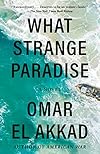
What Strange Paradise
by Omar El Akkad
On This Page
Description
"More bodies have washed up on the shores of a small island. Another over-filled, ill-equipped, dilapidated ship has sunk under the weight of its too many passengers: Syrians, Ethiopians, Egyptians, Lebanese, Palestinians, all of them desperate to escape untenable lives in their homelands. And only one has made the passage: nine-year-old Amir, a Syrian boy who has the good fortune to fall into the hands not of the officials but of Vänna: a teenage girl, native to the island, who lives show more inside her own sense of homelessness in a place and among people she has come to disdain. And though she and the boy are complete strangers, though they don't speak a common language, she determines to do whatever it takes to save him. In alternating chapters, we learn the story of the boy's life and of how he came to be on the boat; and we follow the girl and boy as they make their way toward a vision of safety. But as the novel unfurls we begin to understand that this is not merely the story of two children finding their way through a hostile world, it is the story of our collective moment in this time: of empathy and indifference, of hope and despair--and of the way each of those things can blind us to reality, or guide us to a better one"-- show lessTags
Recommendations

























Member Recommendations
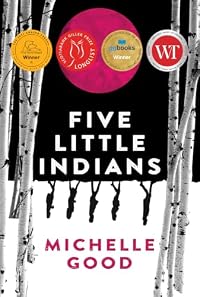
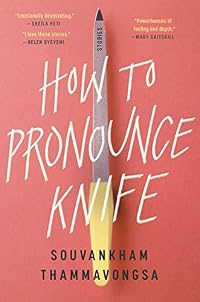
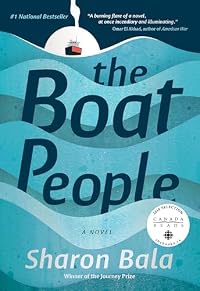
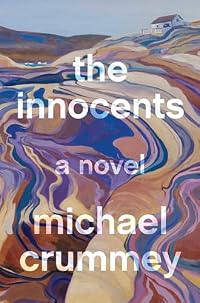
fountainoverflows Both novels focus on the refugee crisis. Magical realism is skillfuly and effectively employed in both.
20
Member Reviews
The photo of the tiny body of Alan Kurdi, washed up on a beach on Kos in 2015, haunted the world. Inspired by that image, El Akkad has invented Amir, five years older than Alan, whose apparently lifeless body is also found on a beach on Kos. Amir, however, revives, evades the police, and makes his way with difficulty to what strange paradise? Beautifully written and enigmatic, the novel demands that its readers, especially its comfortable, white, European or North American readers, wrestle with some hard questions.
This book won the Giller Prize for 2021 and, now that I have read it, I can see why. I was completely immersed in this story of a young Syrian boy on a battered boat in the Mediterranean. Against all odds he survived the shipwreck and then evaded capture by the local police on the island where he landed.
The book is structured so that chapters headed Before and After alternate, starting with an After chapter. Amir wakes up on a beach and when he sees uniformed men approaching him he takes off into the surrounding woods. He is spotted by a local girl, Vanna, coming out of the woods. Vanna hides him in an outbuilding and then sends the police off in another direction. In the Before chapters we learn that Amir, his mother, his stepfather show more (also his uncle) and his stepbrother left Syria and found refuge in Alexandria in Egypt. Amir's father and another uncle disappeared when they took part in a demonstration against the Syrian government. Amir learns that his uncle/stepfather has plans to go out late one night and he follows him all the way to the harbour. His uncle gets on board a boat with at least another 100 people of all different nationalities but with the wish to get to Europe and safety in common. Amir follows him to the ship and the gate-keeper lets him board even though his passage has not been pair. There is an implication that Amir will work off his passge in other ways which I took to mean that he would be made a prostitute. Fortunately his uncle comes up with enough money for a passage on the lower deck which he himself takes leaving Amir on the upper deck. The boat that leaves the Alexandrian harbour is soon exchanged for an old fishing boat and all the boat crew return to the original ship. They leave a pair of Eritreans in charge of piloting the ship, with instructions to just keep the compass needle on North. The ride on the boat is horrendous and probably completely accurate. As they get close to the island the boat capsizes and everyone is thrown into the water. On the island the police are trying to put all refugees in a detention centre. The woman in charge of the centre tells Vanna to take Amir to the tip of the island where there will be someone to take Amir to the mainland. On the mainland people from his own country will take him in. So Vanna, only a teenager, takes on the task of getting Amir safely there. The commanding officer, a former soldier who lost part of his leg while on a peace-keeping mission, is determined to catch them.
The author has said in several interviews that he structured the book as a fable. There is a clue to this right on the first page where one of the epigraphs is from Peter Pan by J. M. Barrie: "I taught you to fight and to fly. What more could there be?" Viewed as a retelling of Peter Pan gives this book a whole new meaning for me. Perhaps if I had read those interviews before I finished the book the ending would not have come as such a surprise. Don't say I didn't warn you. show less
The book is structured so that chapters headed Before and After alternate, starting with an After chapter. Amir wakes up on a beach and when he sees uniformed men approaching him he takes off into the surrounding woods. He is spotted by a local girl, Vanna, coming out of the woods. Vanna hides him in an outbuilding and then sends the police off in another direction. In the Before chapters we learn that Amir, his mother, his stepfather show more (also his uncle) and his stepbrother left Syria and found refuge in Alexandria in Egypt. Amir's father and another uncle disappeared when they took part in a demonstration against the Syrian government. Amir learns that his uncle/stepfather has plans to go out late one night and he follows him all the way to the harbour. His uncle gets on board a boat with at least another 100 people of all different nationalities but with the wish to get to Europe and safety in common. Amir follows him to the ship and the gate-keeper lets him board even though his passage has not been pair. There is an implication that Amir will work off his passge in other ways which I took to mean that he would be made a prostitute. Fortunately his uncle comes up with enough money for a passage on the lower deck which he himself takes leaving Amir on the upper deck. The boat that leaves the Alexandrian harbour is soon exchanged for an old fishing boat and all the boat crew return to the original ship. They leave a pair of Eritreans in charge of piloting the ship, with instructions to just keep the compass needle on North. The ride on the boat is horrendous and probably completely accurate. As they get close to the island the boat capsizes and everyone is thrown into the water. On the island the police are trying to put all refugees in a detention centre. The woman in charge of the centre tells Vanna to take Amir to the tip of the island where there will be someone to take Amir to the mainland. On the mainland people from his own country will take him in. So Vanna, only a teenager, takes on the task of getting Amir safely there. The commanding officer, a former soldier who lost part of his leg while on a peace-keeping mission, is determined to catch them.
The author has said in several interviews that he structured the book as a fable. There is a clue to this right on the first page where one of the epigraphs is from Peter Pan by J. M. Barrie: "I taught you to fight and to fly. What more could there be?" Viewed as a retelling of Peter Pan gives this book a whole new meaning for me. Perhaps if I had read those interviews before I finished the book the ending would not have come as such a surprise. Don't say I didn't warn you. show less
In September 2015, the world was horrified by the image of 2-year-old Alan Kurdi, a refugee from the war in Syria, washed up on the shores of the Mediterranean Sea in Turkey. Of course, that photo seems to have done little to encourage wealthier nations to open their borders to refugees or address the sociopolitical and climate crises causing the refugee crisis. What Strange Paradise begins with a similar image of bodies washed up on the shores of the Greek island of Kos where the locals see the refugees as harmful to their tourist economy. The only survivor is a 9-year-old Syrian boy, Amir Utu, who is protected from the authorities by a 15-year-old Greek girl Vänna Hermes.
Alternate chapters narrate the story before and after the show more shipwreck. In the "before" story, Amir inadvertently follows his “Quiet Uncle” Younis aboard a ship smuggling refugees to Europe. Amir ends up with the better-off passengers on the deck, while Younis is forced below decks. Amir gets to know the other people on the ship including the crew of smugglers who know little about operating and maintaining the ship (and charge extra for life vests), as well as other passengers who share their dreams of a better life. In the "after" story, Vänna helps Amir find clothes and food and tries to get him to ship that takes migrants to the safety a mainland refugee camp all the while avoiding the military lead by Colonel Kethros who is determined to catch Amir.
It's a book that's heartbreaking and enraging rooted in contemporary events. The structure of the novel is interesting and I found myself hoping against hope rooting for Amir and Vänna to succeed. show less
Alternate chapters narrate the story before and after the show more shipwreck. In the "before" story, Amir inadvertently follows his “Quiet Uncle” Younis aboard a ship smuggling refugees to Europe. Amir ends up with the better-off passengers on the deck, while Younis is forced below decks. Amir gets to know the other people on the ship including the crew of smugglers who know little about operating and maintaining the ship (and charge extra for life vests), as well as other passengers who share their dreams of a better life. In the "after" story, Vänna helps Amir find clothes and food and tries to get him to ship that takes migrants to the safety a mainland refugee camp all the while avoiding the military lead by Colonel Kethros who is determined to catch Amir.
It's a book that's heartbreaking and enraging rooted in contemporary events. The structure of the novel is interesting and I found myself hoping against hope rooting for Amir and Vänna to succeed. show less
A beautifully penned, suspenseful story of a Syrian boy landing on a Greek island after a nightmare trip from Alexandria, jammed into a decrepit fishing boat. He meets a local girl named Vänna Hermes, who rescues the boy from pursuing soldiers. The point of view moves to the colonel who "ignores the hustler who walks the beach with a cigarette-girl tray hanging over his chest, selling watered-down sunscreen and sunflower seeds in violation of local ordinance. He simply stares out at the sea, lets it blur and double in his vision until it swallows the land and the sky, until there is nothing else. This arpeggio spring. April staircasing away. It used to feel smoother, the ending of winter, the island in rebirth." Those Greek tourist show more beaches are momentarily closed while men in hazmat suits clean up the dead and their debris after the sinking of the overloaded fishing boat offshore. The only survivor appears to be a nine-year-old boy. The book flies along with its alternating stories on board the boat and on the island with regard for these helpless fleeing children until its surprise ending. The climax troubled me, but what alternative could have contained this story?
As Ron Charles reviews this title in the Washington Post: " Nothing I’ve read before has given me such a visceral sense of the grisly predicament confronted by millions of people expelled from their homes by conflict and climate change. Though “What Strange Paradise” celebrates a few radical acts of compassion, it does so only by placing those moments of moral courage against a vast ocean of cruelty." https://www.washingtonpost.com/entertainment/books/what-strange-paradise-omar-el... show less
As Ron Charles reviews this title in the Washington Post: " Nothing I’ve read before has given me such a visceral sense of the grisly predicament confronted by millions of people expelled from their homes by conflict and climate change. Though “What Strange Paradise” celebrates a few radical acts of compassion, it does so only by placing those moments of moral courage against a vast ocean of cruelty." https://www.washingtonpost.com/entertainment/books/what-strange-paradise-omar-el... show less
The refugee crisis has touched all of us. Without a doubt, the sight of hundreds of bodies washing ashore from yet another failed attempt to exchange the mindless destruction of armed conflict for a new life elsewhere leaves only the most cynical and hard-hearted unmoved. Omar El Akkad’s short, potent novel What Strange Paradise chronicles one such journey: that of nine-year-old Syrian refugee Amir Utu, who follows his uncle aboard a fishing vessel about to set sail north from the Egyptian port of Alexandria. Amir’s act is rash and impulsive, and once on board he is initially unable to grasp the gravity of the situation. His fellow travelers are desperate, possibly dangerous, and, in at least one case, not above unprincipled, amoral show more behaviour. Later, on the island, Amir, the sole survivor after the boat founders in rough coastal waters, instinctively flees the soldiers patrolling the beach and disappears into the forest. He is pursued—since he is on the island illegally and has no rights he will be incarcerated in a refugee camp and probably deported. But Amir hides and is discovered by 15-year-old Vänna, who quickly sizes up the situation when she spots the soldiers, and conceals Amir in the barn behind the house where she lives. El Akkad’s rapid-fire, deftly plotted narrative takes place in a world of clashing moralities and cultures at cross-purposes. Vänna, driven by compassion and precociously sensitive to the injustices of adult society, risks everything in order to protect the boy from forces she believes are out to do him harm. The world of international law and pragmatic duty is represented by Colonel Kethros, commander of the military detachment charged with maintaining order on the island and who, for reasons of his own, pursues Amir and Vänna with single-minded, ruthless zeal. The story ends with an ambiguous coda, and we’re left wondering what really happened, who survived and who didn’t. What Strange Paradise presents an individual instance of suffering and striving against enormous odds, and tells a painful and necessary tale with its eyes wide open. Essential reading. show less
Haunting.
The story of a shipwrecked group of refugees told from the point of view of the child who survived and the girl who helps him. The tale pulls you right along, cheering for Amir and Vanna, wanting them to make it to safety. The casual heartlessness of the tourists in the area who demand to know when the beach will reopen after the bodies are swept up, the inhumanity of people forced into intolerable conditions, and the shining goodness of those who reach to help are all portrayed in such a way that we are there, shivering with them.
And then, the last chapter, well, it brings it all home, slaps us upside the head, makes us feel vaguely guilty for enjoying such a story, when the reality is so harsh.
Omar El Akkad is not letting us show more off with a simple “wow, good book!” Instead he brings a call to action, or for those of us with no power, a wash of regret at our ineptitude. How can we stop this cruelty from happening? How do we step up, be the people we need to be to respect ourselves, to do good, be a force for good?
Thought provoking, and high residue. It will play in my mind for quite a while. show less
The story of a shipwrecked group of refugees told from the point of view of the child who survived and the girl who helps him. The tale pulls you right along, cheering for Amir and Vanna, wanting them to make it to safety. The casual heartlessness of the tourists in the area who demand to know when the beach will reopen after the bodies are swept up, the inhumanity of people forced into intolerable conditions, and the shining goodness of those who reach to help are all portrayed in such a way that we are there, shivering with them.
And then, the last chapter, well, it brings it all home, slaps us upside the head, makes us feel vaguely guilty for enjoying such a story, when the reality is so harsh.
Omar El Akkad is not letting us show more off with a simple “wow, good book!” Instead he brings a call to action, or for those of us with no power, a wash of regret at our ineptitude. How can we stop this cruelty from happening? How do we step up, be the people we need to be to respect ourselves, to do good, be a force for good?
Thought provoking, and high residue. It will play in my mind for quite a while. show less
Readers should be forewarned that this book, which explores the global refugee crisis, will not leave them unaffected.
Amir Utu is a 9-year-old Syrian boy who is the only survivor when an overloaded, unequipped, and dilapidated boat sinks. He washes up on the beach of an unnamed Mediterranean island where he encounters a local girl, 15-year-old Vänna Hermes. In chapters entitled “Before” we learn about Amir’s past and how he came to be on the boat; in alternating chapters entitled “After” we see how Vänna tries to help Amir escape authorities and get to safety.
Like the author’s debut novel, American War, this one asks readers to put themselves in the position of displaced and desperate people. Amir’s family faces show more disbelief, selfishness, indifference, and callousness wherever they go. They leave Syria because their home was destroyed and stay with Mona, a distant relative in Damascus, though “it was clear that Mona intended theirs to be a short visit, a temporary respite to wherever they were going.” Mona, clearly a Bashar al-Assad supporter, tells Amir’s mother that she must be exaggerating what happened and that the destruction shown on television is “all made up” and tells her “’you really can’t let yourself be so easily fooled.’”
Of course the migrants come under the control of smugglers who are concerned only with money. Migrants are deceived into thinking they will get safe passage on a seaworthy craft, but conditions are horrific. I found the description of the sea passage particularly harrowing; more than once I was reminded of what slave ships must have been like. In fact, some are intended “’for the market.’” Even the migrants become concerned only with their own survival: “somewhere along the journey they’d passed the point where human goodness gave way to the calculus of survival.”
Any refugees who do make it to land do not receive the most compassionate of care: “those who survived the passage were taken to wait while, slowly and with well-honed inefficiency, the system considered their appeals for asylum.” A coast guard officer who finds that migrants were given faulty life jackets blames the migrants: “’These people, they don’t think . . . They don’t plan.’” For the tourism industry and wealthy tourists, migrants are an inconvenience: a wreck on the beach “has ruined the tourists’ day, confining them to the grounds of their hotel. . . . a middle-aged couple argue about whether to demand a refund.” A nationalist politician, questioning why all the migrants have phones and why the women keep asking for contraceptive pills, illustrates an ignorance of the nature of the migrants’ plight.
Many of the migrants hope to make it to the West, but they are warned about what awaits them. One of the smugglers who admits to being a “black-market hustler” says, “’You think the black market is bad? Brother, wait till you see the white market’” because “’when you finally get over there to the promised land, . . . you [will] see how those dignified, civilized Westerners treat you – when you find out what they expect of you is to live your whole life like a dog under their dinner table.’” Amir is told, “’You are the temporary object of their fraudulent outrage, their fraudulent grief. They will march the streets on your behalf, they will write to politicians on your behalf, they will cry on your behalf, but you are to them in the end nothing but a hook on which to hang the best possible image of themselves. Today you are the only boy in the world and tomorrow it will be as though you never existed.’”
It is the children in the book who possess admirable traits. Amir, who has so little, more than once shares food with others. Vänna is empathetic and courageous; she vows that only when she sees Amir to safety will she return home to face the consequences of her actions. Appropriately, her surname is that of the Greek god who served as the messenger of the gods and protector of travellers; she shows how the gods want humans to act. Most of the adults lack empathy and behave cowardly, though of course, “’only a coward survives the absurd.’”
This book has so many strengths; it has realistic, well-developed characters and lots of suspense, as well as theme which should have everyone thinking. The ending may be unsatisfactory to some, but I found it most appropriate.
Read this book about people who have “shed their belongings and their roots and their safety and their place of purpose and all claim to agency over their own being” and ask yourself what you would do if you were to encounter Amir. Would you act like Vänna or like Dimitri Kethros? We also need to ask ourselves what we have done since seeing the photo of Alan Kurdi in 2015, a photo which this novel certainly brought to mind.
Note: I received a digital galley from the publisher via NetGalley.
Please check out my reader's blog (https://schatjesshelves.blogspot.com/) and follow me on Twitter (@DCYakabuski). show less
Amir Utu is a 9-year-old Syrian boy who is the only survivor when an overloaded, unequipped, and dilapidated boat sinks. He washes up on the beach of an unnamed Mediterranean island where he encounters a local girl, 15-year-old Vänna Hermes. In chapters entitled “Before” we learn about Amir’s past and how he came to be on the boat; in alternating chapters entitled “After” we see how Vänna tries to help Amir escape authorities and get to safety.
Like the author’s debut novel, American War, this one asks readers to put themselves in the position of displaced and desperate people. Amir’s family faces show more disbelief, selfishness, indifference, and callousness wherever they go. They leave Syria because their home was destroyed and stay with Mona, a distant relative in Damascus, though “it was clear that Mona intended theirs to be a short visit, a temporary respite to wherever they were going.” Mona, clearly a Bashar al-Assad supporter, tells Amir’s mother that she must be exaggerating what happened and that the destruction shown on television is “all made up” and tells her “’you really can’t let yourself be so easily fooled.’”
Of course the migrants come under the control of smugglers who are concerned only with money. Migrants are deceived into thinking they will get safe passage on a seaworthy craft, but conditions are horrific. I found the description of the sea passage particularly harrowing; more than once I was reminded of what slave ships must have been like. In fact, some are intended “’for the market.’” Even the migrants become concerned only with their own survival: “somewhere along the journey they’d passed the point where human goodness gave way to the calculus of survival.”
Any refugees who do make it to land do not receive the most compassionate of care: “those who survived the passage were taken to wait while, slowly and with well-honed inefficiency, the system considered their appeals for asylum.” A coast guard officer who finds that migrants were given faulty life jackets blames the migrants: “’These people, they don’t think . . . They don’t plan.’” For the tourism industry and wealthy tourists, migrants are an inconvenience: a wreck on the beach “has ruined the tourists’ day, confining them to the grounds of their hotel. . . . a middle-aged couple argue about whether to demand a refund.” A nationalist politician, questioning why all the migrants have phones and why the women keep asking for contraceptive pills, illustrates an ignorance of the nature of the migrants’ plight.
Many of the migrants hope to make it to the West, but they are warned about what awaits them. One of the smugglers who admits to being a “black-market hustler” says, “’You think the black market is bad? Brother, wait till you see the white market’” because “’when you finally get over there to the promised land, . . . you [will] see how those dignified, civilized Westerners treat you – when you find out what they expect of you is to live your whole life like a dog under their dinner table.’” Amir is told, “’You are the temporary object of their fraudulent outrage, their fraudulent grief. They will march the streets on your behalf, they will write to politicians on your behalf, they will cry on your behalf, but you are to them in the end nothing but a hook on which to hang the best possible image of themselves. Today you are the only boy in the world and tomorrow it will be as though you never existed.’”
It is the children in the book who possess admirable traits. Amir, who has so little, more than once shares food with others. Vänna is empathetic and courageous; she vows that only when she sees Amir to safety will she return home to face the consequences of her actions. Appropriately, her surname is that of the Greek god who served as the messenger of the gods and protector of travellers; she shows how the gods want humans to act. Most of the adults lack empathy and behave cowardly, though of course, “’only a coward survives the absurd.’”
This book has so many strengths; it has realistic, well-developed characters and lots of suspense, as well as theme which should have everyone thinking. The ending may be unsatisfactory to some, but I found it most appropriate.
Read this book about people who have “shed their belongings and their roots and their safety and their place of purpose and all claim to agency over their own being” and ask yourself what you would do if you were to encounter Amir. Would you act like Vänna or like Dimitri Kethros? We also need to ask ourselves what we have done since seeing the photo of Alan Kurdi in 2015, a photo which this novel certainly brought to mind.
Note: I received a digital galley from the publisher via NetGalley.
Please check out my reader's blog (https://schatjesshelves.blogspot.com/) and follow me on Twitter (@DCYakabuski). show less
Members
- Recently Added By
Lists

Giller Prize Winners
32 works; 6 members

Globe and Mail | Canadian Fiction: Feb. 12, 2022
10 works; 2 members
Globe and Mail | Canadian Fiction: Jan. 29, 2022
10 works; 2 members
Globe and Mail | Canadian Fiction: April 2, 2022
10 works; 2 members
Globe and Mail | Canadian Fiction: Jan. 8, 2022
10 works; 2 members
Globe and Mail | Canadian Fiction: March 19, 2022
10 works; 2 members
Globe and Mail | Canadian Fiction: Feb. 5, 2022
10 works; 2 members
Globe and Mail | Canadian Fiction: Jan. 15, 2022
10 works; 2 members
Globe and Mail | Canadian Fiction: Jan. 22, 2022
10 works; 2 members

Canada Reads Winners and Nominees
129 works; 9 members

Globe and Mail | Canadian Fiction: Dec. 11, 2021
10 works; 2 members

Globe and Mail | Canadian Fiction: Dec. 18, 2021
10 works; 1 member
Globe and Mail | Canadian Fiction: Nov. 27, 2021
10 works; 1 member
Globe and Mail | Canadian Fiction: Dec. 4, 2021
10 works; 1 member
Globe and Mail | Canadian Fiction: Dec. 25, 2021
10 works; 1 member
Globe and Mail | Canadian Fiction: Nov. 20, 2021
10 works; 1 member

Anticipated 2021 Reads
231 works; 7 members

Refugee crisis
40 works; 1 member

Books Read in 2021
5,361 works; 114 members

Dublin Literary Award 2023 Longlist
67 works; 5 members

Arab and Arab Diaspora Literature We Recommend
112 works; 53 members

Top Five Books of 2024
795 works; 264 members

Books Read in 2025
4,090 works; 97 members
Author Information

4+ Works 4,095 Members
Omar was born in Cairo, Egypt and grew up in the Middle East before moving to Canada. He is a graduate of Queen's University. He spent ten years as a reporter covering stories such as the war in Afghanistan to the military trials in Guantanamo Bay, the Arab Spring revolutions in the Middle East and the protests in Ferguson, Missouri. Omar is a show more recipient of the National Newspaper Award for investigative reporting for his coverage of the "Toronto 18" terrorism arrests. He has also won the Edward Goff Penny Memorial Prize for young Canadian journalists, and has been nominated for several National Magazine Awards. (Bowker Author Biography) show less
Awards and Honors
Awards
Distinctions
Notable Lists
Common Knowledge
- Canonical title
- What Strange Paradise
- Original publication date
- 2021-08-19
- Epigraph
- It did not appear to be the duty of these two men to know what was occurring at the center of the bridge; they merely blockaded the two ends of the foot planking that traversed it.
—Ambrose Bierce
An Occurrence at... (show all) Owl Creek Bridge
I taught you to fight and to fly.
What more could there be?
—J. M. Barrie
Peter Pan - Dedication
- To Sonny
- First words
- The child lies on the shore.
- Last words
- (Click to show. Warning: May contain spoilers.)With great and delicate care, the masked man lifts the necklace from around the little boy's neck.
- Blurbers
- Orange, Tommy; Yuknavitch, Lidia; Jen, Gish; Li, Yiyun
Classifications
Statistics
- Members
- 564
- Popularity
- 52,127
- Reviews
- 36
- Rating
- (4.17)
- Languages
- English
- Media
- Paper, Audiobook, Ebook
- ISBNs
- 16
- ASINs
- 5