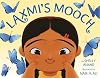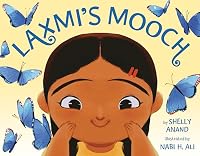
Laxmi's Mooch
by Shelly Anand
On This Page
Description
After Laxmi's friend Zoe points out the hairs on her lip, Laxmi is very self-conscious until her East Indian parents help her to accept and celebrate her appearance.Tags
Recommendations













Member Reviews
Laxmi has never thought about her mooch (mustache, in Hindi) before, but when a friend points it out on the playground, she becomes extremely self-conscious. At home, she talks to her parents, and both Mummy and Papa are reassuring about hair in general and mooches in particular, and Laxmi goes to school the next day able to point out that everyone has a mooch - and if they don't, well, she (and her markers) can help with that..."Pretty soon, everyone was showing off their mooches, real and drawn" - even the teacher (a woman wearing a hijab). Anand deftly turns body shame into body (and cultural) pride.
axmi, an Indian American elementary school student, has a mooch.
A mooch, Laxmi explains, is a sprinkling of hairs on her upper lip; it’s also the Hindi word for mustache. Laxmi is unaware of her mooch until her friends Zoe and Noah point it out during recess. At first, Laxmi is mortified—especially when she realizes she doesn’t have fine, dark hairs just on her top lip but all over her whole body. At the end of the day, she runs home to her parents, who react to her distress with humor and compassion. Mummy explains that Laxmi comes from generations of women with mooches. When Laxmi complains about the hair between her eyebrows, her parents compare her to feminist icon Frida Kahlo. Laxmi is still upset, but that night she dreams show more of tigers, and, appropriately, in the morning she has a whole new attitude—about herself and about her hair. Debut author Anand skillfully balances humor with sincerity, crafting a narrator who is both vulnerable and powerful, while Ali contributes sunny-humored illustrations that place the appealingly chubby, brown-skinned girl at the center of a diverse classroom headed by a hijabi teacher. Laxmi’s journey is both accessible and authentic, and it is a true pleasure to watch her not only embrace her own body, but also teach her classmates how to embrace theirs as well. A picture glossary of the Hindi vocabulary used appears on the endpapers. (This book was reviewed digitally with 8.5-by-22-inch spreads viewed at 22.5% of actual size.)
Fabulous, funny body positivity. (Picture book. 3-8)
-Kirkus Review show less
A mooch, Laxmi explains, is a sprinkling of hairs on her upper lip; it’s also the Hindi word for mustache. Laxmi is unaware of her mooch until her friends Zoe and Noah point it out during recess. At first, Laxmi is mortified—especially when she realizes she doesn’t have fine, dark hairs just on her top lip but all over her whole body. At the end of the day, she runs home to her parents, who react to her distress with humor and compassion. Mummy explains that Laxmi comes from generations of women with mooches. When Laxmi complains about the hair between her eyebrows, her parents compare her to feminist icon Frida Kahlo. Laxmi is still upset, but that night she dreams show more of tigers, and, appropriately, in the morning she has a whole new attitude—about herself and about her hair. Debut author Anand skillfully balances humor with sincerity, crafting a narrator who is both vulnerable and powerful, while Ali contributes sunny-humored illustrations that place the appealingly chubby, brown-skinned girl at the center of a diverse classroom headed by a hijabi teacher. Laxmi’s journey is both accessible and authentic, and it is a true pleasure to watch her not only embrace her own body, but also teach her classmates how to embrace theirs as well. A picture glossary of the Hindi vocabulary used appears on the endpapers. (This book was reviewed digitally with 8.5-by-22-inch spreads viewed at 22.5% of actual size.)
Fabulous, funny body positivity. (Picture book. 3-8)
-Kirkus Review show less
Adorable body positive picture book about Laxmi, who starts to worry when her school friends innocently point out that she has a small mooch, a mustache. After revealing her distress over her mooch to her parents, they explain to her that hair isn't just for the head, everyone has a mooch and regale her with stories of other women who have a mooch.
I especially loved the understated diversity supported in the illustrations (gender neutral bathrooms, their teacher wears hijab, classmates of various ethnicities, Laxmi's parents have different skin tones).
The inside covers also include vocabulary illustrated and written in English, Hindi and Urdu!
I especially loved the understated diversity supported in the illustrations (gender neutral bathrooms, their teacher wears hijab, classmates of various ethnicities, Laxmi's parents have different skin tones).
The inside covers also include vocabulary illustrated and written in English, Hindi and Urdu!
This is a cute book. Laxmi is so sweet. I loved how her mom gave her some good examples of women that have mooches...Mughai empresses, rani, her nana, cousin, and mom. Laxmi asked about her eyebrows having hair between them to almost look like a caterpillar. To which, her mom replies that Frida Kahlo has eyebrows like Laxmi.
Laxmi learns to embrace her mooch, eyebrows, and other body hair. So do her friends. They pretend to be lions and tigers. Soon, everyone wants a mooch like Laxmi; so she draws one on all her classmates and they have fun together. Laxmi's Mooch does teach about body appearance acceptance in a lovely way. This book does a good job as well of culturally representing this population.
Laxmi learns to embrace her mooch, eyebrows, and other body hair. So do her friends. They pretend to be lions and tigers. Soon, everyone wants a mooch like Laxmi; so she draws one on all her classmates and they have fun together. Laxmi's Mooch does teach about body appearance acceptance in a lovely way. This book does a good job as well of culturally representing this population.
I identified with Laxmi because I have a mooch, too. I like that word, and how Laxmi's family made her proud of her mooch, that it is a cultural norm. A wonderful read-aloud for elementary classrooms to show how our differences are interesting and to affirm that our bodies are beautiful as they are. Includes Hindi words such as Titli (butterfly), Toh Kya? (So what?), Billi (cat), and Roti (flatbread).
A book all about body positivity. About a little Indian girl who has a mooch--Hindi for mustache. I have never seen body hair be the topic of a picture book before but once again, I love it. After all, there are those who have their own mooches and yet feel as if they are not seen. This book provides windows and mirrors as well as being diverse!
This book was AWESOME! Laxmi is worried when her friends points out she has a little moustache. Girls are not supposed to have mustaches, or hair all over their bodies! Laxmi’s mother does a great job at pointing out that everyone has hair in very odd places and it serves a purpose. Laxmi takes her mom’s lesson back to school with her and shares the love of a little hair with everyone. This book was so great. It takes a child feeling ashamed about themselves, and turning it around into an important lesson that makes everyone feel better.
Members
- Recently Added By
Lists

Youth: DEI
296 works; 2 members

Rainbow Gardens Wish List: Seedlings & Saplings
104 works; 3 members

Children's Picture Books
188 works; 1 member
Author Information
3 Works 195 Members
Awards and Honors
Awards
Distinctions
Notable Lists
Common Knowledge
- People/Characters
- Laxmi; Frida Kahlo
- Dedication
- For Laddoo & Pinni & all the little kids out there with mooches. -S.A.
To Sundus and Samya, for believing in me and my art. -N.H.A. - First words
- Hi! I'm Laxmi.
- Last words
- (Click to show. Warning: May contain spoilers.)So will you show me yours?
Classifications
Statistics
- Members
- 151
- Popularity
- 216,191
- Reviews
- 8
- Rating
- (4.42)
- Languages
- English, Spanish
- Media
- Paper, Audiobook, Ebook
- ISBNs
- 9