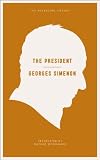
On This Page
Description
At 82, the former premier lives in alert and suspicious retirement - self exile - on the Normandy coast, writing his anxiously anticipated memoirs and receiving visits from statesmen and biographers. In his library is the self-condemning, handwritten confession of the premier's former attache, Chalamont, hidden between the pages of a sumptuously produced work of privately printed pornography - a confession that the premier himself had dictated and forced Chalamont to sign. Inspired by French show more Premier Clemenceau, this is a psychological masterpiece. show lessTags
Recommendations























Member Reviews
Rating: 3.8* of five
The Publisher Says: Restored to print for the first time in more than forty years, The President was hailed by the New York Times as a “tour de force.”
At 82, the former premier lives in alert and suspicious retirement—self exile—on the Normandy coast, writing his anxiously anticipated memoirs and receiving visits from statesman and biographers. In his library is the self-condemning, handwritten confession of the premier’s former attaché, Chalamont, hidden between the pages of a sumptuously produced work of privately printed pornography—a confession that the premier himself had dictated and forced Chalamont to sign. Now the long-thwarted Chalamont has been summoned to form a new coalition in the wake of show more the government’s collapse. The premier alone possesses the secret of Chalamont’s guilt, of his true character—and has publicly vowed: “He’ll never be Premier as long as I’m alive... Nor when I’m dead, either.” Inspired by French Premier Georges Clemenceau, The President is a masterpiece of psychological suspense and a probing account of the decline of power.
My Review: I got a CARE package from one of my old pals from Texas, filled to the brim with Simenon works...but not the Maigret stories, to my relief (read 'em all) and delight (I've never read any of the non-Maigret books)! The President is a delicate and careful autopsy of a once-powerful man's reluctant and relieved laying down his armaments. His life always consisted of public service, unmarried and childless and grasping for the levers of power to make his isolation into welcome solitude.
Simenon's Maigret novels are, as murder mysteries must be, formulaic. Simenon's gift came from creating a rich and satisfying story from these commonly available materials. It's a bit like watching Meryl Streep in a movie: She IS the role, she can't be more than glancingly perceived as the actress who starred in any other movie. Chameleons have that talent...so do cuttlefish...yet to find the gift of remodeling one's self in our smelly, sweaty human selves amazes and delights us every time.
This 152-page tale is a welcome surprise in this era of bloated, dull series books that could and should have been short stories. In my view, the less an author says, the more s/he has to focus and deliver a high-quality experience. Simenon wrote what was necessary to illuminate the long career of the eponymous president and place it in an historical setting. The impact of the actions taken by the president become, by design but still of necessity, quiet bombshells...silent even in their death throes.
This is a book to savor, to sip and ponder the complex flavors mixed in exacting proportions. A simple story, made well, translated carefully, and presented without hype. It is a treat in a literary landscape as pillowy-soft and cloyingly sweet as today's is simply to be told that great hearts still beat faster in pursuit of desired items and outcomes. And they remain great hearts, giving their all and making no excuses. show less
The Publisher Says: Restored to print for the first time in more than forty years, The President was hailed by the New York Times as a “tour de force.”
At 82, the former premier lives in alert and suspicious retirement—self exile—on the Normandy coast, writing his anxiously anticipated memoirs and receiving visits from statesman and biographers. In his library is the self-condemning, handwritten confession of the premier’s former attaché, Chalamont, hidden between the pages of a sumptuously produced work of privately printed pornography—a confession that the premier himself had dictated and forced Chalamont to sign. Now the long-thwarted Chalamont has been summoned to form a new coalition in the wake of show more the government’s collapse. The premier alone possesses the secret of Chalamont’s guilt, of his true character—and has publicly vowed: “He’ll never be Premier as long as I’m alive... Nor when I’m dead, either.” Inspired by French Premier Georges Clemenceau, The President is a masterpiece of psychological suspense and a probing account of the decline of power.
My Review: I got a CARE package from one of my old pals from Texas, filled to the brim with Simenon works...but not the Maigret stories, to my relief (read 'em all) and delight (I've never read any of the non-Maigret books)! The President is a delicate and careful autopsy of a once-powerful man's reluctant and relieved laying down his armaments. His life always consisted of public service, unmarried and childless and grasping for the levers of power to make his isolation into welcome solitude.
Simenon's Maigret novels are, as murder mysteries must be, formulaic. Simenon's gift came from creating a rich and satisfying story from these commonly available materials. It's a bit like watching Meryl Streep in a movie: She IS the role, she can't be more than glancingly perceived as the actress who starred in any other movie. Chameleons have that talent...so do cuttlefish...yet to find the gift of remodeling one's self in our smelly, sweaty human selves amazes and delights us every time.
This 152-page tale is a welcome surprise in this era of bloated, dull series books that could and should have been short stories. In my view, the less an author says, the more s/he has to focus and deliver a high-quality experience. Simenon wrote what was necessary to illuminate the long career of the eponymous president and place it in an historical setting. The impact of the actions taken by the president become, by design but still of necessity, quiet bombshells...silent even in their death throes.
This is a book to savor, to sip and ponder the complex flavors mixed in exacting proportions. A simple story, made well, translated carefully, and presented without hype. It is a treat in a literary landscape as pillowy-soft and cloyingly sweet as today's is simply to be told that great hearts still beat faster in pursuit of desired items and outcomes. And they remain great hearts, giving their all and making no excuses. show less
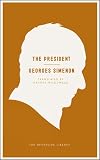
Every once in a while, I fall in love with a particular publisher. The first time I remember it happening was with Soft Skull Press. Then, the New York Review Books. There have been other, more fleeting crushes, of course, but when I'm fully in love with a publisher, I haunt their website, constructing long wishlists of titles. I consider how many books I'd have to buy at once to get the wholesale discount. In bookstores, I look for a certain spine dimension, color scheme, logo. Right now, I am in love with Melville House Publishing -- specifically, the Neversink collection. So when I was at the library, but NOT to check out books, as I already had one overdue and was in the middle of three more, and I turned around to see the familiar show more graphics of a Neversink cover design on the New Titles shelf, I knew I was doomed.
Of course I took it home with me.
I did not give myself permission to start reading it until I finished at least one of the books I was reading. Still, it was like a ticking time bomb sitting on my shelf. I have let too many library books go overdue lately. I finished 400 Years of the Telescope, and immediately replaced it (in its place in my purse) with The President. Still, chances to read it kept slipping by for one reason or another until a Friday, I finally got to dip into it during a short lunch at Zoup!
I read the rest of the book on Saturday.
I don't even know when was the last time that I got to sit down and read a whole book in one day, but it's something I've been missing. Especially over the holidays, as that was exactly the sort of thing I would do when I was young and had no kids. It was hard, at times, due to my lack of practice, to fully devote myself to the book. Through no fault of The President, which I loved, I would read a few pages and my mind would wander. One page -- "Wait, should I go check the laundry?" Three pages -- "I wonder if there are any new pins on Pinterest?" Two pages -- "Oh! Now I need to make a new cup of tea!" And so on.
I did get better at shutting out these wandering thoughts as the day wore on and this book moved closer to its conclusion. I was supremely satisfied when I reached the end, yet I find I am struggling to articulate the reasons why. Every attempt at summary seems a gross over-simplification to my mind. Though I do feel compelled to list some of the themes it touches on -- retirement, death, power, ambition, reckoning...
Suffice it to say, it is a tragedy that this book was out of print for 40 years, and I cheer Neversink for bringing it back. This book is wonderful. I plan to read it again, perhaps many times, later in life. show less
Of course I took it home with me.
I did not give myself permission to start reading it until I finished at least one of the books I was reading. Still, it was like a ticking time bomb sitting on my shelf. I have let too many library books go overdue lately. I finished 400 Years of the Telescope, and immediately replaced it (in its place in my purse) with The President. Still, chances to read it kept slipping by for one reason or another until a Friday, I finally got to dip into it during a short lunch at Zoup!
I read the rest of the book on Saturday.
I don't even know when was the last time that I got to sit down and read a whole book in one day, but it's something I've been missing. Especially over the holidays, as that was exactly the sort of thing I would do when I was young and had no kids. It was hard, at times, due to my lack of practice, to fully devote myself to the book. Through no fault of The President, which I loved, I would read a few pages and my mind would wander. One page -- "Wait, should I go check the laundry?" Three pages -- "I wonder if there are any new pins on Pinterest?" Two pages -- "Oh! Now I need to make a new cup of tea!" And so on.
I did get better at shutting out these wandering thoughts as the day wore on and this book moved closer to its conclusion. I was supremely satisfied when I reached the end, yet I find I am struggling to articulate the reasons why. Every attempt at summary seems a gross over-simplification to my mind. Though I do feel compelled to list some of the themes it touches on -- retirement, death, power, ambition, reckoning...
Suffice it to say, it is a tragedy that this book was out of print for 40 years, and I cheer Neversink for bringing it back. This book is wonderful. I plan to read it again, perhaps many times, later in life. show less
Il y a plusieurs types de romans dur, des polars (plutôt rares), des tranches de vie (généralement sombres et aux problématiques inextricables), des fuites en avant, des familles qui se déchirent et, comme ici, des bilans de vies. Un homme (généralement) qui, au seuil de la mort, se souvient, infatué, de ses glorioles et de ses échecs.
Un ex-président (de la France) comprend qu’il n’est bientôt plus et que sa gloire s’estompe en même temps que son influence politique.
Un récit un peu « vieille France », une stature dont nombre de politiques se rêvent certainement en début de carrière avant de goûter à l’ivresse du pouvoir
Un ex-président (de la France) comprend qu’il n’est bientôt plus et que sa gloire s’estompe en même temps que son influence politique.
Un récit un peu « vieille France », une stature dont nombre de politiques se rêvent certainement en début de carrière avant de goûter à l’ivresse du pouvoir
The eponymous premier is a retired career politician, brooding over his past -- and his few remaining days -- in an isolated, prison-like house in Normandy. As his former protege makes a bid for power, the Premier hopes to play kingmaker one last time. Does he still have the juice?
This is another of Simenon's extended 'personality profiles'. It's interesting, but its slow pace and general moodiness may not be for everyone.
This is another of Simenon's extended 'personality profiles'. It's interesting, but its slow pace and general moodiness may not be for everyone.
Curieux portrait inspiré par Clémenceau et qui témoigne, telle une chronique politique, du climat gouvernemental entre les deux guerres, avec intuition de la part du héros du Marché commun européen et présomptions sur les ministères successifs et éphémères. Ecrit à la fin de 1958, filmé par Henri Verneuil (1961) avec Jean Gabin dans le rôle-titre.
Oct 20, 2005French
Augustin – on ne le désigne que par son prénom –, ancien président du Conseil, s'est retiré dans sa propriété des Ebergues, après un cuisant échec politique. Bien qu'entouré d'un personnel dévoué et vigilant qu'il tyrannise un peu, il est très isolé, sans que sa solitude l'affecte, car il met son indépendance au-dessus de tout. En dehors des moments où ses ennuis de santé et l'appréhension de la mort viennent le troubler, il revit ses souvenirs d'homme d'Etat en rédigeant ses mémoires. Sans trop se l'avouer, il souffre d'avoir perdu toute influence dans la vie politique du pays. Il entrevoit cependant une lueur d'espoir en suivant de près une crise gouvernementale que traverse la France et pour le dénouement de show more laquelle on cite le nom de Chalamont, son ancien chef de cabinet. N'a-t-il pas conservé des documents qu'il croit compromettants pour les politiciens du moment et, entre autres, un aveu écrit arraché à ce Chalamont après une grave trahison de celui-ci ? En effet, vingt ans plus tôt, informé de par ses fonctions d'une dévaluation imminente, devenue indispensable et préparée en secret dans l'entourage du Président, Chalamont avait divulgué l'opération à son beau-père, un important financier qui en tira un profit considérable. Mais Augustin prend conscience de son illusoire vanité, lorsqu'il voit Chalamont, qui est devenu un homme influent, accepter de former un nouveau gouvernement, négligeant ainsi avec indifférence la menace que le Président croyait faire peser sur lui. Ce choc ramène le vieillard à la réalité ; c'est sans amertume et en quelque sorte soulagé qu'il brûlera ses papiers pour attendre une mort paisible qui ne show less
Nov 12, 2010French
Romanzo amaro sulla fine della vita pubblica (e privata) di un importante personaggio politico (ispirato forse a Clemanceau il Tigre). Molto potente, con una carriera che lo aveva portato alla soglia (non attraversata) della Presidenza della Repubblica, finisce la sua vita controllato a vista e spiato dalla polizia, dall'infermiera, dalla segretaria, dall'autista (cioè dal potente Ministero degli Interni e dal candidato alla Presidenza del Consiglio, un suo ex-segretario, che lui conosceva così bene, con alcuni enormi scheletri nell'armadio), tutti a cercare un pericoloso libro di memorie "non ufficiali" in realtà mai composto ma di cui si sapeva -per certo- l'esistenza. Una battaglia finita con la consapevolezza dell'inutilità e show more della "piccolezza" della battaglia stessa. show less
Jun 4, 2008Italian
Members
- Recently Added By
Author Information

1,322+ Works 62,931 Members
The prolific Belgian-born writer Georges Simenon produced hundreds of fictional works under his own name and 17 pseudonyms, in addition to more than 70 books about Inspector Maigret, long "the favorite sleuth of highbrow detective-story readers" (SR). More than 50 "Simenons" have been made into films. In addition to his mystery stories, he wrote show more what he called "hard" books, the serious psychological novels numbering well over 100. The autobiographical Pedigree, set in his native town of Liege, is perhaps his finest work. The publication of Simenon's intimate memoirs also attracted considerable attention. Simenon himself once said that he would never write a "great novel." Yet Gide called him "a great novelist, perhaps the greatest and truest novelist we have in French literature today," and Thornton Wilder (see Vol. 1) found that Simenon's narrative gift extends "to the tips of his fingers." The following are some of Simenon's novels, exclusive of the Maigret detective stories, that are in print. (Bowker Author Biography) Georges Simenon was born on February 13, 1903 in Liege, Belgium. He wrote more than 200 fiction works under 16 different pseudonyms. His first book, The Case of Peter the Lent led to 80 more of the like including the main character, Inspector Maigret. He published over 400 books that were translated into 50 different languages and sold by the millions. He also wrote psychological novels, including The Man Who Watched the Train Go By. He died on September 4, 1989 in Lausanne. (Bowker Author Biography) show less
Some Editions
Series

Belongs to Publisher Series
Work Relationships
Common Knowledge
- Canonical title
- The Premier
- Original title
- Le Président
- Alternate titles
- The President
- Original publication date
- 1957; 2014 (new Dutch translation) (new Dutch translation)
- First words*
- Al meer dan een uur zat hij onbeweeglijk in de versleten zwartleren Louis-Philippefauteuil met de bijna rechte rugleuning, die veertig jaar lang van ministerie naar ministerie was meegereisd en legendarisch was geworden.
- Last words*
- (Click to show. Warning: May contain spoilers.)En na een stilte: 'Nog niet.'
- Original language
- French
- Disambiguation notice*
- Eerder in Nederlandse vertaling vertaling verschenen onder de titel De president. In 2014 opnieuw vertaald onder de titel De Premier.
*Some information comes from Common Knowledge in other languages. Click "Edit" for more information.
Classifications
- Genres
- Fiction and Literature, General Fiction, Mystery
- DDC/MDS
- 843.912 — Literature & rhetoric French Literature French fiction 1900- 20th Century 1900-1945
- LCC
- PQ2637 .I53 .P7313 — Language and Literature French, Italian, Spanish and Portuguese literatures French literature Modern literature 1900-1960
- BISAC
Statistics
- Members
- 248
- Popularity
- 133,093
- Reviews
- 9
- Rating
- (3.72)
- Languages
- 8 — Dutch, English, Estonian, Finnish, French, German, Italian, Russian
- Media
- Paper, Ebook
- ISBNs
- 17
- ASINs
- 11