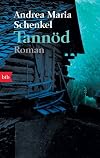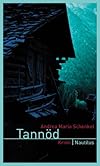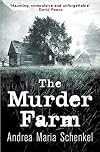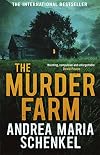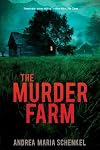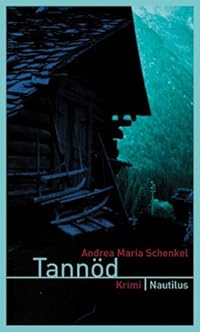
The Murder Farm
by Andrea Maria Schenkel
On This Page
Description
"A whole family has been brutally murdered with a pickaxe at their remote farm home, now dubbed "The Murder Farm". The newspapers are full of stories and rumors about the sensational case, but the police have no firm leads an little sense of how to find the killer. The reader learns about the case when a former resident of the village returns home to collect evidence and attempt a solution to the case. Written as a collage of first-person recollections and third-person narrative, and based show more on the true story of an unsolved rural murder that took place in 1922 in Bavaria, [the author's] internationally bestselling, award-winning debut has been compared to Truman Capote's In Cold Blood. It is an unforgettable detective story in which police, journalists, and narrator alike are confounded until the novel's shattering conclusion."-- From dust jacket flap. show lessTags
Recommendations
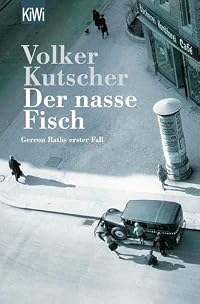

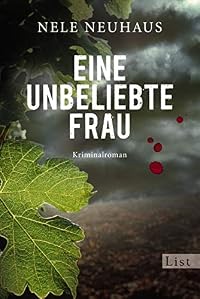
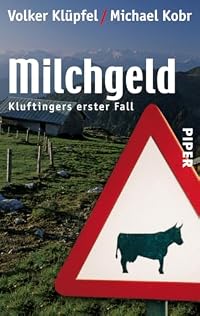
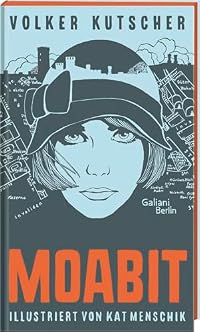










Member Recommendations
caflores No tienen nada que ver ni la época ni el argumento, pero sí la granja, la miseria y el descubrimiento de la verdad.
Member Reviews
Here’s fair warning: Do not start The Murder Farm when you’ve got a lot to do. This riveting novel sucks you in so swiftly and implacably that you won’t get your tasks done.
Author Andrea Maria Schenkel based The Murder Farm on the true story of an unsolved murder from 1922 in which an entire family was axed to death at the farm in a remote part of Bavaria. Should that add to the frisson of reading Schenkel’s novel? I have enjoyed non-fiction books that purport to reveal the “truth” after all these years about cold cases, be they notorious crimes like that of Lizzie Borden or more obscure ones. But the attraction of The Murder Farm really rests on Schenkel’s artistry. That Schenkel’s talent shines through even in show more translation is a testament to translator Anthea Bell.
Schenkel rechristens the victims from the Grubers to the Danners, changes the village’s name changed from Hinterkaifeck to Tannöd, moves the action from 1922 to the 1950s, but, by all accounts, leaves the rest of the facts unchanged. Killed were the abusive, tyrannical family patriarch, his beleaguered wife, his pretty daughter, her young children, and a newly hired maid on her very first day of employment. As in Lauren Oliver’s Rooms (which I’ve recently read) or William Faulkner’s The Sound and the Fury, the action is told alternately by an unnamed narrator, the victims, witnesses, unsympathetic neighbors, and, finally, the killer. Gradually, detail by small detail, the grisly truth about the bloody murders comes crashing down on the reader.
Atmospheric and chilling, The Murder Farm deserves every award it has won; I couldn’t put it down, as cliché as that sounds. I only hope my fellow Buddy Read sisters enjoy it as much as I did. show less
Author Andrea Maria Schenkel based The Murder Farm on the true story of an unsolved murder from 1922 in which an entire family was axed to death at the farm in a remote part of Bavaria. Should that add to the frisson of reading Schenkel’s novel? I have enjoyed non-fiction books that purport to reveal the “truth” after all these years about cold cases, be they notorious crimes like that of Lizzie Borden or more obscure ones. But the attraction of The Murder Farm really rests on Schenkel’s artistry. That Schenkel’s talent shines through even in show more translation is a testament to translator Anthea Bell.
Schenkel rechristens the victims from the Grubers to the Danners, changes the village’s name changed from Hinterkaifeck to Tannöd, moves the action from 1922 to the 1950s, but, by all accounts, leaves the rest of the facts unchanged. Killed were the abusive, tyrannical family patriarch, his beleaguered wife, his pretty daughter, her young children, and a newly hired maid on her very first day of employment. As in Lauren Oliver’s Rooms (which I’ve recently read) or William Faulkner’s The Sound and the Fury, the action is told alternately by an unnamed narrator, the victims, witnesses, unsympathetic neighbors, and, finally, the killer. Gradually, detail by small detail, the grisly truth about the bloody murders comes crashing down on the reader.
Atmospheric and chilling, The Murder Farm deserves every award it has won; I couldn’t put it down, as cliché as that sounds. I only hope my fellow Buddy Read sisters enjoy it as much as I did. show less
This is a cold-eyed study of a gruesome murder. In a scenario very reminiscent of Capote's In Cold Blood, an entire family are found dead on their remote farm, along with the maid. Due to the remoteness of both the far and its inhabitants, many days pass before neighbours look in and make the grisly discovery. There are no clues and no suspects.
The novel proceeds as a mix of eyewitness narration and the record of conversations held with villagers connected with the crime; ostensibly by a former local returning to satisfy their curiosity. The plot is inexorable and contains few twists; the point of this story is more to gradually reveal the characters involved, and the motives that led to the deed.
The novel proceeds as a mix of eyewitness narration and the record of conversations held with villagers connected with the crime; ostensibly by a former local returning to satisfy their curiosity. The plot is inexorable and contains few twists; the point of this story is more to gradually reveal the characters involved, and the motives that led to the deed.
The small village of Tannod is shocked by the brutal murders of a local family and their maid. The bodies of old man Danner, the cold patriarch, his long-suffering wife, their daughter, Barbara, her two children whose paternity has long been the subject of gossip and speculation, and, finally, the maid who had just started that day were all buried under a light layer of straw in the barn. They had all been killed with a pickaxe. It would be four days before the alarm is raised and their bodies discovered.
Although set in the 1950s, the story is a fictionalized account of an actual murder that took place in 1922. The narrator remains anonymous throughout and the story is told sparingly and mostly through the statements or depositions of show more neighbours as well as through the thoughts of the victims and the killer who returns repeatedly to the farm before the discovery to take care of the animals. This gives the reader a strong sense of intimacy and involvement in the lives and secrets of the victims, the village, and even the killer. It also forces the reader to compare the statements of the witnesses with the reality and realize how many secrets are hidden in small villages, how much is real and how much just idle speculation, and how little we really know or want to know about the lives of our neighbours, a very disturbing thought to ponder. Interspersed between the testimonials are verses from the haunting and emotionally charged funeral prayer, the Litany for the Comfort of Poor Souls which adds to the overall sense of dread that builds as the story edges to its climax.
The Murder farm has a kind of dark rhythm that grabs the reader from the first page and never lets up until the last. Its sparse narrative adds to the sense of horror and keeps the reader thinking long after it’s finished. It is dark, disturbing, and a bleak look at life, love, and murder, and, once started, it is almost impossible to put down. show less
Although set in the 1950s, the story is a fictionalized account of an actual murder that took place in 1922. The narrator remains anonymous throughout and the story is told sparingly and mostly through the statements or depositions of show more neighbours as well as through the thoughts of the victims and the killer who returns repeatedly to the farm before the discovery to take care of the animals. This gives the reader a strong sense of intimacy and involvement in the lives and secrets of the victims, the village, and even the killer. It also forces the reader to compare the statements of the witnesses with the reality and realize how many secrets are hidden in small villages, how much is real and how much just idle speculation, and how little we really know or want to know about the lives of our neighbours, a very disturbing thought to ponder. Interspersed between the testimonials are verses from the haunting and emotionally charged funeral prayer, the Litany for the Comfort of Poor Souls which adds to the overall sense of dread that builds as the story edges to its climax.
The Murder farm has a kind of dark rhythm that grabs the reader from the first page and never lets up until the last. Its sparse narrative adds to the sense of horror and keeps the reader thinking long after it’s finished. It is dark, disturbing, and a bleak look at life, love, and murder, and, once started, it is almost impossible to put down. show less
Ms. Schenkel models The Murder Farm as a traditional detective story. In much the same way as detectives must piece together various fragments of evidence to arrive at a provable conclusion, each shift in the narrator unveils another small image of the true happenings on the Danner farm, Similarly, just as said evidence takes multiple forms in real life, the evidence of the Danner farm murders are equally varied. Much of this evidence is not in what each narrator states outright but what is not said. Weeding through the implications of these omissions provides readers with a fascinating glimpse into the isolated lives of the inhabitants of this small German village as well as the emotions involved with such a gruesome crime.
Because of show more the variety of narrators, the story can only be successful if each narrator has his or her own unique voice. This is just one on the many areas in which Ms. Schenkel succeeds. The Murder Farm never feels like one novel pretending to be separate parts. It really does feel and read like a collection of stories that, when read together, provides a clear intimation of what occurred before, during, and after that fateful day. The voices are separate and distinct, making it fairly simple for acute readers to glean the truth before the big reveal. However, those readers who fail to make the connections miss none of the psychology or emotion of the conclusion, vital to any murder mystery.
The Murder Farm may occur in an isolated area of Germany and have its origins in a real-life murder mystery from said area, but there is a generic quality to it that makes it easy for readers to extrapolate the events into any isolated locale. The time period also may be the 1950s but the story feels timeless. So much so that any direct reference to the year can be quite jarring for readers, pulling them out of the narrative and back into the real world. This ephemeral quality makes it so easy for readers to sink into the horrors without having to worry about specifics like setting.
Short and sweet, The Murder Farm packs a powerful punch in a relatively few pages. Ms. Schenkel establishes the story’s ominous tone from the beginning with the use of eyewitness interviews of past events and makes the story even creepier with the inclusion of first-person narratives of current events. It is so much more than a whodunit novel though, something readers begin to understand as a clear picture of life at the Danner farm forms. show less
Because of show more the variety of narrators, the story can only be successful if each narrator has his or her own unique voice. This is just one on the many areas in which Ms. Schenkel succeeds. The Murder Farm never feels like one novel pretending to be separate parts. It really does feel and read like a collection of stories that, when read together, provides a clear intimation of what occurred before, during, and after that fateful day. The voices are separate and distinct, making it fairly simple for acute readers to glean the truth before the big reveal. However, those readers who fail to make the connections miss none of the psychology or emotion of the conclusion, vital to any murder mystery.
The Murder Farm may occur in an isolated area of Germany and have its origins in a real-life murder mystery from said area, but there is a generic quality to it that makes it easy for readers to extrapolate the events into any isolated locale. The time period also may be the 1950s but the story feels timeless. So much so that any direct reference to the year can be quite jarring for readers, pulling them out of the narrative and back into the real world. This ephemeral quality makes it so easy for readers to sink into the horrors without having to worry about specifics like setting.
Short and sweet, The Murder Farm packs a powerful punch in a relatively few pages. Ms. Schenkel establishes the story’s ominous tone from the beginning with the use of eyewitness interviews of past events and makes the story even creepier with the inclusion of first-person narratives of current events. It is so much more than a whodunit novel though, something readers begin to understand as a clear picture of life at the Danner farm forms. show less
Schenkel takes an innovative approach to true crime fiction by eliminating the detective character as narrator. Instead she relies on interviews with participants and first person accounts by those close to the murders giving the novel a documentary flavor. It is surprising how much she covers in this short book using this approach. She handles the sequencing of chapters well to build to a climax and solution by slowly revealing serious family problems with the victims; providing a false lead; and exploring the hatred, suspiciousness and prejudices in the community.
She bases the story on an actual unsolved murder that occurred in the 20’s in Germany, but moves it to the immediate post war period. This is significant because it allows show more one to speculate about human nature and how this may have contributed to an acceptance of Nazi atrocities. Real people are indeed capable of committing heinous crimes given the right circumstances. show less
She bases the story on an actual unsolved murder that occurred in the 20’s in Germany, but moves it to the immediate post war period. This is significant because it allows show more one to speculate about human nature and how this may have contributed to an acceptance of Nazi atrocities. Real people are indeed capable of committing heinous crimes given the right circumstances. show less
From Amazon:
The Murder Farm begins with a shock: a whole family has been murdered with a pickax. They were old Danner the farmer, an overbearing patriarch; his put-upon devoutly religious wife; and their daughter Barbara Spangler, whose husband Vincenz left her after fathering her daughter little Marianne. She also had a son, two-year-old Josef, the result of her affair with local farmer Georg Hauer after his wife's death from cancer. Hauer himself claimed paternity. Also murdered was the Danners' maidservant, Marie.
An unconventional detective story, The Murder Farm is an exciting blend of eyewitness account, third-person narrative, pious diatribes, and incomplete case file that will keep readers guessing. When we leave the narrator, show more not even he knows the truth, and only the reader is able to reach the shattering conclusion.
My Thoughts:
A very short story, only 168 pages translated from the original German. For whatever reason, this book has been classified as "crime fiction". Technically, it is crime fiction, in that the story involves the brutal murder of a family on an isolated farm in post-WWII Bavaria. However, it is not typical detective fiction; rather, it is an insightful portrait of a remote, rural community in southern Germany in the 1950's. Many of the chapters are written as though they are transcripts of interviews taken as part of the murder investigation. Seldom do you read a book where one of the victims garners no sympathy from the reader, but that's what happens here. You feel that the husband/father/grandfather deserved what happened to him. Those that are looking for a typical "mystery/suspense story are going to be sadly disappointed but I would give it 3 stars for the authors efforts. show less
The Murder Farm begins with a shock: a whole family has been murdered with a pickax. They were old Danner the farmer, an overbearing patriarch; his put-upon devoutly religious wife; and their daughter Barbara Spangler, whose husband Vincenz left her after fathering her daughter little Marianne. She also had a son, two-year-old Josef, the result of her affair with local farmer Georg Hauer after his wife's death from cancer. Hauer himself claimed paternity. Also murdered was the Danners' maidservant, Marie.
An unconventional detective story, The Murder Farm is an exciting blend of eyewitness account, third-person narrative, pious diatribes, and incomplete case file that will keep readers guessing. When we leave the narrator, show more not even he knows the truth, and only the reader is able to reach the shattering conclusion.
My Thoughts:
A very short story, only 168 pages translated from the original German. For whatever reason, this book has been classified as "crime fiction". Technically, it is crime fiction, in that the story involves the brutal murder of a family on an isolated farm in post-WWII Bavaria. However, it is not typical detective fiction; rather, it is an insightful portrait of a remote, rural community in southern Germany in the 1950's. Many of the chapters are written as though they are transcripts of interviews taken as part of the murder investigation. Seldom do you read a book where one of the victims garners no sympathy from the reader, but that's what happens here. You feel that the husband/father/grandfather deserved what happened to him. Those that are looking for a typical "mystery/suspense story are going to be sadly disappointed but I would give it 3 stars for the authors efforts. show less
*I received a complimentary e-book from the publisher Quercus Books via NetGalley in exchange for my honest review*
Overall it was an entertaining and well-written novel; however, it was rather short. I would have liked for the suspense towards the end to last a little longer or perhaps not given away who did it so easily. The alternating chapters between what was happening to the characters and the interviews with the characters was very original and I wish more crime novels were like this! I would definitely recommend this to my friends, but I only wish it lasted longer and had a more satisfying ending.
Overall it was an entertaining and well-written novel; however, it was rather short. I would have liked for the suspense towards the end to last a little longer or perhaps not given away who did it so easily. The alternating chapters between what was happening to the characters and the interviews with the characters was very original and I wish more crime novels were like this! I would definitely recommend this to my friends, but I only wish it lasted longer and had a more satisfying ending.
Members
- Recently Added By
Published Reviews
ThingScore 100
Murders have been committed on a farm in rural Bavaria a few years after the end of WWII. The book is the story of the murders and the people in the town. Each chapter is in the voice of a different person explaining how they knew the family and giving insight into the activities of the family.
added by Gremelkin
“The Murder Farm” (its title is “Tannöd” in German), has no detective — in fact there is no investigator at all. It consists of very brief chapters, many of them monologues of different villagers explaining to an unseen interviewer his or her connection to the slain family and to the day of the murders.
added by ozzer
Lists

German Literature
514 works; 55 members
Author Information

14 Works 1,034 Members
Some Editions
Awards and Honors
Series
Belongs to Publisher Series
Work Relationships
Has the adaptation
Common Knowledge
- Canonical title*
- Tannöd
- Original title
- Tannöd
- Original publication date
- 2006 (original German) (original German); 2008 (English translation) (English translation)
- People/Characters
- Hermann Danner; Theresia Danner; Barbara Spangler; Marianne; Josef; Maria Meiler
- Important places
- Tannöd, Bavaria, Germany
- Related movies
- Tannöd (2009 | IMDb)
- First words
- I spent the first summer after the end of the war with distant relations in the country.
- Last words
- (Click to show. Warning: May contain spoilers.)Amen!
- Original language
- German
*Some information comes from Common Knowledge in other languages. Click "Edit" for more information.
Classifications
Statistics
- Members
- 677
- Popularity
- 42,030
- Reviews
- 41
- Rating
- (3.35)
- Languages
- 12 — Catalan, Danish, Dutch, English, Finnish, French, German, Italian, Norwegian (Bokmål), Portuguese, Spanish, Swedish
- Media
- Paper, Audiobook, Ebook
- ISBNs
- 44
- ASINs
- 9