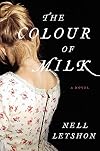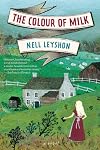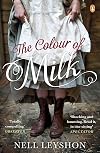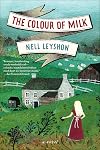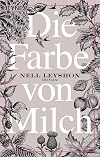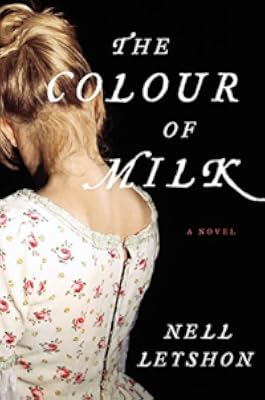
The Colour Of Milk
by Nell Leyshon
On This Page
Description
Mary, the spirited youngest daughter of an angry, violent man, is sent to work for the local vicar and his invalid wife. Her strange new surroundings offer unsettling challenges, including the vicar's lecherous son and a manipulative fellow servant. But life in the vicarage also offers unexpected joys, as the curious young girl learns to read and write -- knowledge that will come at a tragic price.Tags
Recommendations














Member Recommendations
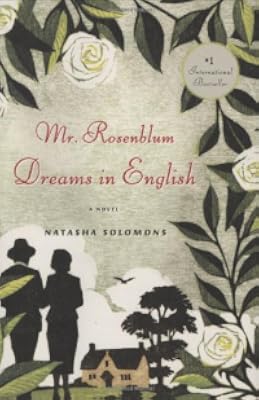
caflores No tienen nada que ver ni la época ni el argumento, pero sí la granja, la miseria y el descubrimiento de la verdad.
Member Reviews
What an astonishingly good read.
I CHECKED THIS EBOOK OUT OF MY LOCAL LIBRARY. SUPPORT YOUR LIBRARIES, FOLKS! THEY NEED US TO USE THEIR SERVICES!
ALL SPOILERS...ALL THE TIME...SPOILERS BELOW! THE PHOBIC ARE WARNED OFF!
My Review: First, read this:
I am utterly besotted with this book. My bookish friend Katie is the one who gets the blame, I mean credit!, for convincing me to try the read. It is short, and it has something I can't describe to you adequately that rings me like a bell. I think, I guess, it's a sense of the passionate urgency Mary feels in learning her letters...like that act, that piece of knowledge, will transform her, will make everything Different. If nothing else, it will give her a leg up on her noxious sister Beatrice.
Her life, Mary's, is about what you expect a woman's life to be at that time and in that class. It is nasty, brutish, and turns out to be short. It is simple, and it is without ornament. It is, in short, a titanic waste of the brain of a clever woman like Mary. As her story begins, she is sold by her father to the local vicar as a caretaking maid-of-all-work for the vicar's housekeeper. His wife is terminally ill, and there's no one whose job it is...no child, no sibling...to muck in and do the labor of cleaning the invalid, her bedding, keeping her as entertained as possible; the housekeeper needs the extra hands. The vicar? Men did not (and do not, by and large) do that sort of work.
Mary's waspish, direct honesty isn't easy. Not for her...it leads those around her to anger, more often than not...and not for the world she lives in. Making honest observations about the facts of life is not a fast way to make squads of pals. Mary's sisters don't much like her, her mother can't be arsed to care about much that isn't making her husband the drunken shit as happy as possible, and Mary's grandfather (her father's father) is crippled by an accident so despite his pleasure in her company he isn't much help to Mary in navigating the world.
What happens as Mary assumes her duties in the vicar's household is the oldest story in the world. She's raped. She isn't, however, going to put up with that, and that's what makes this story a five-star read for me. Mary serves up her revenge and takes her punishmnet with her eyes open, her chin up, and her heart unburdened by regret.
I fell in love with Mary from page one. If you read the above quote, which is from the beginning of the book, and do not feel the appeal, are not vibrating with the language's power, then skip the read. It won't get better...the story's really simple, it's unsurprising, and it's only half the point. The other half is the storytelling, the sense of being there with Mary. We're hearing a voice that shouldn't have reached us from a person who didn't matter when she was alive so she wouldn't have been allowed to leave a record after her death.
It's such a simple tale. It's such an oft-told tale. It's a beauty, because it's got something extra, a little trick up its sleeve, that thing that makes a story taller in the saddle. The risk is how many people will be put off by it. They will find it a gimmick, but I found the storytelling an enhancement of an otherwise unremarkable story a young woman writing about her unhappy, unjust, and in the end short life of work, abuse, work, abuse, rape, punishment; it's lifted to its next, finer level. It's about Mary's indomitable will, her absolute uncompromising need for More. I resonate to that story. The other, I don't.
And that's why I love it, instead of merely thinking it was an interesting, not always successful, stylistic experiment. (How does Mary know how to spell some of the complicated words she uses, eg "hierarchy"?) The effort to bring an unpolished and unmediated voice to life is doomed to artificiality, of course, since this is fiction and not a research project. But the mannerisms were successful in breathing life into a character whose essential reality overcame, for this testy old reader, the inevitable awareness of the story as construct, as artifact.
So I'll shout my thanks westward to my friend in New Jersey...the same one who warbled me into reading The Mercy Seat!...whose recommendation of the story was sufficiently enthusiastic as to make my read necessary. Thank goodness my library had an ebook available. I would've been much the poorer for not having Mary along for the ride into the rest of my reading life.
A story, a character, a book like this is a treasure. Get it, if you can. show less
I CHECKED THIS EBOOK OUT OF MY LOCAL LIBRARY. SUPPORT YOUR LIBRARIES, FOLKS! THEY NEED US TO USE THEIR SERVICES!
ALL SPOILERS...ALL THE TIME...SPOILERS BELOW! THE PHOBIC ARE WARNED OFF!
My Review: First, read this:
this is my book and i am writing it by my own hand.show more
in this year of lord eighteen hundred and thirty one i am reached the age of fifteen and i am sitting by my window and i can see many things. i can see birds and they fill the sky with their cries. i can see the trees and i can see the leaves.
and each leaf has veins which run down it.
and the bark of each tree has cracks.
i am not very tall and my hair is the colour of milk.
my name is mary and i have learned to spell it. m. a. r. y. that is how you
letter it.
I am utterly besotted with this book. My bookish friend Katie is the one who gets the blame, I mean credit!, for convincing me to try the read. It is short, and it has something I can't describe to you adequately that rings me like a bell. I think, I guess, it's a sense of the passionate urgency Mary feels in learning her letters...like that act, that piece of knowledge, will transform her, will make everything Different. If nothing else, it will give her a leg up on her noxious sister Beatrice.
Her life, Mary's, is about what you expect a woman's life to be at that time and in that class. It is nasty, brutish, and turns out to be short. It is simple, and it is without ornament. It is, in short, a titanic waste of the brain of a clever woman like Mary. As her story begins, she is sold by her father to the local vicar as a caretaking maid-of-all-work for the vicar's housekeeper. His wife is terminally ill, and there's no one whose job it is...no child, no sibling...to muck in and do the labor of cleaning the invalid, her bedding, keeping her as entertained as possible; the housekeeper needs the extra hands. The vicar? Men did not (and do not, by and large) do that sort of work.
Mary's waspish, direct honesty isn't easy. Not for her...it leads those around her to anger, more often than not...and not for the world she lives in. Making honest observations about the facts of life is not a fast way to make squads of pals. Mary's sisters don't much like her, her mother can't be arsed to care about much that isn't making her husband the drunken shit as happy as possible, and Mary's grandfather (her father's father) is crippled by an accident so despite his pleasure in her company he isn't much help to Mary in navigating the world.
What happens as Mary assumes her duties in the vicar's household is the oldest story in the world. She's raped. She isn't, however, going to put up with that, and that's what makes this story a five-star read for me. Mary serves up her revenge and takes her punishmnet with her eyes open, her chin up, and her heart unburdened by regret.
I fell in love with Mary from page one. If you read the above quote, which is from the beginning of the book, and do not feel the appeal, are not vibrating with the language's power, then skip the read. It won't get better...the story's really simple, it's unsurprising, and it's only half the point. The other half is the storytelling, the sense of being there with Mary. We're hearing a voice that shouldn't have reached us from a person who didn't matter when she was alive so she wouldn't have been allowed to leave a record after her death.
It's such a simple tale. It's such an oft-told tale. It's a beauty, because it's got something extra, a little trick up its sleeve, that thing that makes a story taller in the saddle. The risk is how many people will be put off by it. They will find it a gimmick, but I found the storytelling an enhancement of an otherwise unremarkable story a young woman writing about her unhappy, unjust, and in the end short life of work, abuse, work, abuse, rape, punishment; it's lifted to its next, finer level. It's about Mary's indomitable will, her absolute uncompromising need for More. I resonate to that story. The other, I don't.
And that's why I love it, instead of merely thinking it was an interesting, not always successful, stylistic experiment. (How does Mary know how to spell some of the complicated words she uses, eg "hierarchy"?) The effort to bring an unpolished and unmediated voice to life is doomed to artificiality, of course, since this is fiction and not a research project. But the mannerisms were successful in breathing life into a character whose essential reality overcame, for this testy old reader, the inevitable awareness of the story as construct, as artifact.
So I'll shout my thanks westward to my friend in New Jersey...the same one who warbled me into reading The Mercy Seat!...whose recommendation of the story was sufficiently enthusiastic as to make my read necessary. Thank goodness my library had an ebook available. I would've been much the poorer for not having Mary along for the ride into the rest of my reading life.
A story, a character, a book like this is a treasure. Get it, if you can. show less
Well, this was a bleak little read. It is so frustrating knowing that for centuries, men have used their physical strength and standing in society to do anything they want to young, uneducated girls without fear of punishment. Yet, when the girl finally retaliates in desperation, she is severely penalised.
I felt so sorry for the way Mary was used by the local vicar. She was a great character - outspoken, free-thinking, spirited and keen to learn. "The Colour of Milk" was her journal spanning the year when she went to work for the vicar and his wife as a housemaid. At first it was difficult to read as there was little punctuation, but it was a touching, tragic little story.
I felt so sorry for the way Mary was used by the local vicar. She was a great character - outspoken, free-thinking, spirited and keen to learn. "The Colour of Milk" was her journal spanning the year when she went to work for the vicar and his wife as a housemaid. At first it was difficult to read as there was little punctuation, but it was a touching, tragic little story.
This is a small book, but it feels very substantial. Because it contains a unique voice, and a story that voice it wants to tell so very, very much.
“this is my book and i am writing it by my own hand.
i want to tell you what it is that happened but i must be ware not to rush at it like the heifers at a gate for if i do that i will get ahead of myself so quick that i will trip and fall and anyway you will want me to start where a person ought to.
and that is at the beginning.”
The style is idiosyncratic and the voice is distinctive. It only took a few pages for me to settle in, and then I wanted to know Mary’s story just as much she wanted to tell it.
I could hear her voice in my head, and at the same time I was asking myself show more questions.
How was it that, in 1831, a poor farm girl had learned how to read and write?
And whatever had happened, over the course of the four seasons of one year, to make the telling of her story so very urgent?
Mary was the fourth child, and the fourth daughter of a farmer. A man who wanted sons, and when they didn’t arrive he began to take his frustration, his anger, out on his wife and daughters. They were cowed by him but there was also a camaraderie, a sisterhood between them.
Mary often caught the worst of his temper. Because she had spirit and a very natural honesty. She took such delight in life and the world around her that she was terribly easily distracted from what she was supposed to be doing. It wasnt;t that she was unwilling to work, but other things called so much louder.
(I understood. I’m the same with housework and books …)
Maybe that’s why her father pushed Mary forward when the local vicar came looking for a domestic servant.
Mary’s candour and personality endear her to the vicar’s invalid wife. He is pleased, he is eager to help the girl, but he is heedless of the possible consequences. And a son, who has crossed paths with Mary’s family before, looks on.
The seasons pass. Relationships grow. but other things changes. The story that unfolds has familiar elements, echoes of other stories, but it uses them very cleverly to create something a little different.
I had an idea of what would happen, and often I was right. But not always, and the ending made me catch my breath.
The prose is sparse, the story is short, and yet it holds so much. Every character is simply but perfectly drawn, and each and every one is important. Just a few words of description, a few words of dialogue painted wonderful pictures of lives and relationships. And of a place and time.
This is a story utterly of its time, and yet it is a story that says things about relationships between families, between sexes, between classes, that a 19th century novel never could.
But the best thing of all was Mary’s voice. She never faltered. Her voice rang true.
And, even now I have put the book down, she and her story continue to haunt me. show less
“this is my book and i am writing it by my own hand.
i want to tell you what it is that happened but i must be ware not to rush at it like the heifers at a gate for if i do that i will get ahead of myself so quick that i will trip and fall and anyway you will want me to start where a person ought to.
and that is at the beginning.”
The style is idiosyncratic and the voice is distinctive. It only took a few pages for me to settle in, and then I wanted to know Mary’s story just as much she wanted to tell it.
I could hear her voice in my head, and at the same time I was asking myself show more questions.
How was it that, in 1831, a poor farm girl had learned how to read and write?
And whatever had happened, over the course of the four seasons of one year, to make the telling of her story so very urgent?
Mary was the fourth child, and the fourth daughter of a farmer. A man who wanted sons, and when they didn’t arrive he began to take his frustration, his anger, out on his wife and daughters. They were cowed by him but there was also a camaraderie, a sisterhood between them.
Mary often caught the worst of his temper. Because she had spirit and a very natural honesty. She took such delight in life and the world around her that she was terribly easily distracted from what she was supposed to be doing. It wasnt;t that she was unwilling to work, but other things called so much louder.
(I understood. I’m the same with housework and books …)
Maybe that’s why her father pushed Mary forward when the local vicar came looking for a domestic servant.
Mary’s candour and personality endear her to the vicar’s invalid wife. He is pleased, he is eager to help the girl, but he is heedless of the possible consequences. And a son, who has crossed paths with Mary’s family before, looks on.
The seasons pass. Relationships grow. but other things changes. The story that unfolds has familiar elements, echoes of other stories, but it uses them very cleverly to create something a little different.
I had an idea of what would happen, and often I was right. But not always, and the ending made me catch my breath.
The prose is sparse, the story is short, and yet it holds so much. Every character is simply but perfectly drawn, and each and every one is important. Just a few words of description, a few words of dialogue painted wonderful pictures of lives and relationships. And of a place and time.
This is a story utterly of its time, and yet it is a story that says things about relationships between families, between sexes, between classes, that a 19th century novel never could.
But the best thing of all was Mary’s voice. She never faltered. Her voice rang true.
And, even now I have put the book down, she and her story continue to haunt me. show less
There are plenty of reasons to suspect, right from the beginning, that something bad is going to happen to the 15-year-old narrator, but there are at least three potential sources for danger to her, and we don’t really know from whence it will come.
It’s 1831, and Mary, 15, is the youngest daughter of four girls, with a bad leg and hair the color of milk. Her cold-hearted father keeps the girls working constantly on their farm, beating them when he thinks they are slacking off. Somehow Mary retains a positive outlook on life, even though her sisters and mother are cruel to her. Only her crippled grandfather (also mistreated by the rest of the family) has any regard for Mary.
After a particularly violent beating from her father, Mary show more is “sold” to the Vicar over the hill to be a caretaker for his ailing wife. There, she is offered a chance to learn to read and write, and she eagerly accepts. But there is a price to pay, and it is beyond reckoning.
Discusson: The story is told as if it were a diary or letter by Mary, in her barely literate form, viz:
" i don’t like to tell you all this. there are things i do not want to say.
but i told my self i would tell you everything that happened. i said i would say it all and for this i must do it.”
The tone is absolutely compelling, with an edge of danger and dread from the very beginning. Mary is a glorious source of sunlight in the middle of a horrifying dark and disturbing tale.
Evaluation: This is excellent literature, and the story will haunt you. Like Emma Donoghue’s Room, you want to cover your eyes as the truth unfolds, yet you can’t look away. This short book is worth your time; highly recommended. show less
It’s 1831, and Mary, 15, is the youngest daughter of four girls, with a bad leg and hair the color of milk. Her cold-hearted father keeps the girls working constantly on their farm, beating them when he thinks they are slacking off. Somehow Mary retains a positive outlook on life, even though her sisters and mother are cruel to her. Only her crippled grandfather (also mistreated by the rest of the family) has any regard for Mary.
After a particularly violent beating from her father, Mary show more is “sold” to the Vicar over the hill to be a caretaker for his ailing wife. There, she is offered a chance to learn to read and write, and she eagerly accepts. But there is a price to pay, and it is beyond reckoning.
Discusson: The story is told as if it were a diary or letter by Mary, in her barely literate form, viz:
" i don’t like to tell you all this. there are things i do not want to say.
but i told my self i would tell you everything that happened. i said i would say it all and for this i must do it.”
The tone is absolutely compelling, with an edge of danger and dread from the very beginning. Mary is a glorious source of sunlight in the middle of a horrifying dark and disturbing tale.
Evaluation: This is excellent literature, and the story will haunt you. Like Emma Donoghue’s Room, you want to cover your eyes as the truth unfolds, yet you can’t look away. This short book is worth your time; highly recommended. show less
Poco menos de 200 páginas para contar una historia terrible, y seguro que no única, de la mano y la escritura de una mujer fuerte, segura y sincera. Mary, quince años, coja y albina, que nos permite ser testigos de su aprendizaje y de como labra, lo que le dejan, de su vida, de la que finalmente es la dueña.
"escribir lleva mucho tiempo, hay que deletrear y copiar cada palabra encima de la página, y cuando termino tengo que volver a mirar para ver si las he elegido bien. y algunos días tengo que pararme porque tengo que pensar en qué es lo que tengo que decir, y en qué es lo que quiero decir. y en por qué lo estoy diciendo. y tardo más tiempo en escribir sobre algo que ha pasado que lo que tardó en pasar.
pero tengo que show more escribir rápido porque no tengo mucho tiempo" show less
"escribir lleva mucho tiempo, hay que deletrear y copiar cada palabra encima de la página, y cuando termino tengo que volver a mirar para ver si las he elegido bien. y algunos días tengo que pararme porque tengo que pensar en qué es lo que tengo que decir, y en qué es lo que quiero decir. y en por qué lo estoy diciendo. y tardo más tiempo en escribir sobre algo que ha pasado que lo que tardó en pasar.
pero tengo que show more escribir rápido porque no tengo mucho tiempo" show less
It has been a long time since I finished a book in 24 hours. This one had me hooked from the beginning:
"this is my books and i am writing it by my own hand.
in this year of lord eighteen hundred and thirty-one i am reached the age of fifteen and i am sitting by my window and i can see many things. i can see birds and they fill the sky with their cries. i can see the tree and i can see the leaves.
and each leaf has veins that run down it.
and the bark of each tree is cracked.
i am not very tall and my hair is the colour of milk.
my name is mary and that is how i have learned to spell it. m.a.r.y. that is how you letter it.
i want to tell you what it is that happened but i must be ware not to run at it like the heifers at the gate for it i do show more that i will get ahead of myself so quick that i will trip and fall and any way you will want me to start where a person ought to.
and that is at the beginning."
Mary is one of the most intriguing characters I've come across in a long time. She is one of four daughters of a struggling farmer who, because they have no brothers, spend their days working in the fields. Mary was born with a deformed leg, which her father never hesitates to complain about since she can't work as quickly as the others. As the opening lines reveal, she is passionate about the farm, the animals, and the surrounding landscape. When the local vicar seeks a servant to help care for the house and his ailing wife, Mary's father is happy to send her away (and to take payment for her services). Mary has no desire to leave the farm and her family--especially her grandfather, who is ignored by the rest of them--but she does as she is told. Despite the hardships and abuse she has suffered, she is an incredibly confident young woman who speaks her mind, no matter what anyone thinks. Yet the vicar and his wife take to her, even seeming to be charmed by her forthrightness.
Mary's book recounts a year in her life in four sections, each named for a season. Each begins with a variation of the passage above. She lives a simple life, accepting what comes along and recording her observations and thoughts. It's difficult to describe just what it is that makes her so engaging; perhaps a combination of stoicism and guilelessness? And the wonderful voice that the author gives her, a voice that speaks poetry without even knowing it. Some readers may find her descriptions of housework and conversations boring, but I was completely captivated. Despite the rather slow pace, the novel does work up to an unexpected climax, one that leaves the reader shaken. But Mary carries on.
I don't want to give too much away, but I hope others will give this beautiful character-driven novel a chance. I will be looking for other works by this author. show less
"this is my books and i am writing it by my own hand.
in this year of lord eighteen hundred and thirty-one i am reached the age of fifteen and i am sitting by my window and i can see many things. i can see birds and they fill the sky with their cries. i can see the tree and i can see the leaves.
and each leaf has veins that run down it.
and the bark of each tree is cracked.
i am not very tall and my hair is the colour of milk.
my name is mary and that is how i have learned to spell it. m.a.r.y. that is how you letter it.
i want to tell you what it is that happened but i must be ware not to run at it like the heifers at the gate for it i do show more that i will get ahead of myself so quick that i will trip and fall and any way you will want me to start where a person ought to.
and that is at the beginning."
Mary is one of the most intriguing characters I've come across in a long time. She is one of four daughters of a struggling farmer who, because they have no brothers, spend their days working in the fields. Mary was born with a deformed leg, which her father never hesitates to complain about since she can't work as quickly as the others. As the opening lines reveal, she is passionate about the farm, the animals, and the surrounding landscape. When the local vicar seeks a servant to help care for the house and his ailing wife, Mary's father is happy to send her away (and to take payment for her services). Mary has no desire to leave the farm and her family--especially her grandfather, who is ignored by the rest of them--but she does as she is told. Despite the hardships and abuse she has suffered, she is an incredibly confident young woman who speaks her mind, no matter what anyone thinks. Yet the vicar and his wife take to her, even seeming to be charmed by her forthrightness.
Mary's book recounts a year in her life in four sections, each named for a season. Each begins with a variation of the passage above. She lives a simple life, accepting what comes along and recording her observations and thoughts. It's difficult to describe just what it is that makes her so engaging; perhaps a combination of stoicism and guilelessness? And the wonderful voice that the author gives her, a voice that speaks poetry without even knowing it. Some readers may find her descriptions of housework and conversations boring, but I was completely captivated. Despite the rather slow pace, the novel does work up to an unexpected climax, one that leaves the reader shaken. But Mary carries on.
I don't want to give too much away, but I hope others will give this beautiful character-driven novel a chance. I will be looking for other works by this author. show less
Written in the first-person through the eyes of fourteen year old, Mary. The book is written with sparse punctuation (none of the sentences begin with capital letters), in simple language, and from a cut-to-the-chase perspective. This non-embellished style reflects Mary's age and class, but I think also, that it is the author, Nell Leyshon's way of experimenting with untraditional styles of prose, as many contemporary forms favour the minimalistic use of language. Unfortunately, this results in lack of details in story features such as characterisation, setting, and plot, so that the novel falls short of the depth factor that really draws the reader in. Hence, I was well aware throughout the story that I was just a reader, an outsider show more observing, rather than feeling as if I were in, or part of the story. If the book was stretched out into a full novel, the story and plot would have been richer. However, in saying all this, Leyshon is quite skillful in bringing the most out of the minimalism writing approach. Portrayal of themes such as poverty, adolescence, and farm life were vivid, and invoked sympathy and admiration for the protagonist. Furthermore, straight after reading the book, I found myself thinking about Mary and her farm life everyday for about a week. All in all, 'The Colour of Milk' is a bold and beautiful read. show less
Members
- Recently Added By
Published Reviews
ThingScore 83
The Colour of Milk is written in short sentences, with longer passages joined by lots of ‘ands’. It appears to have the simplicity of a reading scheme. Which is precisely the point. Because this is a story about literacy – or the achieving of literacy. For Mary, the book’s narrator, the cost of gaining that knowledge is high.
Leyshon’s great skill in this novel is to convey both show more Mary’s outward personality and her inner thoughts through the same narrative voice. In Mary’s own concise reporting of events we see all her relationships in their nuanced colours.
The Colour of Milk starts deceptively quietly, describing a life of rural hardships and limited prospects, but bit by bit, letter by letter, it reveals a world of potential that is shattered by human fallibility. show less
Leyshon’s great skill in this novel is to convey both show more Mary’s outward personality and her inner thoughts through the same narrative voice. In Mary’s own concise reporting of events we see all her relationships in their nuanced colours.
The Colour of Milk starts deceptively quietly, describing a life of rural hardships and limited prospects, but bit by bit, letter by letter, it reveals a world of potential that is shattered by human fallibility. show less
added by kidzdoc
The year is 1830. Fifteen-year-old Mary lives a life of toil and cheerlessness on her father's farm. Outspoken, witty and bold, she has one bad leg and white hair "the colour of milk", a phrase used as a refrain throughout, along with: "this is my book and I am writing it by my own hand."
Through the hardness, Leyshon evokes nature and the seasons with a poetic sensibility. This is where all show more the feeling is. The language has a biblical tinge, with many short passages and sentences beginning with "and" (there are hardly any capitals in the book). A constant flow of seasonal activity and reference to the natural world gives a bucolic flavour: "and in the morning and evening the mist layered and made the hills soft and the air thick"; "and Edna filled the kitchen with jars and pans and we were busy with the fruit and getting it into the jars, and harry dug up all the beetroot and carrots and onions and brought it to the back door and we laid it down in sandboxes and put it in the cold store and then we put the apples in the dark. and he sacked up the potatoes and we made sure the bags was tied and the light could not get in." show less
Through the hardness, Leyshon evokes nature and the seasons with a poetic sensibility. This is where all show more the feeling is. The language has a biblical tinge, with many short passages and sentences beginning with "and" (there are hardly any capitals in the book). A constant flow of seasonal activity and reference to the natural world gives a bucolic flavour: "and in the morning and evening the mist layered and made the hills soft and the air thick"; "and Edna filled the kitchen with jars and pans and we were busy with the fruit and getting it into the jars, and harry dug up all the beetroot and carrots and onions and brought it to the back door and we laid it down in sandboxes and put it in the cold store and then we put the apples in the dark. and he sacked up the potatoes and we made sure the bags was tied and the light could not get in." show less
added by kidzdoc
"This is my book," writes a pale-haired farm girl in 1831, "every word i spelled out. every letter i wrote." Fourth daughter to a father who wanted sons, Mary is sent away from the drudgery of her family's farm to nurse the local vicar's weak-hearted wife. In the genteel, sun-filled rooms of the vicarage she learns to write, but it is there, too, that events take place that compel her to show more undertake her painstaking task.
Leyshon is a master of domestic suspense and the reasons for Mary's determination emerge tantalisingly slowly. A cannier cousin to Hardy's Tess – truculent and possessed of a sly wit – Mary is nevertheless in an invidious position: betrayed by weak-willed masters and, though gifted the means to tell her story, powerless to negotiate the cost at which her knowledge comes.
This is a deftly executed sketch of a lost geography: a story saved by an accident of fate that becomes part of the piercing irony at its heart. Slender but compelling, the charm of Leyshon's novella is to be found as much in its spare, evocative style as in the moving candour of its narrator. show less
Leyshon is a master of domestic suspense and the reasons for Mary's determination emerge tantalisingly slowly. A cannier cousin to Hardy's Tess – truculent and possessed of a sly wit – Mary is nevertheless in an invidious position: betrayed by weak-willed masters and, though gifted the means to tell her story, powerless to negotiate the cost at which her knowledge comes.
This is a deftly executed sketch of a lost geography: a story saved by an accident of fate that becomes part of the piercing irony at its heart. Slender but compelling, the charm of Leyshon's novella is to be found as much in its spare, evocative style as in the moving candour of its narrator. show less
added by kidzdoc
Lists

Llibres que he llegit el 2017
49 works; 1 member
Author Information

14+ Works 552 Members
Awards and Honors
Series
Belongs to Publisher Series
Narratives [Angle] (88)
Common Knowledge
- Canonical title
- The Colour Of Milk
- Original title
- The Colour of Milk
- Original publication date
- 2012-05-30
- People/Characters
- Mary; Violet; Ralph Graham; Mr Graham; Mrs Graham
- First words
- this is my book and i am writing it by my own hand.
- Last words
- (Click to show. Warning: May contain spoilers.)and then i shall be free.
- Original language
- English
Classifications
Statistics
- Members
- 423
- Popularity
- 73,149
- Reviews
- 27
- Rating
- (4.04)
- Languages
- 8 — Catalan, Dutch, English, French, German, Italian, Portuguese, Spanish
- Media
- Paper, Audiobook, Ebook
- ISBNs
- 24
- ASINs
- 12