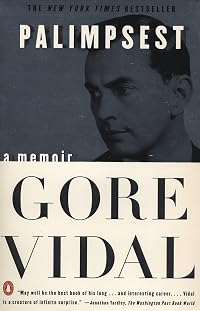
Palimpsest: A Memoir
by Gore Vidal
On This Page
Description
This explosively entertaining memoir abounds in gossip, satire, historical apercus, and trenchant observations. Vidal's compelling narrative weaves back and forth in time, providing a whole view of the author's celebrated life, from his birth in 1925 to today, and features a cast of memorable characters--including the Kennedy family, Marlon Brando, Anais Nin, and Eleanor Roosevelt.Tags
Recommendations



























Member Reviews
A thoroughly nasty, but very enjoyable, memoir, in which Gore Vidal shamelessly and wittily takes the opportunity to settle scores with numerous well-known people who aren't around any more to answer back, whilst at the same time doing his best to impress us with how many of the great and famous he has rubbed shoulders with at one time or another. I frequently felt uncomfortable about laughing out loud at this book, but it was hard not to.
Lots of vitriol is directed at his mother; at the Kennedys (he shared a stepfather with Jackie); at the US literary establishment, which he accuses of blacklisting him after the publication of The city and the pillar with its explicit same-sex love story; at Truman Capote (accused of being short); at show more President Truman's "national security state" (fair enough); at European cinema for its deluded notion that directors are more important than writers; at Charlton Heston; at Hillary Clinton (insufficiently impressed at meeting him); at the English royal family (dim); and at just about everyone else who appears in the book, with the minor exceptions of Tennessee Williams, who is only mildly teased, and Vidal's grandfather Senator T P Gore, who can do no wrong. show less
Lots of vitriol is directed at his mother; at the Kennedys (he shared a stepfather with Jackie); at the US literary establishment, which he accuses of blacklisting him after the publication of The city and the pillar with its explicit same-sex love story; at Truman Capote (accused of being short); at show more President Truman's "national security state" (fair enough); at European cinema for its deluded notion that directors are more important than writers; at Charlton Heston; at Hillary Clinton (insufficiently impressed at meeting him); at the English royal family (dim); and at just about everyone else who appears in the book, with the minor exceptions of Tennessee Williams, who is only mildly teased, and Vidal's grandfather Senator T P Gore, who can do no wrong. show less
Let’s talk about name-dropping. It’s often the mark of the social climber, those who seek to inflate their importance by appearing on the margins of the lives of people more interesting than they. It’s never in good taste, is it? Then there is the closely related phenomenon, gossip. Tacky, right?
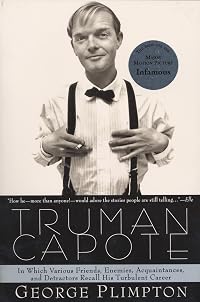
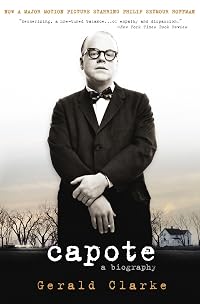
Gore Vidal’s memoir, Palimpsest, abounds in both, yet this reader never felt that Vidal ever lacked a sense of his right to be exactly where he was, even the White House. While his own life didn’t lack achievement—and he makes sure to include mention of his best-selling books and theater and film triumphs—these things seem to interest him less than the people he’s been able to observe at close range, beginning with his senator show more grandfather and his step-sister Jackie (“whose boyish beauty and life-enhancing malice were a great joy to me”), but including Eleanor Roosevelt, Marlon Brando, the Kennedys, the Windsors, Princess Margaret (“far too bright for her station in life”), Tennessee Williams, good friends Paul Newman and Joanne Woodward, and rivals like Norman Mailer. Of course, Vidal might question the term rivals. He would concede that Mailer and others saw him as a rival but denies being envious of anyone else’s success. Well, that may be so; nonetheless, Vidal does use the book to settle some scores, particularly with Truman Capote, whom he pays the left-handed compliment of possessing an inventive imagination, only to lament that he never used it in his attempts to write fiction.
Readers of Vidal’s essays (he was one of the best twentieth-century practitioners of that form) will also recognize some of his recurrent themes, such as his rejection of the auteur school of film criticism. Great films from the Hollywood studios, with few exceptions, owed more to producer and screenwriter than to the director, he asserts. Not that the creation of great movies was the goal. One of Vidal’s bon mots characterized film-making as doing well what shouldn’t be done at all.
Another of Vidal’s recurrent themes is his depiction of the U. S. as the National Security State. He recounts how slowly he came to this realization, despite living in Guatemala when the CIA engineered a coup at the behest of the United Fruit Company.
Despite the name-dropping and the gossip, this book lacks a third feature of many memoirs: there is little kiss and tell. Instead, Vidal is more at pains to set the record straight on those he didn’t sleep with, despite reports to the contrary, beginning with Anaïs Nin. And even if he wanted to name those he slept with, he wouldn’t be able to in most cases: his preferred form of sexual activity was the anonymous one-night stand. The exception haunts the entire story, the schoolmate who died on Iwo Jima and remained the love of Vidal’s life.
To the Elizabethans, it was the play. In the enlightenment, the essay. In the nineteenth century, it was the novel. Vidal was a master of all of these archaic forms. In our day, it is the memoir. With Palimpsest, Vidal produced a masterpiece of this genre as well. Perhaps its quality is due in part to paradox abounding. Vidal avers, “I am not social,” yet his company seems to have been sought out by people who had many others to choose from. He protests the past doesn’t interest him yet writes of it in a way that interests us. One more thing that sets this apart from many other memoirs and is one of the many ways the title, Palimpsest, is well-chosen: Vida repeatedly lets the present intrude. He records where he is as he writes, with details of the weather, his blood pressure, and the research process of finding people he last saw fifty years previously. All of this is told with the elegance and wit one expects from Gore Vidal. An excellent read. show less
Gore Vidal’s memoir, Palimpsest, abounds in both, yet this reader never felt that Vidal ever lacked a sense of his right to be exactly where he was, even the White House. While his own life didn’t lack achievement—and he makes sure to include mention of his best-selling books and theater and film triumphs—these things seem to interest him less than the people he’s been able to observe at close range, beginning with his senator show more grandfather and his step-sister Jackie (“whose boyish beauty and life-enhancing malice were a great joy to me”), but including Eleanor Roosevelt, Marlon Brando, the Kennedys, the Windsors, Princess Margaret (“far too bright for her station in life”), Tennessee Williams, good friends Paul Newman and Joanne Woodward, and rivals like Norman Mailer. Of course, Vidal might question the term rivals. He would concede that Mailer and others saw him as a rival but denies being envious of anyone else’s success. Well, that may be so; nonetheless, Vidal does use the book to settle some scores, particularly with Truman Capote, whom he pays the left-handed compliment of possessing an inventive imagination, only to lament that he never used it in his attempts to write fiction.
Readers of Vidal’s essays (he was one of the best twentieth-century practitioners of that form) will also recognize some of his recurrent themes, such as his rejection of the auteur school of film criticism. Great films from the Hollywood studios, with few exceptions, owed more to producer and screenwriter than to the director, he asserts. Not that the creation of great movies was the goal. One of Vidal’s bon mots characterized film-making as doing well what shouldn’t be done at all.
Another of Vidal’s recurrent themes is his depiction of the U. S. as the National Security State. He recounts how slowly he came to this realization, despite living in Guatemala when the CIA engineered a coup at the behest of the United Fruit Company.
Despite the name-dropping and the gossip, this book lacks a third feature of many memoirs: there is little kiss and tell. Instead, Vidal is more at pains to set the record straight on those he didn’t sleep with, despite reports to the contrary, beginning with Anaïs Nin. And even if he wanted to name those he slept with, he wouldn’t be able to in most cases: his preferred form of sexual activity was the anonymous one-night stand. The exception haunts the entire story, the schoolmate who died on Iwo Jima and remained the love of Vidal’s life.
To the Elizabethans, it was the play. In the enlightenment, the essay. In the nineteenth century, it was the novel. Vidal was a master of all of these archaic forms. In our day, it is the memoir. With Palimpsest, Vidal produced a masterpiece of this genre as well. Perhaps its quality is due in part to paradox abounding. Vidal avers, “I am not social,” yet his company seems to have been sought out by people who had many others to choose from. He protests the past doesn’t interest him yet writes of it in a way that interests us. One more thing that sets this apart from many other memoirs and is one of the many ways the title, Palimpsest, is well-chosen: Vida repeatedly lets the present intrude. He records where he is as he writes, with details of the weather, his blood pressure, and the research process of finding people he last saw fifty years previously. All of this is told with the elegance and wit one expects from Gore Vidal. An excellent read. show less
I thought I had read Vidal's memoir some years ago but was not sure; as I began reading, I knew I had not read it. Vidal is witty, and often thought-provoking; his gossip is both vicious and delicious, but the real reason to read this memoir is not what he has to say about literary figures or politicians he as known but instead his reflections on a host of subjects: anonymity and fame, love and sex, literature versus popular culture, and more. I thoroughly enjoyed reading this first volume of memoirs.
I have always been a big fan of Gore Vidal, but this book is incredibly mean spirited! I Hated the way he spoke of some people. He gives us all the prurient details of his sexual encounters(which I DO NOT mind) but then he judges those men in such a nasty manner for the things they did together. I don't get it. If he were speaking of women who were gracious enough to sleep with him, people would find it very offensive but since he is describing men it's okay? Poor taste.
Vidal has often been a bit too theatrical in his self-presentation--he can't help it seems than to push things a little too far (I'm thinking his later political writings, but you might also think of his tiff with Bill Buckley), and this makes many people take him less seriously than he really deserves to be treated.
This is the first part of his memoirs and it is really good (far better than the second half). Good writing on being "gay" (Vidal thinks everyone's on a sliding scale sexually, so he doesn't appreciate absolutist sexual identities) and being privileged (but not rich) in the WWII and postwar era.
Lots of interesting people pass through, but Vidal's not just namedropping.
And of course lots of interesting (and disputable) show more observations about Washington and American politics.
One of the best books of its kind that I've ever read. show less
This is the first part of his memoirs and it is really good (far better than the second half). Good writing on being "gay" (Vidal thinks everyone's on a sliding scale sexually, so he doesn't appreciate absolutist sexual identities) and being privileged (but not rich) in the WWII and postwar era.
Lots of interesting people pass through, but Vidal's not just namedropping.
And of course lots of interesting (and disputable) show more observations about Washington and American politics.
One of the best books of its kind that I've ever read. show less
I did not want to like this book. It holds all the worst of a memoir – in particular that name-dropping approach that can get so tedious and the desire to go into occasionally excruciating detail over little things. But it is impossible to not like this book. In spite of sometimes lapsing into the errors that can befall any memoir, it has one redeeming quality – it is written about Gore Vidal.
Vidal brings his skills to bear telling the almost true story of his life. Up front he admits that any story based on memory will not be the absolute truth. Hence the name of the book (Palimpsest – meaning parchment prepared for writing on and wiping off again.) This affectation gets overused and does not frame the book as well as the author show more may have liked. In particular, his use of the word to indicate where he may have rewritten passages (to either get them right or to ignore them). And the author constantly derides others for not being accurate in their memories while he openly (again, the name of the book) admits his memory cannot always be correct.
But the book rises above these minor issues. Actually, the author rises above these issues. Because Vidal keeps us reading, even as we feel it may be a guilty pleasure. And just about the time I would start to think things were slowing down, he would shamelessly throw out another name (Kennedy, anyone? Anais Nin? Eleanor Roosevelt? Capote?) and drag me back in. At the end of it all – an engrossing telling of Vidal’s life the way Vidal remembers it. show less
Vidal brings his skills to bear telling the almost true story of his life. Up front he admits that any story based on memory will not be the absolute truth. Hence the name of the book (Palimpsest – meaning parchment prepared for writing on and wiping off again.) This affectation gets overused and does not frame the book as well as the author show more may have liked. In particular, his use of the word to indicate where he may have rewritten passages (to either get them right or to ignore them). And the author constantly derides others for not being accurate in their memories while he openly (again, the name of the book) admits his memory cannot always be correct.
But the book rises above these minor issues. Actually, the author rises above these issues. Because Vidal keeps us reading, even as we feel it may be a guilty pleasure. And just about the time I would start to think things were slowing down, he would shamelessly throw out another name (Kennedy, anyone? Anais Nin? Eleanor Roosevelt? Capote?) and drag me back in. At the end of it all – an engrossing telling of Vidal’s life the way Vidal remembers it. show less
In his memoir, Vidal treats the reader as an intelligent confidant and writes in an arrogant, affectionate, and abrasive manner. From his early years to his time in Hollywood, Vidal's life is covered in the memoir. It includes his interactions with the Kennedys, his friendships with artists, and his involvement in American film.
Members
- Recently Added By
Published Reviews
ThingScore 100
In his rather sere and melancholy condition, Vidal tells some old stories rather less well than he recounted them the first... The finest and most revealing passages in Palimpsest, those which best synthesise the public and the personal, are the ones which treat of the Kennedy court. It’s a test of character whether one repudiates Camelot or not, and Vidal passes this test with all pennons show more flying. show less
added by SnootyBaronet
The reader feels right there, with it and in it; and so effective is the superimposed ripple of Vidal's style and personality (the palimpsest at work?) that a kind of innocence of absurdity-as with the marmalade jar-easily mingles with an effortless and knowing sophistication. Brought so fascinatingly close to us, the Vidal world seems both exotic and domestic, glitzy and homely, and is show more presented with a deft economy that is itself highly droll. show less
added by SnootyBaronet
Lists

Best Autobiographies and Memoirs
370 works; 67 members

Best Biographies, Autobiographies and Memoirs
465 works; 160 members

LGBTQ Memoir/Biography
52 works; 4 members

1990s
309 works; 17 members

Books Read in 2015
3,299 works; 129 members

Favorite Books from the 1990s
32 works; 3 members

Five star books
1,767 works; 110 members
Author Information

168+ Works 31,237 Members
Gore Vidal was born Eugene Luther Gore Vidal Jr. on October 3, 1925 at the U.S. Military Academy at West Point, New York. He did not go to college but attended St. Albans School in Washington and graduated from Phillips Exeter Academy in New Hampshire in 1943. He enlisted in the Army, where he became first mate on a freight supply ship in the show more Aleutian Islands. His first novel, Williwaw, was published in 1946 when he was twenty-one years old and working as an associate editor at the publishing company E. P. Dutton. The City and the Pillar was about a handsome, athletic young Virginia man who gradually discovers that he is homosexual, which caused controversy in the publishing world. The New York Times refused to advertise the novel and gave a negative review of it and future novels. He had such trouble getting subsequent novels reviewed that he turned to writing mysteries under the pseudonym Edgar Box and then gave up novel-writing altogether for a time. Once he moved to Hollywood, he wrote television dramas, screenplays, and plays. His films included I Accuse, Suddenly Last Summer with Tennessee Williams, Is Paris Burning? with Francis Ford Coppola, and Ben-Hur. His most successful play was The Best Man, which he also adapted into a film. He started writing novels again in the 1960's including Julian, Washington, D.C., Myra Breckenridge, Burr, Myron, 1876, Lincoln, Hollywood, Live From Golgotha: The Gospel According to Gore Vidal, and The Golden Age. He also published two collections of essays entitled The Second American Revolution, which won the National Book Critics Circle Award for criticism in 1982 and United States: Essays 1952-1992. In 2009, he received the National Book Awards lifetime achievement award. He died from complications of pneumonia on July 31, 2012 at the age of 86. (Bowker Author Biography) show less
Awards and Honors
Distinctions
Notable Lists
Common Knowledge
- Original title
- Palimpsest: A Memoir
- Original publication date
- 1995
- People/Characters
- Gore Vidal
- First words
- A Tissue of Lies: Could there be a more persuasively apt title for a memoir?
- Last words
- (Click to show. Warning: May contain spoilers.)Finally, I seem to have written, for the first and last time, not the ghost story that I feared but a love story, as circular in shape as desire (and its pursuit), ending with us whole at last in the shade of a copper beech.
Meanwhile…
Classifications
Statistics
- Members
- 1,162
- Popularity
- 21,601
- Reviews
- 15
- Rating
- (3.97)
- Languages
- 6 — English, French, German, Italian, Portuguese, Spanish
- Media
- Paper, Audiobook, Ebook
- ISBNs
- 20
- ASINs
- 9