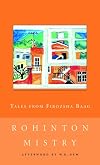
Tales from Firozsha Baag
by Rohinton Mistry
On This Page
Description
Firozsha Baag is an apartment building in Bombay. Its ceilings need plastering and some of the toilets leak appallingly, but its residents are far from desperate, though sometimes contentious and unforgiving. In these witty, poignant stories, Mistry charts the intersecting lives of Firozsha Baag, yielding a delightful collective portrait of a middle-class Indian community poised between the old ways and the new. "A fine collection...the volume is informed by a tone of gentle compassion for show more seemingly insignificant lives."--Michiko Kakutani, New York Times show lessTags
Recommendations









Member Reviews
I had failed to read Mistry’s A Fine Balance for far too long and then, having read it, thought it an exceptional book. Firozsha Baag is a set of three apartment buildings in 1980s Bombay, buildings mostly inhabited by the middle and poorer classes, with occasional notable exceptions. The stories here are linked by the common location and the characters who may be the focus of one story but have background roles in others. Indeed, it’s almost more a novel broken into stories, each with its own focus. (A few of the stories take place in Toronto, home to emigrants from the community—and where Mistry has lived since emigrating there in 1975 at 23.) Firozsha Baag is largely Parsi, a tiny religious minority. The collection is show more remarkable, distinguished by Mistry’s eye for the telling detail. He has an uncanny ability to zero in on the tic or habit or quirk that makes every person unique and he uses it to telling effect, no more so than in “Of White Hairs and Cricket.” It begins as a deceptively simple story about a young teen whose chore it is to pluck out his father’s white hairs and their shared fondness for cricket. In the end, it is a deeply moving reflection on what it means to get old, how children grow up, often without recognizing their parents as people, people with flaws, people with their own traits and strengths and weaknesses. What begins as a casual, almost silly story becomes, bit by bit, a deeply moving portrayal of them both. “Lend Me Your Light” (the title is taken from a poem by Tagore) is a powerful indictment. The narrator, telling the story looking back, now lives in Canada. As a boy, he was allowed to join his older brother and the brother’s friend on their exploits. They are all grown up now; the friend has moved to New York City and become successful; the brother has devoted his life trying to improve the lives of the poor in India’s rural villages. Three lives; three paths…and some illuminating and perceptive thoughts—not too much, just enough. show less
A collection of stories set in a compound of three Mumbai apartment blocks in the 1980s, inhabited by middle-class Zoroastrian Parsi families and one Muslim man. Only three people have cars, fridges are rare, and vicarious prestige comes from one important man in each block: a “prominent priest” in block A, a chartered accountant in B, and a veterinarian in C.
Each story stands on its own, but characters drift in and out of each others' lives and homes. It is a vivid potpourri of sights, sounds, and smells, infused with joy, tragedy, generosity, envy, regret, satire, and humour, guided by a genuine fondness for the characters.
They are of all ages, varying affluence and ambitions, with different relationship status. However, very show more few girls feature: there are wives and widows, men everywhere, and boys playing out in the compound. But almost no mention of girls. The US and Canada are held up as far-off places of great opportunity: Mistry himself moved there in early adulthood, and these stories are inspired by memories of his childhood.
I first read The Ghost of Firozsha Baag, and enjoyed it so much I read the whole collection, so this is now a rolling review. It was Mistry’s first book, published in 1987.
1. Auspicious Occasion, 4*
This introduces the somewhat dilapidated blocks of flats, cheapskate trustees, and some of the inhabitants, focusing on devout Mehroo, who was married at 16 to a 36-year-old lawyer, now known as 'Rustomji the curmudgeon'. She's excited for an important Zorastrian festival and heads to the temple while her indifferent children are at school and her husband is not yet ready:
“He had decided long ago that this was no country for sorrow or compassion or pity.”
There is gentle satire, and nice and nasty aromas are important. A good cup of tea makes everything better.
2. One Sunday, 4*
Najamai lives alone (widowed a year after her fashionable daughters left to study abroad). When she locks up 17 cupboards and the flat to visit her sister for the day, the two neighbours who 'share' use of her fridge pop in, giving delightful, but unsentimental insight into their lives: the stresses, jealousies, boredom, and hierarchies. Teenager, Kersi, tends and oils his childhood cricket bat, which becomes an excellent metaphor. An incident occurs involving Kersi, a homeless odd-job man (Francis), and Tar Gully (a dodgy neighbourhood).
3. The Ghost of Firozsha Baag, 4*
From the start, I was charmed and captivated by Jacqueline’s rapid, stream-of-consciousness narration, full of wry observations in Indian English, with a smattering of words from local languages, and the odd cooking tip.
“Secret of good curry is not only what spices to put, but also what goes in first, what goes in second, and third, and so on. And never cook curry with lid on pot, always leave it open, stir it often, stir it to urge the flavour to come out.”
She’s a lonely outsider: a loyal servant of 49 years, devout Catholic, dark-skinned, and far from her family in Goa.
“Life as ayah means living close to floor. All work I do, I do on floors, like grinding masala, cutting vegetables, cleaning rice. Food also is eaten sitting on floor, after serving them at dining-table. And my bedding is rolled out at night in kitchen-passage, on floor.”
Nevertheless, she is snarky and pragmatic, rather than resentful or mean. She’s even resigned to the fact the family won’t get her name right, and call her Jaakaylee.
Image: Grinding masala by hand, as Jacqueline has to do because her bai (mistress) and seth (master) won’t buy a machine to do it. (Source)
“Busy eating, bai-seth are. Curry is hot, they are blowing whoosh-whoosh on their tongues but still eating, they love it hot.”
Returning after midnight mass in the small hours of Christmas Day, Jacqueline sees a “bhoot” (ghost) on the stairs - the first time since childhood. Word gets out, and she’s widely mocked, so she doesn’t tell anyone of subsequent… encounters. Her telling of this story is peppered with “Believe or don’t believe”, though she clearly wants to be believed.
The turn it takes towards the end was at first funny, and then sweet without being overly sentimental: a very unexpected connection that felt profound and believable.
Magically realistic fact and fiction
This particular story is apparently his only fantastical work. It’s based on a servant of a family he knew as a child who claimed she had seen a ghost.
But is it fantastical? Does Jacqueline really see a ghost? Or does she claim to have seen a ghost for other reasons (several possible motives and benefits are suggested)? Or is the ghost a metaphor for the near invisibility of lower-caste servants? Maybe it’s all of the above.
Image: Goan fish curry (Source)
“Yes, it is one thing I really enjoy, cooking my Goan curry, stirring and stirring, taking the aroma as it boils and cooks, stirring it again and again, watching it bubbling and steaming, stirring and stirring till it is ready to eat.”
Short story club
I read this in Black Water 2: More Tales of the Fantastic, by Alberto Manguel, from which I’m reading one story a week with The Short Story Club, starting 24 March 2025.
You can read this story HERE and in the group.
You can join the group here.
4. Condolence Visit, 5*
Heart-breaking, funny, and true, in gentle equilibrium, exposing the motives and consequences of those who visit the bereaved. Daulat and Minocher were childhood sweethearts; childless, but evidently devoted to each other. He recently died after an unpleasant illness, but with a brief recovery just before the end. Daulat wants to be alone with her memories, gazing into the oil lamp by her husband's bed, which she continues to burn beyond the prescribed four days.
Image: A modest oil lamp with a floating wick (Source)
She is reluctantly preparing for visitors “besieging her with sympathy and comfort” and likely to question her about Minocher's last days “tenderly but tenaciously”. She wishes she could record it once and just lend them a cassette tape, rather than go through it again and again. Meanwhile, experienced widow, Najamai, keeps pushing unwanted help and advice, as does her second-cousin, Moti.
“Daulat nodded, trying to look grateful for the sympathy Moti was so desperate to offer to fulfil her duties.”
Both express shock and disapproval at some of Daulat's choices, but she knows her mind and that of her husband, and mourns in the way that suits her. The symbolism of her moment of acceptance is perfect.
5. The Collectors, 4*
Dr Mody (a vet) and his wife have a teenage son, Pesi, whose shameful behaviour includes encouraging more biddable boys to stone cats.
“A perpetual grief entered to occupy the void left behind after the aspirations for his son were evicted.”
Mrs Mody blames her husband, especially when he takes a paternal interest in Jehangir: a shy, weedy, bookish boy, bullied by Pesi. Dr Mody shows Jehangir his stamp collection:
“The album on the desk, able to produce such changes in Dr Mody, now worked its magic through him upon the boy.”
A philatelic friendship blooms. How lovely.
Image: A Spanish stamp, picturing a woman in traditional dress (Source)
The narrative switches to Jehangir's school and takes a darker mood: a classmate sexually abuses him - and steals stamps for him in return . Time passes, and Mrs Mody's resentment of her husband increases. As foretold in the second paragraph of the story, her husband and Jehangir fall out.
It's a story of fate, disappointment, friendship, betrayal, and a double dose of karma: when Dr Mody dies, his wife gives Jehangir the stamp collection, but it doesn't reignite his passion, and they're destroyed by cockroaches and ants .
6. Of White Hairs and Cricket, 4*
The first first-person narrative is by cricket-fan, Kersi, from the second story. It's a painfully insightful look at the the conflicting emotions 14-year-olds face, but I don't think it works as a story, so only 4*.
Kersi and older brother, Percy, live with their parents and maternal grandmother. On Sundays, Kersi has to pluck “signposts of mortality” from his father's head, despite his grandmother's concerns that it's bad luck, and his own embarrassment and mild disgust. Kersi also ponders passing time by looking at lots of old calendars around his home and goes on reverie about his love of spinning things, starting with Mamaiji's spindle.
His father nurtured his love of cricket and used to take the boys of Firozsha Baag to the park early on Sundays to play, until he stopped doing so. He wants Kersi to go to the US because there's no future in India: he himself is always browsing the small ads for the job that will change the family's fortunes.
When the father of Viraf, Kersi's best friend, is seriously ill, Kersi doesn't know what to say, so slips out, without comforting his friend. Back home, he berates himself for his detachment from those he cares about.
“I wanted to cry for the way I had treated Viraf... I wanted to weep for myself, for not being able to hug Daddy when I wanted to, and for not ever saying thank you for cricket in the morning... and dreams; and for all the white hairs that I was powerless to stop.”
7. The Paying Guests, 5*
At 11am, for the last four weeks, Khorshebai has been sprinkling rotting food scraps and ripped newspaper on the veranda that she and her husband share with Kashmira, Boman and their two small children.
“Traces of prance and glee crept into her step; she became a little girl indulging in forbidden fun.”
It's puzzling: the backstory is gradually revealed, full of symbolism (especially birds, including a dead parrot, Pestonji), gently exploring marital and mental health issues, social and community obligation, and the inadequacy of courts:
“There are laws to protect the poor... and laws to protect the rich. But middle-class people like us get the bamboo, all the way.”
The tragi-comic denouement is an authorial triumph.
8. Squatter, 3*
Ironically, a story about a captivating storyteller is the weakest one for me. Nariman drives a 50-year-old Mercedes to and from the library where he works and likes to share snippets of erudition. When the mood takes him, he tells stories to the boys of the Baag, who hang on his every word, and know his style: when they should ask questions, and when remain silent. Bookish Jehangir is especially appreciative:
“Unpredictability was the brush he used to paint his tales with, and ambiguity the palette he mixed his colours in.”
Nariman tells two stories, unrelated to each other: one about Savukshaw, the best cricketer ever (who later has huge success at other things), and the other about Sarosh, who emigrated to Canada, but vowed to return to if he hadn't become fully Canadian after ten years. Cricket and lavatorial themes are not my thing, but I appreciate that Nariman knew his audience.
9. Lend Me Your Light, 4*
Another first-person account by Kersi, focusing on his emigration to Toronto, and thereby cementing the idea that Kersi is at least loosely based on Mistry himself.
In school, his older brother's best friend was Jamshed, whose lunch was delivered by his family chauffer, not one of the tiffin-wallahs. Raised in an air-conditioned “collection of hyphenated lavishness”, he moves to New York and becomes more snobbish and materialistic, while Percy chooses to work for a rural charity in India.
Kersi's values and choices are somewhere between the other two. When he returns to Bombay after two years in Toronto, he feels like a tourist and is shocked at how dirty it seems, but he is at least sadly aware of the fact - unlike Jamshed's “soul-sapping presence”, which he avoids.
“What would it take, I wondered, to light the lantern in his soul?”
Emigration is a complex experience, and whatever the benefits, perhaps there is always a degree of loss, whether acknowledged or not.
10. Exercisers, 3*
Jehangir is now 19 and in his third year at university, living at home, with an 8pm curfew. He's still bookish, shy, and lonely, with core memories of poverty, not experienced by many of his fellow students. After being at a boys' school, he enjoys the presence of girls and women (lusting after them when he can look up their skirts on the stairs, and undressing the few female staff with his eyes), but is wary of anything more for the first two years.
But he also enjoys covertly watching the sweaty, bulging muscles of the men who go to the children's playground at night and use the equipment as a free gym. He envies their camaraderie, too.
The other thread is his parents taking him by train to consult Bhagwan Baba about Jehangir's future:
“The heat began to strengthen rapidly now, seeming to feed on itself, growing more oppressive with every breath. From metal straps hung the standees, listless, upraised arms revealing identical damp patches under sleeves of shirts and blouses. Overhead, the fans turned ineffectively, whirring and rattling, their blades labouring with feeble rotations, trying to chop the air thick with heat and odour, scattering it around uselessly in the compartment... Hanging from the straps like drowsy trapeze artists... Occasionally a new set of people entered... the contagion of lethargy quickly subdued them. They fell silent under the spell of the whirring fans... Surrendering to the torridity of the air and the hypnotic drone of the fans.”
Image: A crowded carriage, Mumbai in the 1980s (Source)
Jehangir is sceptical and embarrassed, and the Bhagwan is unusually cryptic.
11. Swimming Lessons, 4*
This makes it plain that Kersi is based on Mistry. Kersi is a young man, living in a Toronto apartment block, with some similarities to the Baag, including an old man in a wheelchair who reminds him of his late grandfather.
Ironically, Kersi's narrations are the weakest in this collection, and his priapic obsession, along with striving to glimpse the curves, underwear, and pubes of women are boring, and become more icky the older he gets. He ponders on cause and effect and tries to learn to swim.He says, “water imagery in my life is recurring”, but I hadn't noticed.
However, his narrative is interspersed with glimpses of his parents, and how they respond to his frustratingly brief and uninformative letters.
“Ten thousand miles away there was nothing she could do but write a letter and hope for the best.”
Finally, this story frames itself when his parents receive a copy of his first book (this one), although they didn't even know he was writing. Their thoughts about how he's adapted his childhood memories for material are poignant, nuanced, and believable. That pushed it from 3* to 4*. show less
Each story stands on its own, but characters drift in and out of each others' lives and homes. It is a vivid potpourri of sights, sounds, and smells, infused with joy, tragedy, generosity, envy, regret, satire, and humour, guided by a genuine fondness for the characters.
They are of all ages, varying affluence and ambitions, with different relationship status. However, very show more few girls feature: there are wives and widows, men everywhere, and boys playing out in the compound. But almost no mention of girls. The US and Canada are held up as far-off places of great opportunity: Mistry himself moved there in early adulthood, and these stories are inspired by memories of his childhood.
I first read The Ghost of Firozsha Baag, and enjoyed it so much I read the whole collection, so this is now a rolling review. It was Mistry’s first book, published in 1987.
1. Auspicious Occasion, 4*
This introduces the somewhat dilapidated blocks of flats, cheapskate trustees, and some of the inhabitants, focusing on devout Mehroo, who was married at 16 to a 36-year-old lawyer, now known as 'Rustomji the curmudgeon'. She's excited for an important Zorastrian festival and heads to the temple while her indifferent children are at school and her husband is not yet ready:
“He had decided long ago that this was no country for sorrow or compassion or pity.”
There is gentle satire, and nice and nasty aromas are important. A good cup of tea makes everything better.
2. One Sunday, 4*
Najamai lives alone (widowed a year after her fashionable daughters left to study abroad). When she locks up 17 cupboards and the flat to visit her sister for the day, the two neighbours who 'share' use of her fridge pop in, giving delightful, but unsentimental insight into their lives: the stresses, jealousies, boredom, and hierarchies. Teenager, Kersi, tends and oils his childhood cricket bat, which becomes an excellent metaphor. An incident occurs involving Kersi, a homeless odd-job man (Francis), and Tar Gully (a dodgy neighbourhood).
3. The Ghost of Firozsha Baag, 4*
From the start, I was charmed and captivated by Jacqueline’s rapid, stream-of-consciousness narration, full of wry observations in Indian English, with a smattering of words from local languages, and the odd cooking tip.
“Secret of good curry is not only what spices to put, but also what goes in first, what goes in second, and third, and so on. And never cook curry with lid on pot, always leave it open, stir it often, stir it to urge the flavour to come out.”
She’s a lonely outsider: a loyal servant of 49 years, devout Catholic, dark-skinned, and far from her family in Goa.
“Life as ayah means living close to floor. All work I do, I do on floors, like grinding masala, cutting vegetables, cleaning rice. Food also is eaten sitting on floor, after serving them at dining-table. And my bedding is rolled out at night in kitchen-passage, on floor.”
Nevertheless, she is snarky and pragmatic, rather than resentful or mean. She’s even resigned to the fact the family won’t get her name right, and call her Jaakaylee.
Image: Grinding masala by hand, as Jacqueline has to do because her bai (mistress) and seth (master) won’t buy a machine to do it. (Source)
“Busy eating, bai-seth are. Curry is hot, they are blowing whoosh-whoosh on their tongues but still eating, they love it hot.”
Returning after midnight mass in the small hours of Christmas Day, Jacqueline sees a “bhoot” (ghost) on the stairs - the first time since childhood. Word gets out, and she’s widely mocked, so she doesn’t tell anyone of subsequent… encounters. Her telling of this story is peppered with “Believe or don’t believe”, though she clearly wants to be believed.
The turn it takes towards the end was at first funny, and then sweet without being overly sentimental: a very unexpected connection that felt profound and believable.
Magically realistic fact and fiction
This particular story is apparently his only fantastical work. It’s based on a servant of a family he knew as a child who claimed she had seen a ghost.
But is it fantastical? Does Jacqueline really see a ghost? Or does she claim to have seen a ghost for other reasons (several possible motives and benefits are suggested)? Or is the ghost a metaphor for the near invisibility of lower-caste servants? Maybe it’s all of the above.
Image: Goan fish curry (Source)
“Yes, it is one thing I really enjoy, cooking my Goan curry, stirring and stirring, taking the aroma as it boils and cooks, stirring it again and again, watching it bubbling and steaming, stirring and stirring till it is ready to eat.”
Short story club
I read this in Black Water 2: More Tales of the Fantastic, by Alberto Manguel, from which I’m reading one story a week with The Short Story Club, starting 24 March 2025.
You can read this story HERE and in the group.
You can join the group here.
4. Condolence Visit, 5*
Heart-breaking, funny, and true, in gentle equilibrium, exposing the motives and consequences of those who visit the bereaved. Daulat and Minocher were childhood sweethearts; childless, but evidently devoted to each other. He recently died after an unpleasant illness, but with a brief recovery just before the end. Daulat wants to be alone with her memories, gazing into the oil lamp by her husband's bed, which she continues to burn beyond the prescribed four days.
Image: A modest oil lamp with a floating wick (Source)
She is reluctantly preparing for visitors “besieging her with sympathy and comfort” and likely to question her about Minocher's last days “tenderly but tenaciously”. She wishes she could record it once and just lend them a cassette tape, rather than go through it again and again. Meanwhile, experienced widow, Najamai, keeps pushing unwanted help and advice, as does her second-cousin, Moti.
“Daulat nodded, trying to look grateful for the sympathy Moti was so desperate to offer to fulfil her duties.”
Both express shock and disapproval at some of Daulat's choices, but she knows her mind and that of her husband, and mourns in the way that suits her. The symbolism of her moment of acceptance is perfect.
5. The Collectors, 4*
Dr Mody (a vet) and his wife have a teenage son, Pesi, whose shameful behaviour includes encouraging more biddable boys to stone cats.
“A perpetual grief entered to occupy the void left behind after the aspirations for his son were evicted.”
Mrs Mody blames her husband, especially when he takes a paternal interest in Jehangir: a shy, weedy, bookish boy, bullied by Pesi. Dr Mody shows Jehangir his stamp collection:
“The album on the desk, able to produce such changes in Dr Mody, now worked its magic through him upon the boy.”
A philatelic friendship blooms. How lovely.
Image: A Spanish stamp, picturing a woman in traditional dress (Source)
The narrative switches to Jehangir's school and takes a darker mood:
It's a story of fate, disappointment, friendship, betrayal, and a double dose of karma:
6. Of White Hairs and Cricket, 4*
The first first-person narrative is by cricket-fan, Kersi, from the second story. It's a painfully insightful look at the the conflicting emotions 14-year-olds face, but I don't think it works as a story, so only 4*.
Kersi and older brother, Percy, live with their parents and maternal grandmother. On Sundays, Kersi has to pluck “signposts of mortality” from his father's head, despite his grandmother's concerns that it's bad luck, and his own embarrassment and mild disgust. Kersi also ponders passing time by looking at lots of old calendars around his home and goes on reverie about his love of spinning things, starting with Mamaiji's spindle.
His father nurtured his love of cricket and used to take the boys of Firozsha Baag to the park early on Sundays to play, until he stopped doing so. He wants Kersi to go to the US because there's no future in India: he himself is always browsing the small ads for the job that will change the family's fortunes.
When the father of Viraf, Kersi's best friend, is seriously ill, Kersi doesn't know what to say, so slips out, without comforting his friend. Back home, he berates himself for his detachment from those he cares about.
“I wanted to cry for the way I had treated Viraf... I wanted to weep for myself, for not being able to hug Daddy when I wanted to, and for not ever saying thank you for cricket in the morning... and dreams; and for all the white hairs that I was powerless to stop.”
7. The Paying Guests, 5*
At 11am, for the last four weeks, Khorshebai has been sprinkling rotting food scraps and ripped newspaper on the veranda that she and her husband share with Kashmira, Boman and their two small children.
“Traces of prance and glee crept into her step; she became a little girl indulging in forbidden fun.”
It's puzzling: the backstory is gradually revealed, full of symbolism (especially birds, including a dead parrot, Pestonji), gently exploring marital and mental health issues, social and community obligation, and the inadequacy of courts:
“There are laws to protect the poor... and laws to protect the rich. But middle-class people like us get the bamboo, all the way.”
The tragi-comic denouement is an authorial triumph.
8. Squatter, 3*
Ironically, a story about a captivating storyteller is the weakest one for me. Nariman drives a 50-year-old Mercedes to and from the library where he works and likes to share snippets of erudition. When the mood takes him, he tells stories to the boys of the Baag, who hang on his every word, and know his style: when they should ask questions, and when remain silent. Bookish Jehangir is especially appreciative:
“Unpredictability was the brush he used to paint his tales with, and ambiguity the palette he mixed his colours in.”
Nariman tells two stories, unrelated to each other: one about Savukshaw, the best cricketer ever (who later has huge success at other things), and the other about Sarosh, who emigrated to Canada, but vowed to return to if he hadn't become fully Canadian after ten years. Cricket and lavatorial themes are not my thing, but I appreciate that Nariman knew his audience.
9. Lend Me Your Light, 4*
Another first-person account by Kersi, focusing on his emigration to Toronto, and thereby cementing the idea that Kersi is at least loosely based on Mistry himself.
In school, his older brother's best friend was Jamshed, whose lunch was delivered by his family chauffer, not one of the tiffin-wallahs. Raised in an air-conditioned “collection of hyphenated lavishness”, he moves to New York and becomes more snobbish and materialistic, while Percy chooses to work for a rural charity in India.
Kersi's values and choices are somewhere between the other two. When he returns to Bombay after two years in Toronto, he feels like a tourist and is shocked at how dirty it seems, but he is at least sadly aware of the fact - unlike Jamshed's “soul-sapping presence”, which he avoids.
“What would it take, I wondered, to light the lantern in his soul?”
Emigration is a complex experience, and whatever the benefits, perhaps there is always a degree of loss, whether acknowledged or not.
10. Exercisers, 3*
Jehangir is now 19 and in his third year at university, living at home, with an 8pm curfew. He's still bookish, shy, and lonely, with core memories of poverty, not experienced by many of his fellow students. After being at a boys' school, he enjoys the presence of girls and women (lusting after them when he can look up their skirts on the stairs, and undressing the few female staff with his eyes), but is wary of anything more for the first two years.
But he also enjoys covertly watching the sweaty, bulging muscles of the men who go to the children's playground at night and use the equipment as a free gym. He envies their camaraderie, too.
The other thread is his parents taking him by train to consult Bhagwan Baba about Jehangir's future:
“The heat began to strengthen rapidly now, seeming to feed on itself, growing more oppressive with every breath. From metal straps hung the standees, listless, upraised arms revealing identical damp patches under sleeves of shirts and blouses. Overhead, the fans turned ineffectively, whirring and rattling, their blades labouring with feeble rotations, trying to chop the air thick with heat and odour, scattering it around uselessly in the compartment... Hanging from the straps like drowsy trapeze artists... Occasionally a new set of people entered... the contagion of lethargy quickly subdued them. They fell silent under the spell of the whirring fans... Surrendering to the torridity of the air and the hypnotic drone of the fans.”
Image: A crowded carriage, Mumbai in the 1980s (Source)
Jehangir is sceptical and embarrassed, and the Bhagwan is unusually cryptic.
11. Swimming Lessons, 4*
This makes it plain that Kersi is based on Mistry. Kersi is a young man, living in a Toronto apartment block, with some similarities to the Baag, including an old man in a wheelchair who reminds him of his late grandfather.
Ironically, Kersi's narrations are the weakest in this collection, and his priapic obsession, along with striving to glimpse the curves, underwear, and pubes of women are boring, and become more icky the older he gets. He ponders on cause and effect and tries to learn to swim.He says, “water imagery in my life is recurring”, but I hadn't noticed.
However, his narrative is interspersed with glimpses of his parents, and how they respond to his frustratingly brief and uninformative letters.
“Ten thousand miles away there was nothing she could do but write a letter and hope for the best.”
Finally, this story frames itself when his parents receive a copy of his first book (this one), although they didn't even know he was writing. Their thoughts about how he's adapted his childhood memories for material are poignant, nuanced, and believable. That pushed it from 3* to 4*. show less
It is said that when the British left India, they gifted their mannerism to the Parsis. I do not know the authenticity of such whimsical statements, although I have never seen any community with such great degree of clear-cut decorum. Parsi is a Persian Zoroastrian ethnic community; a minority in the Indian sub-continent. In a religion conscious environment Parsis are the most –mild-mannered and according to my adolescent psyche aromatic individuals. As a child my pleasant memories of experiencing Parsi culture were those pleasant Sundays spent with an elderly neighbor. Dhun Aunty, as we would address her, would serve our hungry mouths with the most delectable savory dishes of meat and eggs. The spicy curries and rice with caramelized show more onions were devoured amid the lingering aroma of sandalwood and eau de cologne. Bowls of warm bread pudding with afternoon tea while laughing your guts outs to the antics of Laurel and Hardy would see an end to a wonderful soiree. It is where I learned to differentiate between Mozart’s Symphony. 40 and ‘The Blue Danube’ (although I’m still a novice to ‘C’ major or ‘G Minor identification) and browsed Wren & Martin before it became mandatory in school. Things have drastically changed now with increase in western urbanization and vast immigration to foreign lands, yet the authenticity of the culture can be experienced in certain residential colonies strictly built for the respected community.
Firoza Baag is one such residential colony adorned by a three apartment buildings and filled with the quirkiest and amusing occupants one can come across. The 11 short stories brim with incidents that flatter the humdrum lives of its occupants or events taking place at a lazy hour that either might be life-changing or may just fade away into a speck of wistfulness. The stories trickle from hilarity to seriousness of bigotry and communalism that become a major part of a sub-culture. Subtle racism, cultural labeling and the insecurities prevailing over other influential communities can be seen throughout the book. This is quite a norm here in India where preference for “fair” skin tones and understated prejudices seep into daily life. The multifarious patterns of Bombay and its people through the lives of one community are comparable to listening to ‘Moonlight Sonata’ at a crowded train station. The concluding story “Swimming Lessons” sums up the entirety of this book as it juxtaposes facts and fictions and illuminates the brilliance of a writer called Rohinton Mistry.
Words fail me when it comes to Mistry’s scintillating mosaic of inconsequential lives that seem to get lost in the crowd. He captures the nitty-gritty of one of the strictest religious community in Bombay through an array of lucid emotions and gentle compassion. Through his books I breathe the sweet air of my nostalgia and observe the frowning faces of strangers wondering the tale behind the wrinkle of their middling life. Rohinton Mistry, which is why I love your words so very much. show less
Firoza Baag is one such residential colony adorned by a three apartment buildings and filled with the quirkiest and amusing occupants one can come across. The 11 short stories brim with incidents that flatter the humdrum lives of its occupants or events taking place at a lazy hour that either might be life-changing or may just fade away into a speck of wistfulness. The stories trickle from hilarity to seriousness of bigotry and communalism that become a major part of a sub-culture. Subtle racism, cultural labeling and the insecurities prevailing over other influential communities can be seen throughout the book. This is quite a norm here in India where preference for “fair” skin tones and understated prejudices seep into daily life. The multifarious patterns of Bombay and its people through the lives of one community are comparable to listening to ‘Moonlight Sonata’ at a crowded train station. The concluding story “Swimming Lessons” sums up the entirety of this book as it juxtaposes facts and fictions and illuminates the brilliance of a writer called Rohinton Mistry.
Words fail me when it comes to Mistry’s scintillating mosaic of inconsequential lives that seem to get lost in the crowd. He captures the nitty-gritty of one of the strictest religious community in Bombay through an array of lucid emotions and gentle compassion. Through his books I breathe the sweet air of my nostalgia and observe the frowning faces of strangers wondering the tale behind the wrinkle of their middling life. Rohinton Mistry, which is why I love your words so very much. show less
A paired look at Rohinton Mistry Tales from Firozsha Baag and Michael Chabon Werewolves in Their Youth.
I chanced upon these back to back, both short story collections, both by writers in their working youth – Mistry’s first book and an early one for Chabon. Both as much as anything nostalgic, bittersweet recollections of childhood, the middle class childhoods of their own existences.
Chabon: laugh out loud funny – you know…so that it gets almost irritating for those who are suffering through your pleasure. They start sounding snarky when they say they must read it too. The guy’s brilliant, this collection is splendid.
Mistry: the blurb says ‘extremely funny’. But the only good thing about the shit of his world – and I mean show more that literally, the shit on the street, the upstairs lavatory that leaks onto your head as you sit on the toilet, the filth, the water supply turned off at 6am because the city is without again, the monsoonal water running down the inside of your house – the good thing about it is that this is all happening to middle class educated people, the same ones who, had they lived in Chabon’s childhood, would have been clean and without want. This life he writes of is the relatively privileged existence one can have in India, that’s what I mean by ‘good’. I mean, there is a worse life. I couldn’t imagine anything less hilarious. I could not imagine anything, if it comes to that, less ‘compassionate’ – another promise of the blurb. I don’t know that Mistry is ever the victim of that sentiment, but certainly not in this book.
rest here: https://alittleteaalittlechat.wordpress.com/2016/10/18/chabon-and-mistry-short-s... show less
I chanced upon these back to back, both short story collections, both by writers in their working youth – Mistry’s first book and an early one for Chabon. Both as much as anything nostalgic, bittersweet recollections of childhood, the middle class childhoods of their own existences.
Chabon: laugh out loud funny – you know…so that it gets almost irritating for those who are suffering through your pleasure. They start sounding snarky when they say they must read it too. The guy’s brilliant, this collection is splendid.
Mistry: the blurb says ‘extremely funny’. But the only good thing about the shit of his world – and I mean show more that literally, the shit on the street, the upstairs lavatory that leaks onto your head as you sit on the toilet, the filth, the water supply turned off at 6am because the city is without again, the monsoonal water running down the inside of your house – the good thing about it is that this is all happening to middle class educated people, the same ones who, had they lived in Chabon’s childhood, would have been clean and without want. This life he writes of is the relatively privileged existence one can have in India, that’s what I mean by ‘good’. I mean, there is a worse life. I couldn’t imagine anything less hilarious. I could not imagine anything, if it comes to that, less ‘compassionate’ – another promise of the blurb. I don’t know that Mistry is ever the victim of that sentiment, but certainly not in this book.
rest here: https://alittleteaalittlechat.wordpress.com/2016/10/18/chabon-and-mistry-short-s... show less
A paired look at Rohinton Mistry Tales from Firozsha Baag and Michael Chabon Werewolves in Their Youth.
I chanced upon these back to back, both short story collections, both by writers in their working youth – Mistry’s first book and an early one for Chabon. Both as much as anything nostalgic, bittersweet recollections of childhood, the middle class childhoods of their own existences.
Chabon: laugh out loud funny – you know…so that it gets almost irritating for those who are suffering through your pleasure. They start sounding snarky when they say they must read it too. The guy’s brilliant, this collection is splendid.
Mistry: the blurb says ‘extremely funny’. But the only good thing about the shit of his world – and I mean show more that literally, the shit on the street, the upstairs lavatory that leaks onto your head as you sit on the toilet, the filth, the water supply turned off at 6am because the city is without again, the monsoonal water running down the inside of your house – the good thing about it is that this is all happening to middle class educated people, the same ones who, had they lived in Chabon’s childhood, would have been clean and without want. This life he writes of is the relatively privileged existence one can have in India, that’s what I mean by ‘good’. I mean, there is a worse life. I couldn’t imagine anything less hilarious. I could not imagine anything, if it comes to that, less ‘compassionate’ – another promise of the blurb. I don’t know that Mistry is ever the victim of that sentiment, but certainly not in this book.
rest here: https://alittleteaalittlechat.wordpress.com/2016/10/18/chabon-and-mistry-short-s... show less
I chanced upon these back to back, both short story collections, both by writers in their working youth – Mistry’s first book and an early one for Chabon. Both as much as anything nostalgic, bittersweet recollections of childhood, the middle class childhoods of their own existences.
Chabon: laugh out loud funny – you know…so that it gets almost irritating for those who are suffering through your pleasure. They start sounding snarky when they say they must read it too. The guy’s brilliant, this collection is splendid.
Mistry: the blurb says ‘extremely funny’. But the only good thing about the shit of his world – and I mean show more that literally, the shit on the street, the upstairs lavatory that leaks onto your head as you sit on the toilet, the filth, the water supply turned off at 6am because the city is without again, the monsoonal water running down the inside of your house – the good thing about it is that this is all happening to middle class educated people, the same ones who, had they lived in Chabon’s childhood, would have been clean and without want. This life he writes of is the relatively privileged existence one can have in India, that’s what I mean by ‘good’. I mean, there is a worse life. I couldn’t imagine anything less hilarious. I could not imagine anything, if it comes to that, less ‘compassionate’ – another promise of the blurb. I don’t know that Mistry is ever the victim of that sentiment, but certainly not in this book.
rest here: https://alittleteaalittlechat.wordpress.com/2016/10/18/chabon-and-mistry-short-s... show less
Mooi gecomponeerde verhalen over de bewoners van een flat in Bombay. De eerste twee verhalen lijken nog wat vlak maar naarmate je verder kennismaakt met de inwoners worden de verhalen steeds beter. The Collectors is een juweeltje, Exercisers een complex verhaal over de ontluikende seksualiteit van een jongen uit de flat. Een belangrijk thema is dat van de emigratie (naar Amerika en Canada) en de vervreemding in het nieuwe land maar vooral ook (bij terugkeer) van het moederland die dat met zich meebrengt. Andere thema's zijn armoede, geloof (de meeste bewoners zijn Parsi), standsverschillen, seksualiteit, ouderdom: allemaal prachtig, onnadrukkelijk verweven in dit mooie mozaïek.
This is the second book I've read by Rohinton Mistry this year - and I'm really liking his style of writing. He writes about the Parsis in Bombay and life in what we used to call "The Parsi Colony."
I'm not a lover of short stories, as I found out earlier this year. But this set of short stories were really enjoyable. Each one was substantial and seemed to tie up well, unlike most short stories that keep you hanging. And they all related to each other in time line and characters so it still had the novel feel, but not quite.
Mistry's writing transports you back to the Bombay you know with the sights and smells that are so familiar. His descriptions about life in the metropolitan bring back many memories of the place. And he describes the show more various characters to a T - like the catholic maid servant Jakaylee (Jacqueline) and the stall-owners outside the school. His stories are pretty true to the time and place.
I did see a little bit of Family Matters in the book toward the end but not too much. All in all a very enjoyable book. show less
I'm not a lover of short stories, as I found out earlier this year. But this set of short stories were really enjoyable. Each one was substantial and seemed to tie up well, unlike most short stories that keep you hanging. And they all related to each other in time line and characters so it still had the novel feel, but not quite.
Mistry's writing transports you back to the Bombay you know with the sights and smells that are so familiar. His descriptions about life in the metropolitan bring back many memories of the place. And he describes the show more various characters to a T - like the catholic maid servant Jakaylee (Jacqueline) and the stall-owners outside the school. His stories are pretty true to the time and place.
I did see a little bit of Family Matters in the book toward the end but not too much. All in all a very enjoyable book. show less
Members
- Recently Added By
Lists

The Best of Canadian Literature
235 works; 33 members

New Canadian Library
191 works; 7 members

A Good Read (Radio 4)
221 works; 1 member

Alphabetical Books
211 works; 3 members

Books You Read For University
184 works; 3 members
Author Information

10+ Works 15,324 Members
Rohinton Mistry was born in Bombay in 1952 and immigrated to Canada in 1975. He began writing stories in 1983 while a student at the University of Toronto. His books recount everyday life in India. Titles include Tales From Firozsha Baag, a collection of short stories, and A Fine Balance, a novel. Mistry's first novel, Such a Long Journey, show more received several awards, including the Governor General's Award and the Commonwealth Writers Prize for Best Book. It was also shortlisted for the Booker Prize and for the Trillium Award. (Bowker Author Biography) show less
Awards and Honors
Notable Lists
Series
Belongs to Publisher Series
Work Relationships
Common Knowledge
- Canonical title*
- Firozsha Baag
- Important places
- Bombay, India; Mumbai, India
- First words
- With a bellow Rustomji emerged from the WC.
- Last words
- (Click to show. Warning: May contain spoilers.)Then Mother stopped listening because, as she told Father so often, she was not very fond of theories, and she took out her writing pad and started a letter to her son; Father looked over her shoulder, telling her to say how proud they were of him and were waiting for his next book, he also said, leave a little space for me at the end, I want to write a few lines when I put the address on the envelope.
- Disambiguation notice*
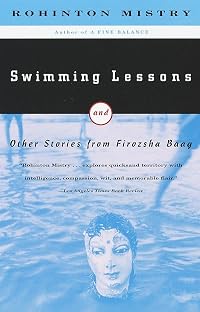
- Collection of 11 short stories, published in 1987 as Tales from Firozsha Baag. It was later published in the United States as Swimming Lessons and Other Stories from Firozsha Baag.
*Some information comes from Common Knowledge in other languages. Click "Edit" for more information.
Classifications
Statistics
- Members
- 759
- Popularity
- 36,987
- Reviews
- 14
- Rating
- (3.84)
- Languages
- 6 — Danish, English, French, German, Italian, Spanish
- Media
- Paper, Ebook
- ISBNs
- 24
- ASINs
- 8