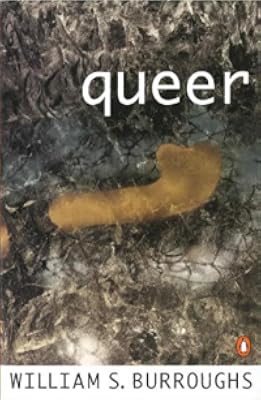
Queer
by William S. Burroughs
On This Page
Description
Originally written in 1952 but not published till 1985, Queer is an enigma - both an unflinching autobiographical self-portrait and a dazzling political novel Set in Mexico City during the early fifties, Queer follows William Lee's hopeless pursuit of desire from bar to bar in the American expatriate scene. As Lee breaks down, the trademark Burroughsian voice emerges; a maniacal mix of self-lacerating humour and the Ugly American at his ugliest. Burroughs' only realist love story, Queer is a show more haunting tale of possession and exorcism. show lessTags
Recommendations




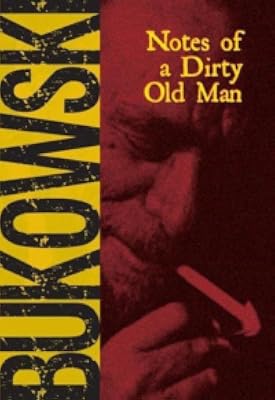
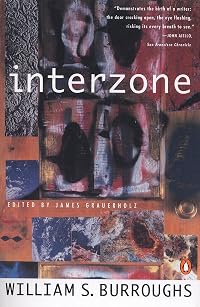
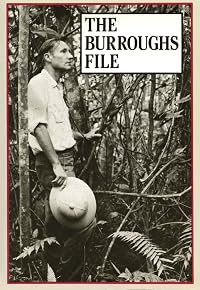
Member Recommendations
Member Reviews
In a different world, Burroughs' second book, written in 1952, could have been the next big gay-themed American novel after The city and the pillar. But it wasn't: partly because the publisher wasn't keen, partly because Burroughs had cannibalised the already-thin manuscript to bulk up the slightly underweight text of Junky, and also partly because he obviously became disenchanted with linear narrative whilst writing it, and wanted to experiment with other techniques. The mauled manuscript was put away and eventually mislaid, and the book didn't come out until 1985, when Burroughs had just got a new seven-book deal with a different publisher and a copy of the typescript of Queer happened to surface in an archive in Liechtenstein. By show more this time gay-themed novels were no longer considered shocking by most people. At least not by the sort of people likely to pick up a book by Burroughs.
Set mostly in Mexico City, the book centres around the unrequited passion of the Burroughs-character, Lee, for a younger American, Gene Allerton (in real life Lewis Marker). Lee pursues Allerton through the bars of Mexico City, and eventually persuades him to come on a quest into South America to search for the possibly mythical drug Yage, but it's clear that Allerton, whilst sometimes willing to be bought, is rather repelled than attracted by the older man. His condition for coming on the trip south is that he won't be expected to have sex with Lee more than twice a week. The narrative of the main text peters out somewhere in the rain forest, and then we see Lee in an epilogue back in Mexico City some time later, fruitlessly trying to find out where Allerton has gone.
The main interest of the book isn't really in this rather standard and dated obsession narrative, nor in the bizarrely awkward dialogues in gay bars, but rather in the "routines," the witty, surreal and very politically-incorrect monologues Lee comes out with when he's trying to deflect attention from his own problems. They are a joy, and flag the direction in which Burroughs' writing is going. show less
Set mostly in Mexico City, the book centres around the unrequited passion of the Burroughs-character, Lee, for a younger American, Gene Allerton (in real life Lewis Marker). Lee pursues Allerton through the bars of Mexico City, and eventually persuades him to come on a quest into South America to search for the possibly mythical drug Yage, but it's clear that Allerton, whilst sometimes willing to be bought, is rather repelled than attracted by the older man. His condition for coming on the trip south is that he won't be expected to have sex with Lee more than twice a week. The narrative of the main text peters out somewhere in the rain forest, and then we see Lee in an epilogue back in Mexico City some time later, fruitlessly trying to find out where Allerton has gone.
The main interest of the book isn't really in this rather standard and dated obsession narrative, nor in the bizarrely awkward dialogues in gay bars, but rather in the "routines," the witty, surreal and very politically-incorrect monologues Lee comes out with when he's trying to deflect attention from his own problems. They are a joy, and flag the direction in which Burroughs' writing is going. show less
Há décadas tenho uma profunda identificação com o Burroughs, começou quando vi um documentário sobre ele e li O gato por dentro (ele tinha o mesmo tipo de relaçãoque tenho com gatos), depois ele acabou influciando minha escrita ao escrever contos quando li outros livros dele.
Ler Queer no presente momento me deixou bem deprimida porque me identifiquei com a narrativa no nível projetivo, nunca fui dependente química, mas eu tinha minha fonte particular de produção de dopamina que me foi tirada no último ano, por isso esse sentimento de carência que ele descreve no livro por estar em abstinência é tão claro pra mim, depois de seis meses só agora estou saindo da minha "abstinência", o que pra ele levou um mês.
Enfim, por show more isso foi um livro especial para mim, mais um ponto de conexão com o Burroughs, que era mega aquariano como eu. show less
Ler Queer no presente momento me deixou bem deprimida porque me identifiquei com a narrativa no nível projetivo, nunca fui dependente química, mas eu tinha minha fonte particular de produção de dopamina que me foi tirada no último ano, por isso esse sentimento de carência que ele descreve no livro por estar em abstinência é tão claro pra mim, depois de seis meses só agora estou saindo da minha "abstinência", o que pra ele levou um mês.
Enfim, por show more isso foi um livro especial para mim, mais um ponto de conexão com o Burroughs, que era mega aquariano como eu. show less
I've always liked this book a lot: pound for pound, it's WSB's best effort as a novelist. And while Queer--like Junky--follows a linear narrative, it's a very different animal than its predecessor. The previous book is an observation of a phenomenon; this one is a study of loneliness and the painful ineptitude which dooms the main character's efforts to relieve that loneliness, and will resonate with anyone who's ever been in that position. Today, of course, the term "queer" has a specifically sociopolitical connotation, but that was not the case in the early 1950s when Burroughs wrote this novel. One does not have to be gay, nor an aficionado of gay literature, to appreciate Queer.
Burroughs became famous for the "difficult" writing of show more Naked Lunch and the cut-ups, and is still remembered for those experimental works today. But whenever I reread Queer, I'm reminded that he was a great conventional novelist when he wanted to be. If you crave more WSB in this vein, check out Interzone, a collection of his early short fiction. (See also William S. Burroughs Jr.'s Speed, a late minor classic in the Beat oeuvre. Billy died young and completed only two novels, but every fan of the father should read the son's work, too.) show less
Burroughs became famous for the "difficult" writing of show more Naked Lunch and the cut-ups, and is still remembered for those experimental works today. But whenever I reread Queer, I'm reminded that he was a great conventional novelist when he wanted to be. If you crave more WSB in this vein, check out Interzone, a collection of his early short fiction. (See also William S. Burroughs Jr.'s Speed, a late minor classic in the Beat oeuvre. Billy died young and completed only two novels, but every fan of the father should read the son's work, too.) show less
Decay pervades this novel. I thought it was merely that I had purchased a fairly old yet never used book and that was where the sense of decrepitude emanates, but then I realized it is the odorous imagery Burroughs' invokes of Mexico City and sundry South American locales. From the bars to the characters, the feeling that some elegance has been shatteringly lost, some refinement irrevocably misplaced leaks from the text. This thrilling (if noxious) interplay of word and action lends itself well to the withdrawals the main character Lee feels from heroin and also to his unquenchable lust for younger men.
I found myself fascinated by the locales visited by Lee, oddly not irritated by his cantankerous and often somewhat crude and racist show more commentary about people and place, but rather seeing them react only to what Lee himself was generating. It was an exercise in frustration however to watch him pine for the focused subject of his lust, his diffident conquest and later travel companion Allerton, almost as if Allerton acts as a receptacle for the withdrawal symptoms Lee experiences.
In many senses of the word, 'queer' accurately describes this novel. Recalling the historical time period that Burroughs would have used this word - before the reclamation of Queer as an identifier signifying positive difference - Lee brings blatant many of the perjorative uses for it, and also the usage as a marker of something strange or out of sorts. However, taking into account the modern use of queer as a way to positively affirm an identity outside the norm, Queer presents an unglamorous but accepting depiction of a homosexual man, never really emblazoning said queerness in neon pink letters with sparkly lights, but rather showing a sympathetic (if frequently rambling) recovering junky. The queerness of the text comes more to light in Lee's eccentricities than merely in his sexual proclivities. show less
I found myself fascinated by the locales visited by Lee, oddly not irritated by his cantankerous and often somewhat crude and racist show more commentary about people and place, but rather seeing them react only to what Lee himself was generating. It was an exercise in frustration however to watch him pine for the focused subject of his lust, his diffident conquest and later travel companion Allerton, almost as if Allerton acts as a receptacle for the withdrawal symptoms Lee experiences.
In many senses of the word, 'queer' accurately describes this novel. Recalling the historical time period that Burroughs would have used this word - before the reclamation of Queer as an identifier signifying positive difference - Lee brings blatant many of the perjorative uses for it, and also the usage as a marker of something strange or out of sorts. However, taking into account the modern use of queer as a way to positively affirm an identity outside the norm, Queer presents an unglamorous but accepting depiction of a homosexual man, never really emblazoning said queerness in neon pink letters with sparkly lights, but rather showing a sympathetic (if frequently rambling) recovering junky. The queerness of the text comes more to light in Lee's eccentricities than merely in his sexual proclivities. show less
For more than three decades, while its writer's world fame increased, Queer remained unpublished because of its forthright depiction of homosexual longings. Set in the corrupt and spectral Mexico City of the forties, Queer is the story of William Lee, a man afflicted with both acute heroin withdrawal and romantic and sexual yearnings for an indifferent user named Eugene Allerton. The narrative is punctuated by Lee's outrageous "routines" — brilliant comic monologues that foreshadow Naked Lunch —yet the atmosphere is heavy with foreboding.In his extraordinary introduction, Burroughs reflects on the shattering events in his life that lay behind this work.
I borrowed this from my local library. It was such a degenerate and disturbing piece of work that it was hard for me to get into it. The plot was quite simplistic as well. I had read Naked Lunch previously as an experiment and had, after, read much Kerouac and all of Ginsberg to get into Beat Literature. However, this was not working for me- the intensity of the degeneracy was a little too far for me to enjoy it. I did not find the narrator likeable in any means and, since the narrator is meant to represent Burroughs himself, that is not a good thing.
I found myself more interested in the introduction and appendix (the supplementary materials) than the book itself. That speaks on its own.
Nevertheless, it was a character study of a show more lonely, misguided, lustful, and disturbed man. I suppose that you have to take that as you will.
2 stars- not recommended. show less
I found myself more interested in the introduction and appendix (the supplementary materials) than the book itself. That speaks on its own.
Nevertheless, it was a character study of a show more lonely, misguided, lustful, and disturbed man. I suppose that you have to take that as you will.
2 stars- not recommended. show less
For university, we’re attending a screening of the 2024 film adaptation, so I wanted to read this book first.
I think it managed to paint a clear portrait of a character in the few pages it had. Lee is lonely, struggling with addiction and looks for affection and human connection in the wrong places.
From the introduction: Lee is “disintegrated,” as Burroughs put it in his 1985 introduction, “desperately in need of contact, completely unsure of himself and of his purpose.”
Going after a guy who is not all that interested is a bad idea? That’s a guaranteed set-up for tragedy.
It’s more reciprocal in the film adaptation, which changes the context of some things. The scene where they meet:
As Lee stood aside to bow in his show more dignified old-world greeting, there emerged instead a leer of naked lust, wrenched in the pain and hate of his deprived body and, in simultaneous double exposure, a sweet child’s smile of liking and trust, shockingly out of time and place, mutilated and hopeless.
is less of a meeting between an unwanted suitor and his target, but rather an awkward attempt at charm. show less
I think it managed to paint a clear portrait of a character in the few pages it had. Lee is lonely, struggling with addiction and looks for affection and human connection in the wrong places.
From the introduction: Lee is “disintegrated,” as Burroughs put it in his 1985 introduction, “desperately in need of contact, completely unsure of himself and of his purpose.”
Going after a guy who is not all that interested is a bad idea? That’s a guaranteed set-up for tragedy.
It’s more reciprocal in the film adaptation, which changes the context of some things. The scene where they meet:
As Lee stood aside to bow in his show more dignified old-world greeting, there emerged instead a leer of naked lust, wrenched in the pain and hate of his deprived body and, in simultaneous double exposure, a sweet child’s smile of liking and trust, shockingly out of time and place, mutilated and hopeless.
is less of a meeting between an unwanted suitor and his target, but rather an awkward attempt at charm. show less
Members
- Recently Added By
Lists

1001 Books You Must Read Before You Die
1,448 works; 1,134 members

Pre-1969 LGBTQ Literature
182 works; 69 members

Read
293 works; 4 members

Authors from the United States
245 works; 3 members

Forced Exposure
83 works; 1 member

My TBR
371 works; 3 members

the nova trilogy & others
5 works; 1 member

Yet another list
68 works; 1 member

Books Read in 2024
4,727 works; 128 members

The Luca Guadagnino Universe
62 works; 1 member
Author Information

362+ Works 39,066 Members
William S. Burroughs was a primary figure of the Beat Generation who wrote in the postmodern paranoid fiction genre. Jack Kerouac called Burroughs the "greatest satirical writer since Jonathan Swift," while Norman Mailer declared him "the only American writer who may be conceivably possessed by genius." While he is best known for the novels Naked show more Lunch, Queer, and Junkie, he also collaborated with artists such as Laurie Anderson, Tom Waits, Nick Cave, Gus Van Sant, David Cronen-berg, and Sonic Youth to produce films, music, and performance pieces. show less
Some Editions
Awards and Honors
Notable Lists
Series
Belongs to Publisher Series
Work Relationships
Is contained in
Has the adaptation
Common Knowledge
- Canonical title
- Queer
- Original title
- Queer
- Alternate titles*
- Diverso
- Original publication date
- 1985
- People/Characters
- William Lee; Eugene Allerton
- Important places
- Mexico City, Mexico
- Related movies
- Queer (2024 | IMDb)
- First words
- Lee turned his attention to a Jewish boy named Carl Steinberg, whom he had known casually for about a year.
- Quotations*
- Non dimenticherò mai l'indicibile orrore che gelò la linfa nelle mie ghiandole - nelle ghiandole linfatiche, cioè, naturalmente - quando l'esecrabile parola sigillò il mio cervello vacillante: ero un omosessuale. Pensai a... (show all)i travestiti smorfiosi e dipinti che avevo visto in un night club di Baltimora. Poteva essere che io fossi una di quelle cose subumane?
- Last words
- (Click to show. Warning: May contain spoilers.)The door closed and the curtains settled back, one curtain trailing over a sofa as though someone had taken it and tossed it there.
- Blurbers
- Amis, Martin; Mailer, Norman
- Original language
- English
- Canonical DDC/MDS
- 813.54
- Canonical LCC
- PS3552.U75
*Some information comes from Common Knowledge in other languages. Click "Edit" for more information.
Classifications
Statistics
- Members
- 2,104
- Popularity
- 9,806
- Reviews
- 31
- Rating
- (3.57)
- Languages
- 14 — Czech, Danish, Dutch, English, Finnish, French, German, Greek, Italian, Polish, Portuguese, Romanian, Spanish, Swedish
- Media
- Paper, Audiobook, Ebook
- ISBNs
- 50
- ASINs
- 13