On This Page
Description
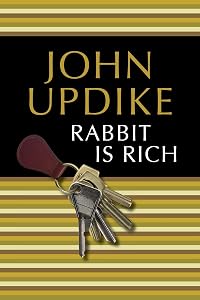
Winner of the Pulitzer Prize, the National Book Award, and the National Book Critics Circle AwardThe hero of John Updike’s Rabbit, Run, ten years after the events of Rabbit Redux, has come to enjoy considerable prosperity as the chief sales representative of Springer Motors, a Toyota agency in Brewer, Pennsylvania. The time is 1979: Skylab is falling, gas lines are lengthening, and double-digit inflation coincides with a deflation of national self-confidence. Nevertheless, Harry show more “Rabbit” Angstrom feels in good shape, ready to enjoy life at last—until his wayward son, Nelson, returns from the West, and the image of an old love pays a visit to the lot. New characters and old populate these scenes from Rabbit’s middle age as he continues to pursue, in his zigzagging fashion, the rainbow of happiness. show less
Tags
Recommendations








Member Reviews
There is a brief passage near the end of Rabbit Is Rich that does a wonderful job of underscoring one of the novel’s main themes: ”Life. Too much of it, and not enough. The fear that it will end some day, and the fear that tomorrow will be the same as yesterday.” Harry “Rabbit” Angstrom, author John Updike’s irrepressible mid-20th century Everyman, has reached middle age, relatively unscathed by the travails of his earlier years. He and his wife Janice have settled into a routine that their relative affluence affords them in their Pennsylvania suburb in the late 1970s. But Rabbit finds himself still running—searching is probably a better word—for whatever it is he doesn’t have: improved business prospects, resolution show more about the status of a long-lost daughter, a better relationship with his son, more sex (especially with his friend’s much younger wife), and a more reliable golf swing. In short, he has reached the point in life where he has acquired much of what he wants, but remains unsatisfied with all that he has.
The third of four novels focusing on Angstrom, Rabbit is Rich is ultimately an unblinking character study of a man who has reached his 40s, with all the successes, failures, frustrated hopes, and dreams still to be realized that this age implies. When he is not fretting over selling Toyota automobiles—Harry’s day job, courtesy of his overbearing mother-in-law—he spends most of his time drinking and playing golf with his buddies, thinking about sex, worrying about current economic conditions, reminiscing about the past and contemplating death, or feuding with his son, who has his own secrets to protect. I found Updike’s prose to be precise, insightful, and often very funny. The author was a keen observer of what it meant to be both middle class and middle age during that era and the story he tells here is one that is both richly detailed and compelling. It is also a tale that is occasionally vulgar and profane, but never beyond the bounds of what befits the character. After reading this novel, you may not like Rabbit, in all his self-absorbed and clueless glory, but you will definitely have a better understanding of what makes him tick. show less
The third of four novels focusing on Angstrom, Rabbit is Rich is ultimately an unblinking character study of a man who has reached his 40s, with all the successes, failures, frustrated hopes, and dreams still to be realized that this age implies. When he is not fretting over selling Toyota automobiles—Harry’s day job, courtesy of his overbearing mother-in-law—he spends most of his time drinking and playing golf with his buddies, thinking about sex, worrying about current economic conditions, reminiscing about the past and contemplating death, or feuding with his son, who has his own secrets to protect. I found Updike’s prose to be precise, insightful, and often very funny. The author was a keen observer of what it meant to be both middle class and middle age during that era and the story he tells here is one that is both richly detailed and compelling. It is also a tale that is occasionally vulgar and profane, but never beyond the bounds of what befits the character. After reading this novel, you may not like Rabbit, in all his self-absorbed and clueless glory, but you will definitely have a better understanding of what makes him tick. show less
More of the same from Updike with two exceptions: less happens and there’s more graphic sex. Quite why this novel, of the three Rabbit novels so far, won the most awards including the Pulitzer is beyond me.
My conclusions that Rabbit and his ilk are a complete waste of human space were confirmed by this. How many people are there out there whose lives are of no benefit to anyone except themselves and to the detriment of everyone around them?
No one in this novel is capable of loving anyone around them or even aware that they lack the ability. Instead, they carry on with facade and distortion as if life really is all about their petty concerns.
Rabbit has grown fat, in more ways than one, on the proceeds of the Toyota showroom inherited show more from his now deceased father-in-law. He is estranged from his son, emotionally estranged from his wife, and still beset by fantasies of the sexual grass being greener.
Updike must have thought all women were simply objects. He describes all of them in terms of their bodily appearance and, as far as I can tell from these three novels, created Rabbit to somehow legitimise lust. Even when he does create a character who supposedly loves Rabbit, his expression of that is for her to take him away during a vacation swingers night and have him perform anal sex. How facile do you have to be for this to be what you consider an expression of love?
So, in conclusion, having read the first three books, while Updike can write great prose, he turned his skill to rendering lives that were entirely unworthy of our focus. Either there’s some genius irony there and that’s exactly the point, or these three books are equally unworthy. I think it actually may be both. show less
My conclusions that Rabbit and his ilk are a complete waste of human space were confirmed by this. How many people are there out there whose lives are of no benefit to anyone except themselves and to the detriment of everyone around them?
No one in this novel is capable of loving anyone around them or even aware that they lack the ability. Instead, they carry on with facade and distortion as if life really is all about their petty concerns.
Rabbit has grown fat, in more ways than one, on the proceeds of the Toyota showroom inherited show more from his now deceased father-in-law. He is estranged from his son, emotionally estranged from his wife, and still beset by fantasies of the sexual grass being greener.
Updike must have thought all women were simply objects. He describes all of them in terms of their bodily appearance and, as far as I can tell from these three novels, created Rabbit to somehow legitimise lust. Even when he does create a character who supposedly loves Rabbit, his expression of that is for her to take him away during a vacation swingers night and have him perform anal sex. How facile do you have to be for this to be what you consider an expression of love?
So, in conclusion, having read the first three books, while Updike can write great prose, he turned his skill to rendering lives that were entirely unworthy of our focus. Either there’s some genius irony there and that’s exactly the point, or these three books are equally unworthy. I think it actually may be both. show less
Rabbit is Rich is the 3rd in a 4 part series centering around Harry "Rabbit" Angstrom.
I did not enjoy the first book in this series at all. The 2nd book, Rabbit Redux, I found myself really enjoying. The main difference between those two was that while the first book left me feeling no empathy towards Rabbit, the second made me really come to appreciate this admitted asshole, and his bizarre life.
The third, Rabbit is Rich, picked up 10 years after the second left off. In it, Rabbit has become a middle aged man, who finds himself virtually adventure-free. His problems center around his annoying mother-in-law, with whom him and his wife live, and his aggravating and dull son, Nelson.
I'm halfway through the final book in the series (well, show more there's also a novella that sounds sort of like an epilogue, but it's not technically part of the series) and I can say that I did enjoy Rabbit is Rich much more than any of the other books in the series. Updike has this amazing ability to give so many fucking details that I should be pulling my hair out, yet he does it so effectively that I smile through most of the pages of his books. Though the story is told through the 3rd person perspective, the level of detail and metaphor really make me feel that I'm reading Harry's thoughts and seeing things through his eyes. show less
I did not enjoy the first book in this series at all. The 2nd book, Rabbit Redux, I found myself really enjoying. The main difference between those two was that while the first book left me feeling no empathy towards Rabbit, the second made me really come to appreciate this admitted asshole, and his bizarre life.
The third, Rabbit is Rich, picked up 10 years after the second left off. In it, Rabbit has become a middle aged man, who finds himself virtually adventure-free. His problems center around his annoying mother-in-law, with whom him and his wife live, and his aggravating and dull son, Nelson.
I'm halfway through the final book in the series (well, show more there's also a novella that sounds sort of like an epilogue, but it's not technically part of the series) and I can say that I did enjoy Rabbit is Rich much more than any of the other books in the series. Updike has this amazing ability to give so many fucking details that I should be pulling my hair out, yet he does it so effectively that I smile through most of the pages of his books. Though the story is told through the 3rd person perspective, the level of detail and metaphor really make me feel that I'm reading Harry's thoughts and seeing things through his eyes. show less
Rabbit is Rich is the third installment of the tetralogy written by John Updike, featuring as its protagonist, Harry “Rabbit” Angstrom. This book follows Rabbit Run and Rabbit Redux which follow the life of Angstrom in his hometown of Mt. Judge, near Brewster, Pennsylvania. When we left Rabbit at the conclusion of Rabbit Redux, he had just lost his job as a linotypist, lost his wife to a Greek car salesman and taken up with two 60s era hippies, an interlude that ended in the death of one and the fiery destruction of his home.
Rabbit is Rich finds Angstrom roughly ten years later, reconciled with his wife Janice, co-owning and managing the car dealership that he and his wife inherited with the death of his father-in-law. Rabbit is show more drawing a salary of $500/week and taking profits from the dealership of an additional $15,000/year. Rabbit is rich.
The time frame is the late 70s, Jimmy Carter is President, inflation is rampant, gas prices are soaring and a general malaise has fallen over the country, but Rabbit is selling Toyotas like hotcakes. Much of the action centers upon Rabbit’s dysfunctional relationship with his college aged son and interaction between he, his wife and their country club friends.
While much of the writing is entertaining and very well done, it must be noted that at times, Updike seems to fly off on wild screeds of florid, almost unintelligible prose that leave the reader simply rolling his eyes. Nevertheless, the characters contained in the story are well presented and fleshed out beautifully, even some of the more peripheral players. All in all, this is a fascinating look at life during the late 70s, from the perspective of a middle class, Pennsylvania family, though Rabbit and his circumstances can hardly be viewed as representative. This may be the best of the three “Rabbit” books I’ve read so far. On to the finale, Rabbit at Rest. show less
Rabbit is Rich finds Angstrom roughly ten years later, reconciled with his wife Janice, co-owning and managing the car dealership that he and his wife inherited with the death of his father-in-law. Rabbit is show more drawing a salary of $500/week and taking profits from the dealership of an additional $15,000/year. Rabbit is rich.
The time frame is the late 70s, Jimmy Carter is President, inflation is rampant, gas prices are soaring and a general malaise has fallen over the country, but Rabbit is selling Toyotas like hotcakes. Much of the action centers upon Rabbit’s dysfunctional relationship with his college aged son and interaction between he, his wife and their country club friends.
While much of the writing is entertaining and very well done, it must be noted that at times, Updike seems to fly off on wild screeds of florid, almost unintelligible prose that leave the reader simply rolling his eyes. Nevertheless, the characters contained in the story are well presented and fleshed out beautifully, even some of the more peripheral players. All in all, this is a fascinating look at life during the late 70s, from the perspective of a middle class, Pennsylvania family, though Rabbit and his circumstances can hardly be viewed as representative. This may be the best of the three “Rabbit” books I’ve read so far. On to the finale, Rabbit at Rest. show less
"How can you respect the world when you see it's being run by a bunch of kids turned old."
'Rabbit is Rich' is the third of four novels about the life of Harry “Rabbit” Angstrom. Each novel, written in approximately 10-year intervals, explores some upheaval in Rabbit’s life. In this novel, Harry is no longer running but has dropped to a slow walk in order to enjoy the fruits of middle-aged affluence, however, his cosy country-club lifestyle is thrown into upheaval when his son, Nelson, quits college to return home with a mystery girl.
The two earlier novels found Rabbit longing for his former glory days as a high-school basket ball star. In this novel, things seem to be going his way again. In the midst of the 1979 oil crisis, Harry show more is owner of a fuel-efficient Toyota dealership and business is brisk. But Rabbit seems unsettled by his good fortune and is just waiting for some catastrophe to occur.
Like the other books in this series this novel is full of richly textured detail but there is deliberately very little action. Updike is unsparing in his description of Rabbit's selfishness and in particular his sexual exploits. But quite why this particular book i was the one that won the Pulitzer Prize I don't quite understand nor do I understand why Updike felt the need to litter it with so many explicit sexual episodes. I don't think that I'm a prude but I felt that most of the sexual details were simply unnecessary.
Overall this was my least favourite book in the series thus far but will be looking to finish it off at some point. show less
'Rabbit is Rich' is the third of four novels about the life of Harry “Rabbit” Angstrom. Each novel, written in approximately 10-year intervals, explores some upheaval in Rabbit’s life. In this novel, Harry is no longer running but has dropped to a slow walk in order to enjoy the fruits of middle-aged affluence, however, his cosy country-club lifestyle is thrown into upheaval when his son, Nelson, quits college to return home with a mystery girl.
The two earlier novels found Rabbit longing for his former glory days as a high-school basket ball star. In this novel, things seem to be going his way again. In the midst of the 1979 oil crisis, Harry show more is owner of a fuel-efficient Toyota dealership and business is brisk. But Rabbit seems unsettled by his good fortune and is just waiting for some catastrophe to occur.
Like the other books in this series this novel is full of richly textured detail but there is deliberately very little action. Updike is unsparing in his description of Rabbit's selfishness and in particular his sexual exploits. But quite why this particular book i was the one that won the Pulitzer Prize I don't quite understand nor do I understand why Updike felt the need to litter it with so many explicit sexual episodes. I don't think that I'm a prude but I felt that most of the sexual details were simply unnecessary.
Overall this was my least favourite book in the series thus far but will be looking to finish it off at some point. show less
This novel was a little better than Rabbit Redux. It was more focused on the social dynamics of a dysfunctional familial relationship- in the veneer of the "Rabbit" family. I viewed it as an intimate character study of an individual and his family and I believe herein lies the strength of the novel in full. There were parts that were a bit long and overdone, but overall it was plausible (I suppose) as the work of fiction that it was setting out to be. Updike is an odd writer, that much I am assured of, but with everything that happens in this novel, I do believe that he's managed to capture something (even if it is fragments of a tattered life that is beset by difficulties and decadence.)
3 stars.
3 stars.
Less fascinatingly horrible than Rabbit, Run, and not even as just plain horrible as Rabbit Redux, Rabbit Is Rich is simply rather dull. At first, I wanted to find out what was going to happen to these characters out of a sort of morbid curiosity, like watching a train wreck...but as the series progresses it becomes increasingly difficult to care. The writing is comparatively bland, and the story is incredibly predictable. I knew everything that was going to happen before it did, with the exception of what Updike seemed to be leading up to as the climax. As it turns out, it was more of an anti-climax. (I should probably give a spoiler warning here, in case anyone cares, not that it matters.)
The entire book seems to be building up to show more Rabbit's son Nelson having an affair with a girl who he doesn't know might be his half-sister, Rabbit's illegitimate daughter from his own affair back in Rabbit, Run. And then, it simply doesn't happen (and the book leaves unresolved whether she is in fact Rabbit's daughter or not). And it's not just that these were the characters' perceptions that Updike was reporting and they turned out to be misapprehensions...during the scenes between Nelson and the girl, they know nothing about what's going on. So basically, Updike is just screwing with us. On the one hand, it's kind of a relief that he doesn't go there, that he draws the line at incest (though he doesn't stick at much else, including wife-swapping and golden showers). But since he was making us think it anyway, he might as well have gone there, and not to do so is artistically dishonest. It's the same kind of stunt hacks like Dan Brown pull...and yet, Updike wins a Pulitzer for it (though I can't say I'm surprised).
Updike quotes from Babbitt in the epigraph, but he is no Sinclair Lewis. My recommendation is, if you enjoy this sort of literary naturalism, it might as well be good naturalism, so go and read that instead...or better still, one of Lewis's even better novels, like Arrowsmith, Dodsworth, Elmer Gantry, or It Can't Happen Here. Those still have something to say, even though they were written almost a century ago...while Rabbit Is Rich, written less than half a century ago, doesn't. show less
The entire book seems to be building up to show more Rabbit's son Nelson having an affair with a girl who he doesn't know might be his half-sister, Rabbit's illegitimate daughter from his own affair back in Rabbit, Run. And then, it simply doesn't happen (and the book leaves unresolved whether she is in fact Rabbit's daughter or not). And it's not just that these were the characters' perceptions that Updike was reporting and they turned out to be misapprehensions...during the scenes between Nelson and the girl, they know nothing about what's going on. So basically, Updike is just screwing with us. On the one hand, it's kind of a relief that he doesn't go there, that he draws the line at incest (though he doesn't stick at much else, including wife-swapping and golden showers). But since he was making us think it anyway, he might as well have gone there, and not to do so is artistically dishonest. It's the same kind of stunt hacks like Dan Brown pull...and yet, Updike wins a Pulitzer for it (though I can't say I'm surprised).
Updike quotes from Babbitt in the epigraph, but he is no Sinclair Lewis. My recommendation is, if you enjoy this sort of literary naturalism, it might as well be good naturalism, so go and read that instead...or better still, one of Lewis's even better novels, like Arrowsmith, Dodsworth, Elmer Gantry, or It Can't Happen Here. Those still have something to say, even though they were written almost a century ago...while Rabbit Is Rich, written less than half a century ago, doesn't. show less
Members
- Recently Added By
Published Reviews
ThingScore 88
"Rabbit Is Rich," a novel by John Updike published in 1981, is the third book in the "Rabbit" series, following the life of Harry "Rabbit" Angstrom. Set in the late 1970s against the backdrop of the American economic boom and the energy crisis, the novel captures Rabbit in middle age, now running his father-in-law's Toyota dealership, a symbol of his newfound prosperity and the shifting show more economic landscape of the time.
As Rabbit navigates the complexities of wealth, family, and societal change, the novel delves into themes of materialism, dissatisfaction, and the search for meaning beyond the trappings of success. Rabbit is depicted as a character who, despite achieving what appears to be the American dream, grapples with a sense of emptiness and the challenges of adapting to a changing world.
"Rabbit Is Rich" is notable for its rich character development, intricate narrative style, and the way it captures the zeitgeist of the era. Updike's portrayal of Rabbit's life, with its ups and downs, reflects broader themes of American identity, generational conflict, and the pursuit of happiness. The novel won several prestigious awards, including the Pulitzer Prize for Fiction and the National Book Award, cementing its status as a significant work in American literature and continuing the deep exploration of one man's journey through the latter half of the 20th century. show less
As Rabbit navigates the complexities of wealth, family, and societal change, the novel delves into themes of materialism, dissatisfaction, and the search for meaning beyond the trappings of success. Rabbit is depicted as a character who, despite achieving what appears to be the American dream, grapples with a sense of emptiness and the challenges of adapting to a changing world.
"Rabbit Is Rich" is notable for its rich character development, intricate narrative style, and the way it captures the zeitgeist of the era. Updike's portrayal of Rabbit's life, with its ups and downs, reflects broader themes of American identity, generational conflict, and the pursuit of happiness. The novel won several prestigious awards, including the Pulitzer Prize for Fiction and the National Book Award, cementing its status as a significant work in American literature and continuing the deep exploration of one man's journey through the latter half of the 20th century. show less
added by Michael_Vannin
Rarely has a single character been so faithfully followed for so many years by so many readers. Rarely has anyone written like John Updike. As a writer, he dared his fellows to be perceptive, to be honest, and above all to be specific. How large his footprint, how ghosted.
added by Shortride
Lists

1001 Books You Must Read Before You Die
1,448 works; 1,133 members

Pulitzer Prize Winners for Fiction
102 works; 54 members

Novels from The Guardian's Great American Novelist Tournament
148 works; 24 members

20th Century Literature
1,161 works; 55 members

National Book Award - Fiction
78 works; 10 members

Pulitzer Prize-Winning Books
42 works; 10 members

1980s
356 works; 23 members
1,001 BYMRBYD Concensus
723 works; 27 members

Penultimate Books
5 works; 1 member

Swinging Seventies
255 works; 18 members

To Read
617 works; 7 members

Lucy's Long List
69 works; 1 member

DigitalDreamDoor top 300
300 works; 4 members
Author Information

342+ Works 53,758 Members
American novelist, poet, and critic John Updike was born in Reading, Pennsylvania on March 18, 1932. He received an A.B. degree from Harvard University, which he attended on a scholarship, in 1954. After graduation, he accepted a one-year fellowship to study painting at the Ruskin School of Drawing and Fine Art in Oxford, England. After returning show more from England in 1955, he worked for two years on the staff of The New Yorker. This marked the beginning of a long relationship with the magazine, during which he has contributed numerous short stories, poems, and book reviews. Although Updike's first published book was a collection of verse, The Carpentered Hen and Other Tame Creatures (1958), his renown as a writer is based on his fiction, beginning with The Poorhouse Fair (1959). During his lifetime, he wrote more than 50 books and primarily focused on middle-class America and their major concerns---marriage, divorce, religion, materialism, and sex. Among his best-known works are the Rabbit tetrology---Rabbit, Run (1960), Rabbit Redux (1971), Rabbit Is Rich (1981), and Rabbit at Rest (1988). Rabbit, Run introduces Harry "Rabbit" Angstrom as a 26-year-old salesman of dime-store gadgets trapped in an unhappy marriage in a dismal Pennsylvania town, looking back wistfully on his days as a high school basketball star. Rabbit Redux takes up the story 10 years later, and Rabbit's relationship with representative figures of the 1960s enables Updike to provide social commentary in a story marked by mellow wisdom and compassion in spite of some shocking jolts. In Rabbit Is Rich, Harry is comfortably middle-aged and complacent, and much of the book seems to satirize the country-club set and the swinging sexual/social life of Rabbit and his friends. Finally, in Rabbit at Rest, Harry arrives at the age where he must confront his mortality. Updike won the Pulitzer Prize for both Rabbit Is Rich and Rabbit at Rest. Updike's other novels range widely in subject and locale, from The Poorhouse Fair, about a home for the aged that seems to be a microcosm for society as a whole, through The Court (1978), about a revolution in Africa, to The Witches of Eastwick (1984), in which Updike tries to write from inside the sensibilities of three witches in contemporary New England. The Centaur (1963) is a subtle, complicated allegorical novel that won Updike the National Book Award in 1964. In addition to his novels, Updike also has written short stories, poems, critical essays, and reviews. Self-Consciousness (1989) is a memoir of his early life, his thoughts on issues such as the Vietnam War, and his attitude toward religion. He was elected to the American Academy of Arts and Letters in 1977. He died of lung cancer on January 27, 2009 at the age of 76. (Bowker Author Biography) John Updike was born in 1932, in Shillington, Pennsylvania. Since 1957 he has lived in Massachusetts. His novels have won the Pulitzer Prize, the National Book Award, the National Book Critics Circle Award, & the Howells Medal. (Publisher Provided) John Updike was born in 1932 and attended Harvard College and the Ruskin School of Drawing and Fine Art in Oxford, England. Form 1955 to 1957 he was a staff member of The New Yorker, which he contributed numerous writings. Updike's art criticism has appeared in publications including Arts and Antiques, The New Republic, The New York Times Book Review, and Realites, among many others. He is the author of such best-selling novels as Rabbit Run and Rabbit is Rich. His many works of fiction, poetry and criticism have been awarded the Pulitzer Prize, the National Book Award, the American Book Award, and the National Book Critics Circle Award. For the past 40 years he has lived in Massachusetts. (Publisher Provided) John Updike is the author of some 50 books, including collections of short stories, poems, & criticism. His novels have won the Pulitzer Prize, the National Book Award, the National Book Critics Circle Award, & the Howells Medal. Born in Shillington, Pennsylvania, in 1932, he has lived in Massachusetts since 1957. (Publisher Provided) show less
Some Editions
Awards and Honors
Awards
Distinctions
Series

Belongs to Publisher Series
Work Relationships
Common Knowledge
- Canonical title
- Rabbit Is Rich
- Original title
- Rabbit Is Rich
- Original publication date
- 1981
- People/Characters
- Harry "Rabbit" Angstrom
- Important places
- Brewer, Pennsylvania, USA
- Epigraph
- 'At night he lights up a good cigar, and climbs into the little old 'bus, and maybe cusses the carburetor, and shoots out home. He mows the lawn, or sneaks in some practice putting, and then he's ready for dinner."
... (show all)i>GEORGE BABBITT of the 'Ideal Citizen'
The difficulty to think at the end of day,
When the shapeless shadow covers the sun
And nothing is left except light on your fur...
WALLACE STEVENS
'A Rabbit as King of the Ghosts' - Dedication*
- /
- First words
- Running out of gas, Rabbit Angstrom thinks as he stands behind the summer-dusty windows of the Springer Motors display room watching the traffic go by on Route 111, traffic somehow thin and scared compared to what it used to ... (show all)be.
- Quotations
- Rather than face who it is, he runs. (p. 113)
Rain, the last proof left to him that God exists. (p. 125)
...all the souvenirs of the dead bristle with new point, with fresh mission. (p. 184)
He enunciates with such casual smiling sonorousness that his sentences seem to keep travelling around a corner after they are pronounced. (p. 191, of the Rev. Archie Campbell)
As always when he sees his son unexpectedly Harry feels shame . . . Run, Harry wants to call out, but nothing comes . . . (pp. 240-41) - Last words
- (Click to show. Warning: May contain spoilers.)Another nail in his coffin. His.
- Publisher's editor
- Jones, Judith
- Original language*
- Anglais (Etats-Unis) (Etats-Unis)
*Some information comes from Common Knowledge in other languages. Click "Edit" for more information.
Classifications
Statistics
- Members
- 2,695
- Popularity
- 6,887
- Reviews
- 34
- Rating
- (3.92)
- Languages
- 11 — Czech, Dutch, English, Finnish, French, German, Hungarian, Italian, Portuguese, Spanish, Swedish
- Media
- Paper, Audiobook, Ebook
- ISBNs
- 44
- ASINs
- 24